
Munich researchers urge EU to replace tailpipe CO₂ rules with lifecycle emissions standard
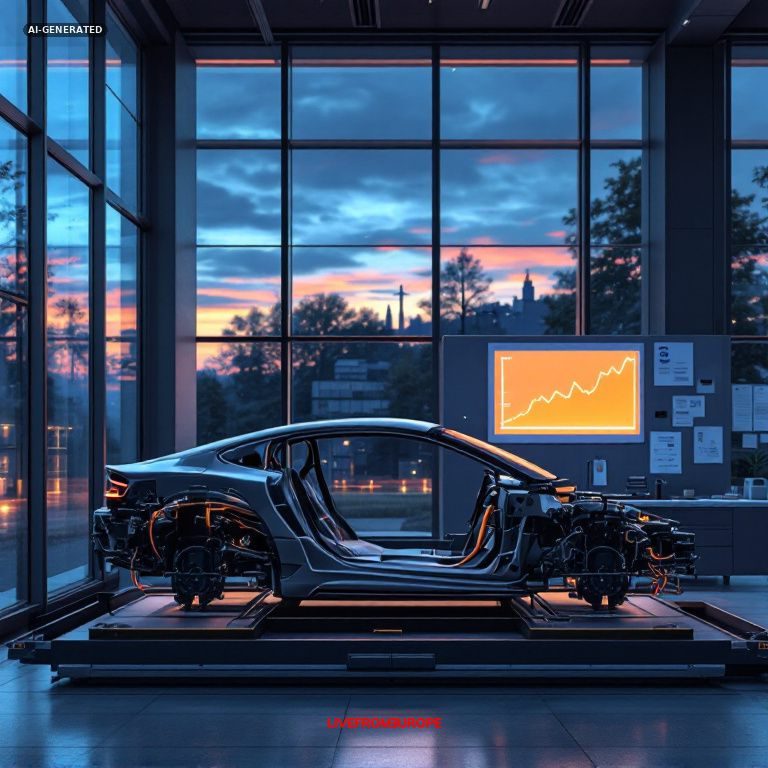
MUNICH — Researchers at the Technical University of Munich published a study on Tuesday criticizing the European Union’s climate regulations for the automotive sector, arguing that current CO₂ standards only measure tailpipe emissions and ignore the full lifecycle of vehicles.
The study, authored by professors Johannes Fottner, Magnus Fröhling and Tim Büthe, found that battery-electric vehicles reduce CO₂ emissions by an average of 41 percent compared to internal combustion engine cars when accounting for production, use and recycling. The researchers called for a mandatory, verified lifecycle reporting standard to replace the EU’s current approach, which they described as a “central error” in climate policy.
TUM President Thomas Hofmann urged EU policymakers to adopt the proposed standard during the ongoing revision of automotive climate regulations. “Klimaschutz und Innovationsfähigkeit,” Hofmann said, emphasizing that the focus should extend beyond tailpipe emissions to include the entire value chain. Büthe, from TUM’s Chair of International Politics, dismissed concerns about excessive bureaucracy, noting that industry and suppliers already use lifecycle assessments and only need a common standard.
The study, a meta-analysis of 19 existing studies and 47 scenarios, concluded that lifecycle emissions of battery-electric vehicles are on average 41 percent lower than those of combustion engine cars. The authors argued that the EU’s current framework fails to account for emissions reductions achieved through decarbonized steel, battery production or recycling, which do not improve a vehicle’s regulatory CO₂ rating under present rules.
Bavarian Premier Markus Söder seized on the findings, telling *Bild* that the study proved the need to abandon the EU’s planned 2035 phase-out of new combustion engine cars. However, the TUM researchers and Hofmann declined to endorse Söder’s position, stating that such decisions were political, not scientific. Fottner, from TUM’s Chair of Materials Handling, Material Flow and Logistics, confirmed that battery-electric vehicles still outperformed combustion engines on CO₂ but stressed that the study’s focus was on regulatory methodology, not technology bans.
The study was released as a white paper, a format the authors acknowledged is not peer-reviewed like a scientific journal article. Critics, including Moritz Mottschall of the Berlin-based Öko-Institut, agreed that lifecycle assessments are useful but questioned whether the TUM analysis justified its strong conclusions. The EU’s current automotive package, which originally aimed for a 2035 combustion engine ban, is under review, with negotiations expected to conclude this autumn.
Hofmann commissioned the study to influence the upcoming EU revision, framing it as a call for “technologieoffenheit” to avoid limiting industry innovation. The researchers did not collect new data but synthesized existing literature to support their argument for a lifecycle-based standard.
Follow us for live European news
- 6
- 2
- 2
- 2
- 2
- 1
- 1
1 further source not geolocated
Articles

Weniger Wasser, mehr Solarstrom, vier Bienenvölker: Tesla-Fabrik Grünheide erhält erneut EU‑Umweltzertifikat Die deutsche Tesla-Fabrik von Elon Musk in Brandenburg hat ihre Umweltbilanz erneut verbessert – über gesetzliche Vorgaben hinaus. Welche Ziele nun angepeilt werden.
tagesspiegel · about 2 hours ago
41 Prozent weniger CO₂‑Emissionen: Studie bescheinigt E-Autos deutlich bessere Klimabilanz als Verbrennern Bei der Berechnung bezogen die Forscher den gesamten Lebenszyklus der Fahrzeuge mit ein. In der EU‑Emissionsregulierung werde dies bisher nicht berücksichtigt, kritisieren die Autoren.
tagesspiegel · about 2 hours ago
Wie sauber ist das E-Auto wirklich?: Forscher streiten, welche Rechnung die ehrlichere ist Die Technische Universität München hat ein Papier veröffentlicht, wonach E-Autos schlechtere Emissionswerte haben als oft angenommen. Andere Forscher widersprechen: Durch veraltete Daten sei ein verfälschtes Bild entstanden.
tagesspiegel · about 2 hours ago
Norsk vindkraft leverer mindre strøm enn ventet NVE jekker ned anslaget på hvor mye strøm norsk vindkraft leverer.
aftenposten · about 2 hours ago
El Niños worden sterker door klimaatverandering, blijkt uit boringen in fossiele koralen Onderzoekers boorden in duizend jaar oude fossiele koraalskeletten. Ze vonden een sterk verband tussen klimaatverandering en het periodieke natuurverschijnsel dat wereldwijd voor ontregeling zorgt.
nrc · about 2 hours ago

Ce que lanalyse des coraux nous dit sur le phénomène El Niño Une étude reposant sur lanalyse de la composition des coraux qui poussent dans les eaux des Galápagos montre une intensification des épisodes dEl Niño depuis que lhumain émet des gaz à effet de serre. Le réchauffement dorigine anthropique est souvent désigné comme cause des épisodes plus marqués dEl Niño, les preuves commencent à saccumuler.
courrier international · about 2 hours ago
Großer Wasserstoffmotor versorgt TU Graz mit Strom Kraftwerke, Schiffe oder Rechenzentren sollen künftig auf Basis von Wasserstoff klimaneutral arbeiten. Am Forschungszentrum LEC in Graz wurde nun eine Versuchsanlage in Betrieb genommen
der standard · about 2 hours ago
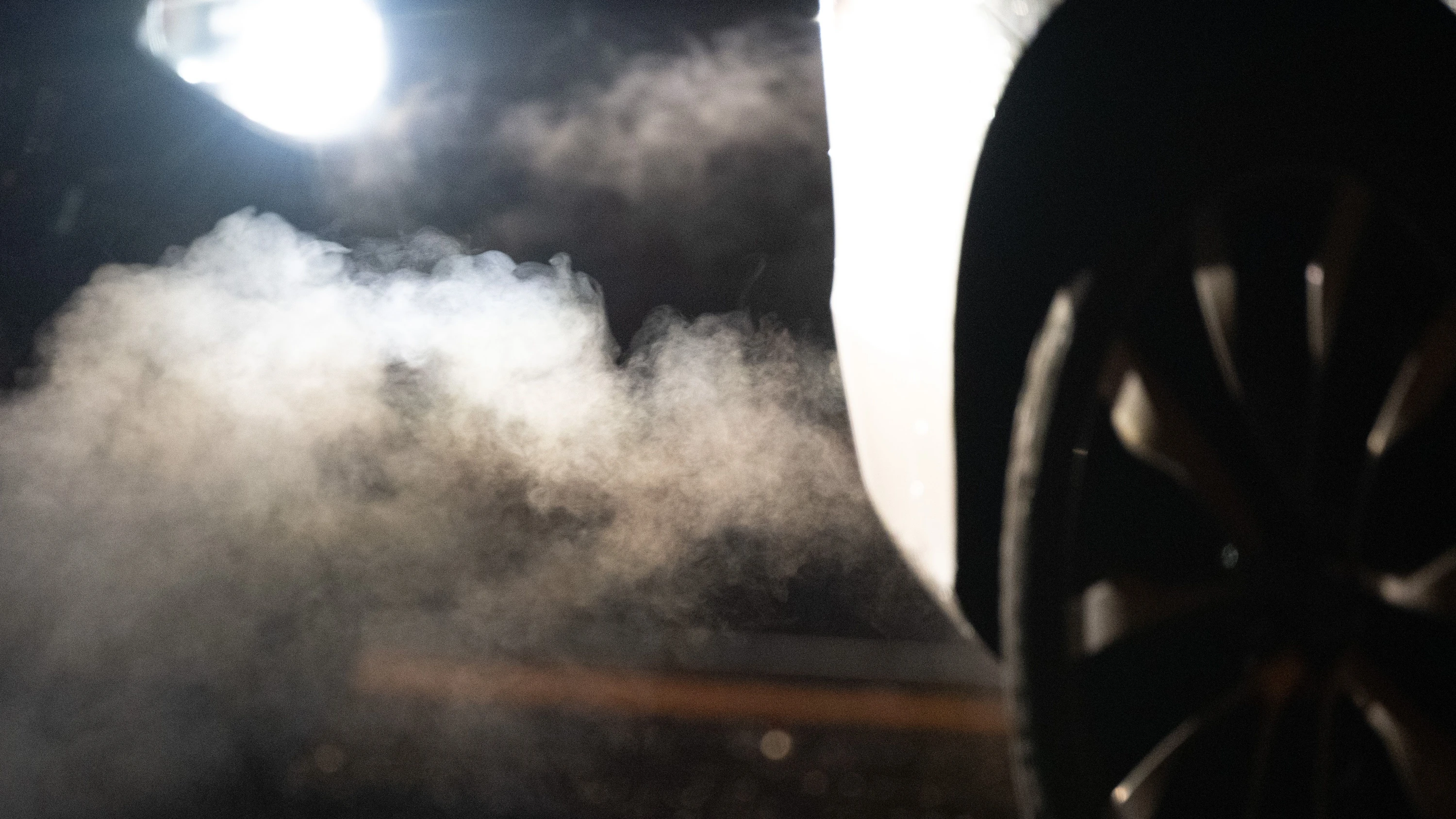
Aufregerstudie der TUM: Sind Elektroautos weniger klimafreundlich als gedacht? Mit einer neuen Studie wollen Forscher der Technischen Universität München eine alte Streitfrage lösen. An den Ergebnissen gibt es aber auch Kritik.
faz · about 2 hours ago
Renewables key to cutting fossil fuel use and stabilising energy prices, European Environment Agency says Energy prices remain a major concern for European citizens, with households and businesses exposed to the increasing volatility of global energy markets. The European Environment Agency sees a clear long-term solution: accelerating the shift to renewable energy.
europeannewsroom.com · about 2 hours ago
Klimabilanz von E-Autos: Die Auto-Lüge der EU gibt es nicht Schon vor der Veröffentlichung hat ein Papier zur Klimabilanz von E-Autos politischen Wirbel verursacht. Die Erkenntnisse sind aber nicht neu und eher trivial. (Elektroauto, Politik)
golem.de · about 2 hours ago
EU-Erdbeobachtungsprogramm – Die Schweiz macht bei Copernicus nicht mit – was das bedeutet Die Copernicus-Satelliten liefern wichtige Klimadaten. Trotzdem hat der Bundesrat erneut auf eine Teilnahme verzichtet.
srf.ch · about 2 hours ago

Der Irrtum vom grünen E-Auto Die CO2‑Bilanz von E-Autos ist schlechter als behauptet. Von der Förderung profitieren vor allem Wohlhabende. Höchste Zeit, den Sonderstatus des Klimaschutz-Maskottchens abzuschaffen.
welt.de · about 2 hours ago

„Wir plädieren dafür, technologieoffen zu sein Wissenschaftler der TU München werfen der EU „Fehlsteuerung bei den Klimazielen für Autos vor. „Es braucht unterschiedliche Technologien entlang des gesamten Rucksacks des CO2-Abdrucks, so Thomas Hofmann, Präsident der TU München.
welt.de · about 2 hours ago

Wie klimafreundlich sind E-Autos? TU München stellt EU-Position infrage Wissenschaftler der TU München werfen der EU vor, die Autohersteller beim Klimaschutz in die falsche Richtung zu lenken. Eine Grundannahme der EU widerlegt ihre Studie allerdings nicht. Das steht wirklich drin.
welt.de · about 2 hours ago
CO2-Emissionen: TU München wirft EU falsche Klimavorgaben für Autos vor Wissenschaftler der TU München werfen der EU „Fehlsteuerung bei den Klimazielen für Autos vor. Sie kritisieren mehrere Punkte bei der Regulierung.
handelsblatt · about 2 hours ago
Energie: China gewinnt erstmals mehr Strom mit Solarzellen als mit Kohle China ist Weltmeister im Ausbau der Solarenergie. Doch das Land gilt auch als großer Klimasünder und will nicht von der Kohle lassen. Nun hat das Land einen Meilenstein erreicht.
handelsblatt · about 2 hours ago
Studie zu CO₂-Emissionen von E-Autos: Kein Argument fürs Aus vom Verbrenner-Aus Ein Bericht der TU München macht Furore. Er zeigt auf, dass E-Autos mehr CO₂ ausstoßen, als die EU angibt. Doch auch der Bericht selbst stößt auf Kritik. mehr...
taz.de · about 2 hours ago
China: Solarstrom überholt Kohle
orf.at · about 2 hours ago
Emotions beat facts at promoting climate action, says study To do more to protect the climate, we need emotion rather than just facts. A study from Geneva shows that images and emotional stories are more likely to motivate people to take action than scientific evidence. A research team from the University of Geneva (UNIGE) analysed 71 studies involving a total of 216,000 participants for the study, the university announced on Tuesday. The researchers compared the impact of 15 different communication strategies on climate change. The analysis revealed that almost all the strategies examined had a positive effect on intentions, behaviour and support for climate policy measures. These included, for example, presenting facts, evoking emotions, or approaches that highlight the financial or health consequences of climate change. The only strategy found to be of little or no effectiveness was messages targeting individual and collective responsibility. According to the researchers, such appeals can even provoke mistrust. Fiction beats facts ...
swissinfo · about 2 hours ago
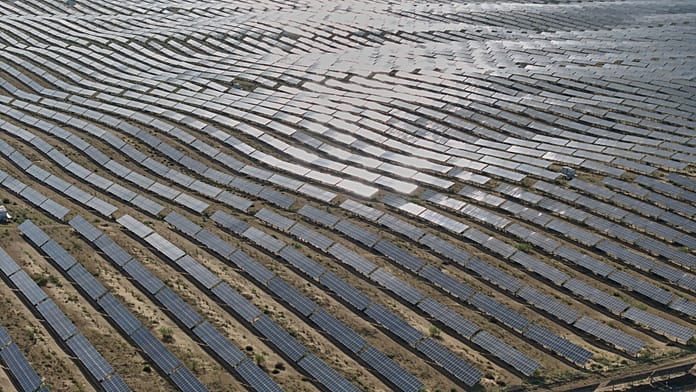
Solar outpaces coal for the first time in China: How does Europe compare? China has seen an explosive growth in its renewable installation, with coals share in its energy mix edging down in recent years.
euronews · about 2 hours ago

Solar overtakes coal as Chinas largest source of installed power capacity reut.rs/4i6fsJM
bluesky_Reuters · about 2 hours ago
« La Chine a un problème demploi, quoi quen disent ses statistiques » Les autorités chinoises utilisent de nombreuses méthodes pour masquer les taux réels du chômage, en particulier celui des jeunes, afin déviter une gronde sociale, observe le journaliste Harold Thibault dans sa chronique au « Monde ».
le monde · about 2 hours ago
Umweltziele: Tesla senkt Wasserverbrauch in Grünheide erneut Der US-Elektroautobauer stellt seinen zweiten Umweltbericht im Rahmen des EMAS-Umweltsiegels vor. Dabei hat Tesla viele selbst gesteckte Ziele erfüllt - eines allerdings nicht.
tagesspiegel · about 2 hours ago