Loading…
 Tuesday, July 28Tuesday, July 28
Over 250 AI-generated Instagram profiles are providing unfounded health advice to more than 53 million followers across seven languages, according to an investigation by Maldita.es. These profiles have collectively made over 45,600 posts, often using synthetic content to promote health products and advice.
The profiles, which have been active since as early as December 2014, use artificial intelligence to create content that is often eye-catching, repetitive, and incoherent. This content, dubbed "AI slop," is designed to go viral and generate revenue through affiliate marketing and product sales.
Many of these profiles redirect users to external websites, primarily Amazon, to sell dietary supplements, books, and other products. Over half of the profiles analyzed (56.4%) include links to these sites, where they may be generating income through affiliate programs.
Some profiles pose as doctors or healthcare professionals, a practice that is illegal in countries like Spain. These accounts, which have a combined total of over 3.6 million followers, often use imagery associated with medicine, such as stethoscopes and white coats, to lend credibility to their advice.
Experts warn that the misinformation spread by these accounts can have serious consequences for public health. Emilio José Molina, vice-president of the Association for the Protection of Patients from Pseudo-scientific Therapies (APETP), told Maldita.es that the content infringes on constitutional rights, such as the right to accurate information and the protection of public health.
The profiles use various personas to convey their messages, including holistic experts, wise elders, and religious figures. Some accounts even use AI-generated images of Asian, Indigenous, and Black people to peddle so-called remedies based on ancestral wisdom.
The investigation by Maldita.es found that these accounts often use stereotypes and cultural appropriation to lend credibility to their advice. For example, some profiles depict elderly Latin American women or Amish community members sharing health tips.
The content created by these profiles is often grotesque or eye-catching, designed to grab users' attention. Videos feature scenes such as brains infested with worms or feet with holes oozing pus, which are meant to shock and engage viewers.
Despite the presence of Meta's AI Information label and watermarks indicating synthetic content, many users still perceive the messages as credible. Psychologist Natalia Martín explains that confirmation bias makes it easier for people to accept information that aligns with their existing beliefs.
The investigation also found that some of these profiles have been verified by Meta, with the blue verification badge intended to guarantee the authenticity of the account. However, this verification does not prevent these accounts from spreading misinformation.
The profiles analyzed by Maldita.es were created between December 2014 and June 2026 and had more than 53.7 million followers at the time of data collection. Some of the profiles have since been removed from the platform.
Experts emphasize the importance of critical thinking and media literacy in combating the spread of misinformation.
Follow us for live European news
5 further sources not geolocated

White House posts bizarre Rick and Morty-style cartoon of Trump and Vance after creators revealing admission People cant afford gas, groceries, rent, and healthcare, former congresswoman Marjorie Taylor Greene said in response to parody video featuring robot Chuck Schumer as a robot
independent · about 11 hours ago
Bill Oddie, wildlife presenter and star of British comedy series The Goodies, dies at 85 UK television personality Bill Oddie, best known for his role in the television comedy series The Goodies and presenter of nature programmes, has died aged 85, his agent said on Monday. Bill was a multitalented celebrity – wildlife presenter, broadcaster, comedian, writer, songwriter, musician and conservationist, Oddies agent David Foster said in a statement. Yet it was never fame that he valued. Instead he encouraged us to respect and protect the environment. He taught us the wonder of...
south china morning post · about 11 hours ago

Tartuff to show 21 films and shorts at extended film festival The 21st iteration of the Tartu-based film festival, Tartuff, will show a total of 13 feature films and 8 short films from Europe, Asia, the Americas, and Australia this year.
news.err · about 11 hours ago

Sarajevo Film Festival to honour Mexican actor Diego Luna, Irans filmmaker Farhadi reut.rs/3TCBdGH
bluesky_Reuters · about 11 hours ago
Estonian film Morten wins three awards at Italian film festival - The Baltic Times TALLINN – Director Ivan Pavljutškovs debut feature film "Morten" won three awards at the Giffoni Film Festival for c......
baltic times · about 11 hours ago
Βίντεο: Η στιγμή που καρχαρίας επιτίθεται σε influencer με ψαροντούφεκο στα Φίτζι Ο Χένρι δημοσίευσε στο Instagram βίντεο από την επίθεση και αναφέρει πως νιώθει «τυχερός που έχω ακόμα το πόδι μου, που μπορώ να το χρησιμοποιώ και αναρρώνω»
protothema · about 11 hours ago
Kopie filmu Odyssea se objevila na více než 2 hodiny na síti X. ‚Jak to Nolan zamýšlel, žertují uživatelé Nový film Christophera Nolana Odyssea o víkendu unikl na sociální síť X a než byly dotyčné účty pozastaveny, zhlédly jej více než dva miliony lidí. S odkazem na média o tom v pondělí informoval server stanice BBC.
irozhlas.cz · about 11 hours ago

Facebook plant großen Umbau und will aussehen wie Tiktok Die Meta-Tochter will den Usern mehr "immersive, visuelle und videoorientierte Erfahrung" bieten. Statt dem klassischen Feed soll nach dem Start der App ein Full-Screen-Video auftauchen
der standard · about 11 hours ago

A new Hello Kitty hotel in Tokyo allows guests to check-in but not stay At this hotel-inspired exhibition in Tokyo, Sanrio fans can check-in with a room key, explore rooms, a garden and beach zone, but cant stay the night.
euronews · about 11 hours ago
Why one smoker gets cancer and another doesnt: a study provides clues For the first time scientists provided evidence on the effect genetic makeup has on developing cancer, underscoring the need to take personalised care into account.
euronews · about 11 hours ago
Latest news bulletin | July 27th, 2026 – Evening Catch up with the most important stories from around Europe and beyond this July 27th, 2026 - latest news, breaking news, World, Business, Entertainment, Politics, Culture, Travel.
euronews · about 11 hours ago
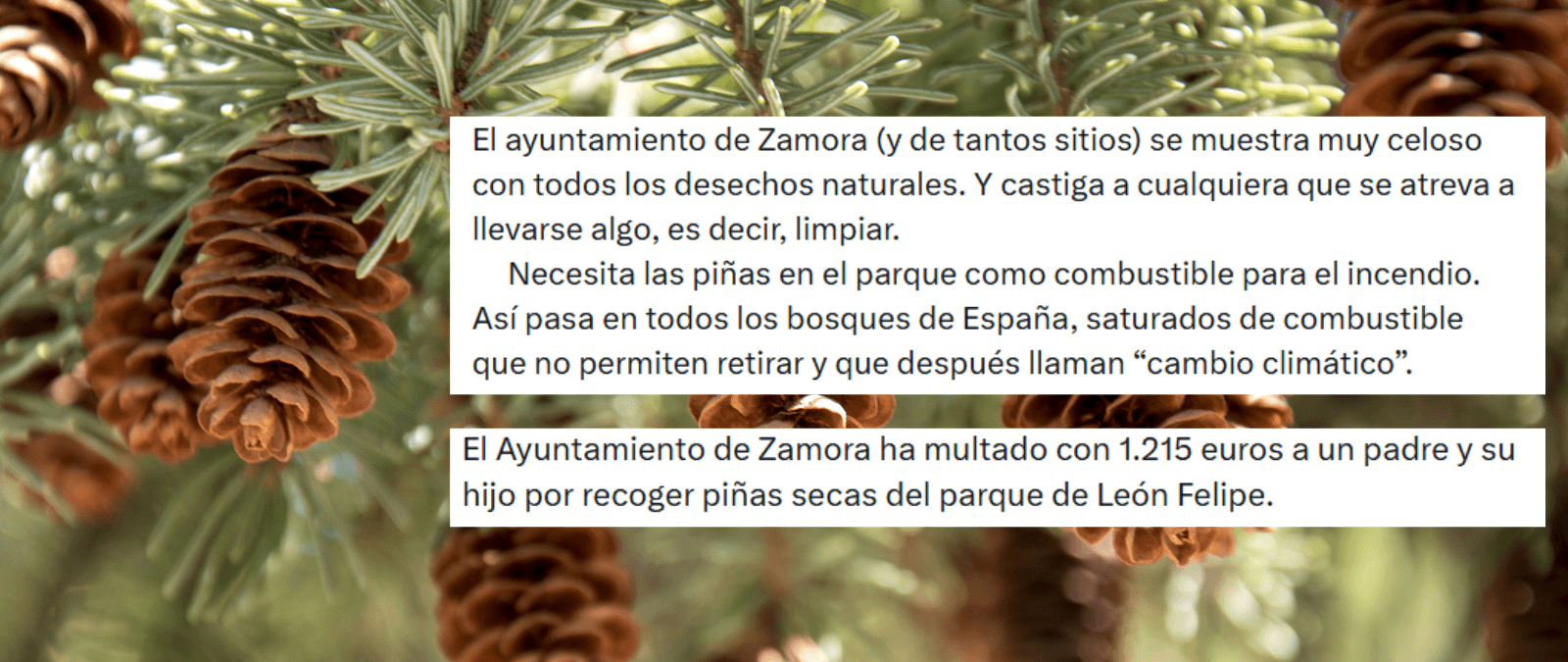
Qué sabemos de la multa del Ayuntamiento de Zamora a un padre y su hijo por recoger piñas de un parque: pasó en 2011, pero el Ayuntamiento mantiene la ordenanza 📲 ¡Pincha aquí y sigue el canal de WhatsApp de Maldita.es para que no te la cuelen! La Ordenanza de Convivencia Ciudadana y Prevención de Actos Vandálicos de Zamora, que regula este tipo de conductas, se aprobó en 2011 y fue reformada en 2013, y continúa en vigor en la actualidad, según el Ayuntamiento de Zamora. Su artículo 39.3 recoge las acciones prohibidas en parques, jardines y vía pública, entre ellas la recolección no autorizada de este tipo de frutos.
maldita · about 12 hours ago
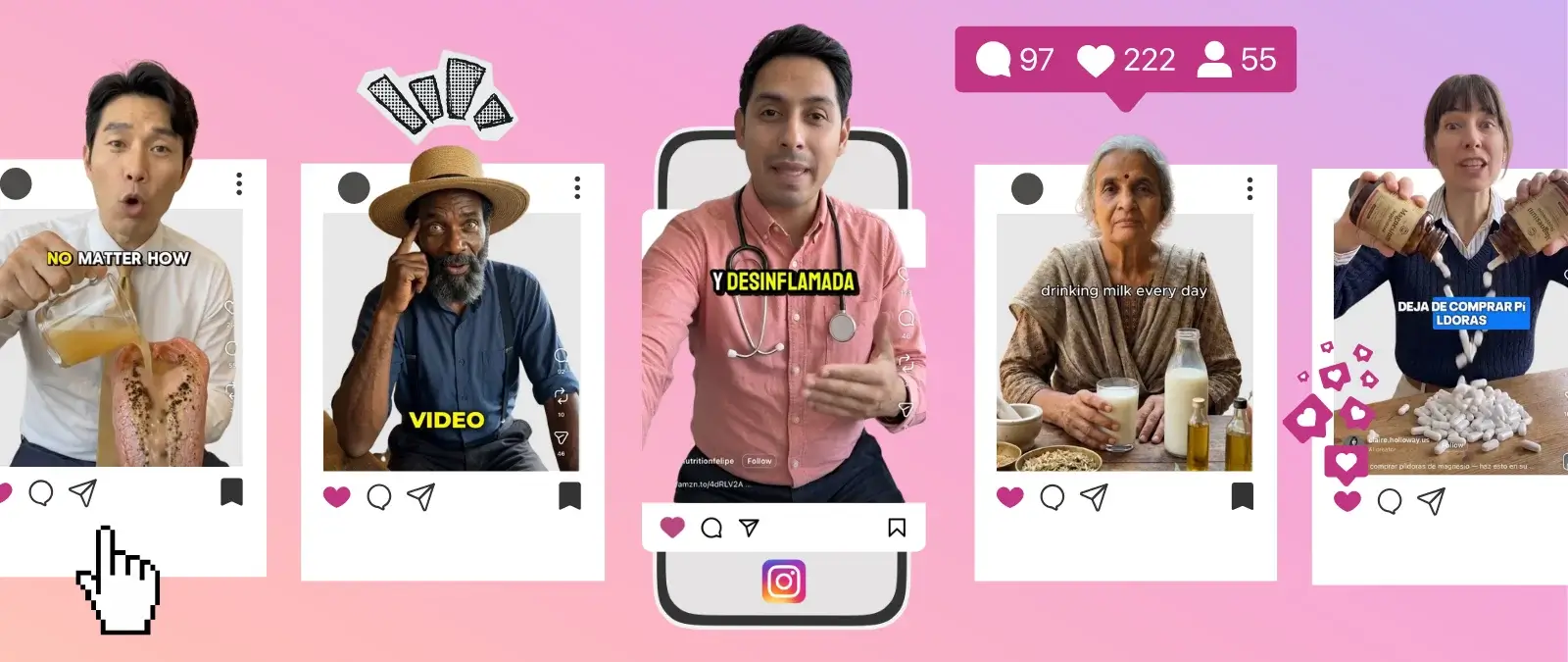
La red coordinada de 250 cuentas de AI slop en Instagram para venderte suplementos de salud: patrones idénticos buscando monetizar Las similitudes entre el perfil de Instagram llamado Eli Hosteler (@eli.hosteler), que se describe como un herbolario amish que vive en Estados Unidos, con el de Ernesto Salute (@ernestosalute), que dice habitar en la región italiana de Trentino o con el monje Fray Lorenzo (@fraylorenzoreflexiones) son mayores que las diferencias. Todos los protagonistas han sido generados con inteligencia artificial (IA), la mayoría de los perfiles se han creado durante este 2026, las descripciones de estos presentan la misma estructura, casi todos pretenden venderte algo, normalmente suplementos o libros y guías con indicios de haber sido escritas también con IA.Estas características y otras tantas, son una evidencia de coordinación y de uso de plantillas similares, con las que pueden crear perfiles masivamente y mediante las que se han replicado 250 cuentas analizadas por Maldita.es. El objetivo, nos dice el experto en ciberseguridad y maldito que nos ha prestado sus superpoderes Daniel Fernández-Viagas, es probar nichos y ganar dinero vendiendo suplementos y guías.Casi el 77 de las cuentas se han creado en 2026Si hacemos un análisis de las 250 cuentas que hemos monitoreado, 192 han sido creadas entre los meses de enero y junio de 2026, lo que indicaría que la red comenzó a operar activamente en esas fechas. Los meses en los que más cuentas de Instagram se crearon fueron marzo y abril con un total de 48 nuevos perfiles cada mes.Aunque existen cuentas creadas en años anteriores, los primeros vídeos disponibles en esos perfiles son recientes. Un ejemplo: las primeras publicaciones de las cinco cuentas creadas en 2022 se hicieron entre 2025 y 2026. Algunos de los vídeos iniciales abordan contenidos que nada tienen que ver con lo que publican ahora. Por ejemplo, los primeros vídeos, publicados en febrero de 2025, de la cuenta de Jae Kim Skin, creada en 2022, son sobre padres y recién nacidos. Ahora, este perfil es un supuesto experto en cuidado facial y no publica nada sobre padres y bebés, una evidencia clara de que, como explicaba Daniel Fernández-Viagas, se están probando nichos.Otro indicativo de que esta operación ha comenzado recientemente es que 131 cuentas de las 250 analizadas por Maldita.es han sufrido, al menos una vez, un cambio de nombre. De hecho, algunas, como Herbalance Lab, acumulanhasta 11 cambios de nombre desde su creación en 2022, aunque su primer vídeo visible se publicó el 1 de enero de 2026.Cambios de nombres en las cuentas de @herbalance_lab, @marjorieholistics y @voxayomiPor otro lado, encontramos que más de la mitad de las cuentas, el 57,4, sigue a otras cuentas de la red. Por ejemplo, Paulina Secretos Salud sigue a Amish Folk Remedies (Remedios populares amish en su traducción al español), Grandma June, Holistic Chen o Mother Juba (Madre Juba), entre otros. Mother Juba, a su vez, sigue a Shaman Glenroy, un perfil de un supuesto chamán, que a su vez sigue a la doctora Dr. Miriam Beiler, que se describe como Doctora en Medicina Tradicional Americana y que vende bebida energética de yerba mate. Y así sucesivamente.La cuenta de Paulina Secretos Salud sigue a Mother Juba, que a su vez sigue a Shaman Glenroy, que sigue a Miriam Beiler. A las redes sociales les da igual. A nosotros no. Ayúdanos a investigar. DONA Los monjes Chen y otros perfiles que comparten patrones similaresOtra evidencia de coordinación entre estas cuentas son los nombres que eligen para estos personajes creados con IA, que en ocasiones son muy similares y presentan breves variaciones. Un ejemplo: 12 cuentas llevan en su nombre de usuario la palabra wellness: WellnessMaddie, wellnesswithjacob1 o Mayalin_wellness; tres la palabra abuela en español: abuela_lopez7, Abuela.Remedies y Abuela Rosa y una en inglés grandmatruth o en masculino Granddad Roy. Otras 14 utilizan health (salud) o healthy (saludable); cinco contienen herbal y otras cinco holistic, entre otras.Muestra de perfiles que llevan en su nombre o handle la palabra health (salud), wellness (bienestar) o abuela.Muchos perfiles no tienen solo nombres o personajes casi idénticos, sino que usan la misma foto de perfil y los mismos nombres, aunque uno en español y otro en inglés. Es el caso de dos cuentas de monjes llamados Chen (@monch_chen y @monjechen). Es un nombre que usan con constancia. Precisamente encontramos seis cuentas que llevan el nombre Chen: @chenwei.sante, Chen Lao (@chen.lao12), Leo Chen (@leo.chenn_), Monch chen (@monch_chen), Mei Lin Chen (@vovomeii) y Monaco Chen (@monacochenn) y tres cuentas con que usan Shen Shen Mu (@shenmuhealer), Shen Yu (@monkshen) y Ravi Shen (@oravishen). Los perfiles de Monch Chen y Monje Chen.Los elementos que aparecen en los vídeos también se repiten en estos perfiles. Por ejemplo, la bandera de Estados Unidos está presente en muchos de ellos. También observamos que los personajes aparecen de forma habitual delante o dentro de supuestos grandes almacenes como Costco o Walmart. El experto en ciberseguridad enfatiza en que este uso de bandera y lenguaje orientado a Estados Unidos se debe a una segmentación demográfica y cultural para vender los productos.Muestra de vídeos donde aparecen la bandera de Estados Unidos o la marca de una cadena de supermercados. ¿Crees que te ha llegado un bulo? Verifica en nuestro chatbot de WhatsApp (+34 644 229 319) Misma tipología de perfiles, localizaciones y descripciones de cuentaLas 250 cuentas giran alrededor de cuatro categorías de perfiles de personas, principalmente: ancianos del campo, holísticos, chamanes u orientales y religiosos. Si atendemos a sus descripciones, casi todos comparten la misma estructura: tres líneas de texto y un enlace. Un intento de mostrar autoridad, pero vendiendo soluciones que no están probadas, no son científicas o no están validadas, explica Fernández-Viagas.Entre las palabras más usadas en estas descripciones de perfiles destacan health (salud), wellness (bienestar); years (años), natural, holistic (holística) o wisdom, (sabiduría). Esas palabras están en inglés, debido a que un 61,2 de estos perfiles son en ese idioma. Le sigue el español con 50 perfiles. Respecto al país en el que Instagram ubica estas cuentas, más de la mitad (132 de las 250) están en Estados Unidos. El resto se ubica en otros países como España (15), Francia (19), Brasil (18), Reino Unido (12), Canadá (8) o Alemania (8), entre otros. Más de la mitad de las cuentas tienen su ubicación de Instagram en Estados Unidos Listado de países en los que están ubicadas las 250* cuentas, según la información disponible en Instagram. La longitud de cada barra representa el porcentaje de perfiles ubicados en cada país. Estados Unidos Francia España Brasil Reino Unido Alemania Canadá Italia Australia —No compartida Suecia Indonesia *Se han eliminado de la visualización los siguientes países por representar menos del 1: Argentina, Portugal, Vietnam, Benín, Bélgica, Colombia, Emiratos Árabes Unidos, Georgia, Luxemburgo, Marruecos, Montenegro, Myanmar, Palestina, Perú, Polonia, Rumanía, Rusia y Tailandia. Las descripciones de los perfiles, además, se caracterizan por el uso de fórmulas similares, que constan de cuatro partes:Presentación del experto o referente: experto holístico, especialista en bienestar, miembro de la comunidad amish, etc.Autoridad: te dicen por qué deberías confiar en ellos con frases como Basado en la sabiduría ancestral, Certificado, Más de 10 años de experiencia, así como otras.Beneficio: lo que obtendrían aquellos que los sigan: consejos de salud, secretos de bienestar, longevidad.Lo que tienes que hacer, la llamada a la acción: síguenos para recibir consejos de salud diarios, consigue mi guía, enlace abajo y haz click aquí. Muestra de descripciones de perfiles que, como podemos observar, responden al mismo tipo de estructura.Esto indicaría que la mayoría de perfiles analizados responden al uso de plantillas para elaborar estas descripciones, sustituyendo alguna de las variables para que estos no sean idénticos. Existen colecciones públicas y comerciales de prompts y plantillas optimizadas para generar scripts (guiones) y textos breves como estas descripciones de los perfiles, al igual que contenidos generados por usuarios con un componente claro de crear avatares que inspiren credibilidad o cercanía, explica el experto en privacidad y ciberseguridad, Daniel Fernández-Viagas. Es relativamente barato y rápido producir gran volumen de cuentas y vídeos y la barrera técnica es baja, por eso se masifica y además a muchos les funciona y están ganando dinero rápido, añade.Otra característica que comparten es el uso de emojis, más del 95 de los perfiles lleva alguno en la descripción del perfil, destacando los siguientes: 👇, 🌿, 🇺🇸, ⬇️, ✨, 🌱, 👇🏻, 📖. Según el experto en ciberseguridad la recurrencia del mismo set de emojis y fórmulas acorta el tiempo de creación y mantiene consistencia de marca.El 56 de las cuentas vende algún tipo de suplemento y un 32, libros o guías con indicios de haber sido creados con IATodos estos perfiles, además, tienen un propósito: ganar seguidores y que estos compren el producto que venden haciendo clic en un enlace que tienen visible en la biografía de su perfil o en alguna de sus publicaciones. Aunque no todos venden lo mismo, la mayoría ofrecen suplementos como raíz de remolacha, de rhodiola o probióticos. Más de la mitad de las cuentas (56) venden algún tipo de complemento alimenticio, principalmente a través de Amazon, pero también de otras webs externas. No obstante, muchos de los productos que se anuncian para Estados Unidos no se venden en Amazon España.Asimismo, un 32,4 de los perfiles que analizamos vende algún tipo de guía o libro, que son el segundo tipo de producto más ofrecido después de los suplementos. De hecho, 11 cuentas, mayoritariamente dirigidas al público hispanohablante de Estados Unidos, vende el libro 200 Soluciones Naturales para Problemas Cotidianos de una tal Marina López, autora de la que no hay rastro. También encontramos perfiles, como el de Fray Lorenzo Reflexiones, que venden guías propias. Este fraile hecho con IA proporciona en la biografía de su perfil un enlace que redirige a una web con el mismo nombre y que dice estar ubicada en Logroño (La Rioja, España). Dentro de la web también aparece el supuesto fraile hecho con IA y se pueden ver imágenes de personas con el libro, que se vende a 9,99 euros, también creadas con esta tecnología. Maldita.es ha escrito tanto a través de la web como por la dirección de email que aparece en la misma preguntando quién ha escrito el libro y si nos podían dar cualquier información sobre quién hay detrás pero no hemos obtenido respuesta a fecha de publicación de este artículo. La página web de la guía que vende el monje Chen es idéntica a la guía que promociona Fray Lorenzo. Ambas, además, al mismo precio, 9,99, aunque tanto una como otra aseguran que se trata de una rebaja y que el precio original es 19,99 euros. Otro detalle: en las dos paginas web de venta aparece una misma reseña, en teoría, de un usuario llamado María R. Estas similitudes son habituales en las páginas web donde la red vende estas guías y libros. En Maldita.es, además, ya hemos advertido del uso de reseñas falsas para dar credibilidad a servicios. Páginas web donde se vende el libro que anuncia el perfil del Monje Chen y el que anuncia Fray Lorenzo.Otros libros afirman estar relacionados con remedios ancestrales, temática budista o rituales ancestrales, entre otros. Todos presentan características similares e indicios de haber sido creados con IA: por ejemplo, no encontramos ninguna información de la autora Marina Martín, la supuesta autora del libro 200 Soluciones Naturales para Problemas Cotidianos; no hay rastro del supuesto Fray Lorenzo o del Monje Chen, ya que las imágenes en las que ambos aparecen han sido generadas con IA y en las dos páginas web, que son idénticas, encontramos la misma reseña de una tal María R. En ningún caso ofrecen pruebas de que exista una persona real escribiendo esos libros o de que esos religiosos sean personas reales.En este artículo ha colaborado con sus superpoderes el maldito Daniel Fernández-Viagas, experto en privacidad y ciberseguridad.Gracias a vuestros superpoderes, conocimientos y experiencia podemos luchar más y mejor contra la mentira. La comunidad de Maldita.es sois imprescindibles para parar la desinformación. Ayúdanos en esta batalla: mándanos los bulos que te lleguen a nuestro servicio de WhatsApp, préstanos tus superpoderes, difunde nuestros desmentidos y hazte Embajador. Metodología Para este artículo, Maldita.es ha recopilado 250 cuentas de Instagram que utilizan inteligencia artificial para difundir contenidos sobre salud. Algunos de estos perfiles han aparecido de forma orgánica en el feed de la plataforma, mientras que otros se han añadido después de realizar una búsqueda entre los seguidores de las primeras cuentas recopiladas. Fueron creadas entre diciembre de 2014 y junio de 2026 y, en el momento de recogida de los datos (realizada entre el 20 y el 21 de julio de 2026), sumaban más de 12,6 millones de seguidores y más de 5.400 publicaciones. A 27 de julio, algunos de los perfiles han sido eliminados de la plataforma. Para cada una de estas cuentas se ha recopilado la siguiente información: enlace (también archivado o con una captura de pantalla si no era posible), nombre de usuario y nombre de perfil (no tiene por qué coincidir con el nombre de usuario y puede coexistir con el de otros usuarios), número de identificación de la plataforma (extraído con una herramienta de My OSINT Tools), si estaba verificada o no, el número de veces que se ha cambiado de nombre, el país que recoge la plataforma (la cual explica en su página web que se determina según la actividad de la cuenta), el texto de la biografía, la fecha de creación, número de publicaciones, seguidores y usuarios a los que sigue. Se ha comprobado también para todas y cada una de las 250 cuentas si entre los seguidos había otros perfiles con las mismas características. Para facilitar el análisis posterior, se han categorizado los perfiles dentro de la base de datos como Ancianos sabios (cuentas que muestran a personas mayores dando consejos de salud en diferentes contextos), Holísticos (aquellos perfiles que utilizan este término o similar en su biografía o que ambientan su contenido en supuestas consultas médicas), Religiosos/predicadores (cuentas cuyos protagonistas simulaban ser monjas, curas o personas de la comunidad amish) y Sabiduría ancestral (representaciones de comunidades asociadas con estos estereotipos, como personas africanas, monjes o de la India que se vincula con supuestos conocimientos ancestrales). Se ha recopilado y analizado también los enlaces disponibles tanto en la biografía como en otras secciones del perfil como pueden ser, por ejemplo, las historias destacadas. En total, 40 de las 50 cuentas disponían de una URL visible en la que vendían algún tipo de producto en diferentes plataformas externas. Se ha utilizado una VPN (Red Privada Virtual) extranjera para acceder a aquellos productos no disponibles en España. Se ha recopilado el precio más bajo de cada uno de estos artículos contemplando los descuentos habilitados en el momento de la recogida de datos. Para identificar si los contenidos están generados con inteligencia artificial se ha utilizado Gemini, la IA de Google, que es capaz de detectar la marca de agua de SynthID, una tecnología imperceptible para el ojo humano que identifica contenidos generados con sus modelos de IA. Algunos contenidos contaban con la marca de agua visible en el vídeo. Nuestras observaciones nos han permitido comprobar que hay más cuentas con estas características disponibles en la plataforma, por lo que la muestra incluída en este artículo no abarca la totalidad de perfiles pero sí representa el fenómeno. Si tienes cualquier duda puedes consultarnos en investigacion@maldita.es. Si tienes cualquier duda puedes consultarnos en investigacion@maldita.es
maldita · about 12 hours ago
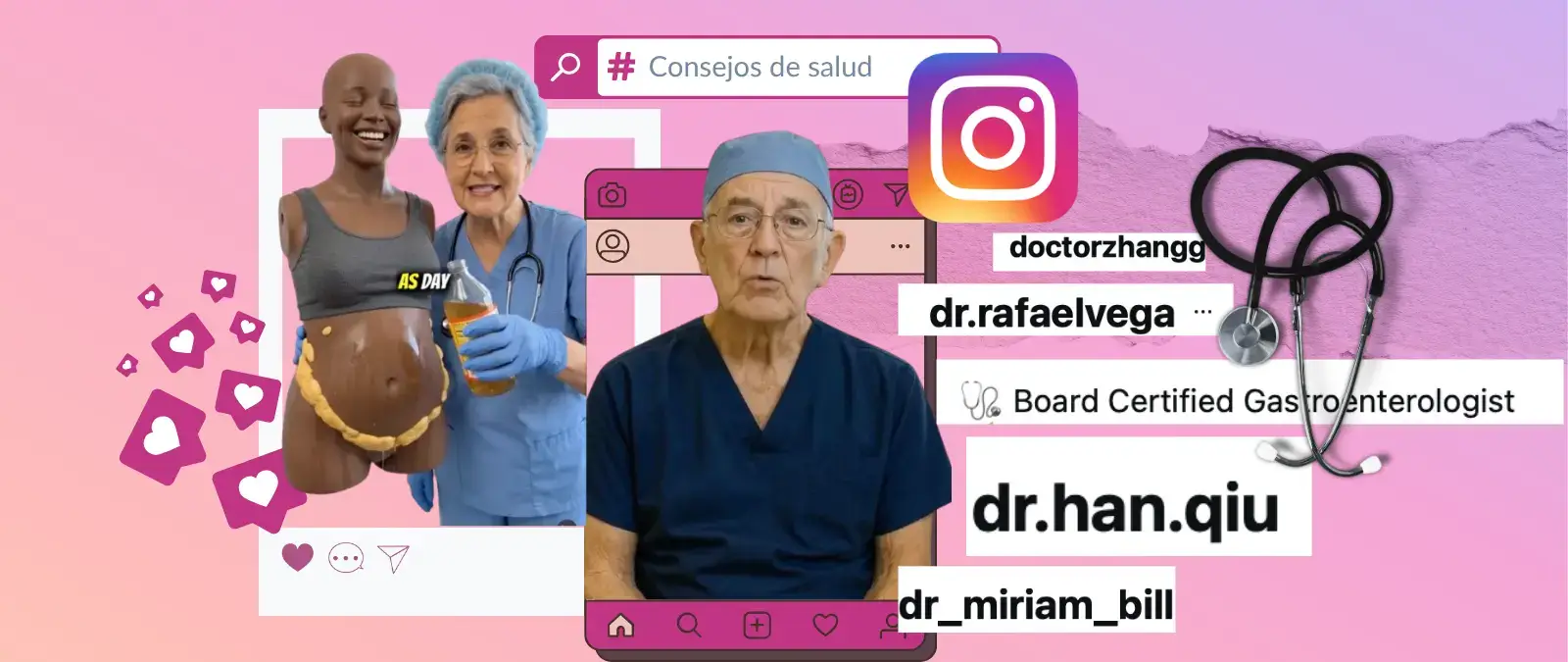
Médicos generados con IA en Instagram para venderte productos sin autorización sanitaria: más de 397 millones de visualizaciones En un vídeo que suma más de 49 millones de reproducciones en Instagram, el doctor Huang explica cómo disolver las piedras en el riñón con agua de coco, aceite de oliva y zumo de limón en sólo tres días. No hace falta decir que el remedio es falso, pero es que este doctor tampoco existe en realidad. Sus vídeos están generados con inteligencia artificial, al igual que los de otras 25 cuentas de usuarios que se hacen llamar doctor o dr. y que suelen aparecer con bata blanca y fonendoscopio dando consejos médicos. Las cuentas acumulan más de 3,6 millones de seguidores a fecha de julio de 2026, a pesar de que el 96 de ellas no tiene ni un año de antigüedad.En España el artículo 403 del Código Penal castiga a quien ejerce actos propios de una profesión como la de médico sin tener el título correspondiente y lo hace más gravemente a quien se atribuye públicamente la condición de médico sin tenerla. Además, el Tribunal Supremo ha valorado en sus sentencias que algunos condenados por este delito se habían aprovechado del engaño creando la creencia generalizada de que eran médicos mediante una puesta en escena. Esto es ilegal en la vida real, y también online. Entre las cuentas identificadas por Maldita.es es habitual la puesta en escena en una consulta, junto a un paciente que está en una camilla, o llevando elementos que tradicionalmente se asocian con estos profesionales sanitarios. El doctor creado con IA que aparece en los vídeos de la cuenta Felipe Nutrition, por ejemplo, lleva en su foto de perfil un fonendoscopio y en ocasiones bata blanca y guantes estériles. La primera línea de su biografía en Instagram es cardiología y sus consejos en español tienen más de 650.000 seguidores.El 64 de estos doctores vende productos desde su perfil en InstagramEn la descripción de su cuenta, Felipe Nutrition incluye enlaces a su remedio favorito, que se venden en Amazon. Es lo mismo que hacen otros perfiles hechos con IA como el Dr. Kendrick Harris o el Dr. Marcus Wolfe, pero en este caso lo que venden es Yerba Magic, un producto que se define como una super bebida instantánea en polvo que aporta energía limpia, claridad mental y bienestar intestinal. El producto lo promocionan varias de estas cuentas (el 20), pero no es ni mucho menos el único que venden. El doctor Salori, por ejemplo, promociona ante sus más de 700.000 seguidores un superalimento de pan de abeja liofilizado para apoyo de energía, inmunidad y vitalidad del que ya te hemos hablado en Maldita.es y cuyos supuestos beneficios para el sistema inmunitario no están respaldados por la evidencia científica. En la página de Amazon casi todos los productos que anuncian estas cuentas llevan una advertencia que dice que no han sido evaluados por las autoridades sanitarias y que no pretenden diagnosticar, tratar, curar o prevenir ninguna enfermedad o condición de salud.La gran mayoría de los productos promocionados por las cuentas son suplementos alimenticios de diferentes tipos, aunque algunas también promocionan sus propios libros de consejos y algún producto concreto como sérums contra la calvicie. A las redes sociales les da igual. A nosotros no. Ayúdanos a investigar. DONA ¿Qué hace Instagram? Algunas de las cuentas tienen incluso la insignia azul de verificación de MetaEl intrusismo profesional hacia los médicos es un delito en España y también es ilegal la publicidad de productos con pretendida finalidad sanitaria (...) que pretendan aportar testimonios de profesionales sanitarios. Instagram tiene además en la Unión Europea la condición de plataforma en línea de muy gran tamaño, lo que quiere decir que tiene la obligación legal de contar con medidas efectivas de mitigación de riesgos sistémicos como la diseminación de contenido ilegal, o los efectos negativos reales o previsibles en la protección de la salud o los derechos de los consumidores.Por si esto fuera poco, las propias reglas que Meta establece para sus plataformas, incluida Instagram, dicen que se restringirán o inhabilitarán las cuentas que hagan una representación engañosa de la identidad para engañar o confundir. No parece que esa regla se aplique, ya que tres de las cuentas incluso lucen la insignia azul que debería significar que la identidad real de esos usuarios ha sido verificada. En Maldita.es ya hemos investigado cómo Meta verifica cuentas que no pertenecen a las personas que dicen representar y que después se usan para timos y engaños. A finales de 2025, la Comisión Europea impuso una multa de 120 millones de euros a X por incumplir obligaciones del Reglamento de Servicios Digitales. En concreto, por el diseño engañoso de la marca de verificación azul. La investigación concluyó que X no verifica de manera significativa quién está detrás de cada cuenta que obtiene este símbolo, también a través del pago de una suscripción. El de la insignia azul de verificación no es el único uso estratégico que las 25 cuentas hacen de los recursos de la plataforma. Tienen un alcance imposible de lograr si no es mediante la amplificación que ofrece la plataforma a través de sus algoritmos de recomendación: varios tienen un número de visualizaciones más de 200 veces mayor que su número de seguidores. También hacen continuos llamamientos a la interacción, ofreciendo recompensas a los usuarios que comenten sus vídeos, una técnica habitual para lograr más visibilidad por parte de esos algoritmos.Si la plataforma quisiera diseñar una estrategia efectiva de reducción de riesgos para este tipo de fenómeno, no le faltarían lugares donde empezar: quizás habría que tener un cuidado especial con los nombres de usuario que tienen elementos formales, como doctor o dr., o con los avatares que muestran elementos asociados a los médicos, como batas y fonendoscopios. También se podría mejorar el control de las cuentas que hacen publicidad mediante enlaces a plataformas de terceros en los que se hacen advertencias sobre el producto diciendo que no han pasado controles sanitarios y que no pretenden diagnosticar, tratar, curar o prevenir ninguna enfermedad o condición de salud.Las cuentas que hemos seguido en esta parte de la investigación comparten muchos de esos indicadores y otros que las plataformas podrían detectar fácilmente. Todas tratan de un tema especialmente delicado como la salud y publican constantemente contenido generado con IA. También, aunque el 96 de las 25 cuenta analizadas tiene menos de un año, el 44 ya ha cambiado de nombre en al menos alguna ocasión y el contenido de otras hace imposible que pueda pertenecer a un auténtico médico.La cuenta del Doctor Marlon Campbell cambiando de aspecto a lo largo de medio añoLa cuenta que hoy pertenece al Doctor Marlon Campbell y promociona una marca de suplementos alimenticios empezó haciendo vídeos con un limón vestido con bata blanca y uniforme de quirófano, luego pasó a ser un médico con rasgos asiáticos y ahora uno estadounidense con rasgos afroamericanos. La información que hace pública Meta nos permite saber que la cuenta ha cambiado tres veces de nombre desde enero, pero no deja consultar qué nombres concretos ha usado.
maldita · about 12 hours ago
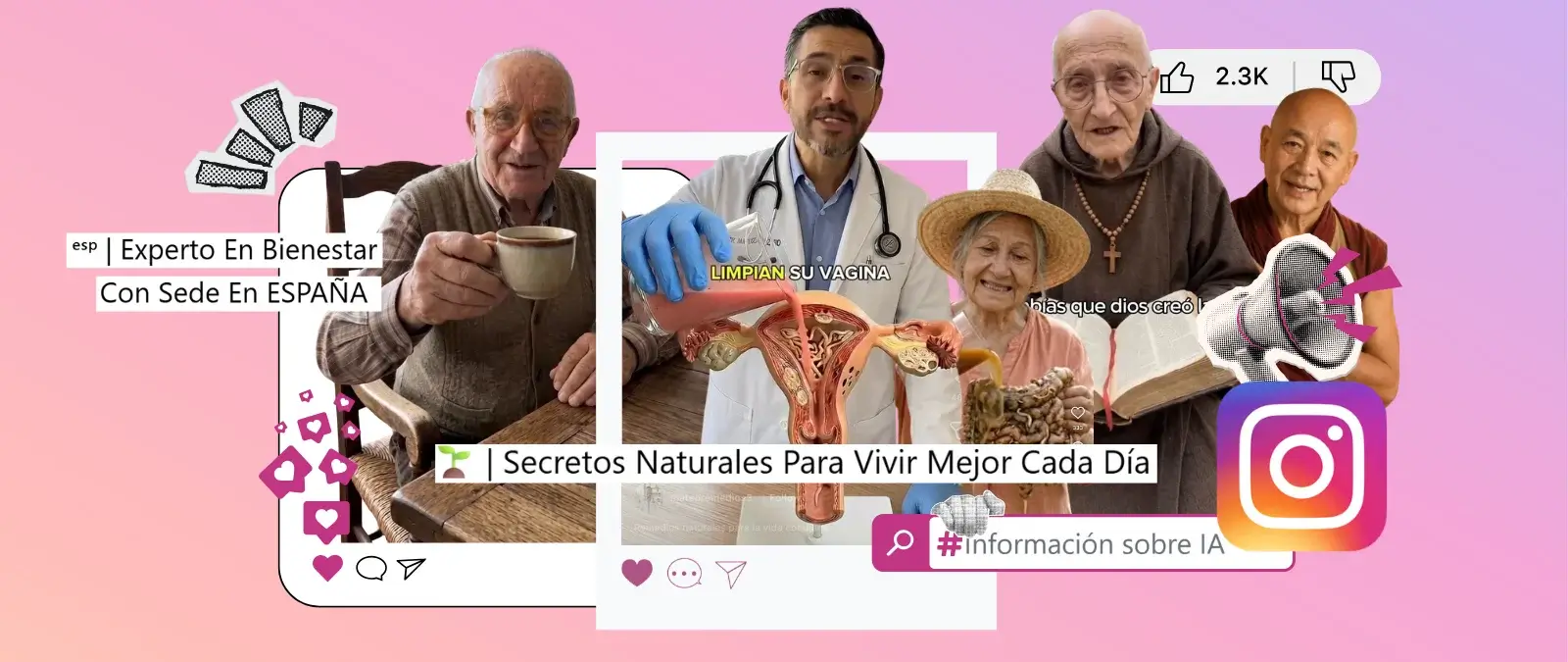
Médicos, curanderos y sanadores: los 50 perfiles de IA en español para venderte falsos consejos de salud en Instagram 📲 ¡Pincha aquí y sigue el canal de WhatsApp de Maldita.es para que no te la cuelen! Más de 5.000 vídeos generados con IA para dar supuestos consejos de salud en españolEl perfil de Instagram paulina.secretos.salud asegura que solo se necesita jengibre machacado en la planta de los pies durante la noche para que desaparezcan los dolores de pies, rodillas y espalda. Los médicos no tienen explicación para esto, dice la protagonista del vídeo, una mujer negra de pelo corto y canoso sentada delante de una bandera de Estados Unidos y varios diplomas (un escenario que pretende simular una consulta médica). Paulina no existe (es un avatar generado con inteligencia artificial) y sus consejos tampoco están respaldados por la evidencia científica.El monje Chen, Paco del Campo y Paulina son tres de los 50 perfiles analizados que utilizan la IA para difundir contenidos desinformadores sobre salud en español dentro de esta plataforma. La mayoría de estas cuentas son relativamente nuevas: el 84 (42) se crearon entre febrero y junio de 2026. En apenas cinco meses estos perfiles han publicado más de 3.100 vídeos (el 57,8 del total de contenidos de todas las cuentas recopiladas). En conjunto, estas 50 cuentas acumulan más de 12,6 millones de seguidores. Dos de las cuentas que utilizan inteligencia artificial para difundir supuestos consejos de salud. Fuente: Instagram.50 cuentas que publican contenido en español desde 14 países diferentesAunque todas estas cuentas publican contenido exclusivamente en español únicamente 17 de ellas están ubicadas en España, Perú o Argentina. Las 34 restantes (para uno de los perfiles no está disponible esta información) están localizadas en otros 11 países de habla no hispana. De hecho, Estados Unidos es el territorio más repetido en la muestra; siendo la ubicación de los perfiles según Instagram en 19 de los 49 casos. Menos del 35 de las cuentas están ubicadas en un país hispanohablante Listado de países en los que están ubicadas las 49* cuentas, según la información disponible en Instagram. Cada emoticono representa a uno de los perfiles. Alemania Argentina Bélgica Brasil España Estados Unidos Francia Georgia Indonesia Marruecos Myanmar Perú Reino Unido Vietnam *No se disponía de esta información para una de las cuentas. Fuente: Instagram Incluso otros perfiles, localizados según la plataforma fuera de Norteamérica, dicen estar relacionados con Estados Unidos. Mateo Rodriguez, perfil ubicado en Alemania, escribe en su biografía: Experta en bienestar afincada en Austin, Texas (sic.). Entre sus contenidos predominan los vídeos cuyos escenarios son cadenas de supermercado americanas como, por ejemplo, Costco, Walmart, Walgreens, Target o Sprouts. El perfil de Samuel, que dice compartir remedios amish que tu doctor nunca te dirá, está ubicado en Bélgica. Sin embargo, en su biografía dice estar basado en los Estados Unidos. En varios de sus vídeos, además, se ven banderas de este país en el fondo, un elemento que aparece constantemente en los vídeos de las cuentas que analizamos. Gemini, la IA de Google, detecta en todos estos contenidos la marca de agua de SynthID, una tecnología imperceptible para el ojo humano que identifica contenidos generados con sus modelos de IA.Perfiles que incluyen referencias a Estados Unidos en sus biografías, a pesar de que están ubicados en otros países. Fuente: Instagram.Remedios y tratamientos que la medicina tradicional no te cuenta y testados durante años, los argumentos que utilizan para convencer a los usuariosLos protagonistas de estas cuentas no son siempre los mismos. Podemos encontrar desde hombres y mujeres del campo, hasta predicadores de diferentes religiones o maestros shaolin (estilo de vida que une el budismo, la meditación zen y las artes marciales). Un rasgo común de todos estos personajes ficticios es su edad: estas cuentas utilizan avatares de edad avanzada. Otro tipo de sujetos habituales en este tipo de cuentas son personajes (también creados con IA) más jóvenes, en entornos que simulan ser consultas médicas o imágenes de perfil vestidos como sanitarios. Se autodenominan expertos en bienestar y en varios ejemplos aparecen términos como salud holística o naturópata. Usan estos personajes como argumento de autoridad, aprovechando la credibilidad popularmente asociada a personas mayores y la reputación de los expertos en salud y científicos.Perfiles que utilizan diferentes protagonistas varios para dar supuestos consejos de salud en sus vídeos generados con inteligencia artificial. Fuente: Instagram.No son las únicas estrategias que utilizan para ganarse la confianza de los usuarios. En sus biografías vemos expresiones como lo que tu abuela sabia y la farmacia no te cuenta, sabiduría ancestral para la vida moderna o conocimientos ancestrales de mi comunidad rural sobre la salud natural para hacer creer que las supuestas claves de salud que proporcionan son remedios o tratamientos que no se encuentran en la medicina basada en la evidencia. Para convencer a los usuarios de que sus métodos han sido testados durante años emplean fórmulas como 40 años de remedios que viví, no que leí, 70 años de remedios naturales o más de 20 años recomendando remedios naturales. Estos mensajes pueden suponer un riesgo para los usuarios, al aumentar la probabilidad de autodiagnóstico de patologías que no padecen o al creer que los pseudotratamientos y consejos de estas cuentas funcionan, y descartar, así, métodos avalados científicamente y realmente efectivos. Esto puede derivar, a su vez, en una desconfianza generalizada en el sistema sanitario y en la ciencia, en su conjunto. A las redes sociales les da igual. A nosotros no. Ayúdanos a investigar. DONA Guías con supuestos consejos o suplementos, los productos que intentan venderte estas cuentas¿Cuál es el objetivo de hacer creer al usuario que detrás de estos perfiles hay personas reales dando consejos que funcionan? Cuatro de cada cinco cuentas intentan vender algo. En 40 de los 50 casos analizados hay algún enlace a páginas web donde se vende algún producto. La mitad (23) venden un libro, una guía o un documento con supuestos consejos de salud o tratamientos. En algunos casos, incluso el mismo. Diez de estas 23 cuentas enlazan a un libro titulado 200 soluciones naturales para problemas cotidianos y cuya autora es Marina Lopez, de la que no hay rastro. Este se vende en Amazon por un precio que ronda los 31 euros.Daniel Fernández-Viagas, experto en privacidad y ciberseguridad y maldito que nos ha prestado sus superpoderes, explica que los enlaces generados dentro del programa de afiliados de Amazon suelen llevar códigos de seguimiento que permiten que cada compra a través de esa URL genere comisión para el operador de la cuenta. De este modo, estos perfiles obtienen beneficios aunque la venta se realice en plataformas externas.Las guías que venden otras siete cuentas son visualmente muy parecidas. Aunque hay ligeras modificaciones en el título, las portadas que aparecen en las webs de venta siguen el mismo estilo. Estos productos tienen un precio entre los 17,45 y los 9,99 euros con los descuentos disponibles en el momento de nuestra investigación. Según Fernández-Viagas, el coste de producción de estos productos es nulo cuando se utiliza la inteligencia artificial para generarlos por lo que el retorno de la inversión puede ser muy alto. Es decir, en palabras del experto, en estos casos se asume poco riesgo y se tiene muchas opciones de ganar algo.No son guías y libros lo único que venden. En los enlaces de las otras 17 cuentas encontramos diferentes tipos de suplementos alimenticios. Todos estos perfiles, excepto uno, realizan la venta de estos productos a través de Amazon, donde aparece un catálogo diferente según el país desde donde se realice la compra. En 16 de los casos, por ejemplo, los suplementos no podrían comprarse desde España (en todos ellos aparece el mensaje Sin ofertas disponibles). Sin embargo, hemos comprobado que sí están disponibles en Estados Unidos.Estos suplementos, dicen los expertos, son innecesarios para la población general sana. Además, tomarlos por voluntad propia, sin prescripción médica, podría suponer riesgos para los consumidores: daños hepáticos, intoxicaciones, vitaminosis y similares, son algunas de las consecuencias que señalan los expertos.En este artículo ha colaborado con sus superpoderes el maldito Daniel Fernández-Viagas, experto en privacidad y ciberseguridad.Gracias a vuestros superpoderes, conocimientos y experiencia podemos luchar más y mejor contra la mentira. La comunidad de Maldita.es sois imprescindibles para parar la desinformación. Ayúdanos en esta batalla: mándanos los bulos que te lleguen a nuestro servicio de WhatsApp, préstanos tus superpoderes, difunde nuestros desmentidos y hazte Embajador. Metodología Para este artículo, Maldita.es ha recopilado 50 cuentas de Instagram que utilizan la inteligencia artificial para difundir contenidos sobre salud. Algunos de estos perfiles han aparecido de forma orgánica en el feed de la plataforma, mientras que otros se han añadido después de realizar una búsqueda entre los seguidores de las primeras cuentas recopiladas. Las cuentas fueron creadas entre diciembre de 2014 y junio de 2026 y, en el momento de recogida de los datos (realizada entre el 20 y el 21 de julio de 2026), sumaban más de 12,6 millones de seguidores y más de 5.400 publicaciones. A 27 de julio, algunos de los perfiles han sido eliminados de la plataforma. Para cada una de estas cuentas se ha recopilado la siguiente información: enlace (también archivado o con una captura de pantalla si no era posible), nombre de usuario y nombre de perfil (no tiene por qué coincidir con el nombre de usuario y puede coexistir con el de otros usuarios), número de identificación de la plataforma (extraído con una herramienta de My OSINT Tools), si estaba verificada o no, el número de veces que se ha cambiado de nombre, el país que recoge la plataforma (la cual explica en su página web que se determina según la actividad de la cuenta), el texto de la biografía, la fecha de creación, número de publicaciones, seguidores y usuarios a los que sigue. Se ha comprobado también para todas y cada una de las 50 cuentas si entre los seguidos había otros perfiles con las mismas características. Se han recopilado y analizado también los enlaces disponibles tanto en la biografía como en otras secciones del perfil, como pueden ser las historias destacadas. En total, 40 de las 50 cuentas disponían de una URL visible en la que vendían algún tipo de producto en diferentes plataformas externas. Se ha utilizado una VPN (Red Privada Virtual) extranjera para acceder a aquellos productos no disponibles en España. Se ha recopilado el precio más bajo de cada uno de estos artículos contemplando los descuentos habilitados en el momento de la recogida de datos. Para identificar si los contenidos están generados con inteligencia artificial se ha utilizado Gemini, la IA de Google, que es capaz de detectar la marca de agua de SynthID, una tecnología imperceptible para el ojo humano que identifica contenidos generados con sus modelos de IA. Algunos contenidos contaban con la marca de agua visible en el vídeo. hay más cuentas con estas características disponibles en la plataforma, por lo que la muestra incluída en este artículo no abarca la totalidad de perfiles pero sí representa el fenómeno. Si tienes cualquier duda puedes consultarnos en investigacion@maldita.es
maldita · about 12 hours ago
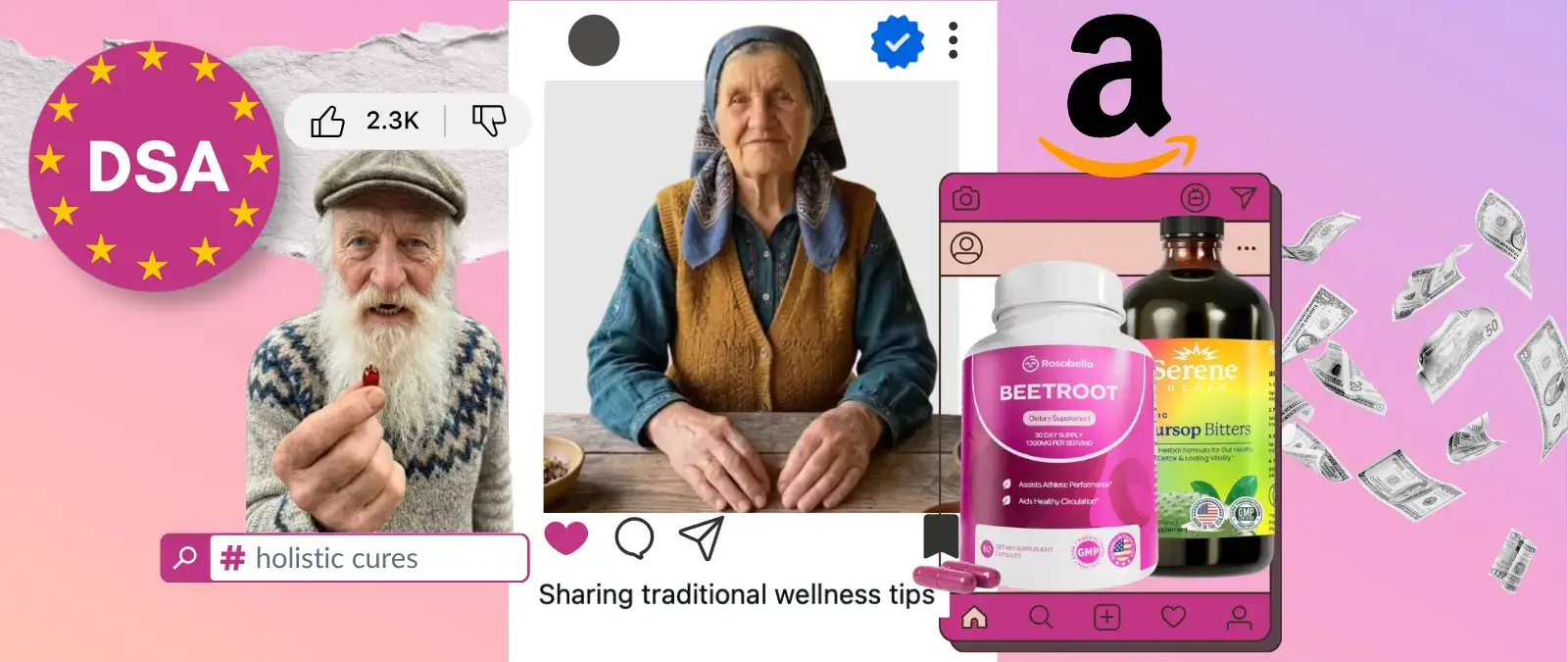
Meta le da la insignia azul de "verificación" en Instagram a "médicos" y "sanadores" generados por IA para que puedan vender sus "remedios" en Amazon En un reel de Instagram, una curandera de una aldea siberiana llamada Baba Matryona ofrece una cura para la presión arterial. "Síganme y escriban las palabras presión arterial en los comentarios", dice, "les mostraré una forma natural y científicamente comprobada que la gente está usando para revertirla para siempre". En su bio hay un enlace a Amazon en el que se vende Jupi, un supuesto suplemento para hidratación y bienestar cuya página de producto indica que "no está destinado a diagnosticar, tratar, curar o prevenir ninguna enfermedad o afección de salud". Baba Matryona, que acumula más de seis millones de visualizaciones en sus vídeos, tiene la marca azul de verificación junto a su nombre de usuario, lo que indicaría que Meta ha verificado su identidad. Sin embargo, no es una persona real: es un personaje creado con inteligencia artificial.En Fundación Maldita.es hemos identificado 25 cuentas verificadas de Instagram que presentan a personajes generados por IA como fuentes de consejos de salud y para vender suplementos en Amazon, así como libros electrónicos sobre curas holísticas. Los remedios que promueven se ofrecen como tratamientos para enfermedades renales, sobrepeso o decoloración dental, entre otras. Ninguno de los creadores es una persona real, pero todos tienen una marca de verificación azul de Meta Verified junto a su nombre de usuario, un servicio que ofrece Meta que debería indicar autenticidad y que supuestamente se otorga cuando la empresa ha verificado que la cuenta representa a una persona real.Un problema a gran escala: 5 millones de suscriptores y 389 millones de visualizaciones.Meta comercializa abiertamente su marca de verificación azul como una forma de ayuda a los creadores a generar mayor confianza con nuevas audiencias dándoles, además, priorización y mayor visibilidad en la plataforma. Esto no solo aumenta la probabilidad de que los usuarios confíen más en estas cuentas y sus consejos de salud engañosos, sino que también significa que el contenido aparece más a los usuarios que buscan consejos de salud en Instagram. Las cifras hablan por sí solas: sólo 25 cuentas acumulan más de cinco millones de suscriptores y 389 millones de visualizaciones.Las reglas de Meta para la representación de la verdadera identidad establecen que las cuentas que suplanten una identidad para engañar o defraudar a otros serán restringidas o deshabilitadas. La insignia de verificación es una de las herramientas que Meta presenta para evitar ese riesgo o, al menos, para indicar a los usuarios en qué cuentas pueden confiar razonablemente. Para obtener la insignia, hay que pagar una suscripción y normalmente se debe presentar copia de una identificación oficial con foto como el DNI. Además, el nombre debe corresponder con el nombre legal y la foto de perfil debe mostrar el rostro del suscriptor para comprobar que la cuenta es verídica y corresponde a la persona que la creó. Para estas cuentas, que son además verdaderamente populares, no se cumplieron estas normas.Las reglas de Meta Verified dejan un hueco por el que estas cuentas pueden colarse en la verificación. En ciertos casos hay usuarios que "pueden verificarse mediante su actividad en los productos de Meta, como la antigüedad del nombre de usuario y la integridad del perfil, incluyendo su nombre e imagen". Esto es algo que sí podría cumplir un personaje creado con IA que tenga perfiles también en Threads y Facebook, como es el caso de la mayoría de las cuentas que encontramos. El resultado es una zona gris en la que el requisito de acreditar identidad podría cumplirse sin proporcionar un DNI o pasaporte.Una campaña coordinada que va en contra de las normas de Instagram y Amazon.Estas 25 cuentas muestran señales de estar coordinadas. Siguen el mismo patrón: se hacen pasar por médicos, expertos holísticos o sanadores, y utilizan una foto de perfil creada con IA y biografías muy similares, en las que prometen remedios naturales y enlaza a una página de producto. Si uno analiza estos vínculos, puede ver que utilizan además etiquetas del programa de afiliados de Amazon, códigos específicos por los que los diferentes perfiles cobran una comisión por cada venta de producto que se cierra a través de ellos, lo que significa que estas cuentas están ganando dinero por promocionar estos productos. Según Amazon, este programa permite monetizar contenido generado por el usuario en las redes sociales. Cuando los clientes hagan clic o interactúen con los enlaces especiales para comprar un artículo, los creadores recibirán ingresos por comisiones.Los "enlaces especiales" son URLs que contienen un identificador o etiqueta única para la cuenta que los publicó. Amazon utiliza estos identificadores para contabilizar las comisiones que deben recibir esas cuentas por las compras que generan. En otras palabras, si a través de ese enlace se produce una venta, la cuenta asociada a esa identificación recibirá un porcentaje. En la URL, el ID único aparece después de tag=.Ejemplos de Enlaces especials de Amazon de varios perfiles. Nos hemos puesto en contacto directamente con una de esas cuentas y la persona que las gestionaba explica a Maldita.es que desde realiza campañas para diferentes productos a través de diferentes perfiles y que las cuentas crecieron orgánicamente alcanzando altos niveles de interacción. Las cuentas obtienen millones de visitas y, aunque estarían dispuestos a vender algunas de las cuentas, no sería por menos de 26. 000 euros.Estos perfiles participan en una operación de monetización multiplataforma que está prohibida tanto por Instagram como por Amazon. Por un lado, las normas de Meta dicen que "los beneficios de las cuentas verificadas son solo para fines personales y no comerciales", pero la venta de suplementos constituye claramente un fin comercial. Por otro lado, sobre el papel Amazon tiene políticas estrictas acerca de quién puede participar en su programa de afiliados y teóricamente no admite a los creadores en redes sociales que promuevan contenido falso o engañoso.Resulta difícil entender cómo estos personajes creados con IA que promueven curas milagrosas y desinformación sobre salud pueden cumplir esas reglas. Ambas plataformas incumplen sus propias políticas y deberían explicar por qué, pero además se benefician de esta actividad. Meta obtiene ganancias por las suscripciones Meta Verified y Amazon gana dinero de las compras, ya que sólo paga las comisiones de su programa de asociados una vez que se haya completado y enviado la venta del producto.La Comisión Europea ya ha multado a X por su insignia azul de "verificación" ser engañosaEn el marco del reglamento de la UE de Servicios Digitales (la conocida como DSA), Instagram es una plataforma en línea de gran tamaño (VLOP, por sus siglas en inglés) y tiene obligación de evaluar los riesgos sistémicos derivados de sus servicios y aplicar medidas efectivas para reducirlos. El artículo 34 exige específicamente a plataformas como Meta que evalúe los riesgos sistémicos derivados del diseño y funcionamiento de su servicio, así como sus efectos negativos en la salud pública. Las cuentas pagan por una insignia verificación que indica autenticidad y mejora la visibilidad de su contenido en las búsquedas, así que en este caso la amplificación de contenido dañino no es un efecto secundario del funcionamiento de la plataforma, sino de un servicio que la plataforma ofrece previo pago. El proceso de autenticación de Meta no funciona y un servicio del que Meta obtiene ingresos contribuye a difundir la desinformación contra la salud.En 2025 la Comisión Europea multó a X con 120 millones de euros por incumplir la DSA y una de las infracciones señaladas era el diseño engañoso de su insignia de verificación azul. La Comisión argumentó que cualquiera podía comprar el estado verificado sin que X comprobara de forma efectiva quién estaba detrás de la cuenta, lo que complicaba que los usuarios pudieran juzgar la autenticidad de los perfiles y el contenido con el que interactuaban, aumentando el riesgo de fraude. La Comisión también tuvo en cuenta que el contenido de los verificados de pago recibía una mayor visibilidad algorítmica. En Maldita.es ya te contamos en otra investigación de Maldita que había cuentas que suplantaban la identidad de famosos para hacer timos y que habían sido verificadas por Meta de forma irregular.El artículo 35 de la DSA enumera, entre las posibles medidas de reducción de riesgos que las plataformas pueden tomar, la de garantizar que los vídeos generados o manipulados que parecen ser de personas reales lleven marcas visibles. Un personaje generado por IA puede pasar por auténtico, pero aún así la mayoría de los vídeos de estas 25 cuentas no lleva ninguna etiqueta o marca visible de este tipo.Detectarlos no debería ser un problema para Meta. Algunas de las publicaciones llevan incluso en la descripción hashtags en inglés como #actorsintético. Mediante su uso, sus creadores declaran que la persona que aparece en pantalla no es real. Incluso si estas cuentas se verificaron en otro momento como auténticas y luego cambiaron su nombre, foto y contenido para ser un personaje generado por IA, cualquier cambio posterior a la verificación debería haber pasado revisión. Esto significa que Meta tiene todas las posibilidades de autenticar la cuenta antes e incluso después del proceso de verificación.Amazon también está designada como plataforma de muy gran tamaño a efectos de la DSA, lo que significa que tiene las mismas obligaciones de evaluación y reducción de riesgos que Instagram. Aunque Amazon intentó impugnar esta designación argumentando que su actividad "no planteaba ningún riesgo sistémico", la justicia europea rechazó ese argumento en noviembre de 2025. A las redes sociales les da igual. A nosotros no. Ayúdanos a investigar. DONA Amazon es quién pone el dineroEn esta red de monetización multiplataforma la responsabilidad no se limita solo a Instagram, sino que se extiende también a Amazon, ya que es su programa de asociaciones el que financia esas cuentas de personajes de IA. La plataforma tiene reglas que teóricamente deberían impedirle pagar comisiones de venta a cuentas de redes sociales que promueven contenido "falso" o "engañoso", pero no las aplica a algunas afirman que un té con limón, jengibre y ajo puede prevenir ataques cardíacos, o que se pueden eliminar los cálculos renales en tan solo tres días con una mezcla de agua de coco, zumo de limón y aceite de oliva.El obtener comisiones por la venta de estos productos es, sin duda, lo que incentiva a estas cuentas de Instagram a difundir desinformación sobre salud a gran escala. A cuantas más personas alcancen, más productos venden y más dinero ganan. Algunos de los suplementos promocionados por estas cuentas se encuentran entre los productos más vendidos en Amazon. En el caso de Soursop Bitters, por ejemplo, se vendieron 70.000 botellas solo en el mes de junio.Amazon incluye una cláusula de exención de responsabilidad estándar que dice que estos productos "no están destinados a diagnosticar, tratar, curar o prevenir ninguna enfermedad o afección de salud", pero mediante sus programa de afiliados está financiando a influencers de IA que promueven precisamente esa narrativa en Instagram, en contra de sus propias normas. 📲 ¡Pincha aquí y sigue el canal de WhatsApp de Maldita.es para que no te la cuelen!
maldita · about 12 hours ago
![From WellnessMaddie to Seu Augusto and Monk Chen: 250 AI-generated Instagram profiles provide unfounded health advice in seven languages to more than 53 million followers Over 45,600 posts: this is how the AI slop machine churns out so-called health adviceDid you know you can unblock your ears in just five minutes? asks Emilio Vega (@vega.naturalmed), a so-called content creator specialising in natural medicine, as he pours a mixture of coconut oil and hydrogen peroxide into an ear, which immediately begins to expel debris and foam. The video has been viewed more than 6.5 million times, and users have left comments such as thank you, doctor and what a great cleaning method. Although not every user who consumes his content seems to be aware of it, Emilio does not exist: the post bears Metas AI Information label, and text accompanying the video reads synthetic performer-ad.In those 45,600 posts from 250 Instagram profiles analysed, both Metas synthetic content labels and these watermarks appear repeatedly. Some directly identify themselves as AI influencers or display inconsistencies typical of AI-generated content, such as unintelligible text and impossible figures (limbs appearing out of nowhere or misshapen body parts). But none of this seems to stop them going viral. Natalia Martín, psychologist, explains that even when there are clear signs that the character is not real, the message can still be perceived as credible: If the message aligns with the recipients existing beliefs, confirmation bias makes it easier for us to accept it.Videos and accounts label their content as AI-generated. Source: Instagram.The use of artificial intelligence allows these accounts to create content on a large scale: they post several times a day, and some profiles have accumulated hundreds or even thousands of videos in total. In this way, they have created a machine churning out AI slop: low-quality content created with AI that is often eye-catching, repetitive and incoherent, and is mass-produced to go viral and generate revenue. Brains infested with worms, feet with holes oozing pus, and a severed torso from which earthworms emerge are just some of the grotesque scenes found in this content, designed to grab users attention.Many videos feature grotesque or eye-catching scenes to grab users attention. Source: Instagram.[AI Slop] Clutters media ecosystems with information overload; it is digital rubbish and pollution, which hides legitimate, high-quality content (or at least makes it difficult to find), Javi Cantón, a researcher in the Department of Computer Science and Artificial Intelligence at the University of Granada, warned Maldita.es about this type of content. But when it comes to health, the risks can be even greater: The main danger of these accounts is that they misinform the public about health matters. This, in itself, already infringes constitutional rights such as the consumers right to accurate information and the special protection of the health of any member of the public who comes across such content, Emilio José Molina, vice-president of the Association for the Protection of Patients from Pseudo-Scientific Therapies (APETP), told Maldita.es.76.8 of the accounts analysed were created during the first half of 2026 and are active in at least seven languages (English, Spanish, French, Portuguese, Italian, German and Russian). The most popular is English, used by 61.2 of the profiles analysed, which is also the most widely spoken language in the world. Although these accounts operate from different countries, more than half (52.8) are based in the United States.
Social Media doesnt care. We do. Help us fight their indifference.
DONATE
A link in the bio or a comment guide: the techniques they use to direct you to Amazon and sell you supplements and booksThe aim of this network is, for the most part, to direct us to other websites to sell us products. More than half of the profiles analysed (56.4) redirect to other websites, mainly Amazon, to sell dietary supplements (which in some cases are repeated across different accounts), through which they may be generating income via the affiliate programme. Many of them feature the same legal disclaimer, which states: Claims regarding dietary supplements have not been evaluated by the FDA (the US Food and Drug Administration) and are not intended to diagnose, treat, cure or prevent any disease or health condition. Molina explains that without a medical diagnosis to justify them, supplements are always unnecessary and adds that the advertising claims they make would not even be legal in Spain, where supplements are prohibited from claiming any kind of therapeutic effect.Also popular, albeit to a lesser extent (30.8), is content promoting so-called books or PDFs containing recipes or advice on healthy living, wellbeing or spirituality (several of which show signs of having been created using AI). The remaining accounts either did not include links (12)) or sold other products such as serums and souvenirs (2.4). According to Molina, at the very least, these products may constitute financial fraud, but they may also cause harm by delaying or preventing effective treatment for their ailments, or even by leading people to believe they may have some kind of condition that has not actually been diagnosed.To direct us to these products, the profiles analysed use various strategies. Some directly include a link to the products or guides they are promoting in their bio. At Maldita.es, we have found that at least 17 of these websites do not meet the basic requirements to operate legally in Spain, such as having a legal notice, a privacy policy and a cookies policy. The absence of this information does not in itself mean that they are fraudulent, but it is a warning sign.On other occasions, users are asked to comment on videos using specific keywords (such as guide, book or heal) in order to receive the supposed documents. At Maldita.es, we contacted two of the profiles using this technique; when we mentioned those keywords in the comments, they messaged us directly asking us to click on a link, despite not having provided one. There are also users who, rather than linking directly in their bios, use their highlighted stories to link to the sales pages.Some users ask you to comment on their videos, supposedly so they can send you content. But we dont receive anything. Source: Instagram.Most of these accounts belong to so-called holistic experts who offer health adviceAccording to our analysis, the 250 profiles use different personas to convey their messages. The most popular is the holistic persona, with 94 accounts: these profiles describe themselves as holistic experts, holistic wellbeing or holistic health, or have usernames that include this word. They often show their AI-generated avatars in settings that are meant to resemble medical consultation rooms. A document from the Spanish Ministry of Health, Social Policy and Equality published in 2011 states that, when discussing health, a holistic approach would involve considering the person as a whole, integrating physical, spiritual, mental, emotional, genetic, environmental and social aspects (as proposed by biopsychosocial approaches). However, holistic is an adjective typically appropriated by pseudosciences.These accounts, such as HolisticZora (@holistic.zora) and Claire Holloway (@claire.holloway.us), share advice which they claim doctors are forbidden to share. Both present health issues, such as being unable to lose weight or having bladder control problems, and claim that holistic medicine does indeed offer a cure, which, in theory, can be found via the link on their profile.For example, Holistic Zora sells tablets containing Rhodiola rosea powder extract with salidroside to help combat stress for $29 (around €25). In a video with 16,200 views and a watermark reading genAIcontent, it claims that this supplement can supposedly help reduce back fat by lowering cortisol levels. However, the products own Amazon sales page states that this product has not been evaluated by the US Food and Drug Administration (FDA). Claire Holloways profile, meanwhile, redirects users to Amazon to sell a book featuring 200 natural solutions to everyday problems for almost $35 (€30), which she promotes as her own in her highlighted stories. However, it is another authors name that appears on the book (Marina López) – a book that we have found is being sold by 23 accounts on the platform.Accounts that call themselves holistic experts and the products they sell. Source: Instagram.Ancestral wisdom: other accounts use AI-generated images of Asian, Indigenous and Black people to peddle so-called remediesThe second most popular group of these accounts are those that hide behind ancestral wisdom to peddle this advice and these unsubstantiated claims. From monks to Jamaican healers, we have found 82 profiles that use typical characteristics of people from racialised communities (mostly elderly people) to share so-called advice based on ancient traditions. As we have already warned on Maldita.es, the most common are depictions of Asian people as senseis or Shaolin masters. One example of this is the profile of Ming San (@mingsanhealing), who looks like a Tibetan monk: he has 1.2 million followers and his ancestral wisdom for the mind and body takes the form of supposed remedies. These include placing cabbage in your socks to relieve pain (the video in which he recommends this has been viewed 2.2 million times).Stereotypes such as African, Indigenous or Indian women also feature. Mama Zola Njeri (@mamazolanjeri) is one example: the account describes her as an African grandmother with folk wisdom who suggests to her 101,100 followers that they apply cola to their moles to remove them. Meanwhile, Nuna Itta (@nunaitta), who portrays an elderly Iñupiat woman (an indigenous people of Alaska), claims that applying mouthwash to the feet helps to exfoliate them; and Shanti Vaidya (@shantivaidya.ayurveda), supposedly a woman from India, recommends eating a clove of garlic in the morning to kill any bacteria. None of them are real, but these three videos alone have racked up more than 383,600 views and 1,445 comments, many from users who seem to believe that Mama Zola, Nuna and Shanti actually exist.Videos that use ancestral wisdom as a pretext to peddle this content. Source: Instagram.From American farmers to elderly Latin American women: how they capitalise on the myth of the wisdom of the eldersThe third most popular type of so-called expert is represented by wise elders, who feature in 61 of the accounts analysed and who, for the most part, appear in the countryside or in rural settings. Roy Bennet (@farmtruths) is one of them: he is supposedly an elderly American who promises country wisdom for the mind and body to his more than 250,000 followers, and whose bio includes a link to pure beetroot which he trusts: a supplement costing $49 (almost €43). Meanwhile, the Italian-language account Ernesto Salute (@ernestosalute), which uses a profile picture depicting an elderly man sharing mountain habits and remedies, has 271 followers. In Portuguese, Seu Augusto (@seuaugusto.oficia), a supposed elderly man who has lived off the land for over 40 years and who posts from Brazil to his 62,500 followers. Similar accounts are only found in Spanish and French.But its not all about men. Older women also feature, sometimes associated with elderly Latina or Italian women. Take Lucía La Cruz (@luciawellnesstips), for example, a Latina mother and grandmother living in the United States, whose bio links to the very same supplement promoted by HolisticZora. She has 52,800 followers and shares tips such as consuming chilli sauce with lemon on an empty stomach to lose weight (with 141,000 views). Nonna Sofia (@nonnasofiahealth) posts holistic health tips from Sardinia and sells another detox supplement on Amazon, this time for $37.99. You think you need three meals a day, but this is a scam by big corporations to keep you buying food, she claims in a video with 35,600 views, in which she asserts that in Sardinia (Italy) people live to be over 100 thanks to fasting.AI-generated videos featuring elderly people to convey wisdom. Source: Instagram.Psychologist Natalia Martín tells Maldita.es that the figure of the wise grandparent conveys authority based on life experience and folk wisdom, something which, for certain demographics, can be even more convincing than a healthcare professional: For example, among people who are sceptical of conventional medicine or who have had bad experiences with the medical system, alternative messages generated by people perceived as more approachable will be prioritised.Religious figures: the Amish in the United States and nuns and preachers in Spanish as representations of a healthy lifestyleFinally, 13 of the profiles analysed used AI-generated characters associated with religion to lend credibility to their messages. These appear mainly on English and Spanish-language accounts, each with their own distinctive features.On English-language profiles (mostly from the United States), there are depictions of people from the Amish community, who are associated with growing their own food and using alternative and natural medicines. Mary Fisher (@amish.house1) is an account that supposedly represents a 99-year-old woman who posts about the Amish way of life. Although the woman does not exist (the most recent posts are labelled AI-generated content), this does not hinder her success. In her most viral video, with 3.6 million views, she claims that placing an ice cube on the arch of the foot for 3 seconds stops a migraine as it is a connection point with the head.Meanwhile, Spanish-language accounts focus on figures linked to Catholicism, such as Sor Catalina (@sormariacatalina), a nun who supposedly shares her remedies and secrets from the convent, or Fray Lorenzo (@fraylorenzoreflexiones), who shares prayers and sells a spiritual guide for the soul promising a step-by-step path to inner peace for just 9.95 euros.Screenshots of the @amish.house1 and @sormariacatalina profiles. Source: InstagramThe major danger: accounts posing as doctors, an illegal practice in SpainAmong the 250 profiles we analysed at Maldita.es, we identified 25 which, in addition to falling into the categories mentioned above, identified themselves as healthcare professionals or included indicators that could lead users to mistake them for such professionals. For example, by using the word doctor or the abbreviation dr in their usernames or bios.Other profiles use elements that may be associated with medicine. One example is the Spanish-language account Felipe Nutrition (@nutritionfelipe), whose description reads: Cardiology, 10+ years in holistic health and which has over 714,000 followers. In several of his videos, Felipe is shown taking patients blood pressure and using a stethoscope or wearing a white coat and gloves. In one video, which has 3.1 million views, he claims that drinking a mixture of cinnamon, vinegar, lemon and turmeric on an empty stomach for three weeks means you dont have to spend thousands of dollars on insulin or metformin, a medicine for type 2 diabetes. He also encourages viewers to buy a yerba mate product available on Amazon (with the warning that it has not been evaluated by the FDA) for $39.99 to boost its effects by up to 10 times.Screenshots of profiles and videos that use imagery to present themselves as doctors. Source: Instagram.These 25 accounts have a combined total of over 3.6 million followers, and their videos have been viewed more than 397 million times. Furthermore, three of these profiles, each with over 800,000 followers, display Metas blue verification badge, which is supposed to guarantee that their identity is genuine.Emilio José Molina, vice-president of the Association for the Protection of Patients from Pseudo-scientific Therapies, points out that in Spain this type of advertising is prohibited by Royal Decree 1907/1996, which does not allow the use of testimonials from healthcare professionals, celebrities or real or alleged patients as a means of encouraging consumption. According to the expert, this is to prevent the public from losing trust in healthcare professionals, something essential for the proper management of public health in areas such as vaccination campaigns, product alerts, screening programmes and a long list of other initiatives that affect both individual and collective health.This article features the superpowers of Natalia Martín, a psychologist.Natalia Martín is part of Superpoderosas, a project by Maldita.es that aims to increase the presence of female scientists and experts in public discourse through collaboration in the fight against disinformation.Thanks to your superpowers, knowledge and experience, we can fight lies more effectively. The Maldita.es community is essential to stopping disinformation. Help us in this battle: send us any hoaxes you come across via our WhatsApp service, lend us your superpowers, share our fact-checks and become an Ambassador.
Methodology
For this article, Maldita.es has compiled 250 Instagram accounts that use artificial intelligence to disseminate health-related content. Some of these profiles appeared organically in the platforms feed, whilst others were added following a search amongst the followers of the first accounts compiled. The accounts were created between December 2014 and June 2026 and, at the time of data collection (carried out between 20 and 21 July 2026), had more than 53.7 million followers and more than 45,600 posts. As of 27 July, some of the profiles had been removed from the platform.
For each of these accounts, the following information has been compiled: link (also archived or accompanied by a screenshot where this was not possible), username and profile name (which need not match the username and may be shared with other users), platform ID (extracted using a tool from My OSINT Tools), whether or not the account was verified, the number of times the name has been changed, the country recorded by the platform (which explains on its website that this is determined based on the accounts activity), the bio text, the creation date, number of posts, followers and users followed. A check was also carried out for each and every one of the 250 accounts to see whether there were other profiles with the same characteristics amongst those they followed.
To facilitate further analysis, the profiles in the database have been categorised as Wise elders (accounts showing older people giving health advice in different contexts), Holistic (those profiles that use this term or a similar one in their bio or that set their content in supposed medical consultations), Religious/preachers (accounts whose protagonists pretended to be nuns, priests or members of the Amish community) and Ancestral wisdom (depictions of communities associated with these stereotypes, such as African, monk or Indian people linked to supposed ancestral knowledge).
The links available both in the biography and in other sections of the profile, such as featured stories, have also been compiled and analysed. In total, 224 of the 250 accounts had a visible URL through which they were selling some kind of product on various external platforms. A foreign VPN (Virtual Private Network) was used to access those products not available in Spain.
To determine whether content was generated using artificial intelligence, we used Gemini, Googles AI, which is capable of detecting the SynthID watermark – a technology imperceptible to the human eye that identifies content generated using its AI models. Furthermore, some content featured visible watermarks from various video-generation tools. We also checked for the presence of the AI Information label that identifies synthetic content on Metas social media platforms, and reviewed whether the descriptions identified the creator as an AI creator or similar terms. The posts by the users analysed displayed several of the typical tell-tale signs of AI-generated videos, such as impossible figures, blurred backgrounds and unintelligible text.
Our observations have enabled us to confirm that there are more accounts with these characteristics available on the platform, so whilst the sample included in this article does not cover all profiles, it does represent the phenomenon.
If you have any queries, please contact us at investigacion@maldita.es](https://files.maldita.es/uploads/images/2026/07/6a6754de10d33portada-investigacion-instagram-cuentas-ia-salud-png.png)
From WellnessMaddie to Seu Augusto and Monk Chen: 250 AI-generated Instagram profiles provide unfounded health advice in seven languages to more than 53 million followers Over 45,600 posts: this is how the AI slop machine churns out so-called health adviceDid you know you can unblock your ears in just five minutes? asks Emilio Vega (@vega.naturalmed), a so-called content creator specialising in natural medicine, as he pours a mixture of coconut oil and hydrogen peroxide into an ear, which immediately begins to expel debris and foam. The video has been viewed more than 6.5 million times, and users have left comments such as thank you, doctor and what a great cleaning method. Although not every user who consumes his content seems to be aware of it, Emilio does not exist: the post bears Metas AI Information label, and text accompanying the video reads synthetic performer-ad.In those 45,600 posts from 250 Instagram profiles analysed, both Metas synthetic content labels and these watermarks appear repeatedly. Some directly identify themselves as AI influencers or display inconsistencies typical of AI-generated content, such as unintelligible text and impossible figures (limbs appearing out of nowhere or misshapen body parts). But none of this seems to stop them going viral. Natalia Martín, psychologist, explains that even when there are clear signs that the character is not real, the message can still be perceived as credible: If the message aligns with the recipients existing beliefs, confirmation bias makes it easier for us to accept it.Videos and accounts label their content as AI-generated. Source: Instagram.The use of artificial intelligence allows these accounts to create content on a large scale: they post several times a day, and some profiles have accumulated hundreds or even thousands of videos in total. In this way, they have created a machine churning out AI slop: low-quality content created with AI that is often eye-catching, repetitive and incoherent, and is mass-produced to go viral and generate revenue. Brains infested with worms, feet with holes oozing pus, and a severed torso from which earthworms emerge are just some of the grotesque scenes found in this content, designed to grab users attention.Many videos feature grotesque or eye-catching scenes to grab users attention. Source: Instagram.[AI Slop] Clutters media ecosystems with information overload; it is digital rubbish and pollution, which hides legitimate, high-quality content (or at least makes it difficult to find), Javi Cantón, a researcher in the Department of Computer Science and Artificial Intelligence at the University of Granada, warned Maldita.es about this type of content. But when it comes to health, the risks can be even greater: The main danger of these accounts is that they misinform the public about health matters. This, in itself, already infringes constitutional rights such as the consumers right to accurate information and the special protection of the health of any member of the public who comes across such content, Emilio José Molina, vice-president of the Association for the Protection of Patients from Pseudo-Scientific Therapies (APETP), told Maldita.es.76.8 of the accounts analysed were created during the first half of 2026 and are active in at least seven languages (English, Spanish, French, Portuguese, Italian, German and Russian). The most popular is English, used by 61.2 of the profiles analysed, which is also the most widely spoken language in the world. Although these accounts operate from different countries, more than half (52.8) are based in the United States. Social Media doesnt care. We do. Help us fight their indifference. DONATE A link in the bio or a comment guide: the techniques they use to direct you to Amazon and sell you supplements and booksThe aim of this network is, for the most part, to direct us to other websites to sell us products. More than half of the profiles analysed (56.4) redirect to other websites, mainly Amazon, to sell dietary supplements (which in some cases are repeated across different accounts), through which they may be generating income via the affiliate programme. Many of them feature the same legal disclaimer, which states: Claims regarding dietary supplements have not been evaluated by the FDA (the US Food and Drug Administration) and are not intended to diagnose, treat, cure or prevent any disease or health condition. Molina explains that without a medical diagnosis to justify them, supplements are always unnecessary and adds that the advertising claims they make would not even be legal in Spain, where supplements are prohibited from claiming any kind of therapeutic effect.Also popular, albeit to a lesser extent (30.8), is content promoting so-called books or PDFs containing recipes or advice on healthy living, wellbeing or spirituality (several of which show signs of having been created using AI). The remaining accounts either did not include links (12)) or sold other products such as serums and souvenirs (2.4). According to Molina, at the very least, these products may constitute financial fraud, but they may also cause harm by delaying or preventing effective treatment for their ailments, or even by leading people to believe they may have some kind of condition that has not actually been diagnosed.To direct us to these products, the profiles analysed use various strategies. Some directly include a link to the products or guides they are promoting in their bio. At Maldita.es, we have found that at least 17 of these websites do not meet the basic requirements to operate legally in Spain, such as having a legal notice, a privacy policy and a cookies policy. The absence of this information does not in itself mean that they are fraudulent, but it is a warning sign.On other occasions, users are asked to comment on videos using specific keywords (such as guide, book or heal) in order to receive the supposed documents. At Maldita.es, we contacted two of the profiles using this technique; when we mentioned those keywords in the comments, they messaged us directly asking us to click on a link, despite not having provided one. There are also users who, rather than linking directly in their bios, use their highlighted stories to link to the sales pages.Some users ask you to comment on their videos, supposedly so they can send you content. But we dont receive anything. Source: Instagram.Most of these accounts belong to so-called holistic experts who offer health adviceAccording to our analysis, the 250 profiles use different personas to convey their messages. The most popular is the holistic persona, with 94 accounts: these profiles describe themselves as holistic experts, holistic wellbeing or holistic health, or have usernames that include this word. They often show their AI-generated avatars in settings that are meant to resemble medical consultation rooms. A document from the Spanish Ministry of Health, Social Policy and Equality published in 2011 states that, when discussing health, a holistic approach would involve considering the person as a whole, integrating physical, spiritual, mental, emotional, genetic, environmental and social aspects (as proposed by biopsychosocial approaches). However, holistic is an adjective typically appropriated by pseudosciences.These accounts, such as HolisticZora (@holistic.zora) and Claire Holloway (@claire.holloway.us), share advice which they claim doctors are forbidden to share. Both present health issues, such as being unable to lose weight or having bladder control problems, and claim that holistic medicine does indeed offer a cure, which, in theory, can be found via the link on their profile.For example, Holistic Zora sells tablets containing Rhodiola rosea powder extract with salidroside to help combat stress for $29 (around €25). In a video with 16,200 views and a watermark reading genAIcontent, it claims that this supplement can supposedly help reduce back fat by lowering cortisol levels. However, the products own Amazon sales page states that this product has not been evaluated by the US Food and Drug Administration (FDA). Claire Holloways profile, meanwhile, redirects users to Amazon to sell a book featuring 200 natural solutions to everyday problems for almost $35 (€30), which she promotes as her own in her highlighted stories. However, it is another authors name that appears on the book (Marina López) – a book that we have found is being sold by 23 accounts on the platform.Accounts that call themselves holistic experts and the products they sell. Source: Instagram.Ancestral wisdom: other accounts use AI-generated images of Asian, Indigenous and Black people to peddle so-called remediesThe second most popular group of these accounts are those that hide behind ancestral wisdom to peddle this advice and these unsubstantiated claims. From monks to Jamaican healers, we have found 82 profiles that use typical characteristics of people from racialised communities (mostly elderly people) to share so-called advice based on ancient traditions. As we have already warned on Maldita.es, the most common are depictions of Asian people as senseis or Shaolin masters. One example of this is the profile of Ming San (@mingsanhealing), who looks like a Tibetan monk: he has 1.2 million followers and his ancestral wisdom for the mind and body takes the form of supposed remedies. These include placing cabbage in your socks to relieve pain (the video in which he recommends this has been viewed 2.2 million times).Stereotypes such as African, Indigenous or Indian women also feature. Mama Zola Njeri (@mamazolanjeri) is one example: the account describes her as an African grandmother with folk wisdom who suggests to her 101,100 followers that they apply cola to their moles to remove them. Meanwhile, Nuna Itta (@nunaitta), who portrays an elderly Iñupiat woman (an indigenous people of Alaska), claims that applying mouthwash to the feet helps to exfoliate them; and Shanti Vaidya (@shantivaidya.ayurveda), supposedly a woman from India, recommends eating a clove of garlic in the morning to kill any bacteria. None of them are real, but these three videos alone have racked up more than 383,600 views and 1,445 comments, many from users who seem to believe that Mama Zola, Nuna and Shanti actually exist.Videos that use ancestral wisdom as a pretext to peddle this content. Source: Instagram.From American farmers to elderly Latin American women: how they capitalise on the myth of the wisdom of the eldersThe third most popular type of so-called expert is represented by wise elders, who feature in 61 of the accounts analysed and who, for the most part, appear in the countryside or in rural settings. Roy Bennet (@farmtruths) is one of them: he is supposedly an elderly American who promises country wisdom for the mind and body to his more than 250,000 followers, and whose bio includes a link to pure beetroot which he trusts: a supplement costing $49 (almost €43). Meanwhile, the Italian-language account Ernesto Salute (@ernestosalute), which uses a profile picture depicting an elderly man sharing mountain habits and remedies, has 271 followers. In Portuguese, Seu Augusto (@seuaugusto.oficia), a supposed elderly man who has lived off the land for over 40 years and who posts from Brazil to his 62,500 followers. Similar accounts are only found in Spanish and French.But its not all about men. Older women also feature, sometimes associated with elderly Latina or Italian women. Take Lucía La Cruz (@luciawellnesstips), for example, a Latina mother and grandmother living in the United States, whose bio links to the very same supplement promoted by HolisticZora. She has 52,800 followers and shares tips such as consuming chilli sauce with lemon on an empty stomach to lose weight (with 141,000 views). Nonna Sofia (@nonnasofiahealth) posts holistic health tips from Sardinia and sells another detox supplement on Amazon, this time for $37.99. You think you need three meals a day, but this is a scam by big corporations to keep you buying food, she claims in a video with 35,600 views, in which she asserts that in Sardinia (Italy) people live to be over 100 thanks to fasting.AI-generated videos featuring elderly people to convey wisdom. Source: Instagram.Psychologist Natalia Martín tells Maldita.es that the figure of the wise grandparent conveys authority based on life experience and folk wisdom, something which, for certain demographics, can be even more convincing than a healthcare professional: For example, among people who are sceptical of conventional medicine or who have had bad experiences with the medical system, alternative messages generated by people perceived as more approachable will be prioritised.Religious figures: the Amish in the United States and nuns and preachers in Spanish as representations of a healthy lifestyleFinally, 13 of the profiles analysed used AI-generated characters associated with religion to lend credibility to their messages. These appear mainly on English and Spanish-language accounts, each with their own distinctive features.On English-language profiles (mostly from the United States), there are depictions of people from the Amish community, who are associated with growing their own food and using alternative and natural medicines. Mary Fisher (@amish.house1) is an account that supposedly represents a 99-year-old woman who posts about the Amish way of life. Although the woman does not exist (the most recent posts are labelled AI-generated content), this does not hinder her success. In her most viral video, with 3.6 million views, she claims that placing an ice cube on the arch of the foot for 3 seconds stops a migraine as it is a connection point with the head.Meanwhile, Spanish-language accounts focus on figures linked to Catholicism, such as Sor Catalina (@sormariacatalina), a nun who supposedly shares her remedies and secrets from the convent, or Fray Lorenzo (@fraylorenzoreflexiones), who shares prayers and sells a spiritual guide for the soul promising a step-by-step path to inner peace for just 9.95 euros.Screenshots of the @amish.house1 and @sormariacatalina profiles. Source: InstagramThe major danger: accounts posing as doctors, an illegal practice in SpainAmong the 250 profiles we analysed at Maldita.es, we identified 25 which, in addition to falling into the categories mentioned above, identified themselves as healthcare professionals or included indicators that could lead users to mistake them for such professionals. For example, by using the word doctor or the abbreviation dr in their usernames or bios.Other profiles use elements that may be associated with medicine. One example is the Spanish-language account Felipe Nutrition (@nutritionfelipe), whose description reads: Cardiology, 10+ years in holistic health and which has over 714,000 followers. In several of his videos, Felipe is shown taking patients blood pressure and using a stethoscope or wearing a white coat and gloves. In one video, which has 3.1 million views, he claims that drinking a mixture of cinnamon, vinegar, lemon and turmeric on an empty stomach for three weeks means you dont have to spend thousands of dollars on insulin or metformin, a medicine for type 2 diabetes. He also encourages viewers to buy a yerba mate product available on Amazon (with the warning that it has not been evaluated by the FDA) for $39.99 to boost its effects by up to 10 times.Screenshots of profiles and videos that use imagery to present themselves as doctors. Source: Instagram.These 25 accounts have a combined total of over 3.6 million followers, and their videos have been viewed more than 397 million times. Furthermore, three of these profiles, each with over 800,000 followers, display Metas blue verification badge, which is supposed to guarantee that their identity is genuine.Emilio José Molina, vice-president of the Association for the Protection of Patients from Pseudo-scientific Therapies, points out that in Spain this type of advertising is prohibited by Royal Decree 1907/1996, which does not allow the use of testimonials from healthcare professionals, celebrities or real or alleged patients as a means of encouraging consumption. According to the expert, this is to prevent the public from losing trust in healthcare professionals, something essential for the proper management of public health in areas such as vaccination campaigns, product alerts, screening programmes and a long list of other initiatives that affect both individual and collective health.This article features the superpowers of Natalia Martín, a psychologist.Natalia Martín is part of Superpoderosas, a project by Maldita.es that aims to increase the presence of female scientists and experts in public discourse through collaboration in the fight against disinformation.Thanks to your superpowers, knowledge and experience, we can fight lies more effectively. The Maldita.es community is essential to stopping disinformation. Help us in this battle: send us any hoaxes you come across via our WhatsApp service, lend us your superpowers, share our fact-checks and become an Ambassador. Methodology For this article, Maldita.es has compiled 250 Instagram accounts that use artificial intelligence to disseminate health-related content. Some of these profiles appeared organically in the platforms feed, whilst others were added following a search amongst the followers of the first accounts compiled. The accounts were created between December 2014 and June 2026 and, at the time of data collection (carried out between 20 and 21 July 2026), had more than 53.7 million followers and more than 45,600 posts. As of 27 July, some of the profiles had been removed from the platform. For each of these accounts, the following information has been compiled: link (also archived or accompanied by a screenshot where this was not possible), username and profile name (which need not match the username and may be shared with other users), platform ID (extracted using a tool from My OSINT Tools), whether or not the account was verified, the number of times the name has been changed, the country recorded by the platform (which explains on its website that this is determined based on the accounts activity), the bio text, the creation date, number of posts, followers and users followed. A check was also carried out for each and every one of the 250 accounts to see whether there were other profiles with the same characteristics amongst those they followed. To facilitate further analysis, the profiles in the database have been categorised as Wise elders (accounts showing older people giving health advice in different contexts), Holistic (those profiles that use this term or a similar one in their bio or that set their content in supposed medical consultations), Religious/preachers (accounts whose protagonists pretended to be nuns, priests or members of the Amish community) and Ancestral wisdom (depictions of communities associated with these stereotypes, such as African, monk or Indian people linked to supposed ancestral knowledge). The links available both in the biography and in other sections of the profile, such as featured stories, have also been compiled and analysed. In total, 224 of the 250 accounts had a visible URL through which they were selling some kind of product on various external platforms. A foreign VPN (Virtual Private Network) was used to access those products not available in Spain. To determine whether content was generated using artificial intelligence, we used Gemini, Googles AI, which is capable of detecting the SynthID watermark – a technology imperceptible to the human eye that identifies content generated using its AI models. Furthermore, some content featured visible watermarks from various video-generation tools. We also checked for the presence of the AI Information label that identifies synthetic content on Metas social media platforms, and reviewed whether the descriptions identified the creator as an AI creator or similar terms. The posts by the users analysed displayed several of the typical tell-tale signs of AI-generated videos, such as impossible figures, blurred backgrounds and unintelligible text. Our observations have enabled us to confirm that there are more accounts with these characteristics available on the platform, so whilst the sample included in this article does not cover all profiles, it does represent the phenomenon. If you have any queries, please contact us at investigacion@maldita.es
maldita · about 12 hours ago
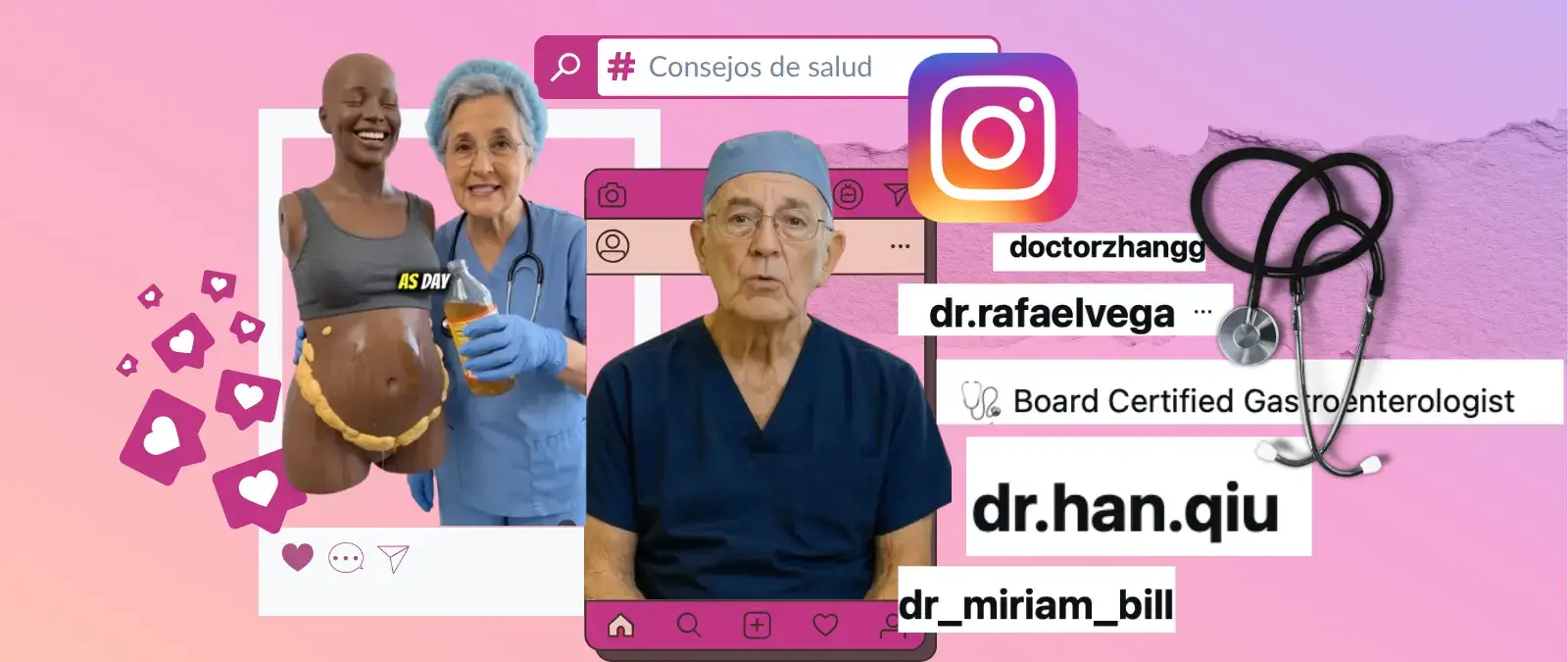
AI-generated Doctors are Selling you Unauthorised Products on Instagram: They Have More than 397 Million Views In a video that has garnered over 49 million views on Instagram, "doctor" Huang explains how to "dissolve" kidney stones with coconut water, olive oil, and lemon juice in just three days. Needless to say, the remedy is fake, but this doctor doesnt exist either. His videos are generated with artificial intelligence, just like those from 25 other Instagram accounts that call themselves doctor or dr.and that usually appear wearing a white coat and a stethoscope, providing medical advice. The accounts have amassed over 3.6 million followers as of July 2026, even though 96 of them are less than a year old.In Spain article 403 of the Penal Code punishes those who perform "acts proper" to a profession such as the medical one without holding the corresponding degree, and it punishes more severely those who publicly claim to be doctors without possessing the qualifications. Furthermore, the Supreme Court has assessed in its rulings that some convicted of this crime had taken advantage of the deception by creating "the widespread belief" that they were doctors through a "staged act". This is illegal in real life, and also illegal online.Among the accounts identified by Maldita.es is common to see them in a consultation room, next to a patient on a stretcher, or carrying items traditionally associated with healthcare professionals.The AI-generated doctor featured in the videos of the Felipe Nutrition account, for example, wears a stethoscope in his profile picture and sometimes a white coat and sterile gloves. The first line of his Instagram bio is "cardiology," and his advice in Spanish has over 650,000 followers.64 of these doctors sell products on their Instagram profileIn his account description, Felipe Nutrition includes links to his "favorite remedy," which is sold on Amazon. This is the same thing that other AI-generated profiles like Dr. Kendrick Harris or Dr. Marcus Wolfe, but in this case what they sell is "Yerba Magic", a product described as a "super instant powder drink" that provides "clean energy, mental clarity, and gut health." The product is promoted by several of these accounts (20) but it is by no means the only thing they sell."Doctor Salori, for example, promotes to his more than 700,000 followers a "superfood" of "bee bread formula for energy, immunity and vitality support, whose purported benefits for the immune system are not supported by scientific evidence. On Amazons website, almost all products advertised by these accounts carry a warning which says they have not been evaluated by health authorities and that they "do not intend to diagnose, treat, cure, or prevent any disease or health condition.Legal disclaimer Amazon uses of the productsThe vast majority of products promoted by the accounts are different types of food supplements, although some also promote their own "advice" books and specific products such as serums against baldness. Social Media doesnt care. We do. Help us fight their indifference. DONATE What does Instagram do? Some accounts even show Metas blue verification badgePracticing medicine without a license is a crime in Spain, as is advertising products "with a purported health purpose (...) that claim to provide testimonies from healthcare professionals. Additionally, Instagram has been designated as a very large online platform in the European Union, which means it has a legal obligation to have effective measures in place to mitigate systemic risks such as the dissemination of illegal content on throughout its service, or the real or foreseeable negative effects it might have on the protection of health or consumer rights.If that werent enough, Metas own rules for its platforms, including Instagram, state that Instagram will restrict accounts that make a deceptive representation of identity to deceive or confuse. That rule doesnt seem to be enforced, since three of the accounts we monitored even display the blue check that should signify that the real identity of the users has been verified. In Maldita.es we have already investigated how Meta verified accounts that do not belong to the people they claim to represent and are used for scams and other deceptions. In late 2025, the European Commission imposed a fine of 120 million euros to X for not complying with the Digital Services Regulation. Specifically, for the misleading design of its "blue checks". The investigation concluded that X did not meaningfully verify who was behind each account that obtained the insignia, even through paid subscriptions.The blue verification badge is not the only strategic use that the 25 accounts have made of the platforms resources. Their reach is impossible to achieve without the amplification offered by the platform through its recommendation algorithms. Several have a number of views more than 200 times greater than their number of followers. They also make continuous calls for interaction, offering rewards to users who comment on their videos. That is a common technique to get the algorithms to provide more visibility.If the platform wanted to design an effective risk reduction strategy for this type of phenomenon, there would be no shortage of places to start: perhaps special care should be taken with usernames that have formal elements such as doctor or dr., or with avatars that display elements associated with health professionals such as stethoscopes and white robes. Controls could also be improved over accounts that advertise through links to third-party platforms that issue warnings about products saying they have not undergone health checks and that they do not intend to diagnose, treat, cure, or prevent any disease or health condition.The accounts we tracked in this part of the investigation share many of these indicators and others that platforms could easily detect. They all deal with a particularly sensitive topic like health and constantly publish AI-generated content. Also, although 96 of the 25 accounts analyzed are less than a year old, 44 have already changed their name at least once, and the content some others publish make it impossible for them to belong to a real doctor.The Dr. Marlon Campbell account changing its appearance over the course of six monthsThe account now belonging to Dr. Marlon Campbell promotes a brand of dietary supplements, began by posting videos featuring a lemon dressed in a white coat and surgical scrubs. It then transitioned to a doctor with Asian features and is now an American with African American features. Information published by Meta reveals that the account has changed its name three times since January, but Instagram doesnt allow users to see the specific names it used before.
maldita · about 12 hours ago
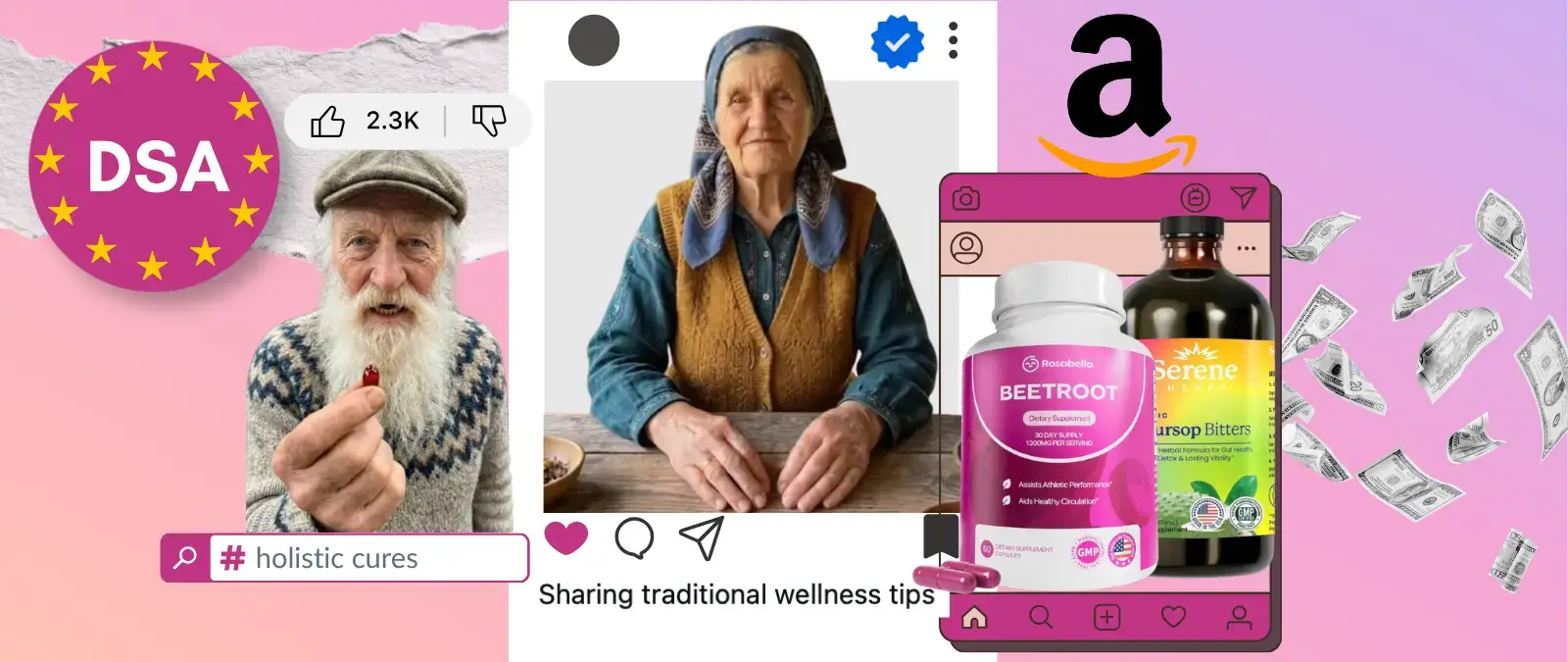
Meta is giving its verified blue check to AI-generated doctors and healers on Instagram, so they can sell their remedies on Amazon On an Instagram Reel, a Siberian village healer by the name of Baba Matryona offers a cure for high blood pressure. Follow me and type in the words blood pressure in the comments, she says, I will show you a natural, science-backed way that people are using to reverse this for good. Her bio links to an Amazon storefront selling Jupi, a hydration and wellness powder whose own product page states that it is "not intended to diagnose, treat, cure, or prevent any disease or health condition." Baba Matryona has a blue check next to her name indicating that the identity has been verified by Meta, and accumulates more than 6 million views on her videos. But shes not a real person, shes an AI persona.This is one of a total of 25 verified Instagram accounts, identified by Fundación Maldita.es, that present AI-generated people as sources of health advice and use them to sell supplements on Amazon and e-books about holistic cures. The remedies they promote are offered as treatments for kidney disease, weight gain and tooth discolouration, among other ailments. None of the creators is a real person but all of them have a Meta Verified blue check next to their name, a service that Meta offers that signals authenticity and is allegedly granted on the basis of having checked it represents a real person.A problem at scale: 5 million subscribers and 389 million viewsMeta openly markets the blue check as something that helps creators build more confidence with new audiences and promises search optimisation and a prioritization and increased visibility across some surfaces. This not only makes it more likely that users will place more trust on these accounts and their misleading health advice but it also means that the content is more likely to appear when searching for health advice on the platform. In fact, the numbers speak for themselves. Just 25 accounts accumulate more than five million subscribers and 389 million views.Metas Authentic Identity Representation policy provides that accounts engaging in identity misrepresentation to mislead or deceive others will be restricted or disabled. The verified badge is one of the available mechanisms intended to ward off that risk on the platform or at the very least to give a signal of what accounts a user can reasonably trust. To obtain a badge, subscribers are ordinarily required to submit images of a valid photo ID, the profile name must correspond to their legal name and the profile picture must show the subscribers face in order to establish that the account is true to the person behind it. For these really popular accounts, this was not the case.The policy does leave one opening. In certain cases, eligible users "may be verified using your activity across Meta products, such as name tenure and profile completeness, including name and picture." This is something a synthetic account, with matching profiles in Threads and Facebook, as a majority of the accounts we found had, could very well achieve. The result is a grey area in which the identity requirement could be satisfied without providing an ID, which makes this functionality readily available to actors such as the ones we have studied.A coordinated campaign that goes against Instagram and Amazons rulesThese 25 accounts show signs of coordination. They follow the same template, posing as a holistic doctor or a healer, a profile picture of the AI character and a bio along the same lines, one that promises natural remedies and links out to a product page. If one analyses these links, one can see they use Amazon associates tags, specific codes linked to the different profiles that pay a commission on each sale routed through it, meaning these accounts are earning commissions from promoting these products. According to Amazon, as a creator, this program, permits you to monetize your (...) social media user-generated content. When customers click through or engage with the Special Links to purchase an item creators will receive commission income.Special Links refers to an URL that carries an ID, or tag, unique to the account that posted it. Amazon then uses these to send any resulting commission from a purchase back to that account. In other words, if the link leads to a sale, the account behind that ID receives a percentage of the transaction. In the URL, the unique ID appears after tag=. For example, in tag=jupi-hydration-20, the ID is jupi-hydration and -20 indicates its a US-registered account. Examples of Amazon Special Links from various accounts. We contacted one of the accounts directly. The person behind it told Maldita.es they run campaigns for different products across various profiles, all of them grown organically to reach high engagement levels. The accounts get millions of views, the spillover is huge the person said. They said theyd be open to selling the account for no less than $30K, thats more than 26.000 euros.These accounts participate in a cross-platform monetisation scheme that is prohibited by both platforms. One the one hand, Meta stipulates that "Verified Standard Benefits are for personal, non-commercial purposes only." The sale of supplements through these accounts constitutes a commercial purpose, which directly contravenes this requirement. Moreover, Amazon has strict policies on who qualifies to participate in the program and bans social media user-generated content that promotes or contain false or deceptive materials. It is highly questionable how AI personas promoting miracle cures and health disinformation can qualify for this program under those rules. Both platforms are failing to enforce their own policies: the reason for this is for those platforms to explain but the fact is that both platforms benefit from these programs. Meta gets money from Meta Verified subscriptions and Amazon makes money from purchases and only pays creators and website owners after a sale is completed and shipped, meaning their advertising cost is entirely risk-free. The European Commission has already fined X for its verification blue check being deceptiveInstagram is a designated very large online platform (VLOP) under the Digital Services Act (DSA) which means it carries obligations to assess risks stemming from its services and must put in place mitigation measures to reduce said risks. Article 34 specifically requires Meta to assess the systemic risks stemming from the design and functioning of its service and its negative effects on public health among the categories to be assessed. The accounts are paying for a check that signals authenticity and raises their content in search. In this case, amplification of harmful content is not a side effect of the functioning of the platform, it is the service being purchased. Metas authentication process is not working adequately and a service on which Meta makes money is also helping amplify health disinformation.In 2025 the European Commission fined X €120 million for breaching the DSA, and one of the three infringements based on the deceptive design of the blue verification mark. The investigation found that anyone could buy verified status without the company meaningfully checking who was behind the account, which made it harder for users to judge the authenticity of the profiles and content they engage with and increased their exposure to fraud. The Commission also weighed the fact that the content of paying subscribers received greater algorithmic visibility as well. Another investigation by Maldita found accounts impersonating celebrities had obtained Meta Verified despite the photo ID requirement.Article 35 (k) of the DSA lists, among possible mitigation measures, ensuring that generated or manipulated video which appreciably resemble existing persons and falsely appear authentic are distinguishable through prominent markings on the platforms interfaces. A synthetic presenter appreciably resembles a person and falsely appears to be authentic but no such visible markings appear on most of the videos of these 25 accounts. Detection should not be a problem for Meta. Some of the posts even include in the description the the hashtag #syntheticperformer whereby the creators themselves declare, in a machine-readable field on Metas own platform, that the person on screen is not real. Even if these accounts were verified initially under authentic signals and then changed their name, picture and content to an AI persona, any change after verification has to pass a review. This means Meta has every possibility to authenticate the account before and even after the verification process.Amazon is also designated as a VLOP under the DSA which means it holds the same risk assessment and mitigation obligations as Instagram. Although Amazon tried to challenge this designation by arguing that its marketplace did not pose any such systemic risks the DSA was built to address, our investigation shows why both the General Court and the Court of Justice rejected that argument in November 2025. A las redes sociales les da igual. A nosotros no. Ayúdanos a investigar. DONA Amazon provides the money incentiveIn the case of this cross-platform monetisation scheme, the risk here is not only confined to Instagram but it spills over onto Amazons own platform, since its Amazons functionality that funds the people running these AI accounts on Instagram. This is despite the marketplaces own policy stating that social media user-generated content promoting or containing "false" or "deceptive" material is ineligible to earn commissions. Therefore accounts with content claiming a tea with lemon, ginger and garlic can prevent heart attacks or another Reel claiming you can get rid of kidney stones in just three days with a mix of coconut water, lemon juice and olive oil, should not be able to qualify for the program. The fact that they can make commissions out of selling these products is arguably what incentivises these accounts to share health disinformation at scale. The more people they reach, the more products they sell, the more money they make. Some of the supplements promoted by these accounts, in several cases, ranked among the sites best sellers. In the case of Soursop Bitters, for example, it sold 70.000 bottles in the month of June alone.Amazon might include a boilerplate disclaimer saying the products are "not intended to diagnose, treat, cure, or prevent any disease or health condition" but it is funding the AI-influencers who are pushing exactly that narrative on Instagram, against its own rules. 📲 ¡Pincha aquí y sigue el canal de WhatsApp de Maldita.es para que no te la cuelen! Thanks to your superpowers, knowledge, and experience, we can fight lies more effectively. The Maldita.es community is essential to stopping misinformation. Help us in this battle: send us the hoaxes you receive to our WhatsApp service, lend us your superpowers, spread our fact-checking, and become an Ambassador.
maldita · about 12 hours ago
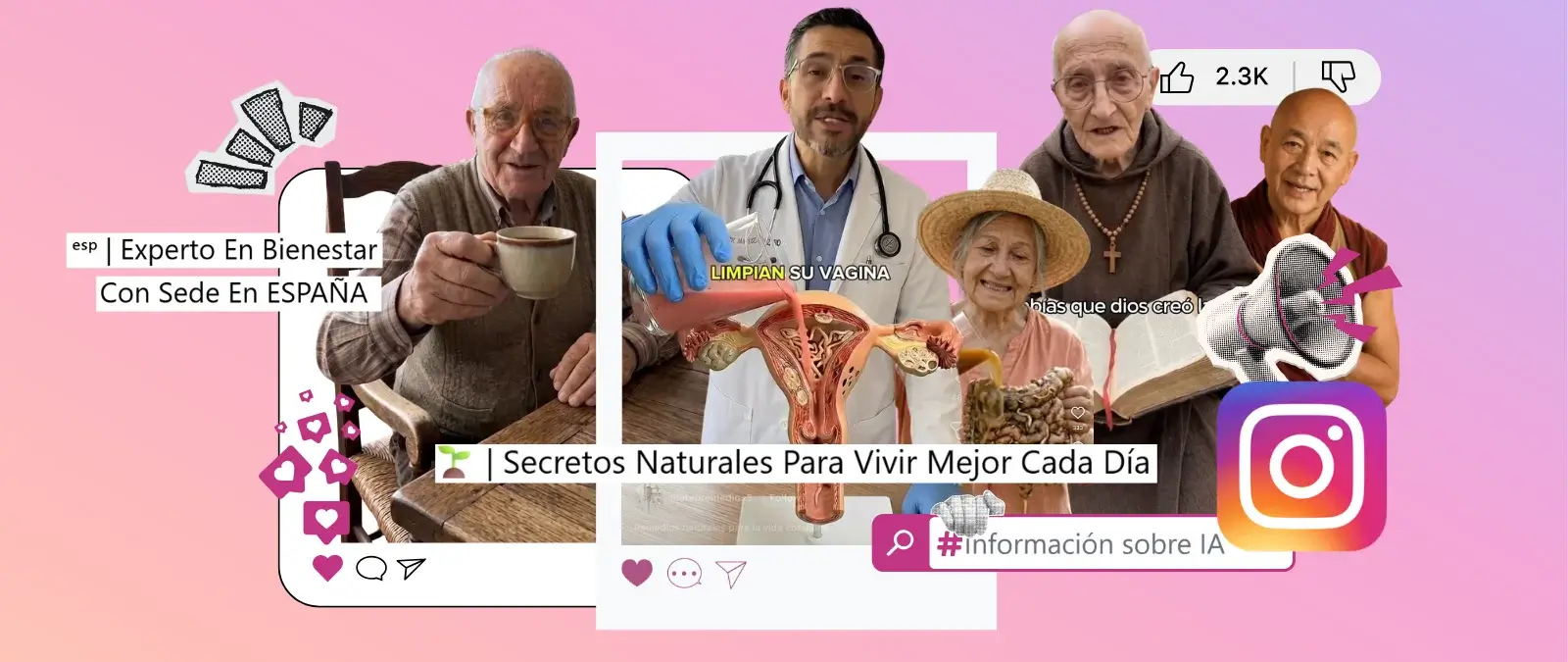
Doctors, quacks, and healers: 50 AI-generated profiles in Spanish designed to sell you false health advice on Instagram 📲 ¡Pincha aquí y sigue el canal de WhatsApp de Maldita.es para que no te la cuelen! The Instagram account paulina.secretos.salud claims that all you need is crushed ginger on the soles of your feet overnight to make foot, knee, and back pain disappear. Doctors have no explanation for this, says the woman in the video, a Black woman with short, graying hair sitting in front of a U.S. flag and several diplomas (a setting intended to simulate a doctors office). Paulina does not exist (she is an AI-generated avatar), and her advice is not supported by scientific evidence.Monk Chen, Paco del Campo, and Paulina are three of the 50 profiles analyzed that use AI to spread health-related misinformation in Spanish on this platform. Most of these accounts are relatively new: 84 (42) were created between February and June 2026. In just five months, these profiles have posted more than 3,100 videos (57.8 of the total content from all the accounts analyzed). Collectively, these 50 accounts have more than 12.6 million followers.Two of the accounts that use artificial intelligence to spread supposed health tips. Source: Instagram.50 accounts that post content in Spanish from 14 different countriesAlthough all of these accounts post content exclusively in Spanish, only 17 of them are located in Spain, Peru, or Argentina. The remaining 34 (this information is not available for one of the profiles) are located in 11 other non-Spanish-speaking countries. In fact, the United States is the most common location in the sample; according to Instagram, this is the location of the profiles in 19 of the 49 cases. Less than 35 of the accounts are located in a Spanish-speaking country List of countries where the 49* accounts are located, according to information available on Instagram. Each emoji represents one of the profiles. Germany Argentina Belgium Brazil Spain United States France Georgia Indonesia Morocco Myanmar Peru United Kingdom Vietnam *This information was not available for one of the accounts. Source: Instagram Even other profiles, which, according to the platform, are located outside North America, claim to be connected to the United States. Mateo Rodriguez, a profile based in Germany, writes in his bio: Wellness expert based in Austin, Texas (sic). His content consists mainly of videos set in American supermarket chains such as Costco, Walmart, Walgreens, Target and Sprouts. Samuels profile, which claims to share Amish remedies your doctor will never tell you about, is based in Belgium. However, his bio states that he is based in the United States. Furthermore, in several of his videos, U.S. flags can be seen in the background, a recurring element in the videos from the accounts we analyzed. Gemini, Googles AI, detects the SynthID watermark in all of this content, a technology imperceptible to the human eye that identifies content generated using its AI models.Profiles that include references to the United States in their bios, even though they are located in other countries. Source: Instagram.Remedies and treatments that traditional medicine doesnt tell you about and tested over the years, these are the arguments they use to convince usersThe protagonists of these accounts are not always the same. They range from men and women in rural areas to preachers of different religions or Shaolin masters (a lifestyle that combines Buddhism, Zen meditation and martial arts). A common trait among all these fictional characters is their age: these accounts use avatars of advanced age. Another common type of subject in these accounts are younger characters (also created with AI), often depicted in settings that mimic doctors offices or with profile pictures showing them dressed as healthcare workers. They call themselves wellness experts, and in several examples, terms such as holistic health or naturopath appear. They use these characters as an appeal to authority, capitalizing on the credibility commonly associated with older people and the reputation of health experts and scientists.Accounts that use various different characters to offer supposed health advice in their AI-generated videos. Source: Instagram.These arent the only strategies they use to gain users trust. In their bios, we see phrases like what your grandmother knew but the pharmacy wont tell you, ancestral wisdom for modern life, or ancestral knowledge from my rural community about natural health to make people believe that the supposed health secrets they provide are remedies or treatments not found in evidence-based medicine. To convince users that their methods have been tested over many years, they use phrases such as 40 years of remedies Ive lived by, not just read about, 70 years of natural remedies or more than 20 years recommending natural remedies.These messages can pose a risk to users by increasing the likelihood that they will self-diagnose conditions they do not actually have or believe that the pseudo-treatments and advice from these accounts are effective, thereby dismissing scientifically validated and truly effective methods. This, in turn, can lead to widespread distrust of the healthcare system and of science as a whole. Social Media doesnt care. We do. Help us fight their indifference. DONATE Guides offering so-called tips or supplements, the products these accounts are trying to sell youWhat is the purpose of leading users to believe that there are real people behind these profiles offering advice that works? Four out of every five accounts are trying to sell something. In 40 of the 50 cases analyzed, there is a link to a website selling a product. Half (23) are selling a book, a guide, or a document containing supposed health advice or treatments. In some cases, its even the same product. Ten of these 23 accounts link to a book titled 200 Natural Solutions for Everyday Problems, written by Marina Lopez, of whom there is no trace. It is sold on Amazon for around 31 euros.Daniel Fernández-Viagas, an expert in privacy and cybersecurity, and the blessed soul who has lent us his superpowers, explains that links generated through Amazons affiliate program typically contain tracking codes that allow each purchase made through that URL to generate a commission for the account holder. In this way, these profiles earn profits even when the sale takes place on external platforms.The guides sold by seven other accounts are visually very similar. Although there are slight variations in the titles, the covers displayed on the sales websites follow the same style. These products are priced between 17.45 and 9.99 euros, based on the discounts available at the time of our research. According to Fernández-Viagas, the production cost of these products is zero when artificial intelligence is used to generate them, so the return on investment can be very high. In other words, in the experts words, in these cases there is little risk and plenty of opportunities to make a profit.Guides and books arent the only things they sell. The links on the other 17 accounts lead to various types of dietary supplements. All of these profiles, except one, sell these products through Amazon, where the catalog varies depending on the country from which the purchase is made. In 16 of these cases, for example, the supplements cannot be purchased from Spain (in all of them, the message No offers available appears). However, we have verified that they are available in the United States.Experts say these supplements are unnecessary for the general healthy population. Furthermore, taking them on ones own initiative, without a doctors prescription, could pose risks to consumers: liver damage, poisoning, vitamin toxicity and similar conditions are some of the consequences experts point out.The cursed Daniel Fernández-Viagas, an expert in privacy and cybersecurity, has contributed his superpowers to this article.Thanks to your superpowers, knowledge, and experience, we can fight lies more effectively. The Maldita.es community is essential to stopping misinformation. Help us in this battle: send us any hoaxes you come across via our WhatsApp service, lend us your superpowers, share our fact-checks, and become an Ambassador. Methodology For this article, Maldita.es has compiled a list of 50 Instagram accounts that use artificial intelligence to share health-related content. Some of these profiles appeared organically in the platforms feed, while others were added after conducting a search among the followers of the first accounts included in the list. The accounts were created between December 2014 and June 2026, and at the time of data collection (conducted between July 20 and 21, 2026), they had a combined total of more than 12.6 million followers and more than 5,400 posts. As of July 27, some of the profiles had been removed from the platform. For each of these accounts, the following information was collected: link (also archived or accompanied by a screenshot if that was not possible), username, and profile name (which does not necessarily match the username and may overlap with those of other users), platform ID (extracted using a tool from My OSINT Tools), whether or not the account was verified, the number of times the name has been changed, the country listed by the platform (which explains on its website that this is determined based on the accounts activity), the bio text, the creation date, number of posts, followers, and users it follows. Each and every one of the 50 accounts was also checked to see if there were other profiles with the same characteristics among those it followed. We also collected and analyzed the links available both in the biography and in other sections of the profile, such as featured stories. In total, 40 of the 50 accounts had a visible URL where they sold some type of product on various external platforms. A foreign VPN (Virtual Private Network) was used to access products not available in Spain. The lowest price for each of these items was recorded, taking into account any discounts available at the time of data collection. To determine whether the content was generated by artificial intelligence, we used Gemini, Googles AI, which is capable of detecting SynthID watermark, a technology imperceptible to the human eye that identifies content generated using its AI models. Some of the content had a visible watermark in the video. Our observations have shown us that there are more accounts with these characteristics available on the platform; therefore, while the sample included in this article does not cover all profiles, it does represent the phenomenon. If you have any questions, please contact us at investigacion@maldita.es
maldita · about 12 hours ago
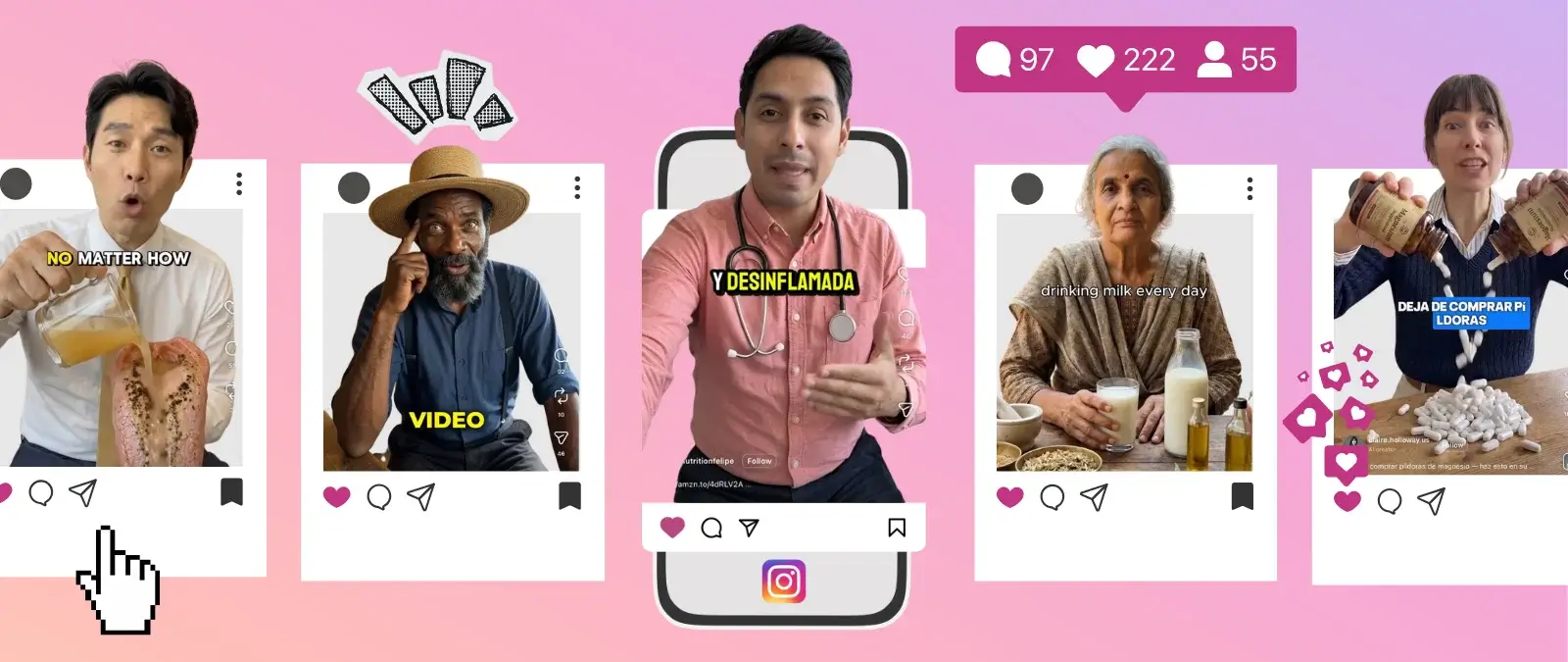
The coordinated network of 250 AI slop accounts on Instagram selling you health supplements: identical patterns seeking to monetise The similarities between the Instagram profile Eli Hosteler (@ eli.hosteler ), which describes itself as an "Amish herbalist" living in the United States, and that of Ernesto Salute (@ernestosalute), who claims to live in the Italian region of Trentino, or with the monk Fray Lorenzo (@fraylorenzoreflexiones), are greater than the differences. All of these profiles were generated using artificial intelligence (AI), most were created during 2026, their descriptions share the same structure, and almost all of them aim to sell you something, usually supplements or books and guides that also appear to have been written by AI.These characteristics, among many others, are evidence of coordination and the use of similar templates, which allow them to create profiles en masse and through which 250 accounts analyzed by Maldita.es have been replicated. The objective, according to cybersecurity expert and Maldita.es contributor Daniel Fernández-Viagas, who has lent us his expertise, is to test niches and make money selling supplements and guides .Almost 77 of accounts were created in 2026An analysis of the 250 accounts we monitored shows that 192 were created between January and June 2026, indicating that the network began actively operating during that period. March and April saw the highest number of new Instagram accounts created, with an average of 48 new profiles each month. Although some accounts were created in previous years, the first videos available on those profiles are recent. For example, the first posts on the five accounts created in 2022 were made between 2025 and 2026. Some of the initial videos cover topics completely unrelated to what they publish now . For instance, the first videos, published in February 2025, on the Jae Kim Skin account, created in 2022, are about parents and newborns. Now, this profile is a supposed expert in facial care and doesnt post anything about parents and babies, clear evidence that, as Daniel Fernández-Viagas explained, they are testing niches.Another indication that this operation has only recently begun is that 131 of the 250 accounts analyzed by Maldita.es have undergone at least one name change. In fact, some, like Herbalance Lab, have accumulated up to 11 name changes since their creation in 2022, even though their first visible video was published on January 1, 2026.Name changes for the accounts @herbalance_lab, @marjorieholistics, and @voxayomiOn the other hand, we found that more than half of the accounts, 57.4, follow other accounts within the network. For example, Paulina Secretos Salud follows Amish Folk Remedies, Grandma June, Holistic Chen, and Mother Juba, among others. Mother Juba, in turn, follows Shaman Glenroy , a profile of a supposed shaman, who in turn follows Dr. Miriam Beiler , who describes herself as a "Doctor of Traditional American Medicine" and sells yerba mate energy drinks. And so on.Paulina Secretos Saluds account follows Mother Juba, who in turn follows Shaman Glenroy, who follows Miriam Beiler. Social Media doesnt care. We do. Help us fight their indifference. DONATE Chen monks and other profiles that share similar patternsFurther evidence of coordination among these accounts lies in the names they choose for these AI-generated characters, which are often very similar with only slight variations. For example, 12 accounts include the word "wellness" in their username: WellnessMaddie, wellnesswithjacob1, and Mayalin_wellness; three use the word "abuela" (grandmother) in Spanish: " abuela_lopez7," "Abuela.Remedies," and "Abuela Rosa"; and one uses the English word " grandmatruth" or the masculine form "Granddad Roy." Another 14 use "health" or "healthy"; five contain "herbal," and another five "holistic," among others.Sample profiles that have the word "health", "wellness" or "grandmother" in their name or handle.Many profiles not only have nearly identical names or characters, but they also use the same profile picture and the same names, one in Spanish and the other in English. This is the case with two accounts of monks named Chen (@monch_chen and @monjechen). Its a name they use consistently. We found six accounts with the name Chen: @ chenwei.sante, Chen Lao (@chen.lao12), Leo Chen (@leo.chenn_), Monch chen (@monch_chen) , Mei Lin Chen (@vovomeii), and Monaco Chen (@monacochenn), and three accounts using Shen: Shen Mu (@shenmuhealer), Shen Yu (@monkshen), and Ravi Shen (@oravishen).The profiles of Monch Chen and Monje Chen.The elements that appear in the videos are also repeated in these profiles. For example, the American flag is present in many of them. We also observe that the characters regularly appear in front of or inside what appear to be large retail stores like Costco or Walmart. The cybersecurity expert emphasizes that this use of the flag and American-oriented language is due to demographic and cultural segmentation aimed at selling products.Sample videos featuring the United States flag or a supermarket chains logo. ¿Crees que te ha llegado un bulo? Verifica en nuestro chatbot de WhatsApp (+34 644 229 319) Same types of profiles, locations, and account descriptionsThe 250 accounts revolve around four main categories of profiles: rural elders, "holistic" practitioners, shamans or Easterners, and religious figures. Looking at their descriptions, almost all share the same structure: three lines of text and a link. "An attempt to project authority, but selling solutions that are unproven, unscientific, or unvalidated," explains Fernández-Viagas.Among the most used words in these profile descriptions are health, wellness; years, natural, holistic or wisdom. These words are in English, as 61.2 of these profiles are in that language. Spanish follows with 50 profiles. Regarding the country where Instagram places these accounts, more than half ( 132 out of 250) are in the United States. The rest are located in other countries such as Spain (15), France (19), Brazil (18), the United Kingdom (12), Canada (8), and Germany (8), among others. More than half of the accounts have their Instagram location in the United States List of countries where the 250* accounts are located, according to information available on Instagram. The length of each bar represents the percentage of profiles located in each country. US France Spain Brazil United Kingdom Germany Canada Italy Australia —No shared Sweden Indonesia *The following countries have been removed from the visualization as they represent less than 1: Argentina, Portugal, Vietnam, Benin, Belgium, Colombia, United Arab Emirates, Georgia, Luxembourg, Morocco, Montenegro, Myanmar, Palestine, Peru, Poland, Romania, Russia and Thailand. Furthermore, the profile descriptions are characterised by the use of similar formulas, which consist of four parts:Presentation of the expert or reference: holistic expert, wellness specialist, member of the Amish community, etc.Authority: They tell you why you should trust them with phrases like "Based on ancestral wisdom," "Certified," "More than 10 years of experience," and others.Benefit: what those who follow them would obtain: health tips, wellness secrets, longevity.What you have to do, the call to action : follow us for daily health tips, get my guide, link below and click here.Sample of profile descriptions that, as we can see, correspond to the same type of structure.This would indicate that most of the profiles analysed use templates to create these descriptions, substituting some of the variables to avoid being identical. There are public and commercial collections of prompts and templates optimised for generating scripts and short texts like these profile descriptions, as well as user-generated content with a clear component of creating avatars that inspire credibility or approachability, explains privacy and cybersecurity expert Daniel Fernández-Viagas. Its relatively cheap and quick to produce a large volume of accounts and videos, and the technical barrier is low, which is why its so widespread. Plus, it works for many people, and theyre making money quickly , he adds.Another shared characteristic is the use of emojis ; over 95 of profiles include at least one in their profile description, with the following being the most common: 👇, 🌿, 🇺🇸, ⬇️, ✨, 🌱, 👇🏻, 📖. According to the cybersecurity expert, "the recurrence of the same set of emojis and phrases shortens creation time and maintains brand consistency."56 of the accounts sell some type of supplement, and 32 sell books or guides with indications of having been created with AIAll these profiles share a common purpose: to gain followers and encourage them to buy the products they sell by clicking on a link visible in their profile bio or posts. While not all of them sell the same thing, most offer supplements such as beetroot root, rhodiola, or probiotics. More than half of the accounts (56) sell some type of dietary supplement , primarily through Amazon, but also through other external websites. However, many of the products advertised for the United States are not sold on Amazon Spain.Similarly, 32.4 of the profiles we analysed sell some type of guide or book, which are the second most offered type of product after supplements. In fact, 11 accounts , mostly targeting the Spanish-speaking audience in the United States, sell the book "200 Natural Solutions for Everyday Problems" by someone named Marina López, an author about whom no trace can be found. We also found profiles, such as that of Fray Lorenzo Reflexiones , that sell their own guides. This AI-generated friar provides a link in his profile biography that redirects to a website with the same name, which claims to be located in Logroño (La Rioja, Spain). The website also features the supposed AI-generated friar and displays images of people with the book, which sells for €9.99, also created with this technology. Maldita.es has contacted the website and the email address listed there, asking who wrote the book and requesting any information about the person behind it, but we have not received a response as of the publication date of this article. The website for the guide sold by Monk Chen is identical to the one promoted by Fray Lorenzo. Both are also listed at the same price, €9.99, although both claim its a discount and that the original price is €19.99. Another detail: both sales websites feature the same review, supposedly from a user named "María R." These similarities are common on websites where these guides and books are sold online. At Maldita.es, weve already warned about the use of fake reviews to lend credibility to services. Websites where the book advertising the profile of Monk Chen and the one advertising Friar Lawrence are sold.Other books claim to be related to ancestral remedies, Buddhist themes, or ancestral rituals, among other things. They all share similar characteristics and show signs of having been created with AI: for example, we found no information about the author Marina Martín, the supposed author of the book "200 Natural Solutions for Everyday Problems"; there is no trace of the supposed Fray Lorenzo or Monk Chen, since the images in which they both appear were generated with AI, and on the two identical websites, we find the same review by someone named María R. In no case do they offer any proof that a real person is writing these books or that these religious figures are real people.This article was written with the help of the damned Daniel Fernández-Viagas, an expert in privacy and cybersecurity, who used his superpowers to contribute his expertise.Thanks to your superpowers, knowledge, and experience, we can fight lies more effectively. The Maldita.es community is essential to stopping disinformation. Help us in this battle: send us the hoaxes you receive via our WhatsApp service, lend us your superpowers , share our fact-checks, and become an Ambassador .
maldita · about 12 hours ago
Why Cyprus crows are smarter than you think Spending the past year feeding the neighborhood crows has changed the way I see them. What began as a simple routine soon became something stranger. They learned a whistle, anticipated feeding times, and even began appearing outside different windows of the house. Watching them steal cat food and scare away pigeons, I began to wonder […]
cyprus mail · about 12 hours ago
Number of Google Searches to Visit BiH jumped by 5, 800 Percent: Growing Tourist Interest Following the World Cup The travel experts singled out Bosnia and Herzegovina as a hidden gem worth visiting in 2026, which became the most popular country for tourists. The experts from Iglu Cruise used Google research data to confirm which countries are heavily visited following the World Cup. Although the World Cup has ended, it is noted that the […] The post Number of Google Searches to Visit BiH jumped by 5, 800 Percent: Growing Tourist Interest Following the World Cup appeared first on Sarajevo Times.
sarajevo times · about 12 hours ago
Diego Luna to Receive the Honorary Heart of Sarajevo at the 32nd SFF In recognition of his outstanding career and indelible contribution to cinema, Diego Luna will receive the Honorary Heart of Sarajevo at the 32nd Sarajevo Film Festival. Luna is a Mexican actor, director and producer whose work across film, television and theatre bridges across global audiences. Guided by his artistic prowess in front of and behind […] The post Diego Luna to Receive the Honorary Heart of Sarajevo at the 32nd SFF appeared first on Sarajevo Times.
sarajevo times · about 12 hours ago

Realizador Pedro Costa recebe prémio Robert Bresson Pedro Costa vai receber o Prémio Robert Bresson a 5 de setembro, num dos eventos paralelos do Festival Internacional de Cinema de Veneza
observador · about 12 hours ago
Mi chiedevano: Perché le persone dovrebbero vedere questo film?. E io pensavo: Non dovrebbero. Perché è una schifezza: la confessione spiazzante di Tom Holland Non capita spesso che un attore parli in maniera negativa di alcuni dei film in cui ha recitato. Eppure Tom Holland lo ha fatto senza troppi giri di parole. Ospite del podcast Dish, linterprete britannico ha confessato che, in passato, promuovere alcune pellicole è stato tuttaltro che semplice, arrivando ad ammettere che, dentro di sé, […] Larticolo Mi chiedevano: Perché le persone dovrebbero vedere questo film?. E io pensavo: Non dovrebbero. Perché è una schifezza: la confessione spiazzante di Tom Holland proviene da Il Fatto Quotidiano.
il fatto quotidiano · about 12 hours ago
Filmstudio laat uitgelekte versie The Odyssey van X halen Filmstudio Universal heeft een illegale, uitgelekte versie van bioscoophit The Odyssey van X laten halen. De film werd op X aangeprezen met de tekst "Iemand heeft The Odyssey helemaal op X gezet, geloof je dat?" Het account waarop de film werd aangeboden, werd na een kleine drie uur offline gehaald. Maar voordat dat gebeurde, hadden zon drie miljoen mensen het bericht gezien en de film bekeken.
rtl nieuws · about 12 hours ago
Radio 10-dj Jeroen Nieuwenhuize verwelkomt zoon: Ons gezin is compleet Radio 10-dj Jeroen Nieuwenhuize en zijn vriendin Tessa Kortlevers zijn ouders geworden van een zoon genaamd Beau. "Sinds afgelopen vrijdag is ons gezin compleet", laten ze weten op Instagram.
nu.nl · about 12 hours ago
Lisette Wellens verlaat WNL na negen jaar: Onvoldoende ruimte voor ambities Lisette Wellens neemt na negen jaar afscheid van WNL. De Goedemorgen Nederland-presentatrice laat op Instagram weten dat er bij de omroep "onvoldoende ruimte" is om haar ambities waar te maken.
nu.nl · about 12 hours ago
Nach Hundeattacke in Potsdam: Neues Schwanenglück am Schloss Sanssouci Vor einem Jahr hatte ein Hund einen Schwan im Park Sanssouci totgebissen. Jetzt sorgt eine neue Schwanenfamilie für entzückte Besucher in Potsdam.
tagesspiegel · about 12 hours ago