
Armenia votes in high-stakes election as neighbors jockey for influence amid economic crisis
Story Timeline
4 months · 3 summary articles
Turkic leaders unveil non-binding roadmaps to boost regional trade and energy ties
International monitors declare Armenias 2026 elections procedurally sound but warn of deep societal divisions
Armenia votes in high-stakes election as neighbors jockey for influence amid economic crisis
Armenia’s parliamentary elections on Tuesday have become a regional flashpoint, with neighboring powers jockeying for influence as voters weigh economic recovery against geopolitical alignment. The vote, the third in as many years, pits Prime Minister Nikol Pashinyan’s reformist Civil Contract party against a resurgent opposition coalition led by former president Robert Kocharyan, who has vowed to reset Armenia’s foreign policy toward Russia and Iran. International monitors from the OSCE and the European Parliament are already warning of irregularities after reports of voter intimidation in border regions near Azerbaijan and Turkey.
The election comes at a critical juncture for Armenia’s economy, which contracted by 7.4% in 2025 amid blockades by Azerbaijan and Turkey and the collapse of trade routes through Georgia. On Monday, Turkish Trade Minister Ömer Bolat announced plans to boost bilateral trade with Syria to $10 billion by the early 2030s and open new customs crossings, a move analysts say could further isolate Armenia unless Yerevan secures alternative transit deals . Syrian Economy Minister Mohammad Nidal al-Shaar, addressing the Anadolu City Economies Summit in Gaziantep, called Türkiye “our natural partner” and urged Turkish investors to return as Damascus reopens factories and drafts new trade laws .
Armenia’s opposition has seized on the economic strain, with Kocharyan’s Armenia Alliance promising to reopen the closed Turkish-Armenian border and restore trade with Iran. “We will end the blockade and bring back prosperity,” Kocharyan told supporters in Yerevan on Monday. Pashinyan, meanwhile, has staked his campaign on closer ties with the European Union, which on Friday launched T-MED, a €25 billion initiative to accelerate renewable energy deployment across the Mediterranean and reduce regional dependence on fossil fuels .
The elections also carry implications for regional security. On Wednesday, Turkish Foreign Minister Hakan Fidan will represent President Recep Tayyip Erdoğan at the Southeast European Cooperation Process summit in Sofia, where he is expected to outline Ankara’s vision for stability amid ongoing conflicts in Ukraine and the South Caucasus . Meanwhile, the Asian Development Bank on Monday approved a $750 million loan to finance the Istanbul North Rail Crossing Project, a 127-kilometer line that will reinforce Türkiye’s role as a key link between Asia and Europe and could divert transit traffic away from Armenia .
With polls closing at 8 p.m. local time, early indications suggest a tight race. The Central Election Commission has deployed 12,000 monitors to polling stations, but concerns persist over the integrity of the vote-counting process. “This election is not just about Armenia,” said Richard Giragosian, director of the Regional Studies Center in Yerevan. “It is a test of whether the country can break free from the shadow of its neighbors—or be pulled deeper into their orbit.”
Follow us for live European news
- 2
- 2
- 2
- 1
- 1
- 1
- 1
- 1
- 1
- 1
- 1
- 1
2 further sources not geolocated
Articles

ULVI KÕRGEMAA ⟩ Tervishoiuhariduse efektid Eesti äärealadele Rakenduslik tervishoiuharidus ei ole üksnes tööjõupuuduse lappija, vaid ka piirkondliku ebavõrdsuse vähendamise vahend. Inimest hoidev tervishoiuharidus, mis toetab nii õppureid kui ka spetsialistide jõudmist üle Eesti, peaks olema meie ühiskondlik valik ajal, mil tervishoid seisab silmitsi üha süveneva tööjõukriisiga, kirjutab Tallinna Tervishoiu Kõrgkooli õppeprorektor Ulvi Kõrgemaa.
postimees · 4 months ago
Former ECtHR judge warns of end of democracy in Turkey, calls for united struggle Former European Court of Human Rights (ECtHR) judge Rıza Türmen has warned that democracy in Turkey has been dismantled and replaced by an authoritarian order under the ruling Justice and Development Party (AKP), calling for a broad social movement to resist it. In an interview with the Yeni Yaşam daily, Türmen said conventional political channels […] The post Former ECtHR judge warns of end of democracy in Turkey, calls for united struggle appeared first on Stockholm Center for Freedom.
stockholm center for freedom · 4 months ago
Anadolu City Economies Summit gathers Türkiye, Syria business leaders in Gaziantep The Anadolu City Economies Summit Gaziantep-Aleppo kicked off in Türkiyes Gaziantep province, focusing on revived trade, logistics, and production ties between Türkiye and Syria. Turkish Trade Minister Omer Bolat and Syrian Economy Minister Mohammad Nidal al-Shaar discussed cooperation opportunities. The summit aimed to contribute to Syrias reconstruction and regional economic integration.
yenisafak · 4 months ago
South Korea approves decree for $350 billion investment in US South Koreas Cabinet approved the enforcement decree for a special law tied to a $350 billion investment pledge to the US, including $150 billion for shipbuilding cooperation and $200 billion for other strategic sectors. The decree follows a special act passed in March and will take effect on June 18. A new joint investment corporation will be established.
yenisafak · 4 months ago
Türkiyes Fidan to represent Erdogan at SEECP summit in Sofia Foreign Minister Hakan Fidan will represent President Recep Tayyip Erdogan at the Southeast European Cooperation Process summit in Sofia on Wednesday, where he is expected to outline Ankaras vision for regional stability and address ongoing security challenges across Europe and the Middle East.
yenisafak · 4 months ago
Türkiye targets $10B trade with Syria, new customs gates Turkish Trade Minister Ömer Bolat announced plans to boost bilateral trade with Syria to $10 billion by the early 2030s and open new customs crossings, as officials gathered in Gaziantep for a summit aimed at deepening economic integration between the two nations.
yenisafak · 4 months ago
Syrian economy minister hails Türkiye as natural partner Syrias Economy Minister Mohammad Nidal al-Shaar tells Anadolus City Economies Summit that Damascus views Türkiye as its "natural partner," urging Turkish investors to return as the war-torn nation reopens thousands of factories and drafts new trade laws.
yenisafak · 4 months ago
ADB approves $750M loan for new Türkiye railway line The Asian Development Bank has approved a €645.83 million ($750 million) loan to finance the Istanbul North Rail Crossing Project, stating that the 127-kilometer line will reinforce Türkiyes strategic role as a key link between Asia and Europe while relieving supply chain bottlenecks for passengers and freight.
yenisafak · 4 months ago
HS Tanskassa | Sikafarmari muistaa vieläkin emakon numero 34 Sianliha on Tanskalle merkittävä vientituote, mutta perinteinen elinkeino on nyt murroksessa. Sikatalouden haitat ja eläinten oikeudet puhuttavat jopa tanskalaisia.
helsingin sanomat · 4 months ago

Solarpunk : la survie en douceur, grâce à lénergie solaire Cest un jeu de survie un peu à part que propose le studio indépendant allemand Cyberwave. Solarpunk, sorti le 8 juin, invite à sinstaller sur un archipel, volant en respectant la nature et en utilisant des énergies renouvelables. Lutopie verte est un vrai bol dair, estime le tabloïd Metro.
courrier international · 4 months ago

À Pyongyang, Kim et Xi célèbrent lamitié invincible qui lie Chine et Corée du Nord Le président chinois Xi Jinping achève le mardi 9 juin une visite de deux jours en Corée du Nord, où il a tenté de ramener dans son giron son homologue Kim Jong-un, enhardi ces derniers temps par son alliance avec la Russie. Pékin a notamment donné des gages en faveur du programme nucléaire nord-coréen.
courrier international · 4 months ago

Bei der Mega-WM ist die Katastrophe für das Klima programmiert Die WM in den USA, Kanada und Mexiko stellt Katar 2022 bei negativen Auswirkungen für das Klima locker in den Schatten. Ökonom Simms: "Die WM 2026 wird die umweltschädlichste aller Zeiten"
der standard · 4 months ago
Cea mai surprinzătoare poveste de succes economic din lume este Coreea de Nord. Cum a fentat regimul lui Kim Jong-un sancțiunile În ciuda izolării diplomatice și a unora dintre cele mai dure sancțiuni din lume, Coreea de Nord traversează o perioadă de revigorare economică surprinzătoare. Motoarele acestei transformări? Vânzările masive de armament către Rusia, sprijinul financiar din partea Chinei și o economie digitală emerg
adevarul · 4 months ago
The EU launches T-MED: cooperation and investment to accelerate the roll-out of renewables in the Mediterranean region Brussels aims to mobilise up to €25 billion in investment to accelerate the transition to green energy in the region. Jørgensen: "Diversifying our supply of fossil fuels is not enough to protect us from energy shocks," but we need "electrified systems based on clean energy, modern grids, and greater connectivity"
eunews.it · 4 months ago
29 May 2026 - Armenia Election Monitor - Upcoming elections in Armenia: why is it important? - a view from Azerbaijan
commonspace · 4 months ago
Assam CM Himanta Biswa Sarma Welcomes EUs Blue Valley Cluster
gdeltproject.org · 4 months ago
Nigel Farage to headline Liz Trusss UK CPAC event after apparent snub Reform had previously suggested Farage would be steering clear of event, modelled on US conservative gatheringUK politics live – latest updatesNigel Farage will be headlining at an American conservative summit brought to the UK by Liz Truss next month alongside hard-right speakers, despite his party previously suggesting he would be steering clear.The Reform UK leader has announced he will speak in July at the Conservative Political Action Conference (CPAC), which claims it wants to save Britain, save the west. Continue reading...
theguardian · 4 months ago
O rulotă produsă de o companie din Turcia se transformă într-o locuință de peste 20 de metri pătrați. Cum funcționează sistemul de extindere O rulotă care ocupă puțin peste 8 metri pătrați în timpul transportului se poate transforma, după instalare într-o locuință cu o suprafață de peste 20 de metri pătrați. Modelul, prezentat de un producător din Turcia, prevede două extensii laterale care se deschid asemenea unui acordeon și măresc spațiul de locuit. Conceptul nu este complet nou, …
hotnews.ro · 4 months ago
Spor o Ankaru na pokračování Když prezident republiky kráčel v pondělí za letního počasí procházkou z Hradu na Klárov do sídla vlády, muselo mu být jasné, že se nejspíš ohledně své účasti na červencovém summitu NATO nic nedozví. Kabinet sice původně o složení delegace do turecké Ankary měl 8. června rozhodovat, jenomže když Petr Pavel ohlásil, že se na rokování osobně dostaví, jak má kdykoli právo, premiér Andrej Babiš (ANO) bod odsunul o dva týdny.
irozhlas.cz · 4 months ago
Nucleare, Parisi: Una distrazione rispetto ai problemi che abbiamo in Italia. Abbiamo unenorme disponibilità di energia solare Abbiamo unenorme disponibilità di energia basata sul solare, però per usare lenergia solare è necessario anche ammodernare la rete per cui è necessario fare una serie di lavori sulle centrali elettriche per usarle come accumulatori. Lo dice il premio Nobel, Giorgio Parisi, al seminario di studi sulla IA organizzato dal Pd. Il nucleare adesso è […] Larticolo Nucleare, Parisi: Una distrazione rispetto ai problemi che abbiamo in Italia. Abbiamo unenorme disponibilità di energia solare proviene da Il Fatto Quotidiano.
il fatto quotidiano · 4 months ago
Turkije lanceert op klimaattop plan om wereldwijd meer energie uit stroom te halen De overgang van fossiele energie naar elektriciteit staat dit jaar centraal op de klimaattop in Turkije, heeft de voorzitter laten weten. Hij hoopt dat meer landen zich de komende tijd achter het doel scharen om binnen tien jaar 35 procent van de energie uit stroom te halen.
nu.nl · 4 months ago
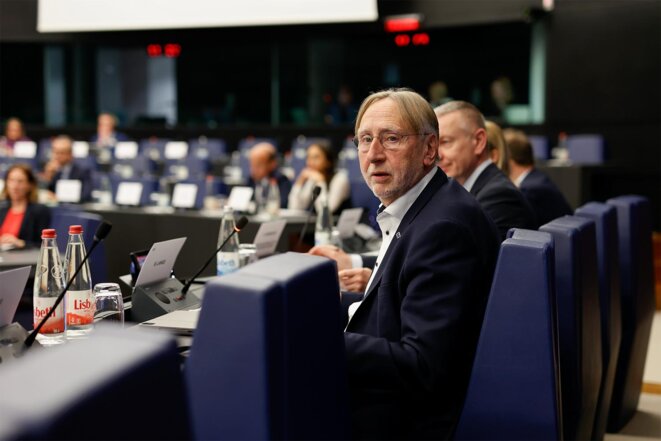
Accord entre lUE et les États-Unis: le négociateur du Parlement est aussi un ami du secteur automobile Les eurodéputés voteront définitivement, mardi 16 juin, sur la partie tarifaire du deal passé entre la présidente de la Commission européenne, Ursula von der Leyen, et le président états-unien, Donald Trump. La version finale du texte doit beaucoup à Bernd Lange, social-démocrate allemand féru de libre-échange.
mediapart · 4 months ago
Turkeys top court says teacher barred from working under post-coup decree suffered rights violations The Turkish Constitutional Court has ruled that a teacher who was barred from working under an emergency decree in the aftermath of a 2016 failed coup suffered rights violations after he was prevented from engaging in his profession for nearly three years and received only limited compensation for the income he lost during that period. […] The post Turkeys top court says teacher barred from working under post-coup decree suffered rights violations appeared first on Stockholm Center for Freedom.
stockholm center for freedom · 4 months ago
Dismissed teachers wife recounts hardship, family rift after Turkeys post-coup crackdown The wife of a teacher dismissed by an emergency decree after a failed coup in Turkey in 2016 has described years of economic hardship, social exclusion and family estrangement after her husband was removed from his job and later imprisoned over alleged links to the faith-based Gülen movement. In an interview on KHK TV, a […] The post Dismissed teachers wife recounts hardship, family rift after Turkeys post-coup crackdown appeared first on Stockholm Center for Freedom.
stockholm center for freedom · 4 months ago

Sok család aggódhat: már egy hét sem maradt az öt éve döcögő napelemes pályázat végső határidejéből Még mindig vannak elakadt projektek az öt éve indult RRF-621 számú napelemes, fűtés-korszerúsítéses pályázatban, pedig június 15-én lejár a végső határidő. A Magyar Napelem Napkollektor Szövetség szerint határidő-hosszabbítás és a gyors kivitelezőváltás lehetővé tétele segíthetne.
hvg.hu · 4 months ago