
Hungarys public broadcasters suspend news output in apology for pro-Orbán propaganda

Story Timeline
15 hours · 2 summary articles
Hungarys public broadcasters suspend news output in apology for pro-Orbán propaganda
Hungarian public media suspends news with apology for past propaganda
Continuation
Hungary’s public broadcasters suspended all news output on Tuesday afternoon, replacing scheduled programming with a black screen and a public apology for years of pro-government propaganda under former prime minister Viktor Orbán. Prime Minister Péter Magyar hailed the move as “a historic day” and said it marked the end of state propaganda on public-service platforms.
The blackout began shortly after Magyar’s government installed interim managers at MTVA, Hungary’s state media group, and dismissed senior staff accused of bias toward Orbán’s Fidesz party. M1, the flagship news channel, displayed a scrolling message in Hungarian and English: “Public media cannot lie. We are sorry we did it for so long.” The apology also stated that the outlets were being transformed to become independent and credible. Radio Kossuth followed suit, replacing news bulletins with cultural programming.
Magyar, who took office in May after his Tisza party won a parliamentary majority in April’s elections, announced the suspension on Facebook. “Tonight propaganda ends on public-service platforms,” he wrote. “They lied day and night, on every frequency. That is over.” The government said the blackout would last until M1 resumes scheduled programming at 8 p.m. local time, though without news content.
The interim leadership named by the government includes Zsófia Mészáros as director of online news services, Balázs Bodacz as head of news production, and György Kerényi as head of Hungarian Radio. Their mandate is to review MTVA’s operations, purge pro-Orbán personnel, and draft a new media law to be submitted this autumn. The law is expected to abolish the controversial Media Council, a Fidesz-appointed body that critics say enabled state control over private outlets.
During Orbán’s 16 years in power, public broadcasters functioned as government mouthpieces. Independent reporting on Magyar’s campaign was effectively blocked; M1 did not invite him to any programmes despite his party’s rising poll numbers. The 2011 “gag law” further tightened state control by creating the Media Council, whose members were loyal to Fidesz. The council’s chair, András Koltay, was dismissed five days ago.
International press freedom monitors had long criticised Hungary’s media environment. Reporters Without Borders ranked Hungary 85th out of 180 countries in its 2025 World Press Freedom Index, citing legal harassment, ownership concentration, and the use of advertising boycotts against critical outlets. The European Commission has repeatedly warned Budapest over breaches of EU media pluralism standards.
Magyar’s government has framed the broadcaster shutdown as the first step toward restoring trust. “We are cleaning house,” a government spokesperson told AFP. Opposition parties, however, accuse the prime minister of politicising the public sector and warned that the interim managers lack safeguards against new forms of control. Fidesz has called the move an “authoritarian power grab” and organised protests outside MTVA headquarters.
By evening, M1 had resumed broadcasting classic Hungarian films, with no indication when regular news bulletins would return. The government insists the blackout is temporary and part of a broader reform aimed at depoliticising state media.
Follow us for live European news
- 3
- 2
- 2
- 2
- 1
- 1
- 1
- 1
- 1
- 1
- 1
3 further sources not geolocated
Articles

Un clip al parlamentarului AUR Mihail Neamțu, în care erau promovate suplimente cu luteină, eliminat prin decizia CNA Consiliul Național al Audiovizualului (CNA) a decis, marți, eliminarea unui clip al parlamentarului AUR Mihail Neamţu în care erau promovate o serie de suplimente alimentare. Cazul a ajuns pe masa CNA după ce a primit 562 de sesizări, potrivit Pagina de Media. Este vorba despre un interviu de peste o oră realizat de Mihail Neamțu …
hotnews.ro · about 11 hours ago
Tüntetést szervezett a Fidesz a közmédia elé A Hír Tv pedig úgy érzi, egyedül maradt.
444.hu · about 11 hours ago
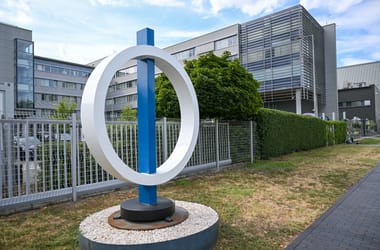
Vezérigazgatói utasítás született a közmédia szünetelő műsorairól és az ideiglenesen leállított szolgáltatásokról Sajtóértesülések szerint Horváth P. András felsorolta, milyen alapelvek szerint kell folytatni a munkát.
hvg.hu · about 11 hours ago
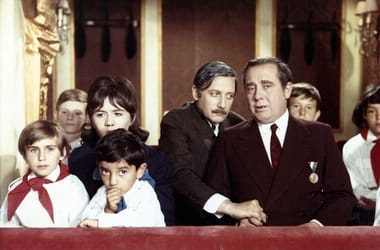
A tanú című filmmel indult el 19:56-kor az M1 átmeneti adása Az állami hírcsatornán egyelőre magyar filmklasszikusokat sugároznak, a hírszolgáltatás csak fokozatosan tér vissza.
hvg.hu · about 11 hours ago
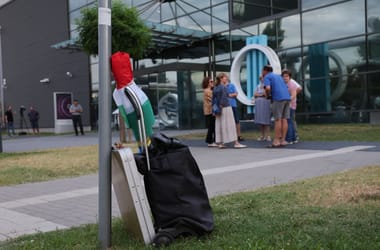
Kisebb csoport tiltakozott a köztévé elsötétítése miatt az MTVA székháza előtt Az eseményt a Védvonal nevével visszaélve szervezték. A Fidesz a csütörtöki demonstrációjával áll majd ki a közmédia ügyében.
hvg.hu · about 11 hours ago
Chudárek o škrtech v ČT: V ohrožení jsou regiony a zahraniční zpravodajové. StarDance zůstane Generální ředitel České televize Hynek Chudárek poprvé veřejně nastínil, jak by se vládní návrh sníženého rozpočtu po zrušení poplatků projevil v provozu veřejnoprávního média. „Zrušit kvótu by bylo optimální, řekl k povinnému podílu produkce z regionů.
denik n · about 11 hours ago

Statlig tv stoppar nyhetssändningar: Ska inte ljuga Statliga medier stoppar nyhetssändningarna i Ungern. Beslutet är en del av premiärminister Peter Magyars arbete med att avveckla det han beskriver som propaganda från Viktor Orbáns tid vid makten. – En historisk dag, skriver Magyar på Facebook.
dagens nyheter · about 11 hours ago
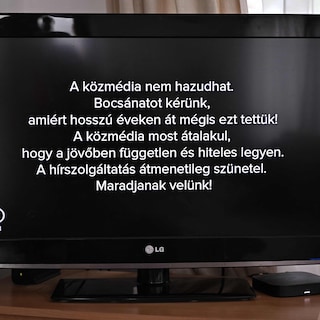
Hongaarse premier Péter Magyar lost belofte in: de publieke omroep gaat op zwart
de volkskrant · about 11 hours ago
Ungheria, la tv pubblica si autosospende e chiede scusa: Nellera Orbán vi abbiamo mentito Il canale M1, fondato nel 1957, ha interrotto le trasmissioni dopo il cambio di management e pubblicato un messaggio su sfondo nero in cui è scritto: I media pubblici si stanno ora trasformando per essere indipendenti e credibili in futuro. E anche la radio si prende una pausa
corriere · about 11 hours ago
LUnità, futuro in bilico: leditore Romeo la chiude, il Pd vuole riacquistarla Il Nazareno è pronto a versare un milione di euro ma dice no a una quota di minoranza dellimprenditore
corriere · about 11 hours ago
Ungarn: Orban-nahes Radio und Fernsehen unterbrechen Betrieb
orf.at · about 11 hours ago
Podcast „wenn sie wüssten: RND gesteht Fehler im Umgang mit Döpfner-Zitaten ein Nachdem der Podcast „Wenn Sie wüssten... verbreitet hatte, Springer-Chef Mathias Döpfner habe Friedrich Merz zur Zusammenarbeit mit der AfD gedrängt, dementierte der Medienkonzern. Nun gesteht das RND Fehler ein.
faz · about 11 hours ago
Medienpolitik der SPD: „Hochwertige Angebote kosten nun mal Geld Der Hamburger Kultursenator Carsten Brosda hat die Koordination der Medienpolitik der SPD-geführten Bundesländer übernommen. Was steht da seiner Ansicht nach an?
faz · about 11 hours ago

🇭🇺 Hungarian public broadcasters close to Viktor Orban have halted broadcasting as part of efforts to undo the longtime nationalist leaders hold on the media, Prime Minister Peter Magyar says Tuesday u.afp.com/SKh9
bluesky_AFP English · about 11 hours ago
Madžarska javna televizija začasno nehala predvajati informativni program Madžarska javna televizija je začasno nehala predvajati informativne oddaje, saj vlada "pregleduje javni medijski servis, da bi postal neodvisen in verodostojen".
rtv slovenia · about 11 hours ago

As notícias das 21h As notícias na Rádio Observador. Aconteça o que acontecer.
observador · about 11 hours ago
Guvernul din Ungaria a oprit emisia televiziunii și radioului de stat: „Mass-media publică nu poate minți Televiziunea publică din Ungaria a anunțat marți că și-a suspendat temporar jurnalele de știri, în contextul în care guvernul reorganizează serviciul public de media pentru a-l face „independent și credibil, notează Reuters. Principalul canal al televiziunii de stat, M1, a afișat un ecran negru cu mesajul: „Mass-media publică nu poate minți. Cu toate acestea, ne …
hotnews.ro · about 11 hours ago
A szöveg, amit Örkény István a Szabad Kossuth Rádió megalakulása napján a rádióban megfogalmazott Kelt Budapesten, 1956. október 30-án.
444.hu · about 11 hours ago
Ungaria începe desființarea „sistemului Orban. Ce includ noile amendamente constituționale propuse de partidul lui Magyar Parlamentul ungar începe marţi să discute o serie de amendamente constituţionale menite să destructureze „sistemul fostului premier naţionalist Viktor Orban, al cărui partid va organiza joi un protest împotriva „tiraniei actualei puteri a premierului Peter Magyar.
digi24 · about 12 hours ago
Jocuri de culise. Noul premier al Ungariei, Peter Magyar, este acuzat de Viktor Orban de „autocrație Peter Magyar, prim-ministrul ungar, a înaintat Parlamentului cel de-al 17-lea amendament constituțional al guvernului său înainte de a pleca, săptămâna aceasta, spre summitul NATO de la Ankara, Turcia, scrie Euractiv.
digi24 · about 12 hours ago
Hongarije pakt propagandaomroep Orbán aan: geen nieuws meer, alleen films In Hongarije is de staatsomroep dinsdag voorlopig gestopt met het uitzenden van nieuws op de televisie en radio. De regering van premier Péter Magyar wil de zenders hervormen omdat het "propagandakanalen" waren geworden van oud-premier Viktor Orbán.
nu.nl · about 12 hours ago

Orbán Viktor reagált arra, hogy elsötétült az M1 Magyar Péter eközben részletekkel szolgált a csatorna jövőjéről.
hvg.hu · about 12 hours ago
Feketelisták, gátlástalanság, lenyomott biztosíték: Radics Peti, Dragomán György és Geszti Péter is reagált az M1 elsötétítésére Sorra üdvözlik az ismert emberek, hogy az M1-en felfüggesztették a hírszolgáltatást. Van, aki azért még nem bont pezsgőt.
hvg.hu · about 12 hours ago
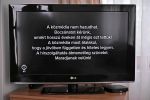
Péter Magyar verkündet Abschaltung des Orbán-nahen Staatsfunks Der Sender M1 sendet eine Entschuldigung: "Die öffentlich-rechtlichen Medien dürfen nicht lügen"
der standard · about 12 hours ago
Încă o lovitură pentru Realitatea Plus, după scăderea audiențelor: CNA suspendă, din nou, emisia Realitatea Plus primește o nouă sancțiune din partea CNA, într-o perioadă în care postul se confruntă și cu scăderi de audiență și probleme cu contractele de publicitate publicitate care îi aduceau bani.
adevarul · about 12 hours ago
Péter Magyar anunță sfârșitul „propagandei din televiziunea publică ungară. Mesajul apărut pe ecrane Premierul ungar Péter Magyar a anunțat că televiziunea publică a încetat să mai difuzeze ceea ce el numește „propagandă, după schimbarea conducerii instituției. Principalul post public de știri, M1, își va relua ulterior emisia, deocamdată fără programe informative.
adevarul · about 12 hours ago

Węgierska telewizja państwowa przestała nadawać. "Przepraszamy, że kłamaliśmy przez wiele lat" Węgierska telewizja publiczna zawiesiła nadawanie. To realizacja zapowiedzi premiera Petera Magyara i jego partii Tisza, którzy po kwietniowym zwycięstwie wyborczym obiecywali zmiany w mediach publicznych oskarżanych o wieloletnią propagandę na rzecz obozu Viktora Orbana. "To historyczny dzień" - skomentował Magyar.
gazeta.pl · about 12 hours ago
Peter King: Our first 250 years are worth celebrating | Herald Community Newspapers
gdeltproject.org · about 12 hours ago
Επανεκκίνηση για τη ραδιοτηλεόραση της Ουγγαρίας: Μαύρη οθόνη για λίγες ώρες με «συγγνώμη για τα ψέματα» «Σήμερα, η προπαγάνδα σταμάτησε να μεταδίδεται από τα δημόσια ΜΜΕ», ανακοίνωσε στο Facebook ο πρωθυπουργός Πέτερ Μαγιάρ, κάνοντας λόγο για μια ιστορική ημέρα
protothema · about 12 hours ago
CNA a decis o nouă suspendare a emisiei Realitatea Plus: „Supradoză de Călin Georgescu, George Simion, AUR şi Alexandra Păcuraru Consiliul Național al Audiovizualului (CNA) a decis suspendarea emisiei postului Realitatea Plus pentru trei ore, după ce a constatat încălcarea legislației audiovizuale în mai multe emisiuni difuzate în luna februarie, relatează Pagina de Media. Potrivit sursei citate, CNA a analizat ore întregi de fragmente de emisune din luna februarie, ca urmare a unor sesizări pe …
hotnews.ro · about 12 hours ago