
German justice minister proposes constitutional ban on sexual identity discrimination after Berlin attack

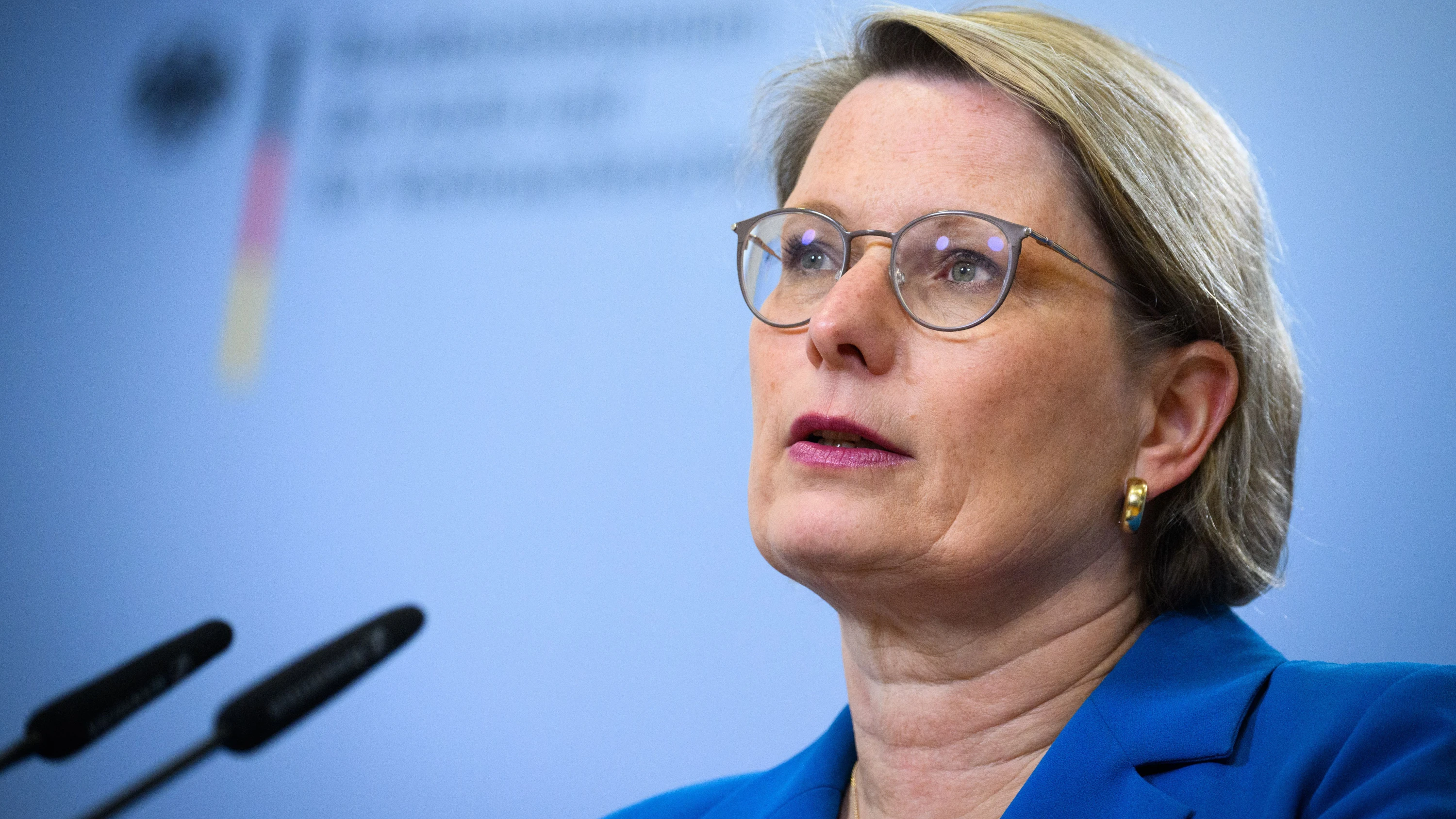
German Justice Minister Stefanie Hubig has proposed amending the country’s Basic Law to explicitly ban discrimination based on sexual identity, a move she framed as a response to the July 25 islamist attack on the sidelines of Berlin’s Christopher Street Day parade.
Hubig, a member of the center-left SPD, told the *Rheinische Post* that Article 3, Paragraph 3 of the Basic Law—which already prohibits discrimination on grounds such as origin, faith, or political views—should be expanded to include sexual identity. “It is only logical to also prohibit unequal treatment based on sexual identity in the constitution,” she said. Discussions within the government are still needed, she added, noting resistance but also “encouraging signals” from the conservative Union, particularly in states led by the party .
The attack in Berlin’s Tiergarten district left one woman dead and at least 31 injured, seven seriously, after a 21-year-old assailant drove a van into pedestrians and then allegedly attacked others with a machete. Police killed the suspect the following day after tracking him to an allotment garden .
Hubig also announced that the federal prosecutor’s office would take over the investigation, though proceedings against the attacker, identified as Abdul B., were formally dropped after his death. She is additionally coordinating with Interior Minister Alexander Dobrindt of the CSU on legal adjustments, including improving information-sharing between security agencies and the judiciary. “Security authorities often have critical information about whether a person, such as an Islamist, poses a threat. We must ensure the criminal justice system can access this when necessary, especially in decisions about suspending sentences on probation,” Hubig said .
The SPD has long advocated for constitutional protections for queer people, while the CDU has opposed such changes. CDU parliamentary group leader Thorsten Frei argued that the Basic Law would be “overloaded” by the amendment, though Hubig pointed to support from some Union-led state governments and Chancellor Friedrich Merz’s public commitment to protecting the queer community after the attack .
Separately, Germany’s outgoing anti-Semitism commissioner, Felix Klein, called for stricter criminal penalties, including at least six months in prison for publicly supporting Hamas at demonstrations. Klein, who will become Germany’s ambassador to the OECD, also urged deportation for non-citizens without secure residency status after serving their sentences. He pressed Merz and Hubig to tighten laws against support for foreign terrorist organizations and expand customs authorities’ powers to disrupt terrorist financing .
In Berlin, prosecutors have handled nearly 700 anti-Semitic crime cases in the first half of 2026, a rise of almost 300 compared to the same period last year. Jana Berthold, the anti-Semitism officer for the Berlin public prosecutor’s office, attributed the increase to a backlog of cases following a surge after the Oct. 7, 2023, attacks in Israel. Most cases involve incitement, use of banned symbols, or property damage, with physical assaults remaining rare .
Follow us for live European news
- 5
1 further source not geolocated
Articles
Deutschland-Liveblog: Hubig will Schutz queerer Menschen im Grundgesetz verankern Reaktion auf den Terroranschlag auf den CSD in Berlin +++ Nach dem Urlaub besucht Merz zuerst das Waldbrandgebiet +++ Antisemitismusbeauftragter für schärferes Strafrecht +++ alle Entwicklungen im Liveblog
faz · about 4 hours ago

LGBTQ+: Schutz queerer Menschen – Hubig will Grundgesetz ändern Der Artikel 3 des Grundgesetzes verbietet Benachteiligungen von Menschen aus vielerlei Gründen. Die Justizministerin möchte die Norm noch erweitern.
handelsblatt · about 5 hours ago
Justiz: Antisemitismusbeauftragter will Judenfeindlichkeit schärfer bestrafen Der Antisemitismusbeauftragte der Bundesregierung fordert ein schärferes Strafrecht gegen judenfeindliche Handlungen. Auch Abschiebungen schließt er nicht aus.
die zeit · about 5 hours ago
„Es ist nur logisch: Justizministerin Hubig will zum Schutz queerer Menschen das Grundgesetz ändern Der Artikel 3 des Grundgesetzes verbietet Benachteiligungen von Menschen aus vielerlei Gründen. Nun plant die Justizministerin ein „Verbot der Diskriminierung aufgrund der sexuellen Identität.
tagesspiegel · about 5 hours ago
Antisemitische Straftaten in Berlin: Staatsanwaltschaft bearbeitet Hunderte neue Fälle Es geht vor allem um Volksverhetzung, Sachbeschädigung, Beleidigung. Körperliche Angriffe sind seltener. Das kann allerdings auch traurige Gründe haben.
tagesspiegel · about 6 hours ago

German anti-Semitism commissioner calls for tougher criminal law
news.yahoo.com · about 7 hours ago
Nach CSD-Anschlag: Schutz queerer Menschen: Hubig will Grundgesetz ändern Der Artikel 3 des Grundgesetzes verbietet Benachteiligungen von Menschen aus vielerlei Gründen. Die Justizministerin möchte die Norm noch erweitern.
tagesspiegel · about 8 hours ago
Diskriminierungsverbot im Grundgesetz: Hubig spricht sich für Schutz queerer Menschen im Grundgesetz aus Die Bundesjustizministerin will das Diskriminierungsverbot im Grundgesetz um sexuelle Identität ergänzen. Die Union sprach sich zuletzt klar dagegen aus.
die zeit · about 10 hours ago
SPD-Pläne empören Union: Wird Hitzeschutz ein Fall fürs Grundgesetz? Nach dem Extremsommer fordern die SPD-Minister*innen mehr Klimaanpassung – und legen sich mit der Union an. Was die Pläne bringen könnten. mehr...
taz.de · about 12 hours ago