
EU and UK impose joint sanctions on Russian cyber operatives and entities over attacks on Europe
Story Timeline
20 hours · 2 summary articles
EU and UK impose joint sanctions on Russian cyber operatives and entities over attacks on Europe
EU and Britain impose joint sanctions on Russia over cyber attacks targeting Europe
Continuation
The European Union and the United Kingdom have imposed coordinated sanctions on Russia over cyberattacks and human rights violations. The move targets individuals and entities accused of orchestrating cyberattacks, interfering in elections, and spreading disinformation across Europe.
The EU sanctioned nine individuals and four entities, while the UK targeted 24 individuals and entities. Among those sanctioned are officers from Russia's GRU military intelligence agency and cybercriminals allegedly working with the Russian state.
The sanctions come in response to a series of cyberattacks attributed to Russia, including an attempted attack on Poland's power grid that could have left up to 500,000 people without electricity during the winter. The EU and UK also accused Russia's FSB intelligence agency of being behind the attacks.
"Russia's imperialist ambitions are not limited to Ukraine," said Estonian Foreign Minister Margus Tsahkna. "The growing volume and aggressiveness of cyberattacks led by Russia's military intelligence (GRU) and the Federal Security Service (FSB) clearly show a malicious pattern aimed at testing the resilience of Western countries, undermining social stability, weakening support for Ukraine, and increasing Russia's influence in Europe."
The sanctions also target the Russian social media app VKontakte and its daughter company Communication Platform LLC for their role in developing and managing the MaxApp, which is used for repression of critics of Russia's war against Ukraine.
The EU and UK have been at the forefront of efforts to punish Moscow with sanctions since its invasion of Ukraine in 2022. The latest sanctions package is the first joint cyber package between the EU and UK since Brexit.
The measures include asset freezes and visa bans for the individuals and entities involved. The EU and several of its member states have also summoned Russian diplomatic representatives to complain about the cyberattacks.
The sanctions are part of a broader effort by the West to counter Russia's actions in Ukraine and Europe. The EU has also announced plans to terminate a €2 million grant for the Venice Biennale, citing a lack of democratic values in Russia.
The Kremlin has responded by accusing the EU of attempting to "cancel" Russian culture. Russian officials have denied the allegations of cyberattacks and human rights violations.
The EU and UK have emphasized that the sanctions are a response to Russia's increasingly reckless attempts to sow chaos and division across Europe. The measures aim to raise the cost of malicious cyber activity and send a clear message to Russia that such actions will have consequences.
The sanctions package includes individuals and entities linked to Russia's FSB and GRU, as well as companies that have enabled or supported Russia's strategic goals. The EU has also imposed sanctions on companies that manufacture and sell surveillance equipment used to monitor phone calls, emails, text messages, and social networks.
Follow us for live European news
- 1
- 1
- 1
- 1
- 1
- 1
7 further sources not geolocated
Articles

EU foreign ministers weigh 250 new Russia sanctions listings EU foreign policy chief Kaja Kallas said the blocs top diplomats will consider 250 new sanctions listings against Moscow and prepare groundwork for a 21st package, while also addressing civilian detentions in occupied territories and Black Sea security.
yenisafak · about 5 hours ago
EU adopts largest-ever cyber sanctions package against Russia - The Baltic Times TALLINN - The European Union on Monday approved its most extensive package of cyber sanctions against Russia to date at the Foreign Affairs Coun......
baltic times · about 5 hours ago
Mosca ringrazia la Biennale: Non è chiusa come la Ue Le parole del portavoce Peskov dopo la sanzione di Bruxelles per il padiglione. E intanto Salvini: La Russia non è per noi una minaccia
corriere · about 6 hours ago
LOccidente reagisce alla cyberguerra di Putin hacker russi sanzionati Si muovono Ue, Nato, Londra. Il Cremlino: Non avete prove. Le istruzioni per proteggersi di 12 Servizi tra cui quelli italiani
corriere · about 6 hours ago
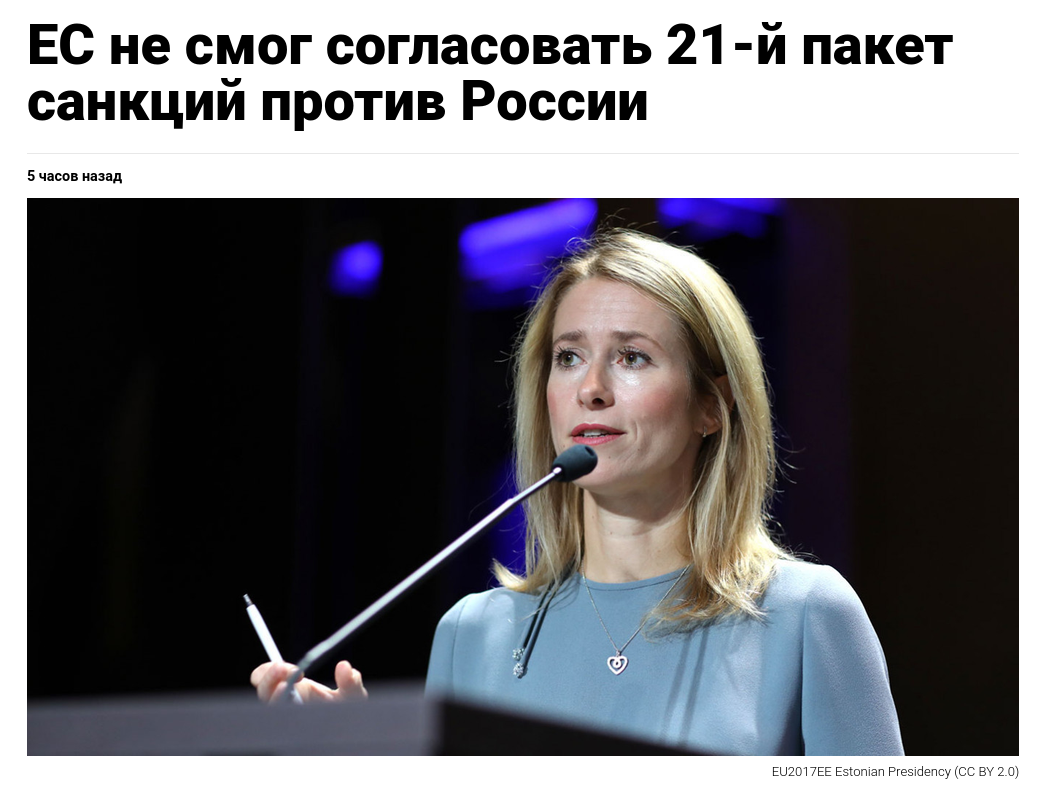
EU foreign ministers failed to reach consensus on the 21st sanctions package in Brussels. Disagreements centered on lowering the Russian oil price cap, while restrictions on Russian fish imports were removed from the draft. #Russia #EU
mastodon bot · about 7 hours ago
EU sanctions Russians over cybercrime and human rights violation
gdeltproject.org · about 8 hours ago
Russia hit with EU, UK sanctions over cyber attacks
gdeltproject.org · about 8 hours ago

The European Commission announced plans to terminate a €2 million grant for the Venice Biennale, citing a lack of democratic values in Russia. The Kremlin responded by accusing the EU of attempting to "cancel" Russian culture. #Russia #EU
mastodon bot · about 8 hours ago

The US government warns that Russia state hackers are coming after your router With residential proxies all the rage, CISA urges router users to be vigilant.
ars technica · about 8 hours ago
EU Commission Report Finds Instagram, Facebook Violate Digital Services Act
gdeltproject.org · about 8 hours ago
UK, EU impose joint sanctions on Russia-linked cyber networks
gdeltproject.org · about 8 hours ago
EU Child Online Safety Plan: Age Verification & Ban
gdeltproject.org · about 8 hours ago
EU and UK hit Russia with joint sanctions over cyberattacks
gdeltproject.org · about 8 hours ago
UK and EU Sanction Russia Over Cyberattacks
gdeltproject.org · about 8 hours ago
EU and Britain Target Russian Intelligence Officers Over a Major Cyberspying Campaign
gdeltproject.org · about 8 hours ago
EU sanctions Russian social network VK and Russias state-backed messaging app Max
telegram_Meduza · about 8 hours ago
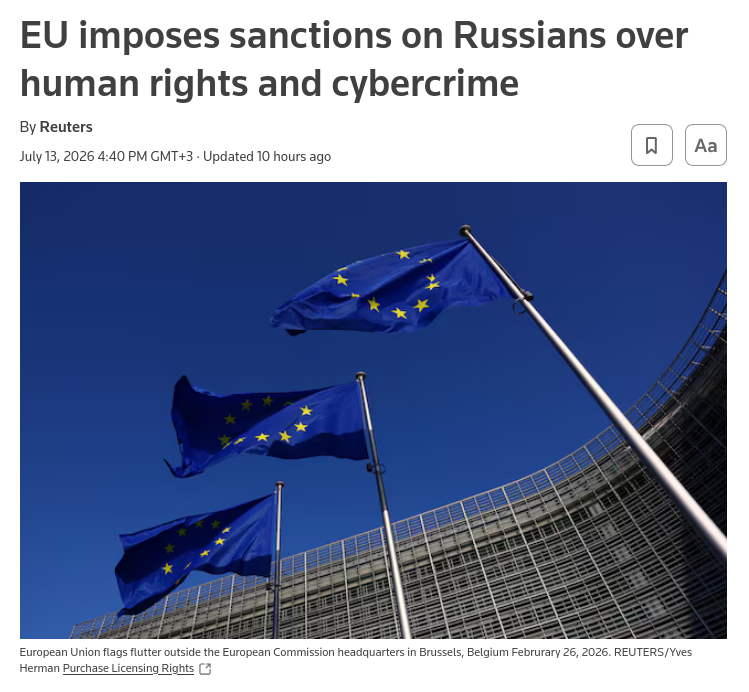
The European Union on Monday broadened sanctions against Russia to include individuals and entities responsible for cybercrime and human rights violations, naming popular social media app VKontakte among them. #Russia #EU
mastodon bot · about 8 hours ago
Keine Einigung der EU-Außenminister auf Russland-Paket
orf.at · about 9 hours ago
Reacția DNSC, după ce România a ajuns ținta spionajului digital rusesc. Ce motive invocă instituția refuzând să ofere detalii despre atacuri Alături de țările UE și NATO, România este sub asaltul celui mai țintit sistem de propagandă și spionaj digital care a existat vreodată, derulat de Rusia, au semnalat mai multe state europene. Directoratul Național de Securitate Cibernetică (DNSC), autoritatea competentă pentru spațiul cibernetic civil și, totodată, echipă de răspuns la incidente de securitate cibernetică în …
hotnews.ro · about 10 hours ago
ELi riigid ei jõudnud Venemaa-vastases sanktsioonipaketis kokkuleppele Euroopa Liidu riigid ei jõudnud ka esmaspäeval Brüsselis toimunud välisministrite kohtumisel kokkuleppele järgmise Venemaa-vastase sanktsioonipaketi osas.
postimees · about 10 hours ago
Zelensky: EU to unveil next round of sanctions against Russia this week This week, the European Union will announce its latest—the 21st—round of sanctions against Russia.
ukrinform · about 10 hours ago
European Union adopts its largest-ever cyber sanctions package against Russia
gdeltproject.org · about 10 hours ago

The EU has adopted sanctions in response to: ➡️ Russias cyberattacks and destabilising actions against the EU and its member states ➡️ Russias human rights violations against Ukrainian prisoners ➡️ the restriction of freedom of expression in Russia 🔗 link.europa.eu/ChmQwB
bluesky_European Council · about 11 hours ago
The EU has stopped sanctioning Russian hackers and started sanctioning the machine that makes them The European Union and the United Kingdom have jointly sanctioned Russias cyber apparatus for the first time. The EU listed nine individuals and four entities, while the UK went further with 24, Politico reports. The language is what matters here. The EUs High Representative Kaja Kallas denounced not a group but an ecosystem, spanning intelligence services, […] This story continues at The Next Web
the next web · about 11 hours ago