Loading…
 Saturday, September 26Saturday, September 26
4 months · 4 summary articles
The 2026 FIFA World Cup in the United States is already overshadowed by visa denials, border incidents, and political tensions, just days before the tournament’s opening match. Iran, Iraq, Senegal, and Uzbekistan have faced prolonged interrogations, strict security checks, and outright visa rejections at U.S. embassies, while a Somali referee invited by FIFA was barred from entering the country . Iran’s Sports and Youth Minister Ahmad Donyamali has publicly urged Washington to treat the Iranian team with “respect,” warning that Tehran will not tolerate unfair treatment amid ongoing efforts to resolve delays affecting support staff .
The controversies extend beyond visa issues. In Germany, national team manager Rudi Völler dismissed concerns about “lagerkoller”—team fatigue or boredom—during the World Cup, while addressing questions about the quality of the training pitch in Winston-Salem, North Carolina . Meanwhile, FIFA President Gianni Infantino’s leadership is under scrutiny as critics argue the tournament has become a “prestige project” prioritizing record revenues and political access over sporting integrity .
The U.S. is expecting a record turnout, with full stadiums and hotels across host cities, but the political climate threatens to dampen the celebratory atmosphere. The Trump administration’s restrictive immigration policies have collided with the global nature of the World Cup, creating logistical and diplomatic friction. A Somali referee, Omar Abdulkadir Artan, was denied entry despite FIFA’s invitation, prompting condemnation from Somalia’s football federation .
On the pitch, former Belgian manager Roberto Martinez has framed his challenge with Portugal as a historic opportunity: becoming the first coach to win the World Cup with a team other than his own nation . Meanwhile, the Netherlands’ Marten de Roon has positioned himself as a mentor for disgruntled players, emphasizing the importance of group dynamics in high-pressure tournaments .
As the tournament approaches, the juxtaposition of sporting ambition and geopolitical friction underscores the challenges facing the 2026 World Cup. Whether these early controversies will fade into the background or define the event remains an open question—one that FIFA and host nations must now confront.
Follow us for live European news
1 further source not geolocated

VIDEO ⟩ Eesti jalgpallikoondis tähistas karikavõitu suure tantsu- ja laulupeoga Teist korda järjest Balti turniiri tšempioniks kroonitud Eesti jalgpallikoondis tundis triumfi üle siirast rõõmu.
postimees · 4 months ago
Hertl poprvé v sérii nebodoval a jeho Vegas podlehlo Carolině 3:5. Ta srovnala finálovou sérii na 2:2 Hokejisté Caroliny vyhráli ve finále NHL na ledě Vegas 5:3 a vyrovnali sérii na 2:2. Hrdinou se stal Jordan Staal, který v první třetině zvýšil na 3:1 a ve 47. minutě zápas za stavu 3:3 rozhodl. Domácí útočník Tomáš Hertl poprvé v sérii nebodoval.
irozhlas.cz · 4 months ago

"Un défi que jadore": Roberto Martinez, ancien sélectionneur des Diables, lance les hostilités avec le Portugal Devenir le premier sélectionneur de lhistoire à remporter la Coupe du monde avec une autre équipe que celle de son pays est un défi que Roberto Martinez "adore". ...
la libre · 4 months ago
Eishockey: Hurricanes schlagen Golden Knights: Ausgleich in NHL-Finals In den Finals um den Stanley Cup ist wieder alles offen – weil die spektakulär unterhaltsame Serie zwischen den Hurricanes und den Golden Knights auch im vierten Spiel abliefert.
tagesspiegel · 4 months ago
Fußball-Nationalmannschaft: Das sagt Völler zum drohenden Lagerkoller und dem WM-Rasen Warum Rudi Völler die Debatte um Langeweile im WM-Quartier für überholt hält – und wie er auf die Diskussion um die Rasenqualität im Trainingslager reagiert.
tagesspiegel · 4 months ago
Fußball-WM: Herausforderung in der Höhe: Wenn die Luft dünn wird Der Puls geht schneller, die Atmung auch. Man sieht es ja nicht, aber spürt es schnell. Welche Herausforderungen Sport in der Höhenluft von Mexiko-Stadt mit sich bringt.
tagesspiegel · 4 months ago
Iran minister asks US to show respect to team at World Cup Irans Sports and Youth Minister Ahmad Donyamali has called on the United States to treat the national football team with "respect" during the 2026 World Cup, warning that Tehran will not tolerate unfair treatment amid ongoing efforts to resolve visa delays affecting support staff.
yenisafak · 4 months ago
Visa denials, border incidents overshadow 2026 FIFA World Cup Days before the 2026 FIFA World Cup, Iran, Iraq, Senegal, and Uzbekistan faced visa disputes, lengthy interrogations, and strict security procedures in the US. A Somali referee invited by FIFA was also denied entry, while FIFAs silence drew widespread criticism.
yenisafak · 4 months ago
25 Jahre „und das ist auch gut so!: Offenheit lohnt sich Wowereits legendäres Coming-out am 10. Juni 2001 hat Homosexualität in der Politik entdramatisiert. Warum passiert das nicht auch im Männer-Profifußball? mehr...
taz.de · 4 months ago
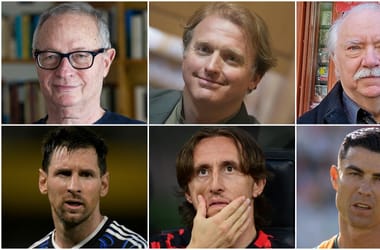
„Ki lesz jobb, Messi tata, Modric apó vagy Ronaldo bácsi? – Spiró, Lackfi és Farkasházy a focivébéről Jó nekünk, hogy most először ilyen rettenetes mennyiségű csapatot és meccset láthatunk a világbajnokságon? Mire, kire érdemes figyelni, ki ünnepelhet a végén, és egyáltalán, mitől jó egy focimeccs?
hvg.hu · 4 months ago
Fußballweltmeisterschaft 2026: Manuel Neuer nimmt am Mannschaftstraining teil Beim öffentlichen Training in Winston-Salem stand auch Manuel Neuer auf dem Platz. Die USA verweigern einem somalischen Schiedsrichter die Einreise. Das Liveblog
die zeit · 4 months ago
Where to watch the 2026 FIFA World Cup anywhere in the world
gdeltproject.org · 4 months ago
Northern Ireland and the elite club that sets the rules of world football Tiny region was home to the inventor of the penalty kick, which could decide many matches in this years World Cup
financial times · 4 months ago

Premier entrainement des Diables à Seattle: Jérémy Doku a dû rentrer prématurément aux vestiaires On a pu voir 15 minutes de lentraînement ouvert des Diables. Seul Debast était absent. Un peu plus tard, Doku est rentré au vestiaire, mais par précaution. ...
la libre · 4 months ago

Die Spieler lagen aufeinander, Franz Beckenbauer ging entrückt auf dem Rasen spazieren Sein „Schaun mer ma vor jedem Spiel entwickelte sich zum Sprichwort, und die Spannung war groß: Würde Franz Beckenbauer mit der DFB-Elf bei der WM 1990 triumphieren? Die neue Folge unserer Serie zu 80 Jahren WELT.
welt.de · 4 months ago

Pendant ce temps-là en Italie : la complainte des absents et pas de pitié pour les autres Bleus Cette fois, ce devait être la bonne : après deux échecs en 2018 et 2022, la Squadra Azzurra allait se qualifier pour la Coupe du monde. Rien ny a fait, la sélection a encore été éliminée. Stupeur et désespoir dans la péninsule. À quoi pensent les Italiens et comment regardent-ils une compétition dont on les a privés une nouvelle fois, la fois de trop ? Tous les mercredis, un billet pour mieux comprendre le désarroi de tout un pays.
courrier international · 4 months ago
Football: France women defeat Ireland and qualify for 2027 World Cup The French womens team secured their place at the 2027 World Cup with a 1-0 win over Ireland. They will be competing in their fifth consecutive World Cup.
france24 · 4 months ago
Somalia criticises US decision to bar World Cup referee Somalias football federation says the US decision to deny entry to award-winning referee Omar Abdulkadir Artan
aljazeera · 4 months ago
Winnend lot levert Belg recordbedrag van 175 miljoen euro op Een Belg heeft met het loterijspel EuroMillions 174.984.088 euro gewonnen. Het is het hoogste bedrag dat ooit in België werd gewonnen met de loterij.
rtl nieuws · 4 months ago
Podcast | We zitten weer op het niveau van het Oranje van Frank de Boer Oranje scoort niet, terwijl bondscoach Ronald Koeman al blij lijkt te zijn als zijn ploeg niet verliest. Het zijn geen hoopgevende berichten richting de eerste wedstrijd van Oranje op het WK voetbal. Verslaggevers Rypke Bakker en Stan Wagtman bespreken het in deze aflevering van Afspelen, dé voetbalpodcast van NU.nl.
nu.nl · 4 months ago
NU+ | Koning voetbal Infantino verzon mega-WK: Hij houdt van geld en macht Bezoekjes aan de Amerikaanse president Donald Trump, recordomzetten en verzekerd van een bonustermijn: het WK voetbal is het ultieme prestigeproject van FIFA-voorzitter Gianni Infantino. Geld, macht en aanzien kenmerken het bewind van Koning Voetbal.
nu.nl · 4 months ago
Eerste jaar Veurink bij Oranje eindigt zonder WK-ticket: Zuur, maar verdienen dit Voor Arjan Veurink eindigt zijn eerste jaar als bondscoach zonder een rechtstreeks ticket voor het WK van 2027 in Brazilië. Toch kijkt hij terug op een mooie periode, al moet er volgens hem en de speelsters nog wel veel beter. "We missen volwassenheid."
nu.nl · 4 months ago
Blick auf Gastgeber USA: Volle Stadien, volle Hotels? Die WM und der Tourismus Millionen Fans werden zur Fußball-WM in Nordamerika erwartet. Die USA rechnen mit dem bestbesuchten Turnier der Geschichte. Für die Gastgeber geht es um weit mehr als Sport.
handelsblatt · 4 months ago
NU+ | Mega-WK is zijn prestigeproject: Infantino ontpopt zich als Koning Voetbal Bezoekjes aan de Amerikaanse president Donald Trump, recordomzetten en verzekerd van een bonustermijn: het WK voetbal is het ultieme prestigeproject van FIFA-voorzitter Gianni Infantino. Geld, macht en aanzien kenmerken het bewind van Koning Voetbal.
nu.nl · 4 months ago