 Monday, May 18Monday, May 18
President Donald Trump’s recent summit with Chinese President Xi Jinping in Beijing has drawn significant attention to U.S.-China relations, particularly regarding Taiwan. During the summit, Trump avoided direct public statements on Taiwan, which analysts suggest may have been a deliberate move to reduce tensions and create a "safer outcome" for Taipei . However, Trump’s prior remarks about using arms sales to Taiwan as a "very good negotiating chip" in U.S.-China talks have raised concerns about the island’s status and U.S. commitment to its security .
Following the summit, Taiwan reaffirmed its sovereignty and independence, stating it would maintain the status quo while deepening ties with the U.S. The Taiwanese government rejected Trump’s warnings against pursuing independence, emphasizing its right to self-determination . Trump later reiterated his opposition to Taiwanese independence during a press briefing aboard Air Force One, framing it as a potential provocation to China .
The summit concluded without major breakthroughs on Taiwan or broader U.S.-China relations, highlighting the limitations of Trump’s personality-driven foreign policy approach. Critics argue that his reliance on personal diplomacy with Xi has failed to produce concrete agreements, leaving key issues unresolved . Despite Trump’s claims of progress in trade and other areas, the lack of clarity on Taiwan’s future remains a persistent point of contention.
> Background: **Trump-Xi talks ease Iran tensions but leave Taiwan and trade disputes unresolved.** — *1 days ago*

China This Week | Not tariffs or West Asia war, why Taiwan is most important issue for China in ties with US | Explained News In the lead-up to the meeting between US President Donald Trump and Chinese President Xi Jinping in Beijing…
europesays.com · about 12 hours ago
Trumps failed China trip shows his trade war backfired, and US corporations are desperate Donald Trumps visit to Beijing this May marked the first time a sitting US president traveled to China…
europesays.com · about 12 hours ago
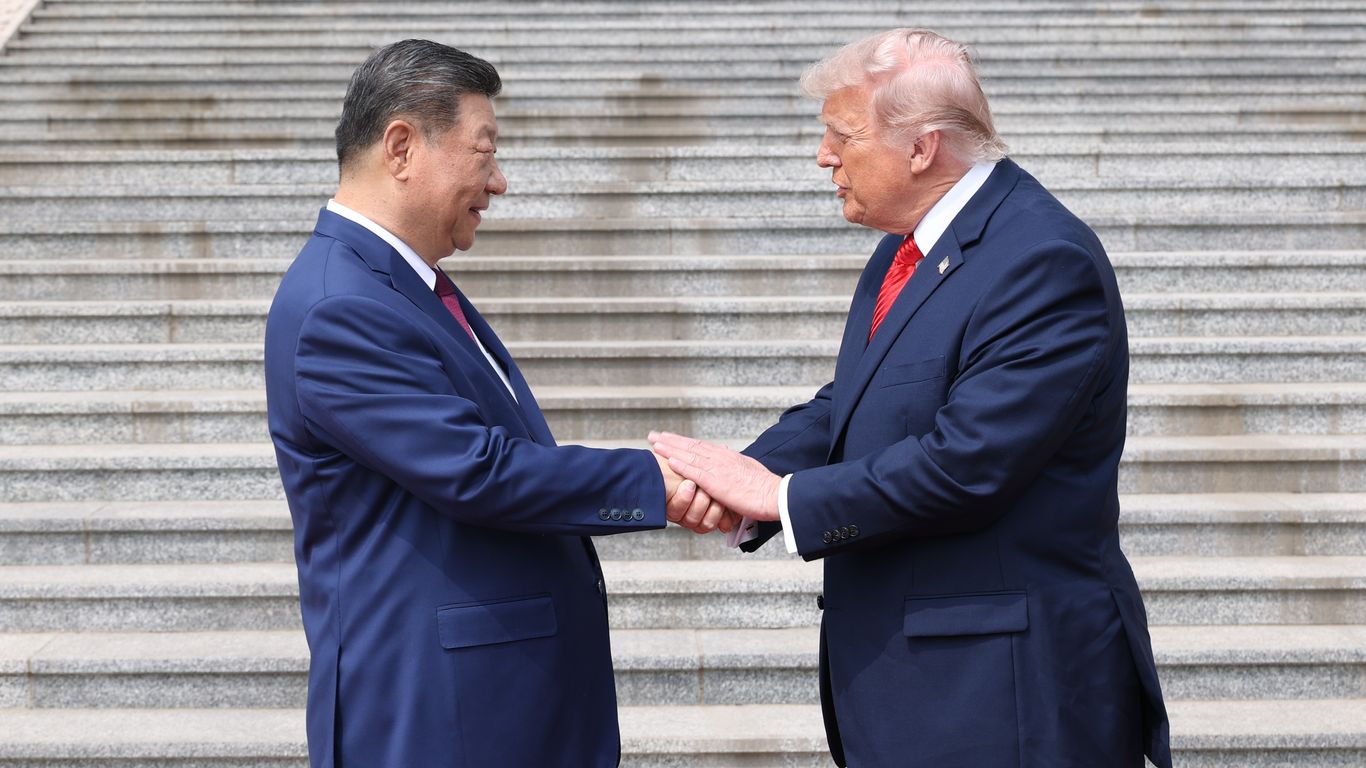
Scoop: Trump advisers fear China may target Taiwan in next 5 years Some close advisers to President Trump fear the biggest substantive result of the China summit is heightened danger that Chinese President Xi Jinping will invade Taiwan in the next five years, potentially choking off the chips used to power AI to U.S. companies.What theyre saying: Trump loved the pageantry and the special access Xi shrewdly rolled out during the Beijing visit. But the words didnt match the bonhomie. One Trump adviser told us Xi is trying to move China to a new position where hes saying: Were not a rising power. Were your equal. And Taiwan is mine.This trip signaled a much higher likelihood that Taiwan will be on the table in the next five years, the adviser added. Theres no way we can be ready economically — the chips supply chain wont be anywhere close to self-sufficiency. For CEOs, and really the economy as a whole, theres no more pressing issue than the supply chain for chips.The big picture: Trump won praise from several CEOs for pushing very hard on Iran and Venezuela and opening markets. Some CEOs came away hopeful that their companies will get licenses to operate in China, and credited POTUS.📈 If youre a CEO or on a CEOs team: Ask to join Jims new weekly Axios C-Suite newsletter.
axios · about 13 hours ago
The week in pictures: Trump in China, Cannes festival and Philippines Senate shooting President Donald Trump met Chinas Xi Jinping in Beijing during a state visit marked by pomp but few deals, the 2026 Cannes Film Festival opened and a shootout in the Philippines Senate saw an ICC-charged politician fleeing the premises: FRANCE 24 looks back at some of the weeks most striking images.
france24 · about 16 hours ago
Concerns in Taiwan after Trumps visit to China – what the US president said and what the authorities in Taipei said Concerns in Taiwan after Trumps visit to China – what the US president said and what the authorities…
europesays.com · about 16 hours ago
Takeaways from Trumps trip to China, from trade to Taiwan President Donald Trump is back at the White House after a three-day visit to China, a crucial meeting…
europesays.com · about 16 hours ago
Is a Chinese invasion of Taiwan imminent? 🇺🇸🇨🇳After nearly a decade since his last visit, US President Donald Trump is meeting Chinese President Xi Jinping in Beijing in a historic summit focused on global trade, technological rivalry and rising tensions over Taiwan, one of the worlds most sensitive flashpoints. 🇹🇼China claims Taiwan as part of its territory while the United States continues to back the island with military support and strong diplomatic ties. Caught in the middle is a resilient democracy that has become one of Asias greatest success stories, despite never being formally recognised as a sovereign state by most other countries. 🎥FRANCE 24s Stella Elgersma takes a closer look at the tense triangle between Taiwan, China and the United States: how it came to be, whats really at stake and whether a military confrontation is truly on the horizon.
france24 · about 18 hours ago
Harvest of Trumps Visit to China: Stability in Relations and Stagnation in Key Issues SadaNews – President Donald Trumps visit to Beijing last week may have yielded only modest results by the…
europesays.com · about 19 hours ago
Trump met Xi Jinping in Beijing. He came back with doubts on Taiwans $14 billion arms deal and lesson in Greek history US President Donald Trump returned from Beijing signalling he may withhold a $14 billion weapons package for Taiwan,…
europesays.com · about 21 hours ago
China signals tariff cuts, advances in farm market access after Trump-Xi summit After a meeting between President Trump and President Xi Jinping in Busan, China is signaling tariff reductions and…
europesays.com · 1 day ago
Pentagon faces crippling rare earth shortage as China tightens controls – Politics – News Beijing has been in a trade war with the U.S. (Image: Getty) Donald Trumps visit to China fell…
europesays.com · 1 day ago
Slotkin, Bennet and Curtis Urge Secretary Rubio to Reaffirm U.S. Commitments to Taiwan WASHINGTON, D.C. – Ahead of President Donald Trumps summit with Chinas President Xi Jinping in Beijing, U.S. Senators Elissa Slotkin (D-MI), Michael Bennet (D-CO), and John…
europesays.com · 1 day ago
Trump aims to stabilize trade in Beijing summit with Xi WASHINGTON (AP) — President Donald Trump claims that America has increasingly profited from trade with China, largely playing…
europesays.com · 1 day ago
In response to Trump, Taiwan says it is sovereign and independent Taiwan says it will maintain status quo and deepen ties with the US after Trump meets with Chinas Xi Jinping.
aljazeera · 1 day ago
Trumps Silence on Taiwan at Beijing Summit Is a Safer Outcome for Taipei, Say Reports The Taiwan issue once again became a focus of international attention following high-level talks in Beijing between U.S.…
europesays.com · 1 day ago
Trump says he discussed North Korea with Xi during Beijing summit U.S. President Donald Trump, right, speaks with Chinese President Xi Jinping during a visit to the Zhongnanhai Garden…
europesays.com · 1 day ago
Iran-US war latest Trump claims worlds most active terrorist has been killed and sets out new nuclear demand Trump says he told Xi that America spies like hell on China as he defends CCP cyber attacks…
europesays.com · 1 day ago
Trump warns Iran as it readies Hormuz toll plan US President Donald Trump has said Iran has an interest in reaching an agreement as negotiations over the…
europesays.com · 1 day ago
Taiwan rebuffs Trump independence warning Taiwan rebuffs Trump independence warning – Daily Times We…
europesays.com · 1 day ago
Trumps comment about negotiations on Taiwan heightens concerns over China Recent comments by U.S. President Donald Trump that arms sales to Taiwan are a very good negotiating chip…
europesays.com · 1 day ago

Trump Calls Xi a Friend. But He Left China Without Any Breakthroughs. The lack of concrete agreements with Beijing shows the risks of President Trumps personality-driven foreign policy, which rests on the belief that he can defend U.S. interests through charm and force of will.
new york times · 1 day ago
Trump health update: White House to have a secret new hospital for POTUS? All we know ahead of his dental checkup The White House has initiated an urgent new effort to proceed with the construction of President Donald Trumps…
europesays.com · 1 day ago
Trump warns against Taiwan independence after China visit Facebook Twitter LinkedIn Threads WhatsApp Telegram Trump speaks to reporters aboard Air Force One after his departure from…
europesays.com · 1 day ago

Trump says Xi agrees Iran must open strait, but no sign China will weigh in
news.yahoo.com · 1 day ago