 Thursday, May 28Thursday, May 28
Russian President Vladimir Putin vows retaliation after accusing Ukraine of a deadly drone strike on a student dormitory in Russian-occupied Luhansk, killing six and wounding dozens. Ukraine denies the claim, stating the attack targeted an elite Russian drone command unit and other military infrastructure, including an oil refinery fueling occupation forces.
The strike, which Moscow describes as a war crime, follows a pattern of escalating Ukrainian attacks deep inside Russian-controlled territory. Kyiv’s military reports hitting 11 Russian oil facilities this month alone, including a refinery in Yaroslavl, 700km from the border. Falling drone debris also ignited a fire at an oil terminal in Novorossiysk, injuring two. At a UN Security Council emergency session, Ukraine’s ambassador dismissed Russia’s accusations as "a pure propaganda show," insisting operations exclusively targeted "the Russian war machine."
Putin’s retaliation threat comes as Ukraine’s drone warfare reshapes the battlefield. Military pilots in Kyiv now conduct high-risk combat tests with unmanned systems, shifting from early limited use to a cornerstone of surveillance, precision strikes, and reconnaissance. Meanwhile, Czech President Petr Pavel urges NATO to adopt "decisive, even asymmetric" responses to Russian provocations, including cutting Moscow’s internet access, expelling its banks from global financial systems, and shooting down violating jets.
The conflict’s economic toll on Russia intensifies. While Moscow’s war economy avoids collapse, analysts warn of mounting strain as Ukraine’s spring offensive stalls and Western sanctions bite. Lithuania’s foreign minister reignites debate over frozen Russian assets, arguing the EU’s recent loan deal merely postponed the fight to redirect them toward Ukraine’s defense. "The question isn’t *if* but *when*," he told *Politico*, framing the assets as a tool to pressure Moscow.
NATO’s unity faces fresh tests. Sweden’s defense minister backs Ukraine’s NATO bid, citing its "battle-tested army" and growing defense industry as assets for the alliance—though opposition from some members persists. Meanwhile, European diplomats scramble to counter U.S. criticism ahead of a NATO summit in Ankara, as Washington signals troop reductions in Europe to address commitments in the Indo-Pacific and Middle East. A Pentagon review could cut U.S. forces from 80,000, though former President Donald Trump’s abrupt social media reversal of a planned rotation halt in Poland has sown confusion.
Ukraine’s President Volodymyr Zelensky rejects German Chancellor Olaf Scholz’s proposal for "associated EU membership," calling it unjust for denying Kyiv voting rights. The rebuke underscores Ukraine’s demand for full accession, even as the war grinds into its third year. Domestically, hundreds of Ukrainians protest a bill that could prematurely declare missing soldiers dead, with over 90,000 people listed as missing in official registries.
In the U.S., bipartisan senators demand the Pentagon release $600 million in stalled security aid for Ukraine and Baltic allies, highlighting growing friction between Congress and the Trump administration over delayed disbursements. The funds, allocated last year, remain tied up amid broader disputes over Ukraine’s long-term support.
> Background: **Putin orders retaliation after Ukraine denies drone strike on Luhansk dormitory** — *9 hours ago*
More LFE coverage on this topic

Lithuania calls for frozen Russian assets to return to Ukraine funding debate Lithuanias foreign minister says the EU loan deal only postponed the fight over whether to tap frozen Russian assets to fund Ukraine and pressure Moscow.
politico.eu · 5 days ago

UK needs national consensus over rejoining EU, David Miliband says Ex-foreign secretary urges reset at higher dosage after officials revealed to have pitched single market for goodsThe UK needs a national consensus about rejoining the European Union, David Miliband has said, in response to revelations that the UK government pitched the creation of a single market for goods with the EU to the bloc.The former foreign secretary, who is now president of the International Rescue Committee, said he thought the UK needed a reset of its relations with the EU at a much higher dosage than the government was planning. Continue reading...
theguardian · 5 days ago

UK, German and French aid cuts will take devastating toll on most vulnerable, says study As Europes leading donor countries slash budgets, the result could be more than 11.5m preventable deaths, report suggestsCuts to foreign aid budgets by the UK, France and Germany could contribute to more than 11.5 million preventable deaths by the end of the decade, according to a new report, which warns that Europe is abandoning its role as a pillar of global health and development.Three separate studies within the report reveal the extent to which the nations have slashed their foreign aid budgets, and illustrate the impact worldwide. UK official development assistance (ODA) spending is projected to fall by 45 between 2020 and 2026, Germanys by 37 between 2023 and 2026, and Frances by 30 over the same period, according to the research.This report was a collaboration with European newspapers El Pais and Le Monde Continue reading...
theguardian · 5 days ago
Sweden backs Ukraines path to NATO, defense minister says Swedens Defense Minister Pål Jonson said Kyivs battle-tested army and fast-growing defense industry would strengthen the alliance, even as some NATO members remain opposed.
politico.eu · 5 days ago
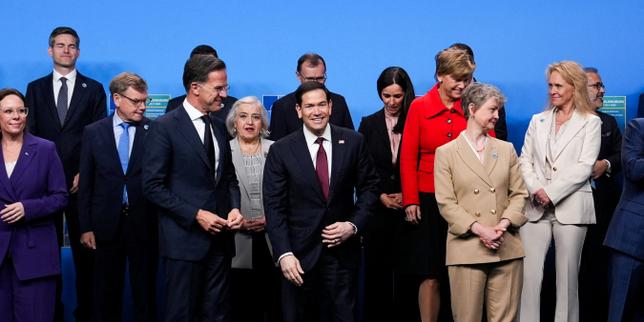
Europe seeks to defuse Trump criticism ahead of NATO summit in Ankara Disoriented by a flurry of announcements regarding the stationing of US troops on the continent, European foreign ministers sought to convince Marco Rubio of their efforts to take greater responsibility for collective defense and to help reopen the Strait of Hormuz.
le monde · 5 days ago
Krieg in der Ukraine: „Assoziierte EU-Mitgliedschaft: Selenskij lehnt Merz-Vorschlag ab Der ukrainische Präsident bezeichnet die Idee des Bundeskanzlers als ungerecht, da die Ukraine damit kein Stimmrecht in der Europäischen Union erhielte.
sueddeutsche · 5 days ago
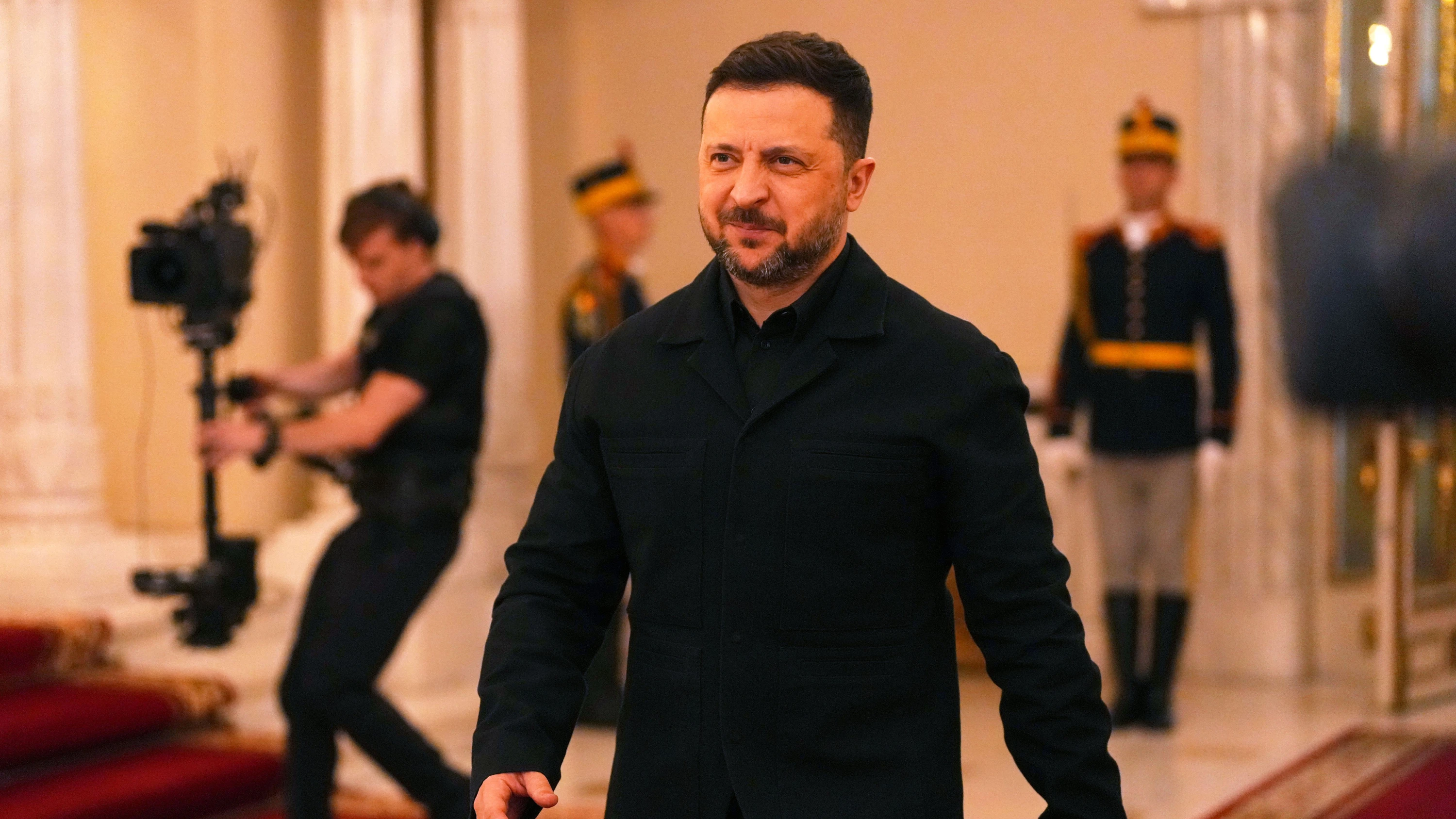
Liveblog Ukrainekrieg: Selenskyj lehnt Merz-Vorschlag für „assoziierte EU-Mitgliedschaft ab Präsident: Ukraine verdient faire Behandlung und gleiche Rechte +++ Wadephul fordert weitere Unterstützung der Ukraine +++ Nawrocki dankt Trump +++ alle Neuigkeiten im Liveblog
faz · 5 days ago
Ukraine Drone Warfare Pushes Military Pilots Into High-Risk Combat Tests in Kyiv 2026 Kyiv, Ukraine – May 23 – Brussels Morning Newspaper — Ukraine drone warfare is rapidly transforming the nature of modern combat as military forces increasingly rely on unmanned aerial systems to conduct surveillance, precision strikes, reconnaissance missions, and tactical battlefield operations. What began as limited drone usage early in the conflict has evolved into one of the […]
brussels morning · 5 days ago
This is how to defeat Vladimir Putin | Timothy Garton Ash The Russian dictators dreams of greatness threaten Nato and the EU, not just Ukraine. Here are eight ways in which he can be thwartedNo dictator lasts for ever. One day Vladimir Putin will be gone. Recent reports suggest growing weakness in the Russian economy, discontent in society and a waning of confidence inside his regime – but it would be foolish to conclude the end is near. Only death or Russia can depose Putin, and nobody knows when or how that will happen. What democracies in Europe and beyond can do is hone a strategy to defeat his external ambitions. Heres a non-exhaustive list of eight elements of such a strategy.Have a clear purpose. Putin aims to subjugate Ukraine, restore as much as possible of the Russian empire, destroy the credibility of Nato, undermine the European Union and re-establish a Russian sphere of influence over eastern Europe. To prevent him achieving these goals is to defeat him. Continue reading...
theguardian · 6 days ago
Putin vows retaliation after accusing Ukraine of hitting student dormitory Ukraine said it hit Russias elite Rubicon drone military unit in a Moscow-occupied part of eastern Ukraine.
bbc · 6 days ago
Care este cu adevărat situația financiară a Rusiei și cum ar putea evolua războiul din Ucraina: „Aceasta nu este o economie care se prăbușește Rusia intră într-o etapă tot mai complicată a războiului din Ucraina, atât din punct de vedere militar, cât și economic. După ani de conflict, ofensiva de primăvară a Moscovei nu a reușit să producă progrese majore pe front, în timp ce Ucraina și-a intensificat atacurile asupra teritoriului rus.
adevarul · 6 days ago
Ukraine war briefing: Putin promises revenge after blaming Kyiv for Luhansk attack he says killed six Ukraine dismisses Russian presidents claim, saying attack on dormitory in Russian-controlled region in the east exclusively targeted the Russian war machine. What we know on day 1,550Russian President Vladimir Putin has blamed Ukraine for what he described as a deadly drone attack on a student dorm in Luhansk, a Russian-controlled region in eastern Ukraine, and has vowed to retaliate. Ukraines military denied the Russian accusations and said it had struck an elite drone command unit in the area. The Russian president said in a statement, carried by state TV on Friday, that he had ordered his military to prepare options to retaliate for the attack in Starobilsk that killed six people and wounded dozens, with 15 people still unaccounted for. He said Kyivs military must have known what it was targeting. At a UN security council emergency meeting called by Russia, Melnyk Andrii, the Ukrainian ambassador to the UN, rejeced his Russian counterparts accusations of war crimes, calling them a pure propaganda show. He added that the operations on Friday exclusively targeted the Russian war machine with strikes neutralising an oil refinery, which was fuelling occupation forces, ammunition depots, air defence assets, and also command centres.The Czech president, Petr Pavel, has urged Nato to show its teeth in response to Russias repeated testing of the alliances resolve on its eastern flank, suggesting a range of options including switching off its internet, cutting off its banks from global financial systems and shooting down jets that violate allied airspace. Speaking to the Guardian in Prague, Pavel called for decisive enough, potentially even asymmetric responses to counter Moscows provocative behaviour against the alliance or risk the Kremlin intensifying its actions.The UNs nuclear watchdog said on Friday that Ukrainian authorities had advised that a fire had broken out at the Dniprovska 750-kilovolt electrical substation due to military activity, causing a nuclear power station to be partially disconnected from off-site power. The International Atomic Energy Agency said firefighters were tackling the fire but an operating nuclear power plant was partially disconnected from its off site power supplies at the request of the grid operator.Falling debris from drones has triggered a fire at an oil terminal in Russias Black Sea port of Novorossiysk, injuring two people and damaging several technical and administrative buildings, officials said early on Saturday. The injured men had been in the street when the drones attacked the port and were being treated in hospital. Ukrainian forces on Friday also attacked a Russian oil refinery in Yaroslavl, about 700km from the border. The Ukrainian Defence Ministry said on X on Friday that Ukraine hit 11 Russian oil facilities this month as of 21 May, including Kirishi, one of Russias largest refineries.Hundreds of Ukrainians have marched through Kyiv to demand that the government veto a bill they say could prematurely declare missing soldiers dead. The protest in Ukraines capital on Friday targeted Bill No. 13646 which addresses the legal status of missing persons. More than 90,000 people are listed as missing in Ukraines registry.US troop numbers in Europe are expected to drop from 80,000 after a review reflecting wider commitments, US secretary of state Marco Rubio said on Friday. In Helsingborg, Sweden for a Nato foreign ministers meeting, Rubio said it was well understood in the alliance that the United States troop presence in Europe is going to be adjusted … you know, we have obligations in the Indo-Pacific, we have obligations in the Middle East, we have obligations in the western hemisphere. Last week, the Pentagon said it would halt the rotation of 4,000 more into Poland, only for Trump to apparently reverse that on Thursday night on social media, in a hasty announcement that appeared to catch the Pentagon by surprise.A bipartisan group of US senators is pushing back on delays by the Department of Defense in sending about $600m in security aid to Ukraine and other allies in eastern Europe. They sent a letter to defense secretary Pete Hegseth on Friday that calls for the funding to be disbursed. Friction has grown between Congress and the Trump administration in recent weeks as lawmakers push for updates on what has happened to $400m in Ukraine aid and $200m more for defense programs in Estonia, Latvia and Lithuania that was allocated by Congress last year. Continue reading...
theguardian · 6 days ago