
US House passes 1.15 trillion defense bill with military pay raise and Israel missile defense funding

The US House of Representatives passed a $1.15 trillion defense policy bill on Wednesday with a narrow margin of 216 to 212 votes.
The National Defense Authorization Act (NDAA) for Fiscal Year 2027 includes provisions for increasing military salaries by 5-7%, strengthening nuclear deterrence, and enhancing missile defense systems. The bill also includes funding for the "Golden Dome," a missile defense system inspired by Israel's "Iron Dome."
The bill includes measures to increase military cooperation between the US and Israel, focusing on counter-drone systems, missile defense, and artificial intelligence.
House Speaker Mike Johnson, a Republican, stated that the law gives soldiers a much-needed raise and strengthens US defense capabilities. "This law gives our brave soldiers a much-needed raise, strengthens our nuclear deterrence and missile defense, including the construction of the Golden Dome," Johnson said.
Representative Jerry Nadler, a Democrat, criticized the bill, calling it an "expensive text that funds an illegal war and undermines our democracy." He argued that the bill gives President Trump and Defense Secretary Pete Hegseth unchecked control over military spending.
The bill now heads to the Senate for approval. The NDAA is part of a broader budget plan that includes funding for the war in Iran and support for farmers affected by trade conflicts. The overall budget plan also includes $12 billion for election-related federal grants.
Representative Alexandria Ocasio-Cortez, a Democrat from New York, criticized the provision on military cooperation with Israel, calling it a threat to American sovereignty and democracy.
The bill's provisions include a record increase in military spending, with the current fiscal year's defense budget at around $900 billion. The proposed increase aims to address various defense needs, including replenishing depleted arms stocks due to ongoing conflicts.
The bill also includes $73 billion allocated for military and intelligence services related to the war in Iran. Defense Secretary Pete Hegseth had previously estimated the cost of the Iran war at $37.5 billion.
The broader budget plan also includes $10 billion in federal grants related to elections. The plan has been criticized by some Republicans for not adhering to strict budget discipline.
The House also passed a short-term funding bill to avoid a government shutdown, which passed with a vote of 220-205. Speaker Mike Johnson accused Democrats of using the funding fight for political gain.
The bill includes funding for the war in Iran, with $37.5 billion already spent according to Defense Secretary Pete Hegseth. The overall budget plan also includes support for farmers affected by trade conflicts and $12 billion for election-related federal grants.
Follow us for live European news
- 1
- 1
- 1
- 1
- 1
- 1
- 1
2 further sources not geolocated
Articles

Buget militar fără precedent în SUA. Camera Reprezentanților a votat cheltuieli de 1.150 de miliarde de dolari pentru apărare Camera Reprezentanţilor a Congresului Statelor Unite a aprobat miercuri, cu o majoritate de patru voturi, noua lege privind bugetul de apărare (NDAA) pe anul fiscal 2027, ce prevede o creştere record a cheltuielilor militare, care vor ajunge la 1.150 miliarde de dolari.
digi24 · about 3 hours ago
US House passes $1.15 trillion defence policy bill in victory for Trump amid partisan divide
gdeltproject.org · about 3 hours ago
Trump reports about $1.4bn in crypto income as digital assets eclipse property Donald Trump earned about $1.4 billion from cryptocurrency ventures in 2025, according to the annual financial disclosure his administration filed with the US Office of Government Ethics on June 30, making digital assets the single largest source of income during his first full year back in the White House. The 927-page filing, released to the […] This story continues at The Next Web
the next web · about 3 hours ago
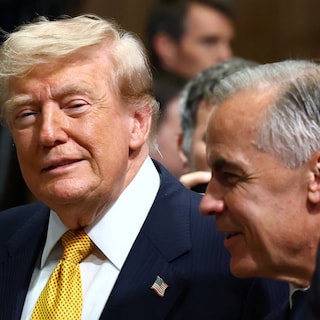
Huis van Afgevaardigden akkoord met verhoging militaire uitgaven tot 1.150 miljard dollar
de volkskrant · about 3 hours ago
Americký kongres schválil rekordné vysoký obranný rozpočet Americká Sněmovna reprezentantů ve středu těsnou většinou schválila návrh obranného rozpočtu v rekordní výši 1,15 bilionu dolarů (24,4 bilionu Kč). Návrh rovněž zahrnuje ustanovení o užší spolupráci P...
respekt · about 3 hours ago
US House passes short-term funding bill to avert government shutdown The US House of Representatives has passed a short-term funding bill to keep the government open through December 4, just weeks before the November midterm elections. The measure passed 220-205, with Speaker Mike Johnson accusing Democrats of using the funding fight for political gain.
yenisafak · about 3 hours ago
US House passes defense bill with Israel technology initiative The US House of Representatives passed the National Defense Authorization Act for Fiscal Year 2027 in a narrow 216-212 vote, establishing a bilateral defense technology initiative with Israel focused on counter-drone systems, missile defense and artificial intelligence through 2030.
yenisafak · about 3 hours ago
Grecia va cumpăra un sistem de apărare aeriană în valoare de 3,5 miliarde de euro de la Israel Consiliul de securitate al Greciei (KYSEA) urmează să dea joi aprobarea finală pentru achiziţionarea de la Israel a unui sistem de apărare aeriană, în valoare de circa 3,5 miliarde de euro (4 miliarde de dolari), şi a mai multor tipuri de drone, au declarat două surse pentru Reuters.
digi24 · about 3 hours ago
US-Abgeordnete verabschieden 95-Milliarden-Budgetplan
orf.at · about 3 hours ago
US House Passes $1.15 Trillion Defense Bill in Win for Trump
gdeltproject.org · about 3 hours ago
Αμετάβλητη η στάση του Στέιτ Ντιπάρτμεντ για τα F-35 στην Τουρκία, μάχη στο Κογκρέσο για να παραμείνει το «μπλόκο»
protothema · about 3 hours ago

Live - Huis van Afgevaardigden akkoord met verhoging militaire uitgaven tot 1.150 miljard dollar
de morgen · about 3 hours ago