
NATO summit in Ankara ends with fragile unity and new Ukraine aid pledge

Story Timeline
2 months · 3 summary articles
NATO summit in Ankara avoids major conflict but leaves tensions over defense spending and Ukraine aid unresolved
NATO summit in Ankara ends with fragile unity and new Ukraine aid pledge
NATO pledges 140 billion in military support to Ukraine over 2026 and 2027
Follow-up
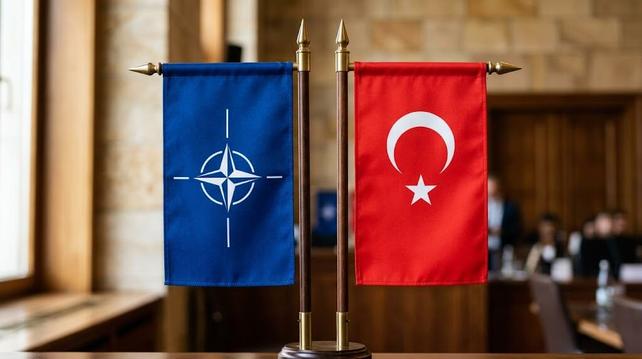
NATO’s two-day summit in Ankara concluded on Wednesday with a fragile show of unity, as US President Donald Trump softened his usual criticism of allies while extracting new commitments from European members to shoulder more of the alliance’s defense burden. The gathering, hosted by Turkish President Recep Tayyip Erdoğan, delivered a €140 billion military aid package for Ukraine over 2026–2027, a pledge to expand NATO’s airborne surveillance capabilities, and a pledge by Kyiv to begin licensed production of US Patriot missile interceptors.
Trump, who had earlier threatened Spain over NATO spending and reiterated his ambitions regarding Greenland, struck a conciliatory tone in Ankara, reaffirming the alliance’s mutual defense clause under Article 5 and greenlighting Ukraine’s right to manufacture Patriot missiles domestically. “The meeting was very productive,” Trump told reporters, thanking Erdoğan for hosting the summit. “We had a great two days.” The Ukrainian president, Volodymyr Zelenskyy, called the talks “constructive,” emphasizing the focus on strengthening Kyiv’s air defenses amid intensifying Russian strikes.
NATO Secretary-General Mark Rutte praised Trump’s push for higher defense spending, noting that European allies and Canada had increased military expenditures by $215 billion over the past two years. “The increase is staggering,” Rutte said, adding that the summit had produced a “strong sense of unity” among members. The alliance’s final declaration reaffirmed its “ironclad commitment” to collective defense, though analysts noted lingering doubts about the durability of that unity given Trump’s unpredictable rhetoric.
The summit also saw Turkey’s growing role in the alliance’s defense industrial base, with Turkish defense exports reaching $10.9 billion in 2026. Erdoğan dismissed objections from Israel and Greece to a potential F-35 sale to Turkey, stating that such concerns had “no place” in the alliance’s deliberations. Trump, who has yet to finalize the jet sale, said his “inclination leans toward approval,” citing Erdoğan’s long-standing support for the US.
Beyond Ukraine, NATO members agreed to send minesweepers to the Strait of Hormuz, a move likely to provoke Iran, which has repeatedly warned foreign navies against operating in the waterway. Trump also confirmed that the US had lifted sanctions on Syria and was considering removing Damascus from the list of state sponsors of terrorism, following a meeting with Syrian President Ahmed al-Sharaa on the summit’s sidelines.
European leaders hailed the summit as a turning point for the alliance. German Chancellor Friedrich Merz described the Ankara gathering as the “dawn of a new, more European NATO,” acknowledging Trump’s criticism of years of European underinvestment. Estonian Prime Minister Kristen Michal told *Euronews* that NATO was “working well,” pushing back against doubts about the alliance’s future. “NATO is not entering a new era—it is already in one,” Michal said.
Yet skepticism persisted. Political scientist Linas Kojala, writing in *Delfi*, noted that while the summit had restored a sense of unity, “the political atmosphere remains turbulent, even chaotic.” Handelsblatt struck a more critical tone, arguing that Trump’s unpredictability had left Europeans questioning the reliability of US commitments. “The mutual defense obligation under Article 5 is a fragile seedling,” the newspaper wrote, “rooted more in trust than in treaty clauses.”
As leaders departed Ankara, the question remained: how long would the fragile unity last? With Trump’s next move—whether on trade, defense spending, or Ukraine—unpredictable, NATO’s future hinged on whether Europe could translate pledges into lasting action.
Follow us for live European news
- 1
- 1
- 1
- 1
- 1
- 1
4 further sources not geolocated
Articles

Presidents of Latvia and Estonia discuss progress on Rail Baltica project - The Baltic Times RIGA - Latvian President Edgars Rinkevics, during his state visit to Estonia, met with Estonian President Alar Karis on Ruhnu Island on Wednesda......
baltic times · about 2 months ago
NATO summit in Ankara must demonstrate the alliances unity - Rinkevics - The Baltic Times RIGA - At the NATO summit in Ankara, the alliance must demonstrate that, despite discussions and disputes, it is capable of standing united, Pre......
baltic times · about 2 months ago
NATO summit begins in Ankara today - The Baltic Times RIGA - The NATO summit will take place in the Turkish city of Ankara today and tomorrow. Latvian President Edgars Rink......
baltic times · about 2 months ago
Erdogan Says Casus Belli Shouldnt Burden the Greek and Turkish People Turkish President Recep Tayyip Erdogan brushed aside Ankaras long-standing casus belli against Greece, saying most Turks do not know what the term means, after Greek Prime Minister Kyriakos Mitsotakis called Turkeys position a historical inaccuracy. Speaking after the NATO Summit in Ankara, Erdogan said the issue should not burden citizens in either country and urged […]
greek reporter · about 2 months ago
NATO Summit Ends With Trump Backing Patriot Production in Ukraine, Delaying Turkey F-35 Decision The NATO Summit in Ankara wrapped up on Wednesday, with President Donald Trump stalling on a decision to sell F-35 fighter jets to Turkey while pledging billions of dollars in new military support for Ukraine. Trump told reporters he has not yet made up his mind on the jet sale. He said that his inclination […]
greek reporter · about 2 months ago

News from Poland: NATO summit in Ankara as seen in Warsaw Presidents of Poland and Ukraine call their Ankara meeting constructive; Romanias DefMin on Ukraine, NATO, Russian threats; European Parliament sides with Polands criticism of Zelensky amid historical row.
polskieradio · about 2 months ago
The 2026 NATO Summit in Ankara confirms a major shift: European and regional allies are taking more responsibility for conventional defense. With Turkish defense exports hitting $10.9B, the alliance is more integrated than ever. #NATO #Geopolitics #Defense
mastodon bot · about 2 months ago

COMMENTARY: As NATO leaders head home from their annual summit in Ankara, it seems they concluded these meetings really arent worth the effort — so long as Donald Trump is U.S. president.
bluesky_Politico Europe · about 2 months ago
Lithuanian president, foreign minister head to Ankara for NATO summit - The Baltic Times VILNIUS - Lithuanian President Gitanas Nauseda and Foreign Minister Kestutis Budrys will travel to Ankara on Tuesday for a NATO summit. ......
baltic times · about 2 months ago
Debate: After Ankara: is Nato a united front again? Nato members made a show of unity at the end of the summit in Ankara. The final declaration states that Europe and Canada will shoulder a greater share of the defence burden in future. Plans were drawn up for massive investment in the defence industry and the modernisation of member states armed forces. Military aid totalling 140 billion euros over two years was also pledged to Ukraine. The media takes stock.
eurotopics.net · about 2 months ago
The President at the NATO Summit in Ankara: Ensuring peace through strength must become the Alliances new guiding principle
gdeltproject.org · about 2 months ago
Foreign Minister Tsahkna in Ankara: NATO Summit decisions strengthen Estonias security
gdeltproject.org · about 2 months ago
Foreign Minister Tsahkna at the NATO Summit: Ukraine, Europes largest military power, belongs in NATO
gdeltproject.org · about 2 months ago
FT: Allies hope Trump has become more supportive of Ukraine after strikes inside Russia European leaders at the NATO summit in Ankara were surprised by the unexpectedly pro-Ukraine tone of US President Donald Trump, with some concluding that Ukraines recent success in what Trump described as "long-range sanctions" had significantly influenced his position.
ukrpravda · about 2 months ago
27 rights groups urge Turkey to release journalists detained before NATO summit Twenty-seven press freedom and human rights groups on Wednesday called on Turkish authorities to release journalists detained or arrested in the run-up to the NATO summit in Ankara, accusing the government of using disinformation and counterterrorism laws to suppress independent reporting. The groups said the cases were part of a broader pre-summit crackdown on critical […] The post 27 rights groups urge Turkey to release journalists detained before NATO summit appeared first on Stockholm Center for Freedom.
stockholm center for freedom · about 2 months ago
Germanys Merz: Ankara summit will bring new spirit to NATO Chancellor Friedrich Merz has expressed confidence that the Ankara summit will mark a new spirit within NATO, strengthening cooperation and unity. He said European allies are ramping up defense spending and will make the alliance more European so it can remain transatlantic.
yenisafak · about 2 months ago
Latvian president says Ankara NATO summit to boost defense ties Latvian President Edgars Rinkevics said the NATO summit in Ankara will strengthen bilateral defense cooperation and defense industrial partnerships, while reaffirming Rigas support for Ukraines future membership despite the lack of alliance consensus.
yenisafak · about 2 months ago
Syrian president meets US congressional delegation, Trumps envoy in Ankara Syrian President Ahmad al‑Sharaa held a meeting in Ankara with a US congressional delegation and US envoy Tom Barrack, with Syrian Foreign Minister Asaad al‑Shaibani also in attendance. The meeting took place on the sidelines of the NATO summit hosted by Türkiye.
yenisafak · about 2 months ago
Erdoğan receives Italys Meloni for talks in Ankara President Recep Tayyip Erdoğan met Italian Prime Minister Giorgia Meloni in Ankara for closed-door talks on the second day of the NATO summit. The meeting covered bilateral relations and regional issues.
yenisafak · about 2 months ago
NATO reaffirms unity, collective defense in Ankara declaration NATO leaders adopted the Ankara Summit Declaration, reaffirming their commitment to Article 5 and collective defense. They announced over $50 billion in new defense procurements and pledged €70 billion in military support for Ukraine in 2026.
yenisafak · about 2 months ago
Türkiye defense industry touts $11B exports at NATO summit The Defense Industries Secretariat announced that Türkiyes defense and aerospace exports exceeded $11 billion over the past 12 months, with approximately 56 percent destined for fellow NATO countries, emphasizing Ankaras role as a trusted partner while the alliance summit convenes in the capital this week.
yenisafak · about 2 months ago
Erdogan hosts EU leaders during NATO summit in Ankara President Recep Tayyip Erdogan hosted European Council President Antonio Costa and European Commission President Ursula von der Leyen for a working dinner on Wednesday as part of diplomatic engagements during the NATO summit held at the presidential complex in Ankara, with the closed-door discussions focusing on bilateral ties and regional security cooperation.
yenisafak · about 2 months ago
Erdogan declares NATO summit historic success in Ankara President Recep Tayyip Erdogan declared the 2026 NATO summit a "historic" success on Wednesday, highlighting Türkiyes leading defense capabilities within the alliance and confirming positive discussions with Washington regarding F-35 fighter jet deliveries and bilateral military cooperation.
yenisafak · about 2 months ago
Merz says Ankara summit marks dawn of new, more European NATO German Chancellor Friedrich Merz on Wednesday praised the Ankara summit as the dawn of a new era for NATO in which European nations assume greater responsibility for their own defense, acknowledging that US President Donald Trump was right to criticize years of European underinvestment.
yenisafak · about 2 months ago
Erdogan hosts Syrias Sharaa at NATO summit in Ankara Turkish President Recep Tayyip Erdogan and Syrian President Ahmad al-Sharaa discussed strengthening bilateral ties and regional stability during a closed-door meeting in Ankara on Wednesday, with the summit taking place as Ankara hosts NATO leaders for a two-day gathering focused on defense and security.
yenisafak · about 2 months ago
Turkish FM: NATO Ankara summit concluded successfully Foreign Minister Hakan Fidan declared the NATO summit in Ankara a success, noting that all allies attended at the leaders level as a sign of confidence in Türkiye and President Erdoğan. He said the summit laid the foundations for a stronger Europe within a stronger NATO under the NATO 3.0 vision.
yenisafak · about 2 months ago
Ankara Summit: Türkiyes strategic weight in NATOs transformation The NATO Ankara Summit takes place at a critical juncture where, beyond Türkiyes hosting, it will play a key role in determining how the Alliance will shape its future in the face of the challenges of the new era. Taking place in a context where the restructuring of the transatlantic alliance is being debated under intense American pressure, the summit constitutes a turning point that will determine the strategic orientations of allies in the new period. Earlier this year, while it was being discussed
yenisafak · about 2 months ago
Trump lauds Erdogan as great leader, hails Ankara summit US President Donald Trump praised Turkish President Recep Tayyip Erdogan as a "great leader" and long-time friend on Wednesday as the two-day NATO summit concluded in Ankara, saying the alliance demonstrated "tremendous unity" while urging members to accelerate plans to meet the 5 GDP defense spending benchmark.
yenisafak · about 2 months ago
Russia says NATO focused on confrontation after Ankara summit Russian Foreign Ministry spokeswoman Maria Zakharova said the alliances July 7-8 gathering in Türkiyes capital failed to live up to Secretary General Mark Ruttes historic billing, warning that NATOs confrontational stance and massive military spending risk catastrophe for the world.
yenisafak · about 2 months ago
Trump says NATO came a long way at Ankara summit President Donald Trump declared that NATO came a long way at the Ankara summit, adding that the alliance made some concessions. He also said the US made a lot of good trade deals with Türkiye, calling it a very good partner.
yenisafak · about 2 months ago