
NATO pledges 140 billion in military support to Ukraine over 2026 and 2027

Story Timeline
2 months · 3 summary articles
NATO summit in Ankara ends with fragile unity and new Ukraine aid pledge
Follow-upNATO pledges 140 billion in military support to Ukraine over 2026 and 2027
NATO leaders endorse 70 billion military aid package for Ukraine at Ankara summit
Follow-up
NATO leaders on Wednesday concluded a two-day summit in Ankara with a pledge to deliver €140 billion in military support to Ukraine over 2026 and 2027, a historic expansion of the alliance’s industrial and financial commitments, and a reaffirmation of collective defence under Article 5. The Ankara Summit Declaration, adopted by all 32 member states, described Russia as a “long-term threat” to Euro-Atlantic security and announced more than $50 billion in new defence procurements, including a $40 billion NATO Drones initiative over five years. Secretary General Mark Rutte hailed the summit as “tremendously successful,” telling reporters that “NATO delivers” and that European allies and Canada are taking “great responsibility” for shared security.
The declaration underscored the alliance’s “ironclad commitment” to Article 5, stating that “an attack on one is an attack on all,” and welcomed the European Union’s multi-year Ukraine Support Loan. Allies also committed to sustaining at least equivalent levels of support in 2027, bringing total pledged assistance to Kyiv to €140 billion over two years. Rutte noted that European members and Canada increased core defence investments by more than $139 billion in 2025 and are on track to reach 5% of GDP in defence spending by 2035, with the current average already at 4%.
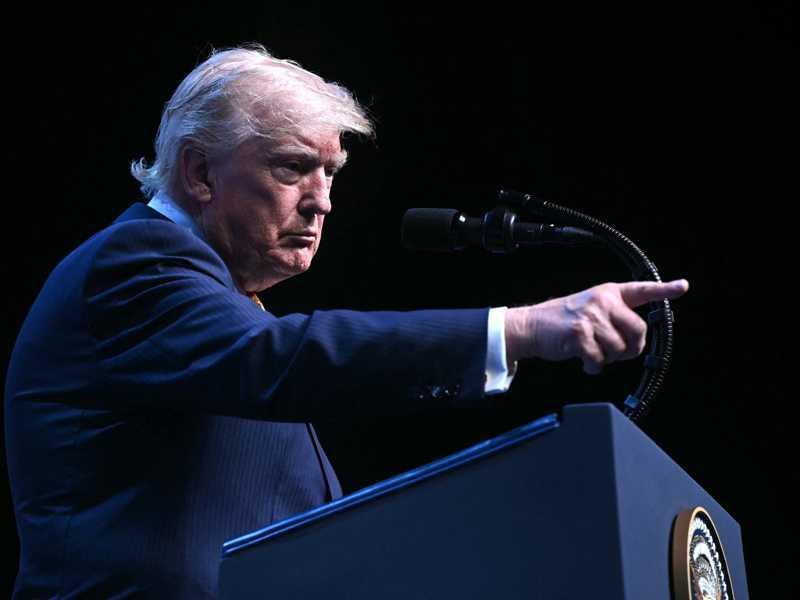
The summit unfolded against a backdrop of heightened regional tensions, including the ongoing US-Israel war in Iran and escalating concerns over Russia’s military posture. US President Donald Trump, attending his first NATO summit since returning to office, declared the meeting “very successful” and praised “tremendous unity,” while also announcing the end of Washington’s memorandum of understanding with Tehran and renewing calls for US control over Greenland. Trump’s remarks, delivered hours after US strikes on Iran in retaliation for attacks on commercial vessels in the Strait of Hormuz, underscored the fragile ceasefire and deepened strains with European allies.
Turkish President Recep Tayyip Erdogan, the summit host, called the meetings “historic,” and NATO leaders adopted a six-point declaration that reaffirmed unity, condemned Iran’s nuclear ambitions, and pledged to eliminate defence trade barriers among allies. Erdogan also urged NATO members to lift restrictions on defence industry cooperation, a call echoed by European leaders seeking to accelerate joint procurement and innovation. The alliance announced a new satellite mega-constellation involving eight allies and launched NATO’s Forward Land Forces initiative, with France agreeing to deploy troops to Finland and Sweden.
For Ukraine, the summit delivered tangible gains. President Volodymyr Zelensky secured bilateral defence deals, including a cooperation agreement with the Netherlands, and NATO’s pledge of €70 billion annually for 2026 and 2027 was widely seen as a critical boost to Kyiv’s war effort. Analysts noted that the summit marked a shift from political pledges to measurable obligations, with Albania confirmed as the host of the next NATO summit but no date set for the gathering.
Yet divisions persisted. Hungary reiterated its opposition to deeper involvement in Ukraine, while Poland pushed for a permanent US base in Europe. French President Emmanuel Macron confirmed ongoing technical work with Turkey and Italy on the SAMP-T air defence system, and European Commission President Ursula von der Leyen stressed the need for faster production and fewer bureaucratic obstacles to meet NATO’s deterrence requirements. Rutte acknowledged that the alliance must now focus on delivery, warning that “the numbers are staggering, but the work is just beginning.”
Follow us for live European news
- 1
- 1
- 1
- 1
4 further sources not geolocated
Articles

NATO summit in Ankara must demonstrate the alliances unity - Rinkevics - The Baltic Times RIGA - At the NATO summit in Ankara, the alliance must demonstrate that, despite discussions and disputes, it is capable of standing united, Pre......
baltic times · about 2 months ago
Erdogan hosts EU leaders during NATO summit in Ankara President Recep Tayyip Erdogan hosted European Council President Antonio Costa and European Commission President Ursula von der Leyen for a working dinner on Wednesday as part of diplomatic engagements during the NATO summit held at the presidential complex in Ankara, with the closed-door discussions focusing on bilateral ties and regional security cooperation.
yenisafak · about 2 months ago
Investment, unity, support for Kyiv: the NATO Summit draws to a close. Rutte: The Alliance is stronger than ever The final statement notes that in 2025, Europe and Canada increased their defence spending by over $139 billion. Contracts worth 50 billion and aid to Kyiv totalling 140 billion have been announced for 2026 and 2027
eunews.it · about 2 months ago
UK, Türkiye sign new security partnership to further strengthen NATO cooperation
gdeltproject.org · about 2 months ago
NATO summit in Ankara tremendously successful, says alliance chief
gdeltproject.org · about 2 months ago
Was the NATO summit a success? It depends on how you define it
gdeltproject.org · about 2 months ago

At End of NATO Summit, Leaders Find Much to Agree on Despite Trumps Insults The alliance restated its commitment to collective defense and reiterated its support for Ukraine.
new york times · about 2 months ago
Five key takeaways from the NATO summit in AnkaraTrump dominates summit with anti-Europe and Iran diatribes as NATO pledges to expand defence budgets and Ukraine support #News #Trump #NATO #Iran
mastodon bot · about 2 months ago
NATOs Ankara Summit: Albania Confirmed, but No Date Set Tirana Times, July 8, 2026 – NATOs Ankara Summit, held on July 7 and 8, marked less a moment of new strategic doctrine than a shift from political pledges to implementation. The central message was clear: the Alliance is moving into a phase where defence spending, industrial capacity, support for Ukraine and burden-sharing are no longer declaratory commitments, but measurable obligations. For Albania, however, the summit carried a specific political significance. NATO Secretary General Mark Rutte confirmed after the Ankara meeting that the next NATO summit will be held in Albania. Yet neither the Ankara Summit Declaration nor Ruttes public remarks The post NATOs Ankara Summit: Albania Confirmed, but No Date Set appeared first on Tirana Times.
tirana times · about 2 months ago
NATO summit begins in Ankara today - The Baltic Times RIGA - The NATO summit will take place in the Turkish city of Ankara today and tomorrow. Latvian President Edgars Rink......
baltic times · about 2 months ago
NATO commits €140 billion in military support for Ukraine Leaders of NATO member states have agreed that the Alliance will provide Ukraine with at least €140 billion in military support over 2026-2027.
ukrpravda · about 2 months ago
NATO chief urges faster defense production at Ankara summit NATO Secretary General Mark Rutte called on allies and defense companies Tuesday to accelerate industrial cooperation and convert higher military spending into concrete capabilities, warning that the alliance faces an increasingly complex security environment.
yenisafak · about 2 months ago
Erdogan expects favorable decision on F-35 jets at NATO summit President Recep Tayyip Erdogan said Tuesday he anticipates a positive outcome on Türkiyes long-running bid to acquire F-35 fighter jets from the United States during the NATO summit in Ankara, citing prior commitments for five aircraft and praising President Donald Trumps reliability on honoring bilateral defense agreements.
yenisafak · about 2 months ago
Roketsan chief says Türkiye can rapidly meet Europes defense needs Roketsan CEO Murat Ikinci said Türkiyes existing defense supply chain could rapidly meet Europes needs through cooperation with major companies, noting that the NATO summit in Ankara offers major opportunities for joint production and technology transfer.
yenisafak · about 2 months ago
Ukraine, Netherlands ink defense deal as NATO summit opens in Ankara Ukrainian President Volodymyr Zelenskyy and Dutch Prime Minister Rob Jetten signed a defense cooperation agreement in Ankara on Tuesday as the 36th NATO summit began, with Zelenskyy also holding bilateral talks with Allied leaders to secure additional military support.
yenisafak · about 2 months ago
Spanish PM Sanchez arrives in Ankara for NATO summit Spanish Prime Minister Pedro Sanchez touched down at Ankaras Esenboga Airport on Tuesday to attend the 36th NATO Heads of State and Government Summit, joining leaders from across the 32-member alliance to discuss Europes defense capacity, military modernization, and continued support for Ukraine.
yenisafak · about 2 months ago
NATO chief meets Indo-Pacific partners at Ankara summit NATO Secretary General Mark Rutte hosted leaders from South Korea, Japan, Australia and New Zealand in Ankara on Tuesday to strengthen defense cooperation and address shared security challenges ranging from the Russia-Ukraine war to tensions in the Indo-Pacific, according to a statement from Japans Foreign Ministry.
yenisafak · about 2 months ago
Türkiye hosts NATO defense ministers at new Ay Yildiz headquarters Defense Minister Yasar Guler welcomed NATO defense ministers to the under-construction Ay Yildiz Joint Headquarters on Tuesday, showcasing Türkiyes consolidated military command structure as Ankara hosts the 36th alliance summit.
yenisafak · about 2 months ago
Fidan joins restricted NATO meeting with European counterparts Foreign Minister Hakan Fidan attended a restricted-format meeting with counterparts from Germany, France, the UK, Italy and Poland alongside EU foreign policy chief Kaja Kallas as Ankara hosts the 36th NATO Heads of State and Government Summit focusing on security cooperation and the alliances future structure.
yenisafak · about 2 months ago
Erdogan hosts NATO leaders at Ankara reception President Recep Tayyip Erdogan and first lady Emine Erdogan welcomed NATO heads of state and their spouses to a reception and state dinner at the presidential complex in Ankara on Tuesday evening, launching the 36th summit of the transatlantic alliance in the Turkish capital.
yenisafak · about 2 months ago
Türkiyes Fidan hosts NATO foreign ministers at Ankara summit Foreign Minister Hakan Fidan on Tuesday presided over two ministerial sessions during the 36th NATO Heads of State and Government Summit in Ankara, convening the Istanbul Cooperation Initiative gathering and the NATO-Ukraine Council to discuss regional security frameworks and bilateral cooperation opportunities.
yenisafak · about 2 months ago
South Korean president urges speedier NATO cooperation Lee Jae Myung on Tuesday called for speedier cooperation between South Korea and NATO at the Defense Industry Forum in Ankara, proposing an upgraded partnership that would move beyond arms sales to joint research, production and operation of defense systems.
yenisafak · about 2 months ago
Estonia best partner to Türkiye in Nordics, Baltics: PM Estonian Prime Minister Kristen Michal told Anadolu that his country is probably the best partner to Türkiye in the Nordic and Baltic region, citing defense industry cooperation and Ankaras contributions to Baltic air security during the 36th NATO summit in Ankara.
yenisafak · about 2 months ago
First lady hopes NATO summit will advance dialogue and reconciliation Emine Erdoğan expressed hope that the NATO summit in Ankara will further strengthen dialogue and reconciliation. She said she was pleased to host leaders and their spouses at the official dinner.
yenisafak · about 2 months ago
NATO allies focus on Arctic, defence spending, Ukraine on summits final day NATO leaders gathered for the second day of the Ankara summit, with security in the Arctic, defence spending, Irans nuclear ambitions, and military support for Ukraine dominating the agenda. Rutte credited Trump with rebalancing defence spending, while Poland pushed for a permanent US base and Hungary reiterated its opposition to deeper involvement in Ukraine.
yenisafak · about 2 months ago
KAAN talks take center stage A key defense issue is set to dominate talks between President Recep Tayyip Erdoğan and U.S. President Donald Trump at the NATO Leaders Summit in Ankara. Erdoğan says he will personally raise the KAAN fighter jet engine issue, expressing confidence that Trump will reaffirm his previous positive stance. Any progress could mark an important step for Türkiyes fifth-generation fighter program and broader defense cooperation between Ankara and Washington.Prepared by @mkasgarlii for Yeni Şafak
yenisafak · about 2 months ago
Erdoğan welcomes NATO leaders as Ankara summit kicks off President Recep Tayyip Erdoğan welcomed NATO leaders at the 36th summit in Ankara, greeting each head of state including President Trump. A family photo was taken before Erdoğan and Secretary General Rutte delivered opening remarks, with defence investment and Ukraine topping the agenda.
yenisafak · about 2 months ago
NATO summit: Day 2 Day two of the NATO Summit is underway in Ankara, where leaders continue talks on defence spending, regional security and military cooperation ahead of the summits expected conclusion later today.Prepared by @mkasgarlii for Yeni Şafak
yenisafak · about 2 months ago
Czech president: Türkiye essential to NATOs collective security Czech President Petr Pavel has described Türkiye as essential to NATOs collective security due to its geographic position and military capabilities. He also called for a stronger European pillar within NATO, while stressing that the US must remain firmly engaged alongside its allies.
yenisafak · about 2 months ago
Erdoğan calls for lifting defence restrictions among NATO allies President Recep Tayyip Erdoğan has called for the removal of restrictions on defence cooperation among NATO allies, warning against policies that could undermine alliance cohesion. He also announced Türkiye has earmarked $24 billion for its Steel Dome air and missile defence project.
yenisafak · about 2 months ago