
Pakistan strikes Afghan border regions killing militants amid civilian toll dispute
Story Timeline
13 hours · 2 summary articles
Pakistan strikes Afghan border regions killing militants amid civilian toll dispute
Pakistan launches ground and air strikes in eastern Afghanistan after Karachi attack
Continuation
Pakistan launched overnight ground and air operations in eastern Afghanistan on Sunday, killing at least 29 militants but triggering a sharp condemnation from Kabul after Afghan officials reported that at least 36 civilians, including women and children, were killed in the strikes. The cross-border assaults, which included a ground incursion along the border, targeted militant hideouts in Paktia, Paktika, and Kunar provinces, according to Islamabad. The Pakistani military claimed the strikes destroyed three militant compounds linked to Jamaat-ul-Ahrar (JuA), a group it accused of carrying out a deadly attack on Pakistani paramilitary forces in Karachi the previous day.
Kabul’s Ministry of Foreign Affairs issued a statement on Sunday evening describing the operation as a “blatant violation of Afghanistan’s sovereignty” and demanding an immediate end to the attacks. Afghan officials said the strikes had killed 36 civilians and injured 158 others across the three provinces, with the highest toll reported in Paktika. The United Nations Assistance Mission in Afghanistan (UNAMA) confirmed 28 civilian deaths in its preliminary assessment, while Taliban officials cited higher figures. Pakistan’s Ministry of Information and Broadcasting released footage purportedly showing Pakistan Air Force airstrikes on JuA positions inside Afghanistan .
The escalation follows a militant assault on a Rangers facility in Karachi on Saturday, in which three attackers were killed and an Afghan national was captured. Pakistani authorities vowed retribution, linking the cross-border strikes to the need to dismantle safe havens used by armed groups operating from Afghan soil. Analysts, however, warned that military pressure alone cannot contain the threat, noting that armed groups have increasingly targeted Pakistani cities despite previous operations .
The conflicting casualty figures underscore the difficulty of verifying reports in Afghanistan’s eastern provinces, where access for independent observers remains severely restricted. Both sides have traded accusations, with Islamabad insisting the strikes were precise and proportionate, while Kabul described them as indiscriminate. The Afghan Taliban, which controls much of the border region, reported 38 civilian deaths and 158 injuries in its own tally, further complicating efforts to establish a definitive account .
The international community has yet to issue a unified response, though the UN’s confirmation of civilian casualties is likely to intensify diplomatic pressure on both sides to de-escalate. For now, the border remains tense, with fears that further strikes could provoke a broader confrontation in a region already grappling with decades of instability.
Follow us for live European news
- 3
- 2
- 1
- 1
- 1
3 further sources not geolocated
Articles

Israeli attack in Gaza kills three, including a child The strike in Deir el-Balah is the latest Israeli attack amid ongoing ceasefire violations.
aljazeera · about 3 hours ago
Pakistan concludes Karachi operation after militant attack The Pakistani military announced on Sunday that it concluded a clearance operation against militants who stormed a Rangers facility in the port city of Karachi, killing three attackers and capturing an Afghan national as authorities vowed retribution for the slain paramilitary troops and promised to pursue the perpetrators.
yenisafak · about 3 hours ago
Israeli forces injure Palestinian, detain 17 in occupied West Bank raids Israeli military forces injured a Palestinian and detained 17 others including a journalist during coordinated dawn raids across the occupied West Bank on Sunday, local authorities said, as rights groups document escalating violence against civilians in the territory.
yenisafak · about 3 hours ago
Qatari killed, another injured by military shrapnel off coast Qatars Interior Ministry said on Sunday that a citizen was killed and another injured after shrapnel from military operations struck their vessel off the coast, as maritime authorities conducted an overnight search and rescue mission amid heightened regional tensions between Washington and Tehran.
yenisafak · about 3 hours ago
Pakistan strikes militant targets inside Afghanistan, Kabul says civilians killed Pakistan has carried out a ground operation and cross‑border strikes against militant hideouts in Afghanistan, killing at least 29 fighters, according to Islamabad. Kabul condemned the attacks, saying dozens of civilians, including women and children, were killed or injured.
yenisafak · about 3 hours ago

Le Pakistan frappe à nouveau lAfghanistan, faisant trente-six victimes civiles, selon les talibans En représailles à un attentat perpétré à Karachi la veille, le Pakistan a lancé le 28 juin une opération terrestre et aérienne le long de sa frontière avec lAfghanistan. Avec, à la clé, vingt-neuf terroristes neutralisés, selon Islamabad – mais trente-six civils tués, rétorque Kaboul.
courrier international · about 3 hours ago
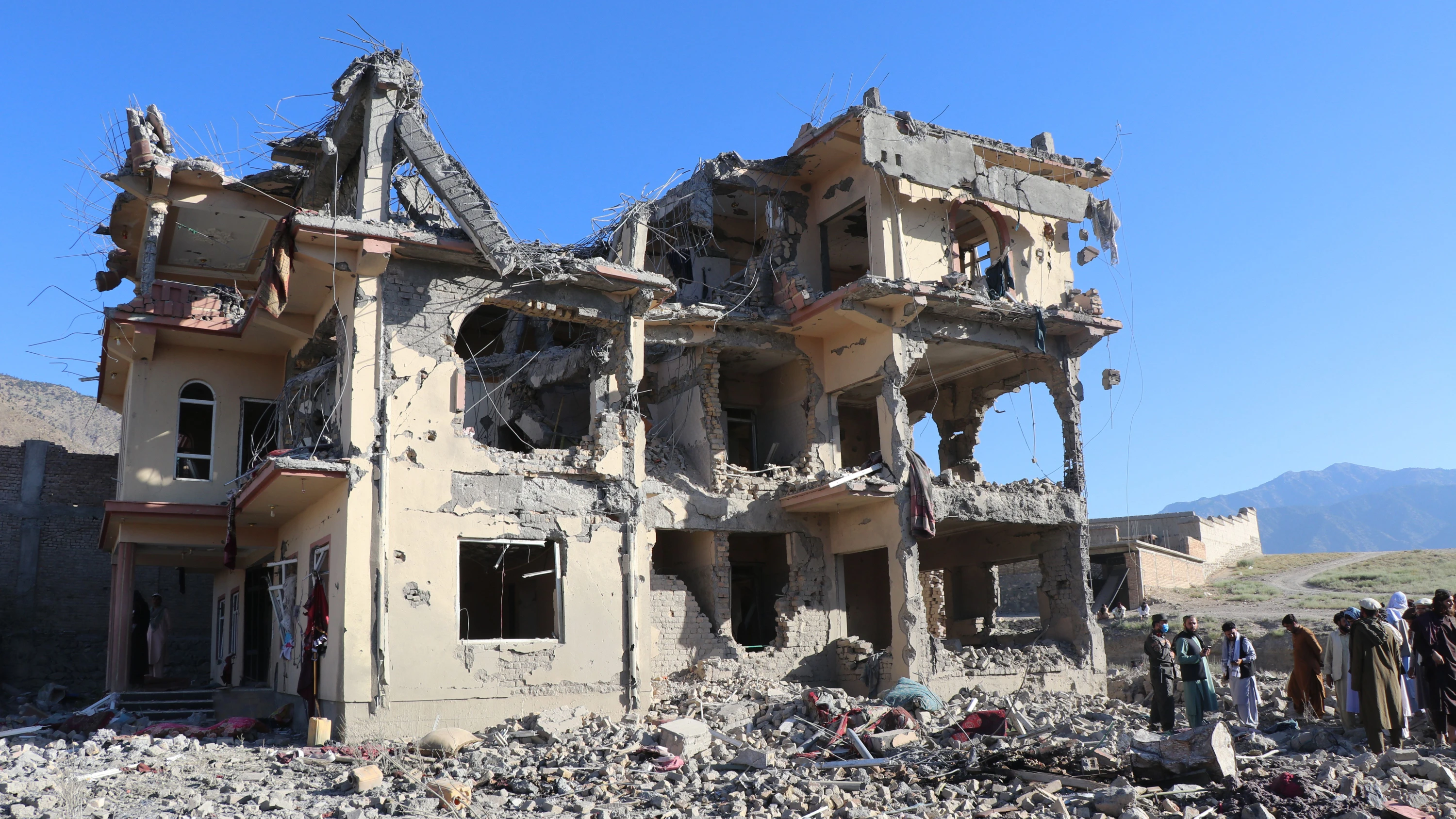
Angriffe in Grenzregion: Pakistan meldet Tötung von 25 Extremisten in Afghanistan Pakistan hat erneut Ziele in Afghanistan angegriffen und dabei nach eigenen Angaben 25 Extremisten getötet. Laut afghanischen Angaben tötete der Angriff 38 Zivilisten und verletzte weitere 158 Menschen.
faz · about 3 hours ago
Afghanistan: Viele Tote bei pakistanischen Angriffen
sueddeutsche · about 3 hours ago

UN says 28 civilians killed in Pakistani airstrikes in Afghanistan
news.yahoo.com · about 3 hours ago
Why Pakistans Afghan air strikes arent stopping armed attacks Analysts warn military pressure alone cannot contain a threat from armed groups that has reached Pakistans cities.
aljazeera · about 3 hours ago
Pakistani Strikes Along Afghan Border Leave Dozens Dead Afghanistans Taliban leaders said Pakistani air strikes killed dozens in the border regions between the two countries that Islamabad claimed were being used by militants as bases to launch attacks on Pakistan.
radio free europe · about 3 hours ago
🌲Afghanistan aims to plant millions of trees Under the shade of recently planted poplars in northeastern Afghanistan, Char Baghs villagers are rediscovering the value of trees after years of wartime deforestation.
bluesky_AFP English · about 3 hours ago

🇵🇰 Pakistani airstrikes have killed dozens of people in eastern Afghanistan, with Islamabad saying it targeted militants but the Afghan government reporting civilian casualties. ➡️ u.afp.com/SK3t
bluesky_AFP English · about 3 hours ago
🇵🇰🇦🇫⚡️ — Pakistans Ministry of Information and Broadcasting (MoIB) has released footage showing Pakistan Air Force (PAF) airstrikes targeting Jamaat-ul-Ahrar (JuA) positions inside Afghanistan. @IntelSlava
telegram_Intel Slava · about 3 hours ago
Konflikt Afghanistan und Pakistan: Dutzende Tote und viele Verletzte Der Konflikt zwischen Pakistan und Afghanistan eskaliert erneut, mit heftigen Luftangriffen Pakistans an der Grenze und gegenseitigen Beschuldigungen. mehr...
taz.de · about 3 hours ago
Afghanistan: at least 36 killed in deadly Pakistani strikes At least 36 people were killed across three provinces of eastern #Afghanistan in Pakistani strikes. #Islamabad says it was targeting a group responsible for an attack the day before.
france24 · about 3 hours ago