Loading…
 Saturday, September 26Saturday, September 26
3 months · 3 summary articles
Far-right leader Vannacci denies femicide and launches anti-immigration party in Rome
Thousands rally in Rome as Italys right-wing intensifies 'remigration' push
Vannacci vows to spare no one in fiery attack on Italys centre-right and media
On Sunday, 14 June 2026, Italy’s political landscape convulsed as former general Roberto Vannacci launched *Futuro Nazionale*, a far-right party whose inaugural congress in Rome was marked by inflammatory rhetoric, mass protests for “remigration,” and a denial of femicide that drew immediate condemnation.
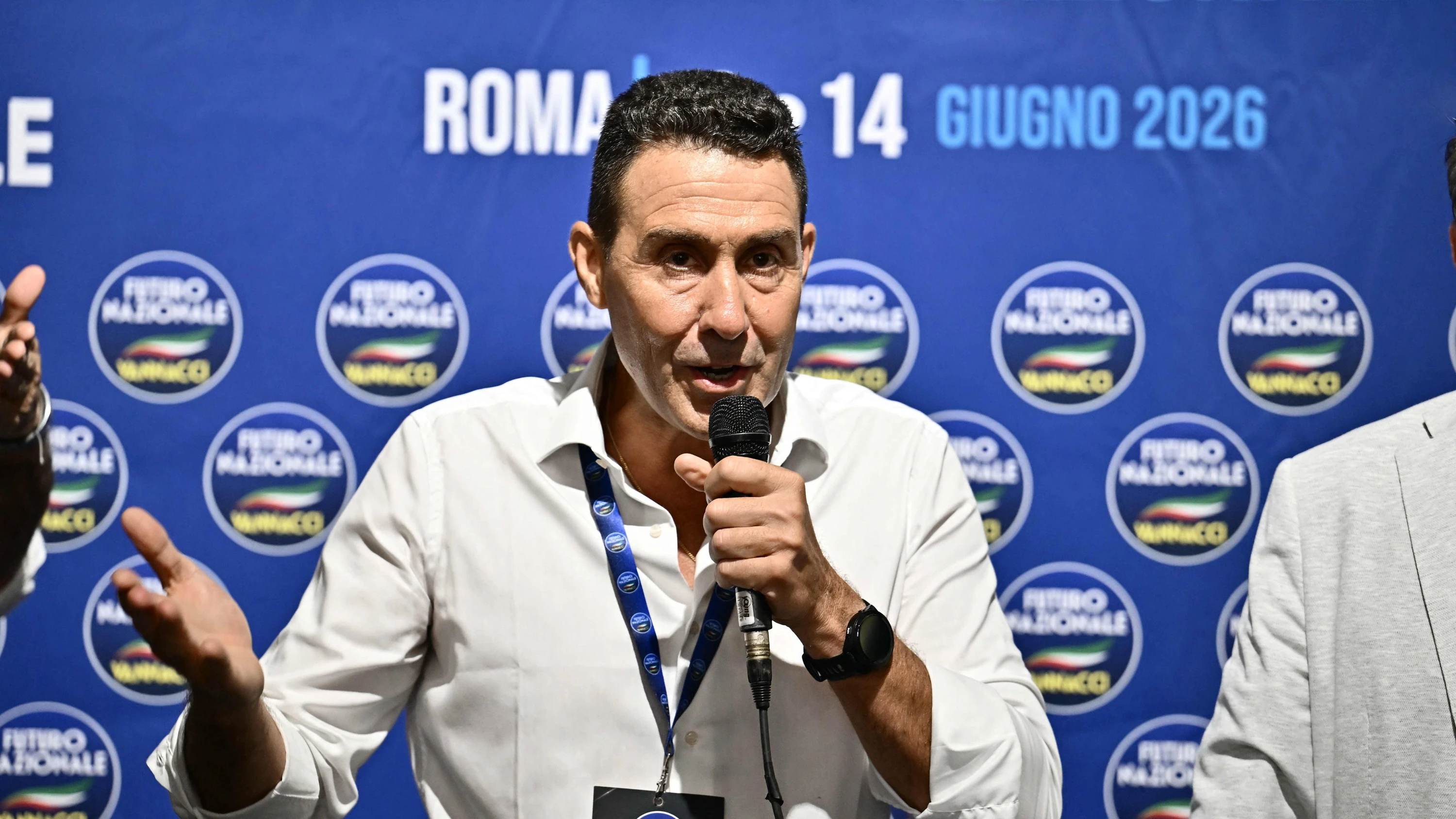
Speaking to thousands of supporters in the capital, Vannacci—once a high-profile critic of Prime Minister Giorgia Meloni’s immigration policies—declared his movement’s mission as “Italy to the Italians,” while simultaneously dismissing the very concept of femicide as a legal fiction. “There is no such thing as femicide; the crime does not exist,” he told delegates, a statement that prompted swift backlash from women’s rights groups and opposition politicians. The remarks were amplified by his newly elected deputy, who greeted the crowd with a fascist-era salute, captured on video and circulating widely across Italian media .
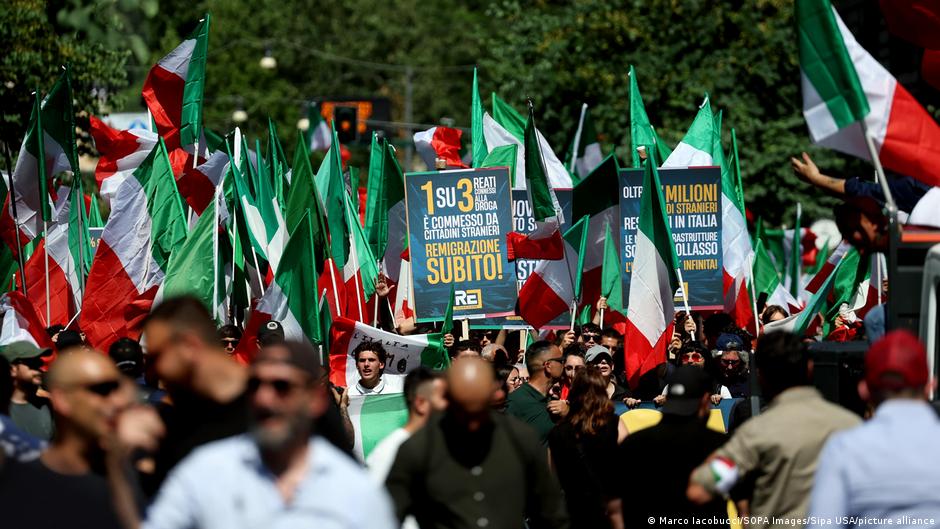
The party’s founding comes amid parallel demonstrations in Rome, where tens of thousands marched both for and against stricter immigration controls. Thousands of protesters carried signs reading “Remigration Now,” echoing Vannacci’s call for mass deportations, while counter-demonstrators demanded humane treatment of migrants and asylum seekers. Police reported no major incidents, but the scale of the protests underscored the depth of societal division .
Vannacci, a former army chief whose 2023 memoir *Il Mondo al Contrario* became a surprise bestseller, positioned *Futuro Nazionale* as a more radical alternative to Meloni’s ruling *Fratelli d’Italia* and Matteo Salvini’s *Lega*. “I am proud to be the scum and nobody’s child,” he told delegates, a phrase that has since become a rallying cry for his supporters . Analysts warn the new party could fracture the right-wing coalition, potentially forcing Meloni to adopt even harsher stances on migration to retain her base.
The emergence of *Futuro Nazionale* also signals a broader shift in Italian politics, where far-right movements are gaining ground by exploiting anxieties over national identity and security. Commentators note that Vannacci’s rhetoric—ranging from anti-immigration slogans to outright denial of gender-based violence—resonates with segments of the electorate disillusioned by mainstream parties. “This is not just another political party; it is a symptom of a deeper crisis,” said political scientist Maria Rossi. “It thrives on fear and division, and today, it has found fertile ground in Rome.”
As the sun set over the protest sites, the political and social fault lines laid bare by Vannacci’s movement showed no signs of closing. With *Futuro Nazionale* now a fixture on the Italian right, the coming months promise heightened confrontation—not only between left and right, but within the very definition of what it means to be Italian in the 21st century.
Follow us for live European news

Partei Futuro Nazionale: Neue rechtsextreme Partei in Italien gegründet Der Ex-Fallschirmjägergeneral Roberto Vannacci schafft eine noch rechtere Alternative zu Melonis Fratelli dItalia und Salivinis Lega – und bekommt Gegenwind. mehr...
taz.de · 3 months ago
Italien : Rechtsextreme und Neofaschisten machen mobil
gdelt bot · 3 months ago
Il padre di Ilaria Sula risponde a Vannacci: Femminicidio e omicidio sono ben diversi. Porti rispetto per mia figlia e per le altre donne uccise Il femminicidio non esiste, non serve un reato specifico. È uno dei cavalli di battaglia di Roberto Vannacci, che allassemblea di Futuro nazionale, oggi a Roma, ha portato sul palco e alla conoscenza dei media. Ma alle parole delleuroparlamentare, interpellato dallAnsa, ha risposto Flamur Sula, il papà di Ilaria Sula, la studentessa 22enne uccisa lo […] Larticolo Il padre di Ilaria Sula risponde a Vannacci: Femminicidio e omicidio sono ben diversi. Porti rispetto per mia figlia e per le altre donne uccise proviene da Il Fatto Quotidiano.
il fatto quotidiano · 3 months ago
Proteste: Neue Rechtspartei in Italien - Demo für „Remigration Melonis Politik kritisiert er als zu weich: Ex-Armeegeneral Vannacci ruft beim Parteitag seiner rechten Bewegung „Italien den Italienern. In Rom protestieren gleichzeitig Tausende für „Remigration.
tagesspiegel · 3 months ago
Einwanderungspolitik: Tausende demonstrieren in Italien für „Remigration – Zehntausende für Zuwanderung In Rom wurden am Samstag Kundgebungen zum Thema Zuwanderung abgehalten. Außerdem gründete sich eine neue rechte Partei, der Melonis Politik zu weich ist.
tagesspiegel · 3 months ago
Rechtsaußenpartei in Italien gegründet: Eine Chance für links Der Ex-General Vannacci setzt Melonis Regierungskoalition mit seiner neuen Rechtsaußenpartei unter Druck. Im besten Fall sprengt er das rechte Lager. mehr...
taz.de · 3 months ago
Vannacci: il femminicidio non esiste. La replica di Giulia Bongiorno: «Nostalgia del delitto donore?» Il leader di Futuro nazionale: sì alla Ue e alla Nato ma senza essere succubi
il sole 24 ore · 3 months ago
Vannacci-Partei in Italien: Der Gründer sagt: „Italien den Italienern Italien hat mit Futuro Nazionale eine neue rechtsextreme Kraft. Der Parteigründer und einstige General Roberto Vannacci ist stolz darauf, „der Abschaum und niemandes Kind zu sein.
faz · 3 months ago
Vannacci: il femminicidio non esiste «Il femminicidio è un omicidio come tutti gli altri, uomini e donne sono uguali, non cè bisogno di proteggere alcuno nei confronti degli altri e quindi devono essere tutti soggetti...
il sole 24 ore · 3 months ago
Vannacci: Non esiste il femminicidio, il reato non serve. E il suo deputato saluta i camerati Lex generale chiude la due giorni costituente del suo partito Futuro nazionale
corriere · 3 months ago