
NASA awards Blue Origin 468M for lunar landers as SpaceX advances in-orbit servicing
NASA and SpaceX are accelerating their in-orbit servicing and lunar ambitions, with new contracts, partnerships, and technological breakthroughs reshaping the future of space infrastructure. On May 26, NASA awarded Blue Origin—a direct rival to SpaceX—$468 million to develop two uncrewed lunar landers, marking a significant expansion of its commercial partnerships for Moon missions . The agency also unveiled plans for a permanent lunar base by the 2030s, intensifying competition with China, which launched its Shenzhou-23 mission this week to test year-long orbital endurance .
In parallel, SpaceX’s role in on-orbit servicing is gaining momentum. Revolv Space, an Italian-Dutch firm, announced a deal with French provider Infinite Orbits to supply Solar Array Drive Assemblies (SADAs) for in-orbit satellite maintenance, signaling growing demand for reusable space infrastructure . Lux Aeterna CEO Brian Taylor underscored the urgency of this shift, arguing that disposable satellites are unsustainable and that on-orbit servicing will soon become standard .
Technological innovation is also driving NASA’s long-term vision. The agency is developing a next-generation AI processor, reportedly 500 times more powerful than current models, to support deep-space missions by providing real-time decision-making for astronauts . Meanwhile, AI’s integration into European space operations has reached production stage, though trust and cybersecurity remain critical hurdles, as AI models increasingly expose vulnerabilities in satellite and ground systems .
While Elon Musk’s reported plans to merge SpaceX and Tesla could reshape the aerospace and automotive sectors, no official confirmation has been released . For now, NASA’s lunar contracts and SpaceX’s in-orbit servicing partnerships remain the most concrete steps toward a sustainable off-world economy.
NASA awards Blue Origin 468M for lunar landers as SpaceX advances in-orbit servicing
Articles
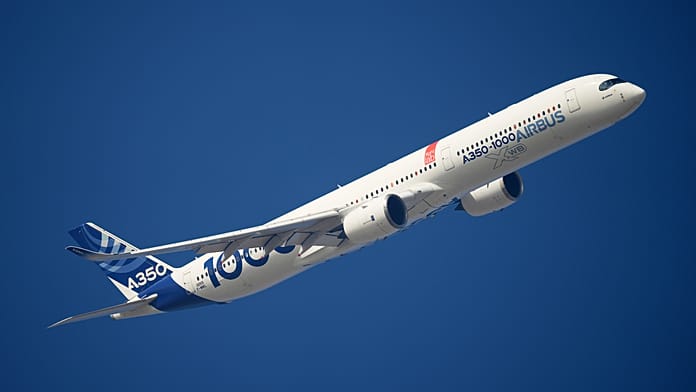
Airbus and BMW strike deals with Frances Mistral to bring AI to defence and safety systems As European companies look for alternatives to US tech giants in the race for artificial intelligence, Airbus and BMW have both partnered with French startup Mistral AI to develop systems ranging from flight safety and defence technology to car crash simulations.
euronews · about 3 hours ago

Revolv Space enters in-orbit servicing market with Infinite Orbits deal WARSAW, Poland — The Italian-Dutch company Revolv Space has announced that French in-orbit services provider Infinite Orbits has selected its Solar Array Drive Assemblies (SADAs), the devices used to manage […] The post Revolv Space enters in-orbit servicing market with Infinite Orbits deal appeared first on SpaceNews.
spacenews · about 3 hours ago
Space race heats up between US, China as NASA lays out Moon base plans NASA has unveiled its plans to send humans to the Moon, which include establishing a permanent presence on Earths nearest satellite by the 2030s. It comes as China moves ahead with its own lunar ambitions, launching three astronauts into outer space. FRANCE 24s Sharon Gaffney speaks to Michelle L. D. Hanlon, Executive Director at the Center for Air and Space Law at the University of Mississippi.
france24 · about 3 hours ago
Steeds betere AI-modellen ontwrichten de wereld van cybersecurity. De verdediging staat eigenlijk met 4-0 achter Met behulp van AI-modellen is het mogelijk geworden om razendsnel de zwakke plekken in software te vinden — én er misbruik van te maken. Is het wel mogelijk om alle systemen op tijd te repareren?
nrc · about 4 hours ago

La Nasa signe avec Jeff Bezos pour ses deux prochaines missions lunaires Le milliardaire américain Jeff Bezos est le grand gagnant de la première série de contrats commerciaux attribués par la Nasa en vue de la construction dune base habitable sur la Lune. Le 26 mai, sa société Blue Origin, rivale de SpaceX, lentreprise dElon Musk, sest vu attribuer 468 millions de dollars pour mettre au point deux modules dalunissage sans équipage.
courrier international · about 4 hours ago

Saját AI-processzort fejlesztett a NASA, 500-szor erősebb a jelenlegieknél A NASA a jövőbeni, Földtől távoli küldetések során olyan processzorokat használna, amelyek képesek megfelelő segítséget nyújtani az űrhajósoknak a munkavégzéshez.
hvg.hu · about 4 hours ago
CEO Series: Lux Aeternas Brian Taylor on whats next for on-orbit servicing In this episode of Space Minds, David Ariosto talks with Lux Aeterna CEO Brian Taylor about the problems with disposable satellites and the use for on-orbit servicing. Sponsored by Arcfield […] The post CEO Series: Lux Aeternas Brian Taylor on whats next for on-orbit servicing appeared first on SpaceNews.
spacenews · about 5 hours ago
Elon Musk plant angeblich Megafusion von SpaceX und Tesla [premium] US-Medienberichten zufolge hat der Multimilliardär einen Zusammenschluss der beiden Konzerne ins Spiel gebracht. Der Zeitpunkt dafür ist nicht zufällig gewählt. Der größte Gewinner steht jetzt schon fest.
die presse · about 5 hours ago

ZenaTech Inc .: ZenaTech Enters the AI Data Center Construction Market with ZenaWorx , a Drone - based 3D Digital Progress Monitoring Software
gdelt bot · about 5 hours ago

ZenaTech Enters the AI Data Center Construction Market with ZenaWorx , a Drone - based 3D Digital Progress Monitoring Software
gdelt bot · about 5 hours ago
AI just reached production in European space. The trust problem is what comes next. – SatNews
gdeltproject.org · about 5 hours ago
The next step for humanity as a whole: Chinas space race with the US heats up NASA is ordering landers, rovers and drones for a sprawling moon base, less than two months after the Artemis IIs record-breaking lunar flyaround. The space agency outlined the first phase of its moon base plans on Tuesday, awarding hundreds of millions of dollars in contracts to four US companies. And the Americans are not alone. On Sunday, the Chinese space agency launched Shenzhou-23 which will see an astronaut orbit the earth for a year. Its ambitions include having their own manned presence on the moon by 2035. For more, FRANCE 24s Sharon Gaffney is joined by the Godmother of Space Law, Dr Michelle LD Hanlon, executive director of the Centre for Air and Space Law at the University of Mississippi.
france24 · about 6 hours ago