
German rail chaos cripples steel, automotive and chemicals sectors
Story Timeline
4 months · 3 summary articles
German train stranded in Brandenburg as heatwave cripples Europe's rail networks
Follow-upGerman rail chaos cripples steel, automotive and chemicals sectors
Storms halt German rail travel as historic test site marks 200 years
Follow-up
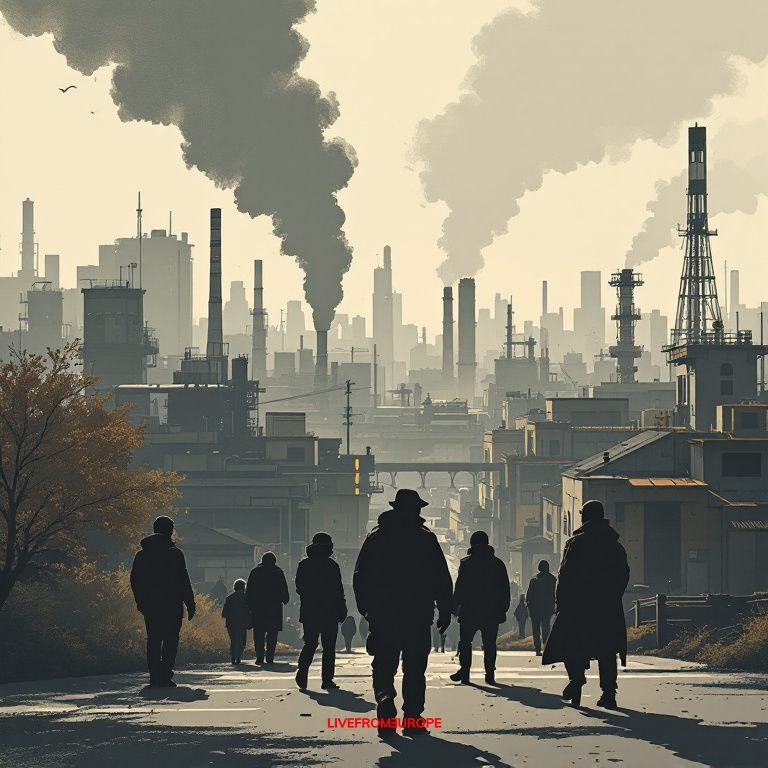
Germany’s industrial heartland is reeling as weeks of rail chaos—delays, cancellations and last-minute rerouting—have pushed the country’s flagship steel, automotive and chemicals sectors to the brink, with executives warning of lost contracts, missed deliveries and spiralling costs. The disruption, which began with sporadic strikes in May and intensified through June, has now become a full-blown logistics crisis that threatens to erode Germany’s competitive edge just as global trade tensions escalate.
On Friday, *Welt am Sonntag* reported that the country’s three most critical industries—steel, automotive and chemicals—have sounded the alarm over “critical escalation,” citing freight delays that have already forced some plants to idle production lines and reroute shipments via road and air at triple the usual cost. “The rail network is no longer fit for purpose,” said a spokesperson for ThyssenKrupp Steel Europe, one of the sector’s largest employers. “Every day without reliable logistics is a day we lose to international competitors.”
The crisis comes as the International Monetary Fund’s departing chief economist, Pierre-Olivier Gourinchas, warned on Friday that tit-for-tat trade warfare is threatening to destabilise the global economy, calling attempts to gain marginal advantages “self-defeating” . Gourinchas, who steps down this weekend, said the cumulative effect of protectionist measures—from tariffs to export controls—risks choking supply chains already strained by geopolitical flashpoints such as the Strait of Hormuz, where analysts now question how long the global economy can “survive this ongoing war” .
In the Netherlands, meanwhile, a new Deloitte survey released on Saturday found that 52% of Dutch chief financial officers have grown less optimistic about the economic outlook, citing intensifying uncertainty over both geopolitics and domestic infrastructure reliability. “We’re seeing a clear shift from growth optimism to risk aversion,” said Deloitte Netherlands’ chief economist, Mathijs Bouman.
The German government has pledged €1.2 billion in emergency funding to stabilise rail freight, but industry leaders say the measures are too little, too late. “Money alone won’t fix a decade of underinvestment,” said Hildegard Müller, president of the German Association of the Automotive Industry. With freight volumes down 18% year-on-year and some chemical plants operating at 60% capacity, the question is no longer whether the damage is reversible—but how deep the scars will be.
Follow us for live European news
- 3
- 1
- 1
- 1
1 further source not geolocated
Articles

Rohstoffe: Verband: Zementverbrauch auf Niveau vor Zweitem Weltkrieg Der Zementverbrauch in Deutschland ist so niedrig wie seit Jahrzehnten nicht. Was Verbandspräsident von Achten über die Krise der Baustoffindustrie sagt.
handelsblatt · 3 months ago
52 of Dutch chief financial officers are less optimistic about the economic outlook Chief financial officers in the Netherlands are still focused on growth but are taking a more cautious stance as economic and geopolitical uncertainty intensifies, according to a new survey by Delo
nltimes.nl · 3 months ago

Suomi voi kääriä miljardit, kun Eurooppa käristyy
iltalehti · 3 months ago
Rohstoffe: Verband: Zementverbrauch auf Niveau vor Zweitem Weltkrieg
die zeit · 3 months ago
Not Economy but Extremism is Threatening Europes Future
gdeltproject.org · 3 months ago

„Kritische Zuspitzung – Bahn-Chaos belastet deutsche Industrie Umleitungen und Störungen rauben nicht nur Bahnreisenden die Nerven. Sie sind inzwischen auch ein massives Problem für die Wirtschaft. Deutschlands Vorzeigebranchen Stahl, Auto und Chemie schlagen Alarm.
welt.de · 3 months ago
Illusions of Western virtue: Ursula von der Leyen and Europes moral bankruptcy – Peoples World
gdeltproject.org · 3 months ago
How on earth has the global economy survived this ongoing war?
gdeltproject.org · 3 months ago
Tit-for-tat trade warfare threatens global economy, says IMF chief economist Pierre-Olivier Gourinchas, who is leaving the fund, warns attempts to gain small advantages will be self-defeating
financial times · 3 months ago