
NATO leaders in Ankara to affirm ironclad defence pledge amid transatlantic tensions
Story Timeline
3 months · 28 summary articles
NATO leaders, including U.S. President Donald Trump, are set to affirm an ironclad commitment to collective defence under Article 5 at next week’s summit in Ankara, according to a draft text approved by NATO ambassadors on Friday and reviewed by Reuters. The pledge comes as allied capitals scramble to present a united front amid transatlantic tensions, with European defence spending and long-term military support for Ukraine dominating the agenda.
The summit text, obtained by Reuters, commits members to a €70 billion ($80 billion) pledge over the next two years, a figure that underscores Europe’s push to shoulder more of the alliance’s burden. German Chancellor Friedrich Merz pushed back on Friday against Trump’s criticism of Berlin’s defence spending, calling past efforts “ridiculous” and insisting Germany “does not have to shy away” from its record. Merz’s remarks followed reports that Germany is doubling its defence budget within four years, a move aimed at placating U.S. demands for greater burden-sharing.
Swedish Prime Minister Ulf Kristersson warned that the summit convenes at a “turbulent time” for European security, with allied leaders set to discuss boosting defence industrial capacity and sustaining military aid to Ukraine. Lithuanian President Gitanas Nausėda expressed hope that Trump would unequivocally reaffirm NATO’s collective defence clause, calling the alliance “sacred.” Meanwhile, Estonian Prime Minister Kristen Michal cautioned that failing to deter Russia now would cost far more than investing in defence, framing deterrence as a fiscal imperative.
The summit’s focus on Ukraine is underscored by reports that NATO members are poised to pledge €140 billion in military aid over two years, a figure that would nearly match this year’s total support. Ukrainian President Volodymyr Zelenskyy has pressed for greater industrial cooperation, including domestic production of Patriot missile systems, to reduce reliance on Western supplies. The Baltic states, meanwhile, are pushing for a stronger role in NATO’s nuclear deterrence strategy, with Lithuania seeking full integration into the alliance’s nuclear umbrella.
Tensions persist, however. U.S. Defence Secretary Pete Hegseth’s reported plan to announce significant troop cuts in Europe was blocked last month, with Senator Marco Rubio reportedly intervening to prevent the move. Uncertainty also lingers over delayed U.S. weapons deliveries to Estonia, despite assurances from Washington that shipments are en route. Belgian Defence Minister Theo Francken praised Turkey’s role in the alliance, calling Ankara “very important” and urging Europe to include Turkish technology in its defence programmes.
As NATO leaders gather in Ankara, the summit’s success hinges on balancing unity with pragmatism—reaffirming transatlantic bonds while addressing Europe’s growing defence autonomy. The stakes are high: a fractured alliance risks emboldening Moscow, while a united front could redefine Europe’s security architecture for decades to come.
Follow us for live European news
- 3
- 2
- 1
- 1
- 1
- 1
- 1
- 1
- 1
- 1
4 further sources not geolocated
Articles
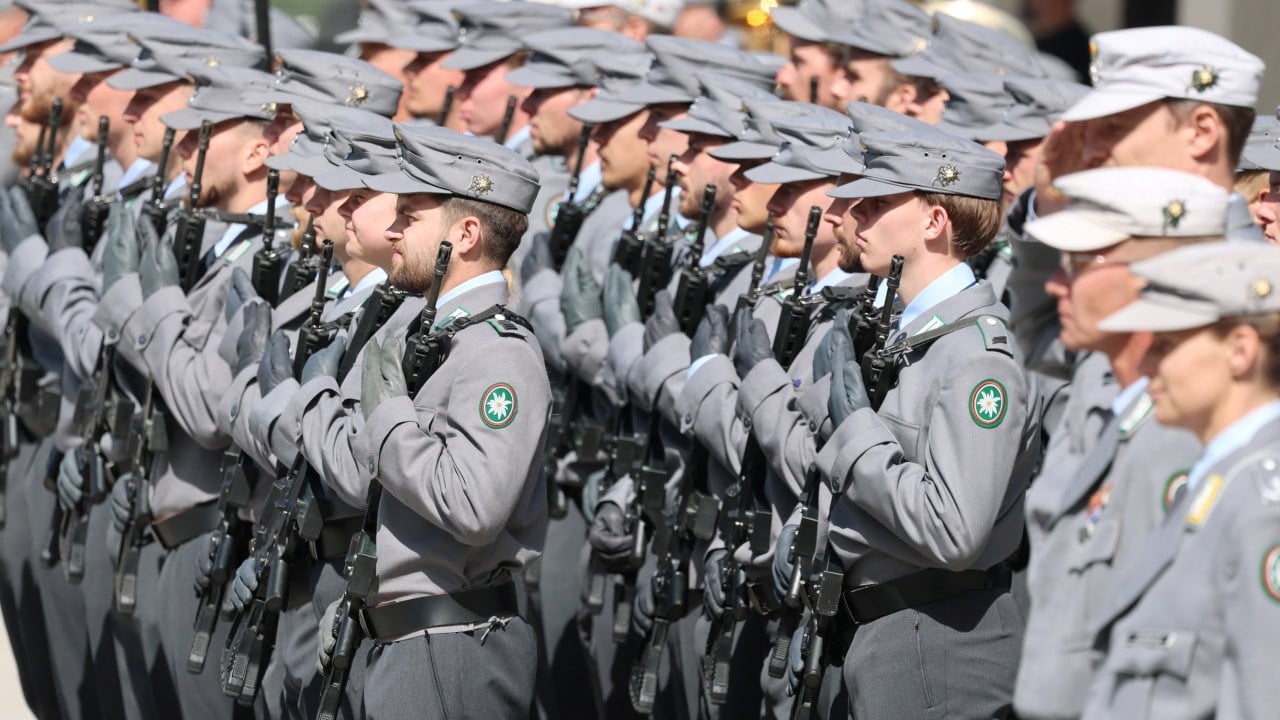
Merz hits back at Trump for ridiculing Germanys defence spending drive Germany does not have to shy away from talking up its record on defence spending, Chancellor Friedrich Merz said on Friday, when asked about US President Donald Trump calling Germanys past efforts ridiculous. The issue of defence spending has loomed large as Nato leaders prepare to gather next week in Ankara, where Europeans aim to set aside strife with Trump over Iran and Greenland and show they are stepping up to defend the continent. Germany is doubling its defence budget within four...
south china morning post · about 2 months ago

Ex-NATO chiefs, Swedish PM reveal what Ankara summit must deliver #Europe #NATO
mastodon bot · about 2 months ago

#EU #USA Marco Rubio reportedly helped block Defense Secretary Pete Hegseths plan to announce significant troop cuts in Europe during a NATO meeting last month. Subscribe to @OSINTdefender Chat room
telegram_OSINTdefender · about 2 months ago
#Germany #USA Germany is committed to doubling its defense budget within four years, aiming to meet NATOs spending targets and enhance its military capabilities. This significant increase reflects a shift in Germanys defense policy under Chancellor Merz. Subscribe to @OSINTdefender Chat room
telegram_OSINTdefender · about 2 months ago
NATO leaders including Trump to affirm ironclad commitment to collective defence in Ankara, summit text says NATO leaders including U.S. President Donald Trump are set to affirm an ironclad commitment to collective defence under the alliances Article 5 pact at a summit in Ankara next week, according to a text approved by NATO ambassadors on Friday and reviewed by Reuters. NATO members are also set to pledge €70 billion ($80 billion) […]
in-cyprus · about 2 months ago
Bříza: Putin bude doufat, že se státy na summitu NATO pohádají a rozdělí. Pravděpodobnost ale není velká Připravovaný summit NATO v Ankaře se blíží. „Největší sen Vladimira Putina by určitě byl, kdyby Donald Trump práskl do stolu a řekl, že s Evropou nadále nepočítá, a odletěl. To si ale nemyslím, že nastane, komentuje blížící se summit expert na bezpečnost a mezinárodní vztahy Vlastislav Bříza z Univerzity Karlovy v pravidelném pořadu Radiožurnálu Co se děje se světem.
irozhlas.cz · about 2 months ago
Steinmeier gratuliert Trump zum 250. US-Jubiläum – und betont Bedeutung der Nato Bundespräsident Frank-Walter Steinmeier hat US-Präsident Donald Trump zum 250. Jubiläum der USA gratuliert. Er betonte die engen Beziehungen beider Länder und hob die Wichtigkeit der Nato hervor.
welt.de · about 2 months ago
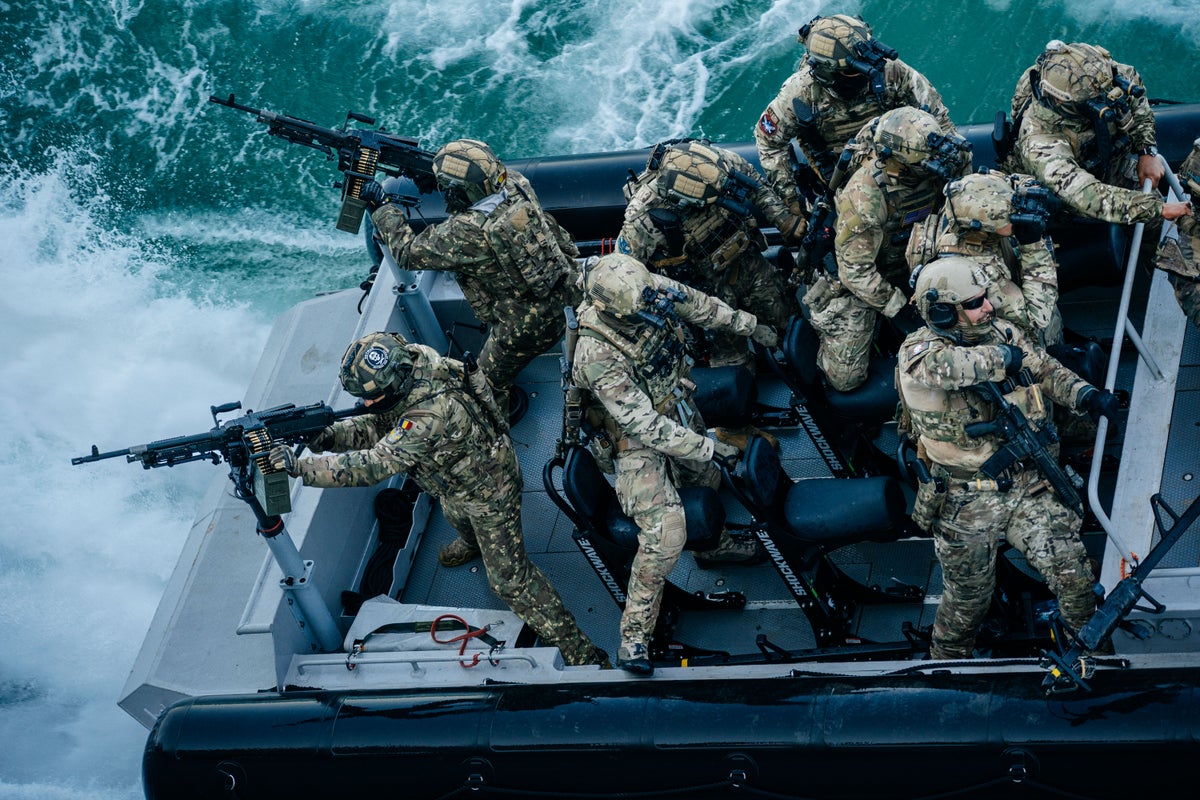
Hegseth prepared huge cuts to US troops in Europe but was overruled by Trump The Trump administration has cut the pool of US military capabilities available to Nato in a crisis as Russia presses on Europes eastern frontier
independent · about 2 months ago
UK Sets Sights on New EU Summit With Closer Ties to Europe Crucial
gdeltproject.org · about 2 months ago
Nato Ankara summit to focus on unity and defence
gdeltproject.org · about 2 months ago
Uncertainty remains over delayed U.S. weapons deliveries to Estonia Estonian Defense Minister Hanno Pevkur says U.S. weapons shipments to Estonia are on their way, but he still cannot give exact dates. Matthew E. Wall, deputy chief of mission at the U.S. Embassy, likewise did not mention any timelines, stressing instead that the key issue is greater allied contributions to NATOs defense capability.
news.err · about 2 months ago
Lithuania president expects Trump to say NATO is sacred at Ankara summit Lithuanian President Gitanas Nausėda said he hopes to hear an unequivocal commitment from US President Donald Trump to NATOs collective defence clause at next weeks alliance summit in Ankara.
lrt · about 2 months ago
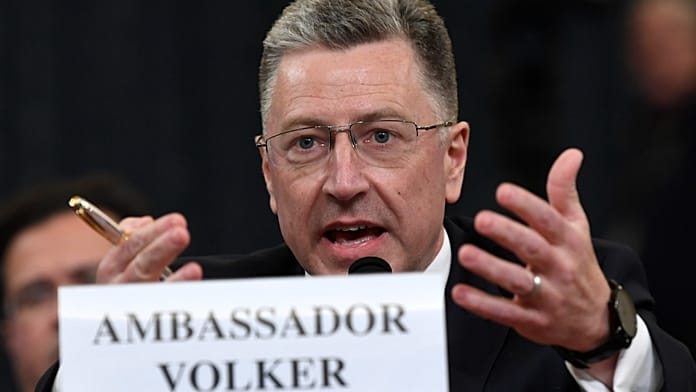
Donald Trumps always raging about something, former US NATO envoy says Kurt Volker told Europe Today the US presidents anger at allies for not joining in the war in Iran was an "exaggeration".
euronews · about 2 months ago
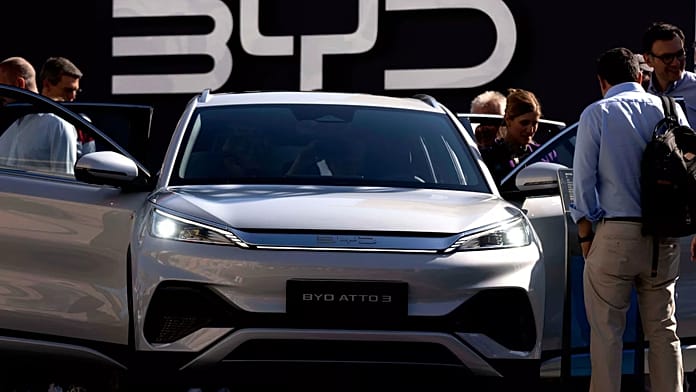
October deadline for China talks not realistic at all, chief trade MEP says Bernd Lange, head of the European Parliaments trade committee, told Euronews the EU should be pushing China hard on unfair industrial subsidies and other pressing issues.
euronews · about 2 months ago
The EUs Social Media Ban for Kids: Child Protection or Digital Control?On July 2, 2026, Euractiv published an exclusive report revealing that European Commission President Ursula von der Leyen is expected to announce proposals for an EU-wide social media ban for children during her annual State of the Union address in Strasbourg on September 16. Multiple EU officials and diplomats confirmed that Commission officials have already informed governments to expect the announcement. While officially framed as a child protection measure, critics and privacy advocates have raised alarm bells. The technical infrastructure required to enforce such a ban—namely, mandatory age verification through digital identity systems—could create a surveillance mechanism that extends far beyond protecting minors. As one observer put it, this is probably about control, not about kids — a system where submitting government-issued ID becomes a prerequisite for online participation, with potentially severe consequences for political speech. The Proposed Ban: What We Know The exact minimum age and enforcement mechanisms remain unclear. National governments have floated various options, from mandatory parental consent to outright restrictions backed by age verification technology. An expert panel established by von der Leyen to examine online child protection is expected to report on July 13, with the announcement potentially coming during her September speech. The momentum is undeniable. France, Spain, Germany, Denmark, and Greece have all pressed ahead with national measures. Australia passed a world-first law in 2024 requiring major social media platforms to prevent under-16s from holding accounts, which took effect in December 2025. The UK government announced similar plans last month. Ireland, currently holding the rotating presidency of the Council of the EU, is pushing for an EU-wide approach to age verification. A diplomat told Euractiv that Brussels is under growing pressure to act before national laws diverged too far. Christel Schaldemose, a vice president of the European Parliament, urged von der Leyen to move more quickly, stating: She is not moving fast, and that is a problem. The Digital Identity Infrastructure The key to understanding why this proposal has sparked concerns about surveillance and control lies in the technical infrastructure being developed to enforce it. The European Commission has already announced an age-verification app that is technically ready and soon available, according to von der Leyen. The app is built upon the European Digital Identity (EUDI) Wallet and requires users to verify their age with official documents or digital IDs. It then issues a confirmation using zero-knowledge proofs"—a system designed to give platforms proof of age without exposing personal data. However, critics are deeply skeptical. Thomas Lohninger, executive director of Austrian privacy NGO epicenter.works, told POLITICO: We are deeply worried by the Commission plans to tie digital identity with the technical implementation of age verification. The Electronic Frontier Foundation (EFF) has been fighting age verification mandates because they undermine the free expression rights of adults and young people alike, create new barriers to internet access, and put at risk all internet users privacy. The security of the app itself has been called into question. Independent developers found vulnerabilities including authentication bypasses, unencrypted biometric storage, and forgeable verification payloads. One white hat hacker reportedly bypassed the apps biometric authentication in minutes. As IT security expert Dr. Fabian Knirsch warned: We are seeing a dangerous mix: a social media ban is a regulatory measure, but its technical implementation is becoming a free pass for data mining. The Slippery Slope: From Age Verification to Surveillance The concern is not merely technical but political. Age verification, once established as a universal requirement for social media access, creates a precedent that can be expanded. Spanish Prime Minister Pedro Sánchez has already proposed linking social media accounts to EU Digital Identity Wallets to prevent anonymity, comparing anonymous posting with driving a car without carrying a license. A Euronews report noted that a French measure linking digital IDs with social media accounts would allow authorities to fight against bad actors"—but that unofficially, it would be one more step towards a society where words and opinions are policed. The European Parliament has received questions about whether all EU social media users will be required to undergo mandatory passport/ID age verification and whether the Commission wishes to extend this obligation beyond social media platforms. The concern is that what starts as child protection becomes a universal identification requirement for all online activity. The Censorship Concern: Political Speech at Risk The users concern that this is about submitting your ID so governments in the EU can ban you if you post any pro Palestine rhetoric or anti imperialist or anti fascist rhetoric touches on a broader anxiety about how digital identity systems can be weaponized against political speech. The Council of Europes Commissioner for Human Rights, Michael OFlaherty, has urged caution in imposing sweeping bans, acknowledging that while efforts to restrict childrens access arise from legitimate concerns, blanket bans and mandatory age verification pose risks. He argued for regulating platforms, not children. The ITIF (Information Technology and Innovation Foundation) warned that while protecting minors online is important, overly restrictive measures, such as bans, undermine young peoples rights to access information and participate in digital spaces. European Digital Rights (EDRi) has serious concerns that the age verification narrative, which began with the aim of excluding young people from porn platforms, is now expanding to include also social media (or features thereof, such as chat functions), chatbots and interpersonal messaging services such as WhatsApp. The bottom line, according to EDRi: restrictions and bans on any category of users will force everyone to verify their identity. The Australian Precedent and Its Lessons Australias social media ban for under-16s, which took effect in December 2025, is being cited by von der Leyen as a model. However, the Australian experience has revealed significant loopholes—children simply using photos of adults to bypass checks. This has led to calls for even stricter verification, creating a ratchet effect where each bypass leads to more intrusive surveillance. Conclusion The EUs proposed social media ban for children is presented as a benevolent measure to protect minors from online harm. Von der Leyen has framed it as no different from banning the sale of alcohol or tobacco to minors. And indeed, protecting children from harmful content is a legitimate goal. However, the technical infrastructure required to enforce such a ban—mandatory age verification through government-issued digital identities—raises profound questions about privacy, freedom of expression, and the scope of state surveillance. As one expert noted, verification is becoming an instrument of surveillance rather than serving to ensure legally compliant process design. The concern that this system could be used to silence political speech—whether pro-Palestine, anti-imperialist, anti-fascist, or any other viewpoint disfavored by authorities—is not paranoid speculation. It is a logical consequence of creating a system where online participation requires government-issued identification, and where platforms (and by extension, governments) can revoke access based on content. The question is not whether children should be protected online. The question is whether the cure—universal digital identification and the end of online anonymity—is worse than the disease. And whether, once this infrastructure is in place, it will remain limited to protecting children or expand to encompass far more. Please like, comment, follow and share, it really helps out Until next time, comrades. 📺 Watch on YouTube: 📡 Im live on Twitch: 📱 All links:
mastodon bot · about 2 months ago
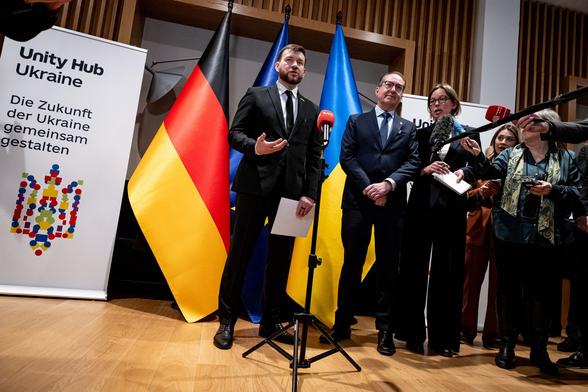
Berlin and Kyiv are discussing mechanisms both to encourage and force Ukrainian men residing in Germany to return to their country, Ukraines ambassador to Germany Oleksiy Makeev said in an interview. #Russia #EU #Germany
mastodon bot · about 2 months ago
Trump: Je absurdní, aby Spojené státy pokračovaly ve stejné podpoře NATO Americký prezident Donald Trump označil za absurdní, aby Spojené státy pokračovaly v tom, co prezident pokládá za jednostrannou podporu Severoatlantické aliance. Summit NATO se přitom za méně než týde...
respekt · about 2 months ago
+++ Ukraine-Krieg +++: Ukraine soll bei Nato-Gipfel Milliardenversprechen erhalten Merz reagiert gelassen auf Trump-Kritik an Verteidigungsausgaben +++ Selenskyj drängt auf eigene Produktion für Patriot-Raketen +++ Der Newsblog
handelsblatt · about 2 months ago
Spitzentreffen in Ankara: Ukraine soll bei Nato-Gipfel Milliardenversprechen erhalten Die Ukraine sieht sich im Abwehrkampf gegen Russland derzeit im Aufwind. Können weitere Unterstützungszusagen der Nato die Lage weiter verbessern?
handelsblatt · about 2 months ago
Türkiye to unveil Ay Yıldız military hub at NATO summit Türkiye will showcase its next‑generation Ay Yıldız Joint Headquarters during next weeks NATO summit in Ankara, hosting visiting defence ministers and senior NATO officials. The complex consolidates the National Defence Ministry, General Staff, and armed forces commands under one roof.
yenisafak · about 2 months ago
NATO summit in Türkiye to mark turning point, says defense ministry Türkiyes National Defense Ministry has stated that next weeks NATO summit in Ankara will mark a significant turning point for the alliance, reaffirming collective defense and highlighting Türkiyes strategic role. The ministry also condemned Israeli attacks in Syria and Lebanon.
yenisafak · about 2 months ago
Turkish defense products to be showcased at NATO summit Türkiyes Defense Industries Secretariat will host a high-level reception at Turkish Aerospace Industries as part of the NATO Defense Industry Forum. Indigenous air platforms will perform demonstration flights, and senior allied officials will attend.
yenisafak · about 2 months ago
Erdogan, Trump share strong will to lift CAATSA sanctions: Fidan Turkish Foreign Minister Hakan Fidan said on Thursday that President Recep Tayyip Erdogan and US President Donald Trump share a "strong will" to lift sanctions imposed on Türkiye under the Countering Americas Adversaries Through Sanctions Act (CAATSA), adding that both governments are taking steps to resolve the issue.
yenisafak · about 2 months ago
Former NATO chief proudest of Sweden, Finland accession Former NATO Secretary General Jens Stoltenberg has told Anadolu that Sweden and Finlands entry into the alliance was the decision he is most proud of during his decade‑long tenure. He thanked President Erdoğan for his cooperation and said his main expectation for the Ankara summit is to demonstrate unity.
yenisafak · about 2 months ago
Belgian defense minister: NATO needs Türkiye, praises Turkish tech Belgian Defense Minister Theo Francken has told Anadolu that Türkiye is a very important ally and should be included in Europes defense programs. He praised Turkish technology, said Europe can learn a lot from Ankara, and stressed that unity is essential ahead of the NATO summit.
yenisafak · about 2 months ago
Germanys Merz rejects Trumps NATO burden-sharing criticism Chancellor Friedrich Merz has pushed back against President Trumps claims that Germany is not contributing enough to NATO defense. Merz said Germany is doubling its defense budget within four years and making its largest-ever military investment, insisting we have nothing to be ashamed of.
yenisafak · about 2 months ago
Despite harsh rhetoric, Central Europe still sees Ukraine as security partner, diplomat says Political rhetoric from some Central European countries toward Ukraine does not always reflect the true state of bilateral relations, according to Ambassador Extraordinary and Plenipotentiary Andrii Veselovskyi, an Advisor to the Director of the National Institute for Strategic Studies.
ukrinform · about 2 months ago
Cu câteva zile înainte de summitul NATO de la Ankara, Trump spune că e „ridicol ca SUA „să continue pe o cale unilaterală în alianță Preşedintele american Donald Trump a declarat joi că este "ridicol" ca SUA să menţină o relaţie „unilaterală cu NATO, cu mai puţin de o săptămână înainte de summitul organizaţiei de la Ankara, în Turcia, relatează AFP, preluat de Agerpres.
digi24 · about 2 months ago
Vor Nato-Gipfel: Hilfszusagen für Ukraine
sueddeutsche · about 2 months ago
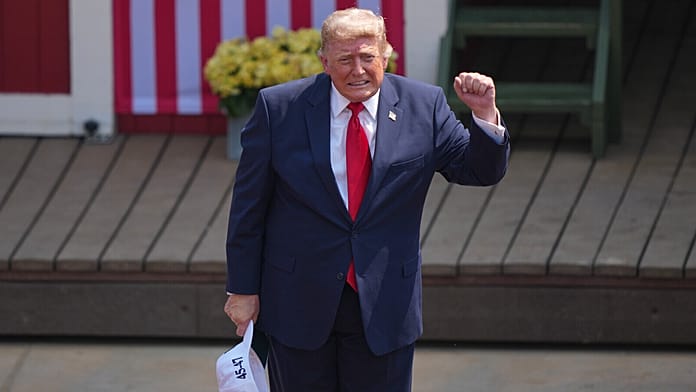
Newsletter: Raging Trump turns up the heat ahead of NATO summit Good morning and welcome to Friday, Im Mared Gwyn. We wrap up this week with another dispatch from Ireland as it takes on the six-month EU Council Presidency, and a look ahead to next weeks high-stakes NATO summit in Ankara.
euronews · about 2 months ago