Loading…
 Saturday, September 26Saturday, September 26
3 months · 7 summary articles
A severe heatwave that swept across Europe in June has resulted in nearly 10,000 deaths, according to European officials. The majority of the victims, about 9,000, were aged 65 or older, highlighting the increased risk faced by older people during extreme temperatures.
Authorities collected data from 27 European countries, revealing that England and Wales alone reported approximately 2,700 deaths. France and Spain combined recorded more than 2,000 deaths. Experts attribute the rising intensity and duration of heatwaves to climate change, which poses a growing health risk to elderly and vulnerable populations.
In Spain, civil protection authorities have issued an alert in Catalonia as the region faces its third heatwave. The heat is expected to persist until at least Wednesday, July 15, with the hottest conditions initially hitting the Lleida Pyrenees area. The worst impact on Monday and Tuesday is expected in Ponent, while coastal and southern Prelitoral areas may also experience very warm nights.
Fire brigades have placed extra staff, stations, and control rooms on alert due to the increased risk of wildfires. Officials have urged residents to stay in cooler places to avoid heat-related illnesses.
The heatwave has also led to other issues across Europe. In Germany, for example, the public transport company VAG has apologized for service disruptions caused by the heat, offering free rides as compensation.
As Europe grapples with the immediate effects of the heatwave, experts warn that climate change is making such events more frequent and severe. This trend puts elderly people and other vulnerable groups at increasing risk, underscoring the need for better heat management strategies and public health interventions.
The heatwave has also sparked discussions about the broader implications of climate change. With temperatures rising and heatwaves becoming more common, there is growing concern about the long-term impact on public health and infrastructure.
In response to the heatwave, various measures have been implemented across Europe. In Spain, for instance, authorities have issued alerts and increased fire brigade staffing to mitigate the risks associated with the extreme heat. Similarly, in other affected countries, efforts are being made to protect vulnerable populations and ensure public safety.
Looking ahead, the heatwave is expected to continue in some regions, with Spain's Catalonia region facing particularly high temperatures until at least Wednesday, July 15. As the situation evolves, officials are urging residents to take precautions and stay informed about the latest developments.
The heatwave in Europe serves as a stark reminder of the urgent need to address climate change and its impacts. As temperatures continue to rise, the frequency and intensity of heatwaves are likely to increase, posing significant challenges to public health and safety. It is crucial for governments and communities to work together to develop effective strategies for managing these risks and protecting vulnerable populations.
In conclusion, the severe heatwave that swept across Europe in June has had a devastating impact, resulting in nearly 10,000 deaths. The majority of the victims were elderly, highlighting the increased risk faced by this demographic during extreme temperatures. As climate change continues to make heatwaves more frequent and intense, there is a growing need for effective heat management strategies and public health interventions to protect vulnerable populations and ensure public safety.
Follow us for live European news
2 further sources not geolocated

Peak heat in Europe just broke historic 1970s records Continue reading Peak heat in Europe just broke historic 1970s records at The European Sting - Critical News & Insights on European Politics, Economy, Foreign Affairs, Business & Technology - europeansting.com.
european sting · 2 months ago
Südchinesisches Meer: China ignoriert auf See seit zehn Jahren internationales Recht Peking erhebt Anspruch auf das Südchinesische Meer, obwohl der Ständige Schiedsgerichtshof in Den Haag 2016 anders geurteilt hat. Zum Jahrestag erinnern 14 Staaten daran. Warum auch Deutschland dabei ist.
sueddeutsche · 2 months ago

From KKK halls to slave auction sites, communities rethink historic sites A former Ku Klux Klan hall in Texas is becoming an arts center — one of several racist landmarks across the U.S. that communities are trying to turn from symbols of terror into sites of reparation.Why it matters: Years after the backlash against Confederate monuments, new fights have emerged over what to do with remaining physical reminders of particularly hurtful racism — tear them down, preserve them, reinterpret them or return them to communities harmed by them.Zoom in: In Fort Worth, Texas, advocates are turning the former KKK Klavern No. 101 auditorium into an arts and community center named after a Black lynching victim. The building once stood as a threat to Black Americans, Latinos and Catholic and Jewish immigrants.The new center is designed as a reparative justice project — a place for performances, history, organizing and community healing. Supporters see it as an alternative to the usual choices of demolition or preservation.Zoom out: Similar moves are unfolding across the country.In Laurens, S.C., a former segregated theater that later housed a KKK museum was remade as the Echo Project, an antihate education center.In Fredericksburg, Va., officials moved a slave auction block from a downtown street corner to a museum. Theyre planning a memorial at the original site.In New Orleans, a former segregated school has become the Tate Etienne & Prevost Center, with civil rights exhibits, antiracism groups and affordable senior housing.In Drew, Miss., the Emmett Till Interpretive Center is transforming the barn where 14-year-old Emmett Till was tortured and killed in 1955. Theyre turning it into a memorial and place for reflection.State of play: The changes are happening at a time when the U.S. is more racially and ethnically diverse than ever — and as the Trump administration pushes federal sites and national parks toward a more "uplifting" version of American history.A 2025 executive order by President Trump directed federal cultural institutions and Interior Department sites to remove or revise what it cast as divisive or anti-American content— often interpreted as references to the nations era of slavery.A federal judge ordered the administration to restore national park materials removed under the directive, but an appeals court later allowed the removals to continue while the legal fight plays out.Context: The clash has put local history projects in sharper relief — as federal interpretation of U.S. history narrows, cities, nonprofits and descendants are countering that by trying to preserve fuller stories on the ground.Patrick Weems, executive director of the Emmett Till Interpretive Center, tells Axios the barn acquisition forced his community to confront a site many people would rather avoid — and to replace decades of silence with restorative justice."We have to sit with the worst of our humanity," Weems said. "Were not going to let this be erased. Were not going to let the murderers who wanted this to be erased (and) get away with that."Friction point: Saving sites associated with some of the nations worst episodes of racism can feel like boosting white supremacy. Destroying them can erase evidence of what happened.Stone Mountain, Ga., remains an especially difficult case: Its both a public park and home to the nations largest Confederate carving, one that includes Confederacy President Jefferson David, and Gens. Robert E. Lee and "Stonewall" Jackson.State law protects the carving, while park officials and advocates have pushed for new exhibits on slavery, segregation and the mountains KKK ties.Confederate heritage groups have sued over efforts to add that context.What theyre saying: "We cannot erase history. We should not delete history, because we need to learn from it," Carlos Gonzalez-Jaime, executive director of Transform 1012 N. Main Street, the organization in charge with reimagining the Texas former KKK building, tells Axios.Gonzalez-Jaime said Transform 1012s first step was listening to communities targeted by white supremacy as well as those who wanted the former Klan hall torn down."How can we use this space that was used to teach hate into a place to teach understanding, to teach love, to teach healing?" Gonzalez-Jaime said.Between the lines: Rather than simply preserving or tearing down racist landmarks, communities have an opportunity to create new civic symbols, social justice strategist Rashad Robinson told Axios. Robinson, author of "From Presence to Power: How to Take On the Fights That Matter — and Win," said movements should invest in places that reflect their values rather than allowing the past to define them.
axios · 2 months ago
Late-June heat wave caused 10,000 excess deaths across Europe
gdeltproject.org · 2 months ago

The Joker of San Fermín: A villain at the Running of the Bulls A US citizen who has been running in Batman makeup is facing a fine after trying to record himself mid-race despite a security ban on cellphones. He is one of a growing group of people seeking social media notoriety at the famous festival in Pamplona, and getting creative about it
elpais · 2 months ago
🇲🇷 Mauritanias Imraguen peoples desert-ocean paradise under threat The Imraguen have for centuries developed fishing practices in harmony with nature, a way of life now threatened by climate change, overfishing and the difficulty of passing it onto the next generation.
bluesky_AFP English · 2 months ago
Europe records 10,000 excess deaths during June heatwaves, new data shows The June heatwaves would have been "virtually impossible" without climate change, the World Weather Attribution group of scientists said.
euronews · 2 months ago
Ο Ρόμπερτ Πλαντ, θρύλος των Led Zeppelin στο protothema: «Μου λείψατε πολύ» Είδαμε από κοντά τον Ρόμπερτ Πλαντ, που επέστρεψε στην Ελλάδα ύστερα από σχεδόν δύο δεκαετίες όχι για να αναβιώσει τον μύθο των Led Zeppelin, αλλά για να μας θυμίσει από πού γεννήθηκε - Η συναυλία του στο Sani Festival ήταν μια επιστροφή στις ρίζες ενός καλλιτέχνη που εξακολουθεί να αναζητά το καινούργιο
protothema · 2 months ago

Die entlarvende Sehnsucht nach Hitze Millionen Deutsche brechen im Sommer in Mittelmeerregionen auf – begleitet von Horrormeldungen über Hitzetote hierzulande. Die fast drei Jahre höhere Lebenserwartung von Italienern und Spaniern verdeutlicht Deutschlands Versagen im Hitzeschutz.
welt.de · 2 months ago
Eine Zutat mit Betörungspotenzial: die unwiderstehlichen Feigenblätter [premium] Ob als Eis, Mayonnaise, Pulver oder Fischverpackung: Wer einmal dem Aroma des Feigenblatts verfallen ist, geht nicht mehr achtlos an Feigenbäumen vorbei.
die presse · 2 months ago
Nur ein Bruchteil: So viele Syrer kehrten heim seit dem Assad-Sturz [premium] Seit 2015 suchten knapp 130.000 Syrer Schutz in Österreich – jetzt laufen weitere Programme an, mit denen sie finanziell zur Heimreise motiviert werden sollen. Zahlen aus dem Innenresort zeigen: Bisher will kaum jemand gehen.
die presse · 2 months ago
Caniculă extremă în Europa: peste 10.000 de decese premature și incendii devastatoare alimentate de criza climatică Un val de căldură record care a lovit vestul și sudul Europei la sfârșitul lunii iunie a provocat peste 10.000 de decese, intensificând în același timp incendii de vegetație de o virulență fără precedent.
adevarul · 2 months ago
Debate: Water supply crisis in southern Lisbon Water supplies in the coastal region around Almada in Portugal have been repeatedly disrupted for over a week – in the middle of the high season. The shortages are the result of rising resident and tourist numbers and an ageing infrastructure in which around a third of the water volume is lost through leaks. Portuguese media call for action.
eurotopics.net · 2 months ago
Summer soundtrack: Charli XCX and the return of The Strokes On todays Arts24 music show, Jennifer Ben Brahim brings us a roundup of upcoming album releases to add to your summer playlists. From the return of indie sleaze icons The Strokes, who are set to release their first album in six years, "Reality Awaits", to a British pop star hoping to recreate the success of her 2024 record Brat – the album that sparked the viral internet trend dubbed "Brat Summer". Her seventh album, Music, Fashion, Film, features musician John Cale, designer Marc Jacobs and filmmaker Martin Scorsese on the cover. Heres the single "Wink Wink".
france24 · 2 months ago
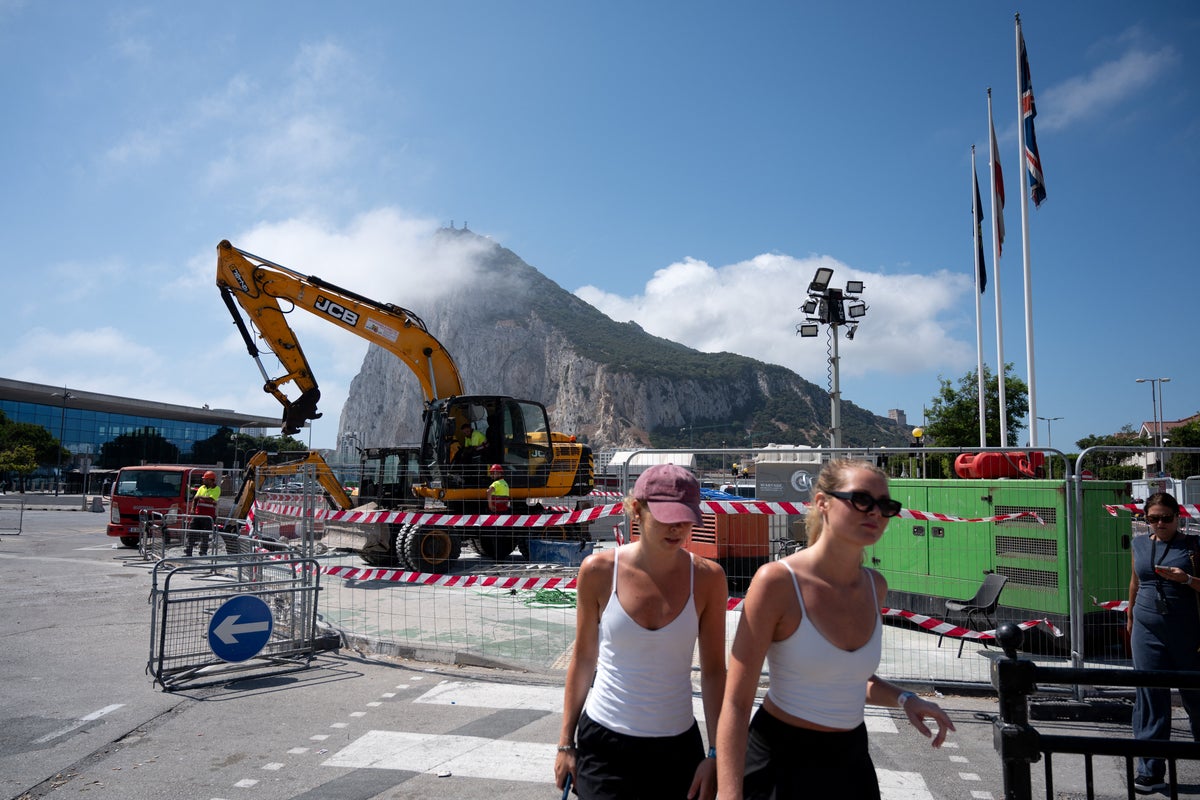
Gibraltars land border with Spain is about to disappear. This is what happens next In the biggest shift in 300 years, there will no longer be a land border between the two neighbours. Graham Keeley speaks to locals on the Rock about how they feel about the new changes coming in and how they think life will change
independent · 2 months ago
Real estate brokers challenge countrys top housing platform over rising listing costs The Dutch real estate agents association NVM says its members are increasingly opposing changes at Funda, the popular housing platform that is majority-owned by NVM.
nltimes.nl · 2 months ago
PostNL ends next-day standard letter delivery; Priority mail now costs 3.95 euros Starting Saturday, July 12, PostNL no longer offers next-day delivery for standard letters in the Netherlands. The average delivery time is now two days.
nltimes.nl · 2 months ago
Dutch short track skater Sven Roes returns home after disappearing earlier this summer Short track speed skater Sven Roes, who disappeared abruptly earlier this summer, has returned to the Netherlands and reunited with his family in good health, the Royal Dutch Skating Association (K
nltimes.nl · 2 months ago
Protest gegen Rheinmetall in Berlin: Aktivisten kleben sich vor Brandenburger Tor fest – auch Greta Thunberg mit dabei Innerhalb weniger Tage protestieren Aktivistinnen und Aktivisten erneut gegen den Rüstungskonzern Rheinmetall. Auch dieses Mal ist eine prominente Unterstützerin dabei.
tagesspiegel · 2 months ago
Second helpings Fewer Europeans are eating out and margins are thin. Their way back runs through theatre, delivery and a smaller, cheaper table than before. Guido Zöllick got his tax cut on the first day of January. The president of DEHOGA, Germanys hotel and restaurant federation, had lobbied for years, and the government finally lowered value-added tax […] Second helpings was originally published on Emerging Europe.
emerging europe · 2 months ago
Vulnerable advised not to swim in warm Danish waters According to a press release from the Statens Serum Institut (SSI), people with open wounds are urged to be cautious when bathing in the Danish sea during the summer, especially if they have a weakened immune system. Epidemiologist and section leader at SSI, Steen Ethelberg, states that while the vast majority can safely bathe, those […]
cphpost · 2 months ago
New heatwave in most of Jutland Starting Wednesday, high summer temperatures are expected in large parts of Jutland, prompting a heatwave warning from the Danish Meteorological Institute (DMI) that runs until Friday evening. The warning covers most of Jutland, except the southernmost municipalities, with temperatures locally expected to reach up to 30 degrees. A heatwave is when the average of the […]
cphpost · 2 months ago
More than 2,700 deaths in UK linked to May, June heatwaves The UK has experienced two record heatwaves this year, with temperatures reaching 35.1C in May and 37.7C in June.
aljazeera · 2 months ago
Watch | Fionntán De Brún: Kneecap made the Irish language cool for young people Irish writer Fionntán De Brún said during a discussion at the HeadRead festival in Tallinn that a new generation in Ireland has fully embraced the Irish language, something that is now dubbed the Kneecap effect.
news.err · 2 months ago

BIRNs Bowie from Srebrenica Film Now Free to Watch Online BIRN Bosnia and Herzegovinas documentary about rock guitarist Samir Bowie Mehic, looking back on his wartime life in besieged Srebrenica before his death in the July 1995 genocide, is available on YouTube.
balkaninsight · 2 months ago
No berries this year? Rainy weather devastates Lithuanian farms More than a week of persistent rain and unusually cool weather has begun to worry Lithuanian farmers, who say the conditions are disrupting harvesting and increasing the risk of crop losses, although they stress the situation has not yet reached a critical point.
lrt · 2 months ago
Why Every Business Needs Online Reviews Management in 2026 London, July 13 Brussels Morning Newspaper – Online reviews management is gaining renewed attention as businesses face growing pressure to protect their digital reputation in an increasingly competitive marketplace. Industry experts say consumers now rely heavily on online ratings, customer … Read more
brussels morning · 2 months ago

South Africas anti-immigrant groups move from ultimatums to door-to-door threats Recent protests drew only a few hundred people, but they revealed a new strategy: going through poor neighborhoods to point out immigrants homes and demand that they leave the country
elpais · 2 months ago

🇮🇹 Without natural drinking water, residents of Italys Aeolian Islands are mulling whether to build more desalination plants that will also cater to the large number of tourists, or continue bringing in water by ship. ➡️ u.afp.com/SK9z
bluesky_AFP English · 2 months ago
Το σινεμά της Κιμώλου μετατρέπει τις παραλίες σε θερινές αίθουσες κάτω από τα αστέρια Ξεκινάει το Kimolos Experience Festival 2026 - Δείτε το πρόγραμμα προβολών
protothema · 2 months ago