
Ferry no-show fees slash cancellations as Norway tackles overbooking crisis
Story Timeline
4 months · 2 summary articles
Finland's rail network halts after train fire causes nationwide chaos
Ferry no-show fees slash cancellations as Norway tackles overbooking crisis
Color Line’s new “no-show” fee for day-trip passengers has cut last-minute cancellations by more than half since it took effect on 24 March, the Norwegian ferry operator said on Thursday. Under the policy, travellers who book a day return from Oslo, Kristiansand or other ports but fail to board are charged 300 NOK (€27) unless they cancel at least 24 hours in advance. “The measure has had a clear effect,” a company spokeswoman told Aftenposten . She added that the fee also frees up scarce cabin space for passengers who genuinely intend to travel.
The initiative comes as Norway’s domestic ferry sector faces chronic overbooking during the summer season. Last year, Color Line and its rivals logged more than 12,000 no-shows on day routes between March and October, forcing operators to turn away ticket holders and triggering complaints from drivers waiting for onward connections. Transport authorities welcomed the move, noting that it aligns with similar policies already in place on Swedish and Danish domestic ferries.
Meanwhile, Sweden’s public-transport authority, SL, warned of “increased risk of delays and crowding” on Stockholm’s Red Line after a signal fault entered its second week. Reduced speeds between T-Centralen and Mörby centrum have cut peak-hour capacity by 15 %, and engineers have yet to identify the root cause. “We are running at lower speeds to ensure safety, but that inevitably means longer dwell times and more knock-on effects,” said Andreas Strömberg, SL’s operations director . The disruption coincides with the final stretch of the school year and the start of summer tourism, raising concerns about rush-hour gridlock.
In Estonia, the Rescue Service is collecting public feedback on Wednesday’s nationwide EE-ALARM test, the country’s first full-scale public warning system drill. Residents have until Friday to report whether sirens, mobile alerts and radio broadcasts reached them in time. “We need to know if the system works as designed,” said a spokeswoman for the service . The test follows a 2024 audit that found 12 % of sirens were non-functional during a smaller exercise.
Across the continent, France’s Zero Waste movement has delivered a critical assessment of the country’s experimental glass-deposit scheme, launched a year ago in four regions. The association found that only 34 % of supermarkets actually offered the service, and contamination rates reached 18 %, making recycling inefficient. “The pilot was poorly coordinated and under-resourced,” said Laura Martin of Zero Waste France . The government has yet to announce whether the scheme will be expanded or scrapped.
Follow us for live European news
- 2
- 2
- 1
- 1
- 1
- 1
- 1
- 1
- 1
- 1
- 1
- 1
- 1
Articles

Ännu större signalfel på röda linjen: Ökad risk I snart två veckor har ett signalfel på tunnelbanans röda linje påverkat trafiken.Under natten har något hänt – och SL måste köra med reducerad hastighet ännu längre på banan.– Det blir ökad risk för förseningar och trängsel, säger Andreas Strömberg på SL.
expressen · 4 months ago
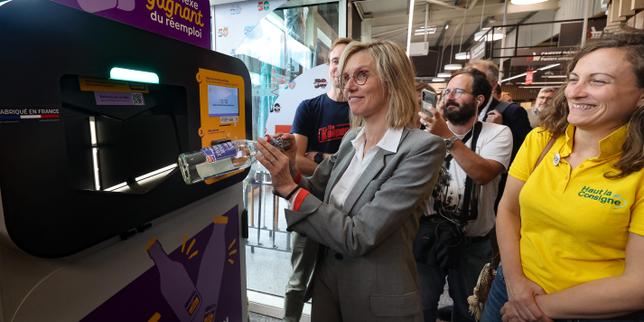
Faux départ pour le retour de la « vraie consigne » du verre dans les supermarchés Un an après la mise en place du dispositif à titre expérimental, lassociation Zero Waste France dresse un bilan critique du déploiement de la consigne du verre dans des supermarchés de quatre régions françaises.
le monde · 4 months ago
Der See ist da. Irgendwo hinter den Reisebussen. [premium] Manche Pilgerorte haben Heilige. Der Pragser Wildsee in den Südtiroler Dolomiten hat Terence Hill.
die presse · 4 months ago

Una "incidencia técnica" generó falsos positivos en el cribado de cáncer de colon en Málaga Sanidad ha asegurado que este fallo ya ha sido solventado y que se están repitiendo las pruebas Leer
elmundo · 4 months ago
A shorter third runway at Heathrow is better than none The UK airport and its airlines should stop fighting and compromise on expansion
financial times · 4 months ago
Rescue Service asks for feedback after EE-ALARM public warning system test The Rescue Service is asking Estonian residents to submit feedback by the end of the week about the impact of the nationwide EE-ALARM test that took place on Wednesday.
news.err · 4 months ago

As notícias das 5h As notícias na Rádio Observador. Aconteça o que acontecer.
observador · 4 months ago

Lindustrie ne compte pas avoir recours aux flexi-jobs Les secteurs industriels tels que la sidérurgie, le verre et la chimie nont pas lintention davoir recours aux "flexi-jobs", rapporte jeudi De Tijd qui a enquêté sur les accords sectoriels conclus à ce sujet. ...
la libre · 4 months ago
Kritik der Böckler-Stiftung: Wenig Tarifbindung: Deutschland hinkt EU-Vorgaben hinterher Löhne, Sonderzahlungen, Urlaub: Tarifverträge bringen Vorteile für Beschäftigte. Doch Deutschland schneidet bei der Tarifbindung schlecht ab - und ein Aktionsplan der Bundesregierung fehlt noch immer.
tagesspiegel · 4 months ago
Bei Schulausflug in Oberbayern: Verletzte nach Busunfall nicht mehr in akuter Lebensgefahr Nach einem tragischen Busunfall in Oberbayern gilt es zu klären, wie es zu dem Unglück kommen konnte. Dafür werden auch die Fahrzeuge untersucht.
tagesspiegel · 4 months ago
Har innført «no show»-gebyr på dagsreiser: – Tiltaket har hatt effekt 24. mars i år innførte Color Line et såkalt «no show»-gebyr for passasjerer som bestiller dagsreise, men ikke møter til…
aftenposten · 4 months ago
Autovelox, dai margini di errore alla privacy: ecco la nuova patente di affidabilità Non solo il margine di errore fissato a 3 km/h fino a 100 allora. Non solo loscuramento automatico dei volti nelle immagini scattate frontalmente. Nel decreto del ministero delle Infrastrutture...
il sole 24 ore · 4 months ago

Pilotprojekt in Frankfurt: Mehr Busse mit Kameras gegen Falschparker Wer Busspuren blockiert, riskiert ein Bußgeld. In Frankfurt können einige Busfahrer die Falschparker fotografieren und melden. Nun weitet die Stadt das Pilotprojekt nicht nur bei Bussen aus.
faz · 4 months ago
South Korea fines Coupang $408m over biggest data leak in countrys history Data protection watchdog says e-commerce giant failed to implement safety measures and delayed reporting breach.
aljazeera · 4 months ago

200 millió kilométert vezettek elengedett kormánnyal a BMW-sek A BMW Highway Assistantnek köszönhetően akár tartósan is el lehet engedni a BMW-k kormányát.
hvg.hu · 4 months ago
Hundratals krogar vill hålla nattöppet under VM Över 400 restauranger och pubar vill visa nattliga matcher under fotbolls-VM. Det slopade matkravet har ökat intresset, enligt branschorganisationen Visita.
svenska dagbladet · 4 months ago