
AfD hits record 37% in Brandenburg poll as governing coalition collapses

Story Timeline
2 months · 5 summary articles
The far-right Alternative for Germany (AfD) has surged to a record 37% in a new Infratest dimap poll for Brandenburg, marking its highest-ever result in the state and dealing a severe blow to the governing SPD-CDU coalition just 100 days into its term. The survey, published on 25 June 2026, shows the SPD of Ministerpräsident Dietmar Woidke collapsing to 22%, while the CDU and Left Party each register 12%, effectively tying for third place behind the AfD’s commanding lead.
The poll, reported by *Welt* , underscores widespread voter disillusionment with the coalition’s performance since taking office in March. Analysts and rival parties are scrambling to interpret the shift, with the AfD framing the result as a “receipt” for Woidke’s leadership, while the SPD insists it remains focused on rebuilding trust through policy delivery.
The political earthquake comes as a separate, donation-funded legal analysis published the same day suggests the AfD’s prospects of facing a federal ban have significantly improved. A team of constitutional experts, commissioned by a civil society initiative, concluded that the party’s foundational documents, parliamentary motions, and public statements by its officials now meet the threshold for a potential prohibition under Germany’s Basic Law. The 25 June report in *Handelsblatt* did not specify a timeline but noted that the threshold for initiating proceedings had been lowered by recent jurisprudence.
Woidke, whose approval ratings have plummeted in lockstep with the SPD’s polling collapse, has sought to downplay the significance of the survey, telling reporters that “trust is built over time, not overnight.” His CDU partners, meanwhile, have distanced themselves from the coalition’s poor showing, with party strategists privately conceding that the SPD’s leadership has failed to articulate a compelling vision beyond crisis management.
The AfD’s rise in Brandenburg—long a left-leaning bastion—mirrors broader trends across eastern Germany, where the party has capitalized on economic anxiety, migration debates, and frustration with mainstream parties. The poll’s findings are expected to intensify pressure on Chancellor Olaf Scholz’s federal government to address regional disparities and counter the AfD’s narrative ahead of next year’s Bundestag elections.
With the AfD now polling above 30% in multiple eastern states, the question is no longer whether the party will shape the political agenda, but how quickly mainstream parties can reverse the trend—or whether the federal government will move to outlaw the AfD before it consolidates further gains.
Follow us for live European news
- 6
- 2
- 1
- 1
- 1
- 1
- 1
- 1
- 1
- 1
- 1
3 further sources not geolocated
Articles

ISCA Will Lead Singapores Accountancy Profession March In NDP 2026 For The First Time SINGAPORE - Media OutReach Newswire - 25 June 2026 - For the first time, Singapores accountancy profession will be represented in the National Day Parade (NDP), as the Institute of Singapore Chartered Accountants (ISCA) leads a civilian marching contingent made up of accountants, aspiring ...
the slovenia times · 2 months ago

Parlamento debate iniciativas de incentivo à natalidade Partidos, da esquerda à direita, defendem reforço de medidas à natalidade
observador · 2 months ago

Benjamin Duhamel va animer une émission politique le dimanche sur France Inter et France 2 Ancien de BFM-TV, le journaliste de 32 ans mène depuis la rentrée 2025 deux des interviews matinales de la radio publique. Ce nouveau rendez-vous durera quarante minutes, à partir du 30 août.
le monde · 2 months ago
Umfrage: AfD sieht Quittung für Woidke - SPD setzt auf Vertrauen Die SPD/CDU-Koalition in Brandenburg ist 100 Tage am Start, hat aber das Vertrauen vieler Wähler laut Umfrage bisher nicht gewonnen. Die AfD kommt auf einen Höchstwert. Wie reagieren die Parteien?
tagesspiegel · 2 months ago
Pîslaru îl acuză pe Grindeanu de „tupeu formidabil: „PSD, de unde era exponentul flexibilității, e primul care a impus o linie roșie Dragoș Pîslaru, ales vicepreședinte PNL, după congresul de duminică, îl acuză pe președintele PSD Sorin Grindeanu de „tupeu formidabil, după ce acesta a spus că PSD va vota doar un guvern din care social-democrații fac parte și că vrea „deplină autonomie asupra programului de guvernare. Pîslaru a mai spus la Digi24 că un guvern PNL-USR-UDMR ar avea mai multă legitimitate, deoarece aceste trei partide au împreună mai multe mandate în Parlament decât PSD.
digi24 · 2 months ago
Politisk sjokk i New York. – Amerikanere bør bli vettskremt. Mamdani støttet tre kandidater til Kongressen, og alle tre vant. – Amerikanere bør bli vettskremt, advarer…
aftenposten · 2 months ago
Scenariul alegerilor anticipate prinde contur. Un fost judecător CCR explică mecanismul de dizolvare a Parlamentului Scenariul alegerilor anticipate a revenit în discuție. Fostul judecător al Curții Constituționale Petre Lăzăroiu explică pentru „Adevărul cum funcționează acest mecanism, de ce este puțin probabil să fie declanșat și ce variante reale are la dispoziție președintele Nicușor Dan.
adevarul · 2 months ago
Politics: The Democratic Base Is Angry Is the party paying attention?
sueddeutsche · 2 months ago
Analysts: Finding a popular presidential candidate will not be easy Finding a presidential candidate with enough support to be elected in the Riigikogu this September will not be an easy task, analysts have said, after Alar Karis announced he would not seek a second term earlier this week.
news.err · 2 months ago
Latest Norstat poll sees Center catching up to Isamaa Support for Isamaa has fallen by just over 1 percentage point over the past three weeks, while the rating of its closest rival, the Center Party, has increased by about the same amount.
news.err · 2 months ago
Digital ID brain trust will meet behind closed doors as minister ducks cost questions Minutes will not be published, and MPs still have no answer on the groups budget or how its members were chosen
the register · 2 months ago
Narod napreduje, ko zna prepoznati skupni cilj in ga je sposoben postaviti nad vsakodnevne razlike Osamosvojitev nas še danes uči, da največjih dosežkov ne ustvarjajo okoliščine, temveč "ljudje, lačni prostosti duha in dovolj pogumni, da se medsebojno povežejo, presežejo razlike in uresničijo svoje sanje", je v poslanici zapisal premier Janša.
rtv slovenia · 2 months ago
Spor o summit je Macinkova pomsta, kroky vlády mě motivují obhajobě mandátu, říká Pavel Spory s vládou prezidenta Petra Pavla spíše motivují k tomu, aby na funkci hlavy státu v dalším volebním období znovu kandidoval. Řekl to v rozhovoru se serverem Seznam Zprávy. První funkční období mu...
respekt · 2 months ago

LUDR dEric Ciotti, laboratoire ultralibéral du RN au poids croissant LUnion des droites pour la République du maire de Nice devrait jouer un rôle majeur dans le dispositif du parti dextrême droite pour lélection présidentielle de 2017, malgré ses propositions radicales et discordantes sur le plan économique.
le monde · 2 months ago
„Gibt Zeugen, die das so bestätigen – AfD-Landeschef zeigte „Hitlergruß Auf einem Foto von 2020 ist Sachsen-Anhalts AfD-Chef Martin Reichardt mit einem „Hitlergruß zu sehen. Reichardt selbst gibt an, einen Ritterschlag ausgeführt zu haben. „An dieser Version der Geschichte hinken zwei Sachen, so „Politico-Reporterin Pauline von Pezold.
welt.de · 2 months ago
AfD erreicht Höchstwert in Brandenburg – Linkspartei liegt gleichauf mit CDU In Brandenburg erreicht die AfD in einer Umfrage von Infratest dimap mit 37 Prozent einen neuen Höchstwert. Die SPD von Ministerpräsident Woidke kommt auf 22 Prozent. CDU und Linkspartei liegen mit jeweils 12 Prozent gleichauf.
welt.de · 2 months ago
Spendenfinanzierte Analyse: Gutachten: Chancen für AfD-Verbotsantrag stehen gut Eine Gruppe von Experten hat das Grundsatzprogramm der AfD, ihre Wahlprogramme und die Parlamentsanträge analysiert. Auch Äußerungen von Funktionären wurden für das Gutachten ausgewertet.
handelsblatt · 2 months ago
Zaslúžené víťazstvo prezidenta Petra Pavla a neofašistická reakcia (komentár Zola Mikeša) Český Ústavný súd v stredu predbežným opatrením poslal na samit NATO českého prezidenta Petra Pavla. Filip Turek na rozhodnutie súdu reagoval vyhlásením, že by Ústavný súd nemal existovať.
aktuality.sk · 2 months ago

Was die US-Demokraten von Trump lernen sollten Die US-Opposition dürften bei den Midterm-Wahlen als Sieger hervorzugehen. Aber nur, weil die Wähler von Trump enttäuscht sind. Ändert die Partei ihre Strategie nicht, wird der Erfolg schnell verpuffen
der standard · 2 months ago
A Solidarity Tax on Billionaires Could Raise €800 Billion France is set to make decisive political choices in the coming year. On one side stands a nationalist right wing on the rise, increasingly aligned with business interests, aiming to take power by stigmatizing immigration ... Read more
social europe · 2 months ago
Viitoarea desemnare de premier va trece pentru că parlamentarii nu vor să rişte alegeri anticipate Nu văd cum şefii de partide îşi vor impune voinţa la următorul vot de învestitura, cât timp exista riscul este ca parlamentarii să plece acasă.
adevarul · 2 months ago
Nicușor Dan, mesaj despre negocierile politice: „Mingea este la partide. Uneori e greu să distingi între pasul 1, pasul 2 și pasul 3 Președintele României, Nicușor Dan, a declarat că este conștient de responsabilitatea funcției pe care o ocupă și că toate deciziile pe care le ia au ca obiectiv binele României.
adevarul · 2 months ago
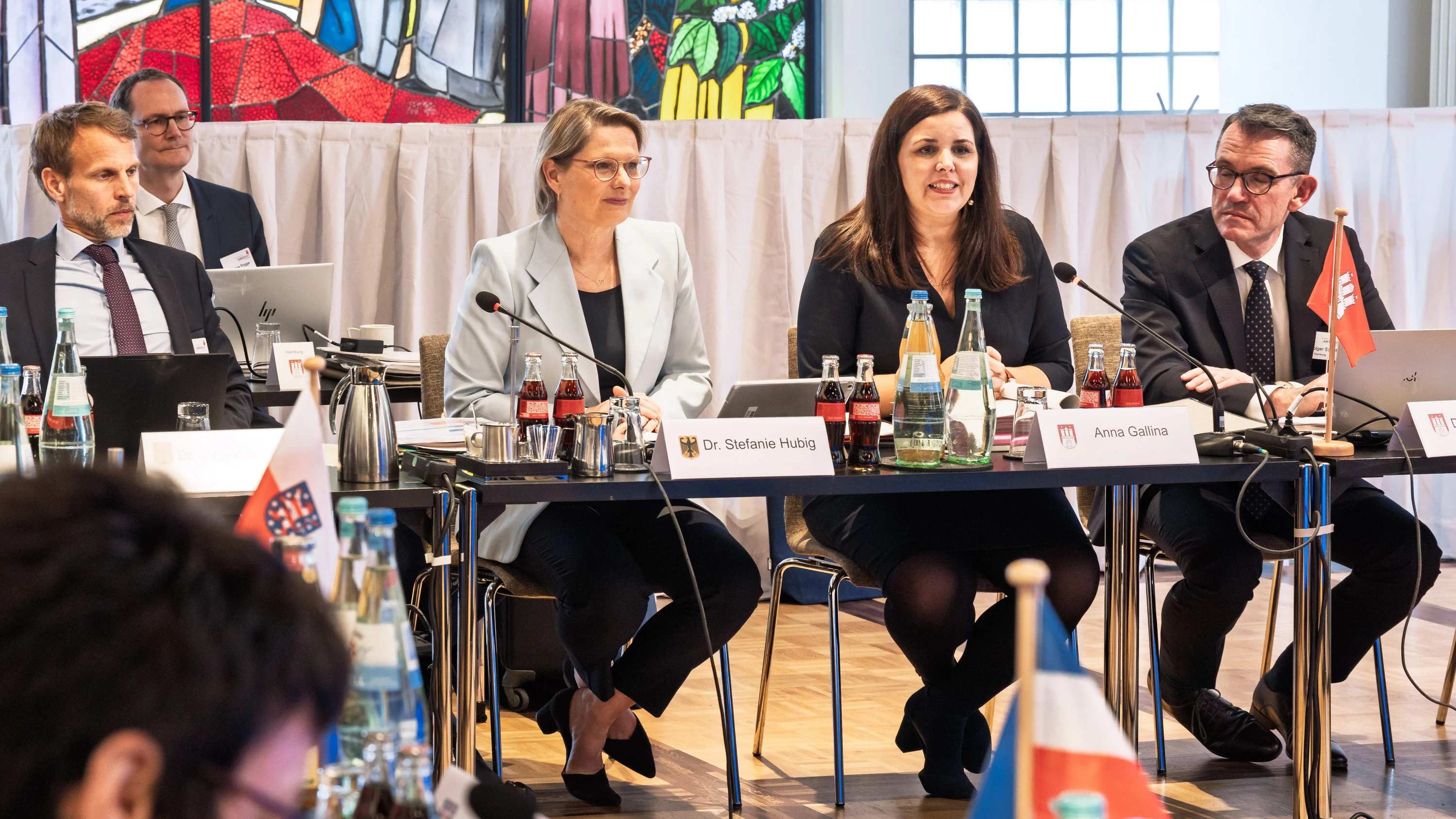
Beschluss wahrscheinlich: Wie der „Pakt für den Rechtsstaat aussehen könnte Über den „Pakt für den Rechtsstaat wurde seit Monaten verhandelt. Am Donnerstag dürfte das Finanzpaket für die Justiz beschlossen werden.
faz · 2 months ago

Do you think there should be limits on election poster sizes? An Comisiún Toghcháin has suggested that the permitted shape and size of posters should be limited.
thejournal · 2 months ago
„Demokratie leben in Mecklenburg: AfD und CDU stimmen gemeinsam gegen Demokratieprojekte Auf Betreiben der extremen Rechten beschließt ein Landkreis in Mecklenburg-Vorpommern, auf Mittel aus dem Programm „Demokratie leben! künftig zu verzichten. mehr...
taz.de · 2 months ago