
Hungarian poet Kinga Tth captivates opening day of 50th Bachmann Prize in Klagenfurt
Story Timeline
6 hours · 2 summary articles
Hungarian poet Kinga Tth captivates opening day of 50th Bachmann Prize in Klagenfurt
Century of Ingeborg Bachmann celebrated as Helga Schubert challenges her romantic myth
Continuation
The 50th Bachmann Prize, Europe’s most prestigious German-language literary competition, opened in Klagenfurt on Wednesday with a €30,000 purse and an immediate surge of enthusiasm for the Hungarian poet Kinga Tóth, whose debut reading captivated both jury and audience.
Tóth, 34, read an excerpt from her manuscript-in-progress that wove intimate family memory with sharp political observation, drawing sustained applause and prompting early speculation about the main prize. The opening day also saw strong reactions to Jovana Reisinger’s absurdist Heimat tale, which critics hailed as a comic yet poignant meditation on belonging, but Tóth’s performance quickly became the day’s defining moment.
Festival director Daniel Wisser opened the 50th edition by noting the absence of the austerity rhetoric that once shadowed the event, declaring the anniversary “a celebration of linguistic risk and stylistic freedom.” The jury, led by Swiss author Sibylle Berg, will now deliberate behind closed doors before announcing the main prize on Sunday, with a separate audience award to be presented the same evening.
Tóth, who lives in Budapest and works as a translator from German and English, is the first Hungarian writer to reach the final stage of the Bachmann Prize. Her work explores migration, queer identity, and the afterlives of state socialism, themes that resonated with the predominantly young audience gathered in the historic Klagenfurt Stadthaus.
The competition’s double jubilee—50 years of the prize and 50 years since Ingeborg Bachmann’s death—has prompted renewed debate about the festival’s legacy. Critics in the left-leaning daily *Der Standard* argued that the event risks mythologising Bachmann as an eternal victim, urging instead a sharper focus on the experimental voices now at its centre.
With the €30,000 main prize still undecided, the festival’s organisers have framed this year’s edition as a deliberate pivot toward younger, more diverse storytelling. The remaining six authors, including Austrian novelist Anna Weidenholzer and Swiss playwright Lukas Bärfuss, will read their texts over the next three days, with live streams and social media amplifying the event’s reach across the German-speaking world.
Follow us for live European news
- 3
- 2
- 2
- 1
- 1
- 1
- 1
- 1
- 1
- 1
3 further sources not geolocated
Articles

European Statistics Competition 2026 winners We are pleased to announce the results of the 2026 European Statistics Competition for the 2025-2026 school year. The results were made public this morning during the award ceremony in Sofia, Bulgaria. Nearly 29 000 students from 22 EU countries signed up for the 9th edition of this statistical l...
eurostat · about 2 hours ago
PWR secures first multi-million pound sponsor deal Premiership Womens Rugby (PWR) has secured its first title sponsorship deal which will see over £3m invested into the league.
bbc sport · about 2 hours ago
Ob 150-letnici Ivana Cankarja kot "otipljivi poklon pisatelju" izšel spominski bankovec Ob 150-letnici rojstva Ivana Cankarja je izšel spominski bankovec Euro Souvenir z nominalno vrednostjo nič evrov. "Gre za otipljiv poklon pisatelju, ki je verjel, da je kultura največje bogastvo naroda," so zapisali sodelujoči pri projektu.
rtv slovenia · about 2 hours ago
Winners of the Linstow Art Award 2026 Professional Art Prize Announced - The Baltic Times The Linstow Art Award 2026 competition has concluded, with an international jury selecting three laureates from among 36 a......
baltic times · about 2 hours ago
Ιστιοπλοΐα: Παραδόθηκαν από την ΕΟΕ στην ΕΙΟ τα 20 σκάφη για τους αθλητές της περιφέρειας, φωτογραφίες Η χορηγία έγινε με την υποστήριξη της Stoiximam - «Τεράστιο το έργο της ΕΙΟ που διδάσκει ήθος», δήλωσε ο Κούβελος
protothema · about 2 hours ago

Traversée du Groenland, lexpédition SILA est un très grand succès ! Rien nest simple dans des conditions extrêmes au Groenland, après des moments intenses sur la calotte glaciaire, les explorateurs de lexpédition SILA ont collectés des données qui apporteront des éléments de réponse pour la recherche sur le climat. Une très belle initiative de lassociation belge IMAQA. ...
la libre · about 2 hours ago

"En terrain connu" : Elisa Sartori décrit à merveille la joie et la tristesse des allers-retours entre la Belgique et lItalie Ce roman graphique est remarquablement illustré par la Biélorusse Dina Melnikova. ...
la libre · about 2 hours ago
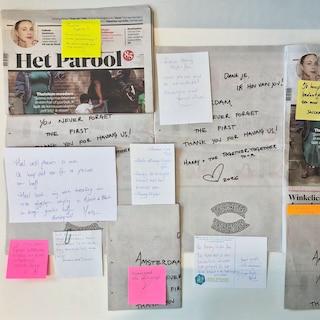
Hoe de postkamer van Het Parool volliep met Harry Styles-kranten voor fans: Sorry, de sudoku is al ingevuld
parool · about 2 hours ago
Barockoper „Cefalo e Procride bei den Musikfestspielen Potsdam Sansscouci: Das Vertrauen in die Liebe ist dahin Michiel Dijkema inszeniert Giovanni Battista Bononcinis wiederentdeckte Barockoper in Potsdam so schlicht wie poetisch. Ein Glücksfall für die Festspiele.
tagesspiegel · about 2 hours ago
Radsport: Lipowitz-Konkurrent Onley nicht bei Tour de France dabei Im vergangenen Jahr durchkreuzte Oscar Onley fast den dritten Gesamtrang vom deutschen Radstar Florian Lipowitz. Dieses Jahr fehlt der Brite in Frankreich.
tagesspiegel · about 2 hours ago
Bob: Bis Olympia 2030: Friedrich setzt Bob-Karriere fort Nach zweimal Silber bei Olympia in Cortina hat Francesco Friedrich wieder neue Ziele. Der erfolgreichste Bobpilot der Welt setzt seine Karriere bis 2030 fort und verstärkt sich mit Georg Fleischhauer.
tagesspiegel · about 2 hours ago
Film zu Ingeborg Bachmann: Alle anderen waren zu spät In Regina Schillings „Ingeborg Bachmann – Jemand, der ich einmal war spielt Sandra Hüller aus, was die Blicke der anderen von der progressiven Denkerin übrig ließen. mehr...
taz.de · about 2 hours ago
Eröffnung Bachmannpreis: Das Blutwunder von Klagenfurt Doppeljubiläum am Wörthersee: In Klagenfurt wurden die 50. Tage der deutschsprachigen Literatur eröffnet. Vom Spardiktat ist keine Rede mehr. mehr...
taz.de · about 2 hours ago
Slávna herečka kvôli nemu preplakala dni. Režisér opísal, že aj takto vzniká oceňovaný film Z režiséra, ktorého film Proti múru obletel svet, sa stal rukojemník vlastnej firmy. Fatih Akin na ArtFilme 2026 odhalil svoj únik z pasce úspechu aj cenu za filmový extrém.
aktuality.sk · about 2 hours ago
Palkinnot | Miljoona euroa solututkija Sara Wickströmille Arvostettu Körber-tiedepalkinto myönnettiin suomalaiselle solubiologille.
helsingin sanomat · about 2 hours ago
Man höre auf, Ingeborg Bachmann zum ewigen Opfer zu erklären Der 100. Geburtstag der Jahrhundertdichterin wurde einmal mehr benützt, um ihr Leben in eine Kitschorgie zu verwandeln. Damit verunglimpft man ihr Werk
der standard · about 2 hours ago
Prizes were awarded to the winners of the Competition of Student Scientific Research Papers organised by Latvijas Banka - The Baltic Times Today at the award ceremony held at Latvijas Banka, prizes were awarded to the winners of the 24th Competition of Student Scientific Resear......
baltic times · about 2 hours ago

Lactrice Virginie Efira primée au Festival du film de Locarno Lactrice belge Virginie Efira recevra le Leopard Club Award lors du Festival du film de Locarno. ...
la libre · about 2 hours ago
Ne parleremo a Chi lha visto?: il clamoroso lapsus di Pino Rinaldi incendia il toto-nomi del dopo Sciarelli Nonostante la concorrenza dei Mondiali e di Temptation Island, Federica Sciarelli saluta il pubblico di Chi lha visto? e conferma lennesimo successo dascolti, in attesa dellultima puntata di mercoledì prossimo. Con la nota ufficiale della Rai che sancisce il suo addio dopo ventidue anni, è partito il toto-nomi per la successione in vista della presentazione […] Larticolo Ne parleremo a Chi lha visto?: il clamoroso lapsus di Pino Rinaldi incendia il toto-nomi del dopo Sciarelli proviene da Il Fatto Quotidiano.
il fatto quotidiano · about 2 hours ago
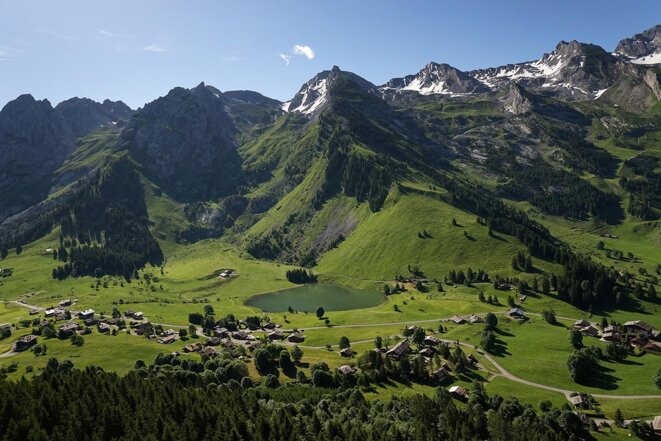
JO dhiver 2030: les atteintes à lenvironnement planifiées par le comité dorganisation Défrichements de zones forestières, terrassements, artificialisations, et des remontées mécaniques hors du temps, le comité dorganisation des JO dhiver 2030 envisage de dégrader durement la montagne pour le business du ski.
mediapart · about 2 hours ago
JO 2030 : le ski-alpinisme officiellement confirmé par le CIO au programme des Jeux dhiver dans les Alpes françaises Sport additionnel qui avait fait son entrée aux JO de Milan-Cortina, le « ski-alpi » doit être organisé dans le Briançonnais en 2030. En Italie, les Français Emily Harrop et Thibault Anselmet avaient remporté trois médailles, dont le titre en relais mixte.
le monde · about 2 hours ago
Neues Potsdamer Eiscafé La Favola: Gennaro Barbato bringt italienisches Flair in die Berliner Straße Er hat lange in Berlin und Potsdam als Koch gearbeitet: Jetzt hat Gennaro Barbato sein erstes eigenes Café eröffnet. Im La Favola bietet der Neapolitaner nicht nur Eis an.
tagesspiegel · about 2 hours ago
Philippe Sands erhält Friedenspreis des Deutschen Buchhandels: Zeitgemäßer und interessanter könnte eine Wahl kaum sein Dass ein Menschenrechtsanwalt einen der wichtigsten deutschen Buchpreise erhält, ist auf den ersten Blick ungewöhnlich. Doch geht es bei Sands immer um Gewalt und Gerechtigkeit – und damit um die aktuellsten aller Themen.
tagesspiegel · about 2 hours ago
IOC entscheidet: Skibergsteigen im Programm für Olympia 2030 bestätigt Die Skibergsteigen-Premiere in Mailand und Cortina hat den Olympia-Machern gefallen. Deshalb darf die Sportart auch 2030 in Frankreich wieder bei den Winterspielen dabei sein.
tagesspiegel · about 2 hours ago
30.000 Euro Preisgeld: Erste Publikums-Favoritinnen beim 50. Bachmann-Wettlesen Der Literaturwettstreit ist eröffnet. Viel Applaus gibt es für Jovana Reisingers skurrile Heimatgeschichte. Eine Dichterin aus Ungarn kann bei Jury und Publikum jedoch noch mehr punkten.
tagesspiegel · about 2 hours ago
Friedenspreis des Deutschen Buchhandels: Auf Sands gebaut Mit Philippe Sands gewinnt ein renommierter Völkerrechtler den Friedenspreis des Deutschen Buchhandels. Packend schreiben kann er obendrein. mehr...
taz.de · about 2 hours ago
3voor12 bepaalt voor jonge witte jongens wat hun plek is: achteraan. Niet alleen Bram Moskowicz vond daar wat van Sophie Straat scandeerde tijdens een optreden op Best Kept Secret: „Alle witte mannen naar achteren! Maar de witte man die zij aanspreekt staat waarschijnlijk niet in het publiek.
nrc · about 2 hours ago
Ethiopian journalists win US democracy award for courage One of the last remaining independent media outlets in Ethiopia, Addis Standard, has won the US National Endowment for Democracy award for its journalists resilience and courage working under a repressive media landscape. Addis Standard will travel to Washington DC in September to accept the award. Ethiopia is the country that jails the most journalists in Sub-Saharan Africa only after Eritrea. Topics like armed conflict and human rights abuses have led local journalists to be imprisoned and international correspondents to be expelled from the country. Our correspondent in Ethiopia Tom Canetti sat down with the editor-in-chief of Addis Standard Yonas Kedir.
france24 · about 2 hours ago