
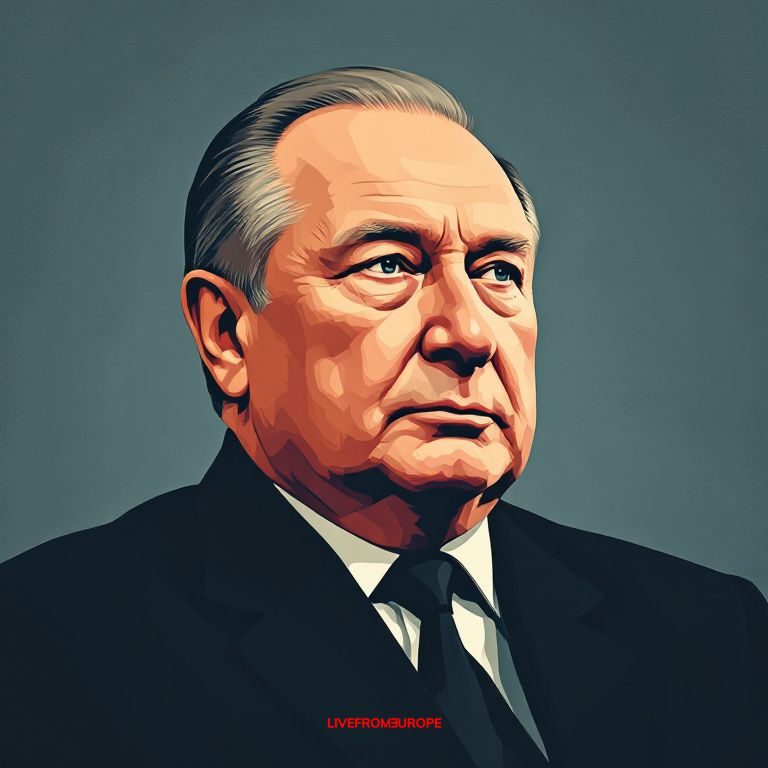
Former Russian defence minister Sergei Ivanov dies at age 73
Story Timeline
6 hours · 2 summary articles
Former Russian defence minister Sergei Ivanov dies at age 73
Former Russian ally Sergei Ivanov, longtime Putin associate, dies at age 73
Continuation
Sergei Ivanov, the former Russian defense minister and longtime ally of President Vladimir Putin, died on Friday at the age of 73, Russian state media and the Kremlin confirmed. Ivanov, who served as defense minister from 2001 to 2007 and later as head of the presidential administration, was widely regarded as one of the most influential figures in the Russian establishment. At one point, he was considered a potential successor to Putin, though Dmitry Medvedev ultimately assumed the presidency in 2008.
The announcement of Ivanov’s death came first from the United VTB League, where he held the honorary position of president, before being officially confirmed by the Kremlin. The cause of death has not been disclosed, and no further details have been provided by Russian authorities. The exiled news outlet Meduza reported that Ivanov had been rumored to be suffering from a severe, long-term illness, though these claims could not be independently verified.
Ivanov’s career spanned decades of close collaboration with Putin, beginning in the Soviet-era KGB and continuing through its successor agency, the FSB, and into government service. His tenure as defense minister coincided with a period of significant military modernization in Russia, and his later role in the presidential administration solidified his reputation as a key architect of Putin’s inner circle. Even after stepping back from frontline politics, Ivanov remained a prominent figure in Russian public life, often cited as a potential kingmaker or power broker within the Kremlin’s corridors.
International observers have noted Ivanov’s role in shaping Russia’s security policies during a period of heightened geopolitical tensions. His death removes one of the last remaining figures from Putin’s early years in power, raising questions about the future dynamics within the Russian leadership. While the Kremlin has not indicated any immediate political repercussions, the absence of Ivanov—a man once seen as a potential heir apparent—marks the end of an era in Russian politics.
The timing of his death, coming just months before Russia’s next presidential election cycle, has inevitably fueled speculation about its potential impact on the political landscape. However, with no official cause provided and no succession plans announced, the immediate consequences remain unclear. For now, the Russian government has offered no further comment beyond the confirmation of Ivanov’s passing.
Follow us for live European news
- 2
- 1
- 1
- 1
- 1
1 further source not geolocated
Articles

Pärnumaal hukkus liiklusõnnetuses inimene Reedel kell 16.25 sai häirekeskus teate raskest liiklusõnnetusest Pärnumaal Tõusi külas, kus hukkus 45-aastane mees.
postimees · about 2 hours ago
Byl považován za Putinova nástupce. Zemřel ruský exministr Sergej Ivanov V 73 letech zemřel bývalý ruský ministr obrany a bývalý šéf prezidentské kanceláře Sergej Ivanov, informují ruská média. Ivanov dlouho spolupracoval s prezidentem Vladimirem Putinem, nejprve v sovětské tajné policii KGB, pak v její ruské nástupnické organizaci FSB a ve vládě. Jeden čas byl pokládán i za možného Putinova nástupce v Kremlu, prezidentem se ale nakonec stal na čtyři roky Dmitrij Medveděv, píše BBC.
irozhlas.cz · about 2 hours ago
A murit episcopul-vicar al Arhiepiscopiei Aradului. Emilian Crișanul avea 54 de ani Episcopul-vicar al Arhiepiscopiei Aradului, Preasfinţitul Părinte Emilian Crişanul, a decedat, vineri după-amiază, la vârsta de 54 de ani, după o lungă şi grea suferinţă, a anunţat eparhia.
adevarul · about 2 hours ago
Putins Longtime Ally Sergei Ivanov Dies at 73 The exiled news outlet Meduza reported that Ivanov was rumored to be suffering from a severe, long-term illness.
themoscowtimes · about 2 hours ago
Ex-Russian minister once seen as Putin successor dies
gdeltproject.org · about 2 hours ago
Man död i trafikolycka på E22 Körde in i mitträcket på E22
expressen · about 2 hours ago
A murit Serghei Ivanov. Fostul ministru rus al Apărării, văzut drept posibil succesor al lui Putin, avea 73 de ani Fostul ministru rus al Apărării, Serghei Ivanov, unul dintre cei mai apropiați colaboratori ai lui Vladimir Putin și considerat, la un moment dat, un posibil succesor al liderului de la Kremlin, a murit la vârsta de 73 de ani. Decesul a fost anunțat inițial de Liga Unită VTB, unde Ivanov ocupa funcția de președinte de onoare, iar ulterior a fost confirmat de Kremlin. Cauza morții nu a fost făcută publică.
digi24 · about 3 hours ago