
French counterintelligence arrests man filming drone prototype for suspected Russian espionage
Story Timeline
4 months · 7 summary articles
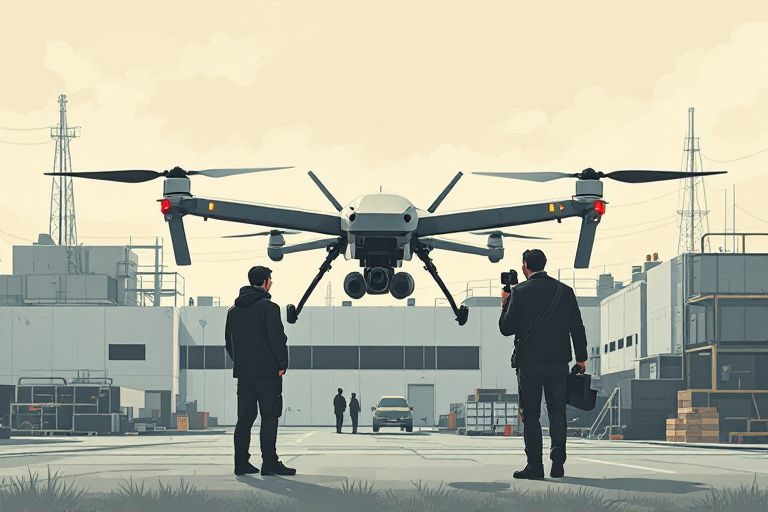
French counterintelligence arrested a man on 3 June 2026 while he was filming a classified drone prototype at a factory near Toulouse, officials confirmed on Saturday, as investigators widen a probe into suspected Russian-directed sabotage and espionage on French soil. The suspect, whose identity has not been released, is accused of passing sensitive information to Moscow, a charge that carries up to 15 years in prison under French law .
The drone plant supplies both the French and Ukrainian armed forces, according to Ukraine’s state news service, which reported the arrest on Friday . French prosecutors have not yet filed formal charges, but investigators believe the suspect acted under direction from Russian intelligence services. The case is the latest in a series of incidents that French authorities now describe as part of a coordinated campaign.
On 10 June 2026, the domestic intelligence agency DGSI publicly warned that “foreign state actors” were actively seeking to disrupt French critical infrastructure, naming Russia as the principal threat. The agency cited “multiple indicators” of attempted sabotage against energy networks and transport hubs, though it did not link those probes directly to the drone-factory arrest .
Separate investigations are examining two other men detained in the Paris region on suspicion of preparing physical attacks on rail links and logistics depots. Police found encrypted communications devices and detailed maps of target sites in their possession. A judicial source said the suspects had “operational ties” to handlers in Moscow, but no direct evidence of a completed attack has been disclosed.
The French government has summoned the Russian ambassador twice in the past fortnight to protest what it calls “unacceptable interference.” President Emmanuel Macron’s national security adviser told reporters on Friday that Paris would respond “at a time and place of our choosing,” without elaborating.
Analysts note that the arrests coincide with a broader European crackdown on Russian covert operations. Last week, a court in The Hague sentenced a former Dutch naval officer to eight years for passing classified NATO documents to Russian handlers, while Belgian authorities expelled four Russian embassy staff accused of intelligence gathering.
The drone-factory suspect remains in pre-trial detention at the Fresnes prison south of Paris. A hearing to determine whether he will be formally indicted is scheduled for 30 June 2026.
Follow us for live European news
Articles

Man gripen för våldtäkt Kunde spåras med hjälp av kameror
expressen · 3 months ago
Tonåringar åtalas för planerad granatattack i Oslo Två unga pojkar misstänks ha planerat sprängdåd på flera platser i centrala Oslo.Planeringen ska ha skett via det svenska Foxtrot-nätverket, skriver Dagbladet.
expressen · 3 months ago
Russias shadow looms behind several sabotage and espionage attempts on French soil At the beginning of June, counterintelligence agents arrested a man while he was filming a drone prototype in a factory near Toulouse. Other investigations are targeting individuals suspected of preparing acts of sabotage orchestrated from Russia.
le monde · 3 months ago
VAATA VIDEOT ⟩ Leiutajast juuksur viis imematerjali saladuse hauda kaasa 1990. aastal jõudis avalikkuseni videoklipp salapärasest kuumakindlast materjalist, mis pälvis ettevõtete tähelepanu üle kogu maailma. Materjali on püütud taasluua, kuid selle täpne koostis on siiamaani saladuseks jäänud – või kas ikka on?
postimees · 3 months ago
Man suspected of spying for Russia detained at drone factory in France A man suspected of spying for Russia at a drone manufacturing plant that supplies products to the French and Ukrainian armies has been taken into custody in France.
ukrinform · 3 months ago

A Cold War 250 miles up: Mistrust between Russia and the US poisons the International Space Station NASA ordered its astronauts to shelter in a capsule after Roscosmos unilaterally decided to repair an air leak. An incident that exposes a more dangerous fissure: lack of trust between Moscow and Washington
elpais · 3 months ago
Court sentences conscript who passed information on Defense Forces in Zaporizhzhia region to GRU The court sentenced a Russian military intelligence agent, who was exposed in the Zaporizhzhia region last July, to 15 years in prison with confiscation of property.
ukrinform · 3 months ago
Two former military personnel from Crimea to stand trial for treason, says prosecutors office Two former members of the Internal Troops of the Ministry of Internal Affairs of Ukraine from Crimea, who defected to the enemy, will stand trial for treason. They face up to 15 years in prison.
ukrinform · 3 months ago

Fabricante francesa de drones alvo de espionagem russa Homem está acusado de ter fornecido informações à Rússia, um crime que pode implicar 15 anos de prisão
observador · 3 months ago
Důstojník z katamaránu je ve vazbě. Je podezřelý z nepřízpůsobení rychlosti a vypnutého radaru Soud v chorvatském Splitu poslal do vazby prvního důstojníka z katamaránu, který se v neděli srazil s plachetnicí s českou posádkou. Zůstat ve vazbě má nejméně měsíc. Vyšetřovatelé 33. letého muže podezírají, že neměl zapnutý radar a nepřizpůsobil rychlost plavidla hustotě provozu, píše deník Jutarnji list. Plachetnice se po nárazu potopila. Při nehodě přišli o život čtyři z osmi českých občanů na palubě.
irozhlas.cz · 3 months ago
Azerbaijan sentences eight Russian nationals detained during Moscow-Baku conflict to up to four years on drug smuggling charges. #Russia #Azerbaijan
mastodon bot · 3 months ago

14 detidos por tráfico de droga em Aljustrel Os 14 detidos foram constituídos arguidos
observador · 3 months ago

Staatsveiligheid van mei 2025 tot lente 2026 slachtoffer van cyberaanvallen: Gegevens van agenten in gevaar gebracht
de morgen · 3 months ago
Serbia: Procurorii susțin că studenții au plănuit simularea unui atac cu „tun sonic la proteste. Oficialii vorbesc despre război civil Procurorii sârbi susțin că studenți implicați în protestele antiguvernamentale de amploare din martie 2025 au discutat despre simularea utilizării unui „tun sonic, cu scopul de a crea impresia că autoritățile au folosit o astfel de armă împotriva manifestanților. Pe baza acestor concluzii, oficiali de rang înalt de la Belgrad au lansat acuzații grave la adresa mișcării studențești, vorbind despre tentative de destabilizare a țării și chiar despre provocarea unui război civil.
digi24 · 3 months ago