
Ethiopia's election marred by war and repression: Italy's far-right surges in new poll
Story Timeline
4 months · 4 summary articles
Ethiopia’s ruling Prosperity Party is poised for a landslide victory in national elections on June 1, but the vote unfolds amid severe democratic deficits, according to reports from the ground. Prime Minister Abiy Ahmed’s government faces criticism for restricting press freedom and political dissent, while armed conflict affects 70% of the country, raising doubts about the credibility of the electoral process. France 24’s correspondent Tom Canetti reports that the election is less about competition and more about projecting an image of stability under Abiy’s leadership .
In Italy, the far-right Brothers of Italy (FdI) maintains its lead in the latest Quorum-YouTrend poll, securing 28% support—up one point from April—while the center-left Democratic Party (PD) slips to 22%. The anti-establishment Five Star Movement (M5S) gains a point to reach 14%, consolidating its position as the third-largest party. The poll, conducted on May 26-27 with a sample of 815 respondents, also shows the far-right National Alliance (FN) rising to 4%, while the once-dominant League (Lega) stagnates at 6% .
Denmark’s latest Voxmeter poll, fielded from May 18-24, reveals a tight race ahead of the 2029 European Parliament elections. The Social Democrats (A-S&D) lead with 21%, followed by the Green Left (F-G/EFA) at 13%—up one point—and the Moderates (M-RE) at 7%. The far-right New Right (Æ-ECR) holds steady at 5%, while the Red-Green Alliance (Ø-LEFT) drops a point to 6%. The poll, based on 1,000 respondents, suggests a fragmented political landscape with no clear majority bloc .
At the EU level, the far-right European Sovereign Nations (ESN) group—currently dominated by Germany’s Alternative for Germany (AfD)—risks losing its status as a formal parliamentary group after the 2029 elections. Projections show ESN falling below the seven-nationality threshold required to maintain its grouping, signaling potential fractures within the far-right alliance .
The Ethiopian election, Italy’s shifting political alliances, and Denmark’s polling dynamics reflect broader trends in electoral politics, where stability, far-right gains, and democratic backsliding shape the outcomes. With the EU’s 2029 elections on the horizon, the balance of power in Brussels remains uncertain, particularly as nationalist and populist forces vie for influence.
Follow us for live European news
- 2
- 1
- 1
- 1
1 further source not geolocated
Articles

Ethiopia heads to the polls: Elections under the shadow of war and dissent As Ethiopia prepares to hold its seventh General Elections on June 1, Prime Minister Abiy Ahmed and the ruling Prosperity Party are widely expected to secure a landslide victory. But the stakes for him are high nonetheless: restoring stability and projecting an image of national unity. Critics warn that growing restrictions on press freedom and political dissent are casting a shadow over the vote. And with 70 of the country still affected by armed conflict, many question whether the conditions for a truly democratic election are in place. Report on the ground by our correspondent Tom Canetti.
france24 · 4 months ago
80 of Greeks Say Greece Is Unfair to Its Citizens A new survey has shown that eight in ten Greeks (80.4 percent) perceive of life in Greece as unfair to citizens, while 81.9 percent believe that wealth is distributed unfairly in favor of businessmen, while 86.5 percent call for an in increase in taxes for the rich for reasons of social justice. These are the […]
greek reporter · 4 months ago
The New EU Voting system – the old west-east north-south division
gdeltproject.org · 4 months ago
Denmark, Voxmeter poll: A-S&D: 21 F-G/EFA: 13 (+1) O-PfE: 11 V-RE: 10 I-EPP: 10 (-1) C-EPP: 8 M-RE: 7 B-RE: 6 (+1) Ø-LEFT: 6 (-1) Æ-ECR: 5 Å→G/EFA: 3 H-*: 1 +/- vs. 11-17 May 2026 Fieldwork: 18-24 May 2026 Sample size: 1,000 ➤ europeelects.eu/denmark
telegram bot · 4 months ago
Italy, Quorum - YouTrend poll: FdI-ECR: 28 (+1) PD-S&D: 22 (-1) M5S-LEFT: 14 (+1) FI-EPP: 8 AVS-LEFT|G/EFA: 6 LEGA-PfE: 6 (-1) FN-ESN: 4 (+1) Azione-RE: 3 IV-RE: 2 +E-RE: 1 PLD-RE: 1 ORA!-*: 1 (n.a.) NM-EPP: 1 +/- vs. 27-28 April 2026 Fieldwork: 26-27 May 2026 Sample size: 815 ➤ europeelects.eu/italy
telegram bot · 4 months ago
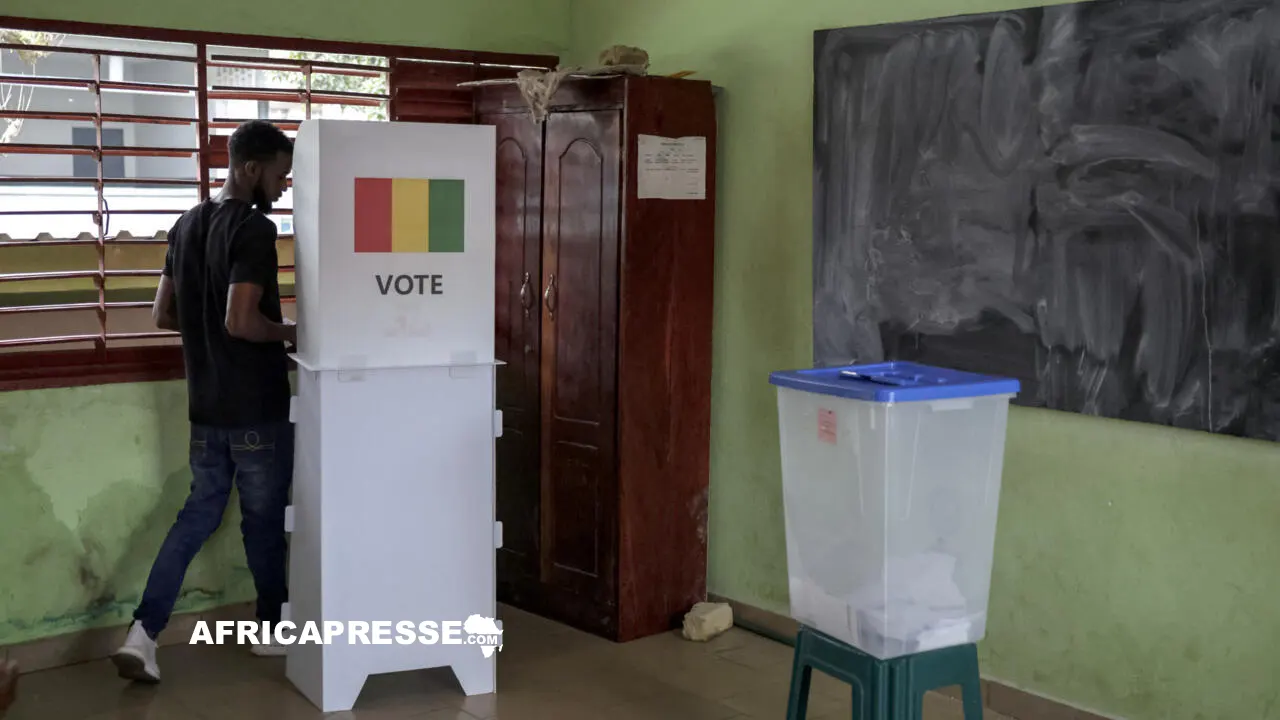
Africa PresseGuinée : sept millions d électeurs appelés aux urnes pour refermer la parenthèse transitionnelle
gdelt bot · 4 months ago
Olympiareferendum: Beteiligung am Olympiareferendum bei über 47 Prozent
die zeit · 4 months ago
The latest EU Parliament projection is out! Currently dominated by Germanys Alternative for Germany (AfD), the far-right ESN group would fall below the seven-nationality threshold required to form a European Parliament group if an election were held today. #EP2029 Explore:
telegram bot · 4 months ago