 Thursday, May 21Thursday, May 21
SpaceX has officially filed for an initial public offering (IPO) that could become the largest in history, with a targeted valuation of $1.75 trillion. The company plans to begin trading on the Nasdaq under the ticker symbol SPCX as early as June 2026, pending regulatory approval. If successful, the IPO could raise up to $75 billion and potentially make Elon Musk the world’s first trillionaire, given his 85.1% voting control through a dual-class stock structure .
The IPO prospectus reveals significant financial challenges, including a $4.9 billion net loss on $18.67 billion in revenue for 2025 and a $4.27 billion net loss in Q1 2026 on $4.69 billion in revenue. These losses stem partly from the recent merger with xAI (which itself merged with X, formerly Twitter), as well as ongoing investments in ambitious projects like Mars colonization and orbital data centers. Despite these setbacks, SpaceX highlights Starlink as its only profitable unit, which accounted for most of its Q1 2026 revenue. Additionally, Anthropic has agreed to pay $1.25 billion per month for SpaceX’s compute services, signaling potential future revenue streams .
The IPO’s success hinges on investor confidence in SpaceX’s long-term vision, including plans for lunar and Martian missions, orbital data centers, and a human settlement on Mars. While the company’s Starlink satellite internet business remains a financial bright spot, its AI and social media ventures (X and xAI) generated only $818 million in Q1 2026, down from Twitter’s pre-acquisition performance. Musk will retain his roles as CEO, CTO, and chairman post-IPO, maintaining significant control over the company’s direction . The final details, including the number of shares and pricing, are expected to be disclosed in an amended filing in the coming weeks.

SpaceX unveils plans to go public, with $1.75 trillion valuation Elon Musks rocket and satellite company has publicly filed details about its upcoming initial public offering, highlighting both the companys ambitious goals in space and its financial results. Among the groups long-term goals are the construction of data centres in space and creating a large human settlement on Mars. Also in this edition: Samsung and its workers find a last-minute deal to suspend a planned 18-day strike.
france24 · about 3 hours ago
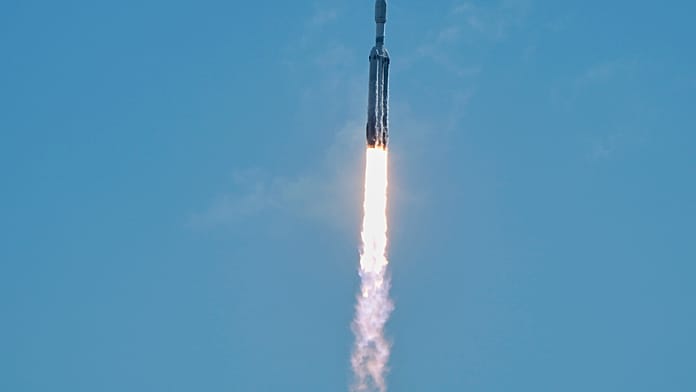
SpaceX IPO ready for launch as countdown begins for what could be the biggest ever listing SpaceX plans a record-breaking IPO that could raise around $75 billion (€64.5bn) despite ongoing losses. The Elon Musk-led firm says funds will support Moon and Mars missions, while strong Starlink earnings contrast with losses in X and xAI.
euronews · about 3 hours ago
SpaceX not the behemoth everyone thought Elon Musks SpaceX isnt the financial juggernaut that many were expecting, according to the IPO prospectus it filed yesterday.The big picture: Its expected to be the largest IPO ever, and could make Elon Musk the worlds first trillionaire.But the prospectus shows just how much the IPO depends on expectations for future growth and investor servility to Musk — as opposed to the current underlying business.Those expectations will be severely tested if SpaceX really wants to be valued at $1.75 trillion — which would make it one of the worlds 10 most valuable companies.By the numbers: SpaceX is wildly unprofitable, reporting a $4.9 billion net loss on $18.67 billion in consolidated revenue for 2025.For context, 200 companies in the S&P 500 had more revenue last year than did SpaceX. This includes Tesla, whose sales were five times higher.SpaceX said that the AI unit containing X and xAI generated only $818 million in Q1 2026, about a third less than Twitter alone generated in the quarter before Musk took it over.Yes, but: There are some financial green shoots in the filing.For example, Anthropic has agreed to pay $1.25 billion per month to SpaceX for compute, and SpaceX says it will seek to sign similar contracts.Zoom in: The Starlink connectivity business, which years ago was a rumored IPO candidate as a standalone business, is SpaceXs only profitable unit and accounted for most of its Q1 revenue.Look ahead: SpaceX is expected to begin trading next month on the Nasdaq under the ticker symbol SPCX.AI rivals OpenAI and Anthropic are expected to go public after Labor Day, with OpenAI seeming to be ahead on paperwork.The bottom line: SpaceX isnt quite David, but its sure as hell not Goliath.
axios · about 3 hours ago

SpaceX plans for a record-breaking IPO
news.yahoo.com · about 8 hours ago
Elon Musks space company has filed to go public The space company SpaceX has officially applied to go public, aiming for the largest stock market listing ever, Reuters reports. According to Reuters, SpaceX could potentially be valued at 1,750 billion dollars, and investors could trade the companys shares starting June 12 if all goes to plan. With the application, SpaceX also revealed some financial […]
cphpost · about 8 hours ago
Elon Musk eyes record-breaking Wall Street debut with SpaceX IPO Elon Musks SpaceX filed for a stock market debut on Wednesday that could become the largest IPO in history, seeking to raise up to $75 billion at a valuation of as much as $1.75 trillion, according to US media reports. Musk would remain CEO, CTO and chairman after the listing.
france24 · about 10 hours ago

SpaceX files for IPO that could make Elon Musk a trillionaire
news.yahoo.com · about 13 hours ago
Elon Musks SpaceX sets out plans for biggest IPO in history AI and satellite company fires starting gun on wave of massive Wall Street listings
financial times · about 13 hours ago
Elon Musks SpaceX unveils filing for blockbuster IPO A successful sale could value the company at a record-setting $1.75 trillion.
aljazeera · about 14 hours ago

SpaceX reveals plan for $1.75tn stock market debut Elon Musks rocket and satellite operations company, with extensive contracts with US, to go public next monthSpaceX unveiled its plans to list publicly on the US stock market Wednesday, disclosing its investor prospectus and revealing details about its financials for the first time. Elon Musks rocket and satellite operations company will go public next month at a valuation of around $1.75tn.The company, which is the worlds most prominent rocket maker and which has extensive contracts with the US government, confidentially filed for an IPO last month. The filing allowed for a period of regulatory review before the details became public. Continue reading...
theguardian · about 15 hours ago

Elon Musks SpaceX IPO filing is out SpaceX on Wednesday disclosed its filing for an initial public offering, ahead of an expected stock market debut next month.Why it matters: This is expected to be the largest IPO ever, and could make Elon Musk the worlds first trillionaire.Catch up quick: Musk launched SpaceX in 2002 with the goal of one day colonizing Mars.Since then, it has become the worlds most successful commercial space company by far and inspired rival efforts by billionaires like Jeff Bezos and Richard Branson.It has also become a major partner to NASA and created the Starlink satellite internet network.More recently, SpaceX acquired xAI — Musks frontier lab that itself had just merged with X (formerly Twitter) — with plans to focus on orbital data centers.SpaceX filed its IPO confidentially with the SEC on April 1.By the numbers: SpaceX financials are complicated, because of its recent merger with xAI (which itself recently merged with the company formerly known as Twitter). It reports a $4.9 billion net loss on $18.67 billion in revenue for 2025, inclusive of the entire current business.For Q1 2026, it bookerd a $4.27 billion net loss on $4.69 billion in revenue.Musk holds 85.1 of voting power in SpaceX, thanks to a dual-class stock structure.Look ahead: SpaceX is expected to begin trading in late June on the Nasdaq under ticker symbol SPCX.The filing doesnt disclose the number of shares being offered or a proposed price. Expect that to come in a couple of weeks via an amended filing.Note: This is a breaking story. Check back here for updates.
axios · about 15 hours ago
Musks SpaceX sets out plans for biggest IPO in history Satellite and AI company to list on Nasdaq under symbol SPCX
financial times · about 16 hours ago