Loading…
 Wednesday, August 5Wednesday, August 5
A four-tonne upper stage of a SpaceX Falcon 9 rocket is set to crash into the Moon on Wednesday at approximately 06:35 GMT, creating a new lunar crater near the Einstein Crater. The impact, traveling at roughly 5,400 mph (8,690 km/h), poses no danger to Earth, NASA spokesperson Jimi Russell said in a statement.
The rocket stage, weighing about 8,800 pounds (4,000 kilograms), was part of a January 2025 launch carrying two lunar landers. While the booster returned to Earth, the upper stage remained in space, where solar activity and gravitational forces redirected it toward the Moon, according to Julianna Scheiman, SpaceX director of NASA Science and Dragon Programs. Scheiman confirmed that SpaceX had followed standard procedures for high-energy missions but that the stage’s trajectory shifted unexpectedly.
Scientists anticipate the collision will produce a sunlit plume of lunar dust and debris, potentially visible through telescopes. Benjamin Fernando of Los Alamos National Laboratory, lead author of a recent paper on the impact, said the brightness of the plume remains uncertain, prompting further study. NASA plans to track the booster for training and later observe the impact site for scientific research, Russell added.
The rocket stage is expected to strike the Moon’s northern hemisphere, creating a crater roughly 60 feet (18 meters) wide and 12 feet (4 meters) deep, according to NASA estimates. Astronomers, including Cambridge University’s Matt Bothwell, suggested the impact could generate a dust cloud rising over 50 kilometers, visible with sufficient telescopic equipment. Best viewing conditions are expected in eastern parts of the U.S. and Canada, per Associated Press reports.
Independent astronomers first detected the stage’s unintended trajectory toward the Moon, a path later confirmed by NASA. The event follows previous human-made objects striking the Moon, including the Soviet Luna 2 probe in 1959. NASA and SpaceX officials emphasized the scientific value of observing the impact, with Scheiman noting excitement among researchers to study the collision’s effects.
Follow us for live European news
4 further sources not geolocated

Weltraum-Schrott: Schlägt Teil von SpaceX-Rakete ungeplant auf dem Mond ein? Im vergangenen Jahr hatte eine „Falcon 9-Rakete von SpaceX zwei Lander zum Mond gebracht. Jetzt könnte ein Teil der Rakete ungeplant auf dem Mond einschlagen - aber wird der Aufprall sichtbar sein?
tagesspiegel · about 1 hour ago
Voyager seeks relaxed requirements in NASA commercial space station RFP Voyager Technologies remains upbeat about the prospects for its Starlab commercial space station but is hoping for some tweaks to NASAs plans to support the stations development. The post Voyager seeks relaxed requirements in NASA commercial space station RFP appeared first on SpaceNews.
spacenews · about 1 hour ago
Part of a SpaceX rocket to leave crater when it slams into the Moon The upper stage of a SpaceX rocket will crash into the Moon on Wednesday, an unintentional collision that poses no danger to Earth but will leave behind a lunar crater. A mixture of solar activity and gravitational forces put the rockets second stage on a path towards the Moon, scientists said.
france24 · about 1 hour ago

Y después del eclipse, lluvia de estrellas La ausencia de luz lunar favorecerá la observación de las Lágrimas de San Lorenzo tras el histórico eclipse solar que oscurecerá el atardecer
la vanguardia · about 2 hours ago
SpaceX rocket stage expected to slam into Moon A SpaceX rockets upper stage is set to unintentionally crash into the Moon on Wednesday, a collision that poses no danger to Earth but will leave behind a lunar crater.
france24 · about 2 hours ago

SpaceX plans next Starship launch as soon as this month, catching it on land reut.rs/3Tu1OWD
bluesky_Reuters · about 2 hours ago
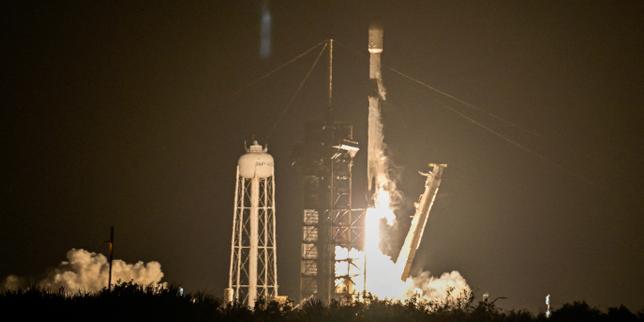
Un étage dune fusée de SpaceX va sécraser sur la Lune à plus de 8 500 km/h, mercredi matin Conséquence dun changement de trajectoire inattendu, la collision laissera un cratère à la surface lunaire. La NASA assure que limpact sera sans danger pour la Terre.
le monde · about 2 hours ago

SpaceX rockets upper stage is set to unintentionally crash into the Moon on Wednesday. The collision poses no danger to Earth but will leave behind a lunar crater u.afp.com/SHSp
bluesky_AFP English · about 2 hours ago
How astronaut Luca Parmitano gears up for the Artemis III Moon mission NASA has presented Artemis III, its next step toward a Moon landing, as one of the most complex missions undertaken by the space agency. Luca Parmitano explains why and how he is preparing for it.
euronews · about 3 hours ago

SpaceX rocket hours away from crashing into the moon in unintentional collision
bluesky_The Guardian · about 3 hours ago
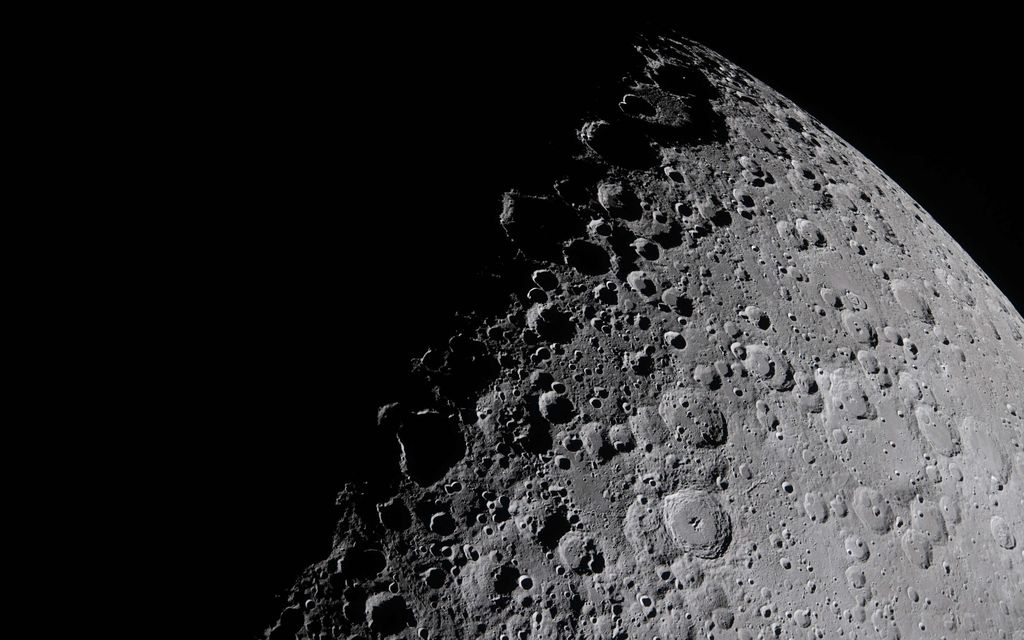
4 000 kilon raketti törmäämässä Kuuhun
iltalehti · about 3 hours ago
Avaruus | SpaceX:n raketin osa törmää Kuuhun Törmäyksen on arvioitu tapahtuvan keskiviikkoaamuna Suomen aikaa.
helsingin sanomat · about 3 hours ago
#USA Rocket Lab has been awarded a $397 million contract by the U.S. Space Force to build and launch Flatellite spacecraft for the Space-Based Airborne Moving Target Indicator program. Subscribe to @OSINTdefender Chat room
telegram_OSINTdefender · about 3 hours ago
SpaceX to begin Starship orbital flights SpaceX plans to start deploying upgraded Starlink satellites into orbit on the next flight of its Starship vehicle, scheduled for as soon as the end of the month. The post SpaceX to begin Starship orbital flights appeared first on SpaceNews.
spacenews · about 6 hours ago
Un étage dune fusée de SpaceX va sécraser sur la Lune à plus de 8 500 km/h, mercredi matin Conséquence dun changement de trajectoire inattendu, la collision laissera un cratère à la surface lunaire. Limpact sera sans danger pour la Terre, assure la NASA.
le monde · about 6 hours ago
Rocket Lab, STR win Space Force contracts for airborne-target tracking The companies, along with a third unidentified vendor, won $615 million in contracts for the AMTI satellite program The post Rocket Lab, STR win Space Force contracts for airborne-target tracking appeared first on SpaceNews.
spacenews · about 7 hours ago
Ce se va întâmpla când racheta SpaceX scăpată de sub control se va izbi de Lună, cu viteza de 8.700 km/h Oamenii de știință se așteaptă ca Luna, care a fost lovită de nenumărate ori de asteroizi și meteoriți parcursul a milioane de ani, să se confrunte cu o nouă coliziune, miercuri, de această dată din partea unei rachete SpaceX scăpate de sub control, care se deplasează cu viteze de aproximativ 2,43 kilometri pe secundă (5.400 …
hotnews.ro · about 7 hours ago