 Saturday, July 4Saturday, July 4
Scientists create first self-replicating artificial cells in breakthrough hailed as dawn of a new biological era
Researchers at the University of Minnesota have constructed the first laboratory-made cells that can grow and divide, fulfilling core criteria for life and opening a path to programmable biomanufacturing. The SpudCell systems, built from previously inert chemical compounds, complete a full cell cycle and mark the first time scientists have assembled a synthetic organism capable of Darwinian evolution.
“What we cannot build, we cannot understand,” said Kate Adamala, associate professor at the College of Biological Sciences and lead author, in remarks to *WELT*. “To unlock the full potential of biotechnology, we must be able to reconstruct the scaffold of life from scratch.” While natural cells already provide the chemical diversity used by the pharmaceutical and fine-chemical industries, Adamala argues that synthetic cells could eventually produce compounds that are toxic to or incompatible with natural biology. “Many products essential to our civilization cannot be made inside living cells because they are too fragile or too reactive,” she said.
The Minnesota team’s work follows decades of attempts to coax non-living matter into living systems. Unlike earlier protocells that could only perform a single function, SpudCell traverses the entire cell cycle—growing, copying its internal components, and splitting into daughter cells—demonstrating the minimal behaviors required for life as defined by biologists. The advance arrives just as Anthropic, the AI company, launched *Claude Science*, a dedicated research workbench for scientists, underscoring the accelerating convergence of AI and wet-lab biology.
In a separate discovery that rewrites the evolutionary map of Mexico, palaeontologists in Hidalgo have identified *Ambystoma quetzalcoatli*, the first fossil salamander species formally described from Mexico and the oldest confirmed record of the genus *Ambystoma* in the country. The 12 specimens, unearthed in the early 2000s from an 85-square-kilometre lake system near Atotonilco el Grande, show distinctive cranial and vertebral traits absent in living axolotls, including an elongated skull opening, a differently structured palate, and 17 trunk vertebrae. “These fossils provide a crucial missing link in the origin and diversification of Mexican fauna,” said Jorge Herrera Flores and María Patricia Velasco de León, co-authors of the study published in *Palaeontologia Electronica*.
Meanwhile, a 235-million-year-old tooth discovered in Slovenia’s Upper Idrijca Landscape Park has been identified as belonging to a plakodont, a marine reptile with flat, shell-crushing teeth that once patrolled the shallow Tethys Ocean. The fossil, found by park ranger Gregor Koželj, is one of relatively few plakodont remains from the Carnian stage of the Early Triassic. “Every such find is vital for reconstructing their geographic spread, which reached as far as China,” said Irena Debeljak, a palaeontologist at the Ivan Rakovec Institute. Further analysis may assign the tooth to the genus *Cyamodus* and shed light on the evolution of enamel toughened for crushing mollusc shells.
Across the Atlantic, Spanish researchers have uncovered the first natural programmable metamaterial in a living organism: the compound eye of the vinegar fly *Drosophila melanogaster*. A team led by the University of Seville and University College London found that during development the fly’s eye cells assemble into a precisely patterned 2D lattice of interconnected triangles. When internal pressure is applied, the lattice inflates into the eye’s final 3D curvature, a process the authors liken to inflating a water balloon with a predetermined shape. “We have discovered an architectural blueprint in 2D that predetermines the 3D form,” said Juan Garrido García, lead author in *Nature Communications*. The finding suggests future bioengineers could design implantable tissues that adopt specific shapes without rigid external moulds, potentially revolutionising regenerative medicine.
Follow us for live European news
6 further sources not geolocated

Forscher kommen der Frankensteinschen Vision einen großen Schritt näher Leben aus dem Labor? US-Forscher erschaffen erstmals aus dem Nichts künstliche Zellen, die sich sogar vermehren. Die Wissenschaftler sehen großes Potenzial für die Industrie – und hoffen auf ein neues Zeitalter der Biologie.
welt.de · about 2 hours ago

Efter nya cyberhoten: Bekämpa AI med AI Med hjälp av AI kan hackare slå till mot stora datasystem på ett sätt som cybersäkerhetsexperter tidigare inte har sett.Motmedlet?Bekämpa AI med AI.– Våra mänskliga försvarare hinner inte med, säger Pontus Johnson, professor vid KTH.
svenska dagbladet · about 2 hours ago
The Ancient Greek Mosaic That Celebrates the Joy of Life A magnificent ancient Greek mosaic discovered in Hatay, Turkey continues to amaze archaeologists and historians attempting to ascertain the exact meaning of its images and inscriptions. The floor mosaic, which was found in the Hatay Province, located on the Turkish-Syrian border, is divided into three parts, with two images complete and in nearly perfect condition. […]
greek reporter · about 2 hours ago
Vanishingly rare copy of US Declaration of Independence discovered in the UK Graham Moore, the Revolution 250 curator at the National Archives, said the "exceptional" item was "one of the rarest forms of the Declaration we know about".
euronews · about 2 hours ago
GM corn variety cannot be regarded as safe: Author of study linking food to cancer issues new attack – Engineering Evil
gdeltproject.org · about 2 hours ago

Hunting the tardigrade: one small step in sequencing DNA of all life on Earth
bluesky_The Guardian · about 2 hours ago
V Krajinskem parku Zgornja Idrijca našli zob plakodonta, starega 235 milijonov let V okolici Idrije so odkrili 235 milijonov let star zob plakodonta. Fosil bo pomagal raziskati evolucijo teh morskih plazilcev in povečal pomen parka Zgornja Idrijca ter Geoparka Idrija, kjer bodo fosil ali njegovo repliko v prihodnosti tudi razstavili.
rtv slovenia · about 2 hours ago

Las vasijas y lámparas que parecen de cristal pero están hechas gracias a los insectos La diseñadora Ori Orisun Merhav crea sus obras a partir de resina segregada por el insecto Kerria lacca, y técnicas de soplado de vidrio e impresión 3D
la vanguardia · about 2 hours ago

Creó una técnica artística y a sus 90 años es su único exponente: Cada día le dedico 5 o 6 horas A sus 90 años, este zamorano es el creador y único exponente del Grapel Art, la técnica que convierte las radiografías médicas en cuadros alucinantes, que ya le ha valido más de 20.000 seguidores en redes sociales
la vanguardia · about 2 hours ago
Drones en lápidas y refugios en la ópera
la vanguardia · about 2 hours ago
Ancient Indian gold rings unearthed in Thailand Thai archaeologists have discovered two ancient Indian gold rings, estimated to be 1,900‑2,100 years old, at the Don Yai Thong site in Phetchaburi province. One ring bears an inscription in ancient Brahmi script, believed to be linked to a merchant caste, and both are now housed in a Ratchaburi museum.
yenisafak · about 2 hours ago

Starburst-Galaxie M82: Zigarre im Sternendunst Das James Webb Space Telescope hat ein neues Bild einer Galaxie aufgenommen, die massenhaft neue Sterne ausbrütet.
faz · about 2 hours ago
AI may well destroy humanity - just not the way you think
gdeltproject.org · about 2 hours ago
Conference in Sarajevo: Facts against Genocide Denial Ahead of the commemoration of the 31st anniversary of the genocide in Srebrenica, a two-day international scientific conference dedicated to researching, documenting and preserving the truth about the genocide began in Sarajevo. Through four thematic panels, local and international experts talk about the legal, historical and social aspects of the genocide, as well as the […] The post Conference in Sarajevo: Facts against Genocide Denial appeared first on Sarajevo Times.
sarajevo times · about 2 hours ago
"Zgodovinopisci se zavedamo, da se je velik del vpliva v družbi preselil na družbena omrežja" Kako so živeli, potovali, trgovali, se sporazumevali na jadranskem prostoru v srednjem veku? Kaj vse lahko izvemo iz dostopnih virov? Nov zgodovinski mednarodni projekt Transaquam Medium želi vse to predstaviti na danes priljubljenih platformah.
rtv slovenia · about 2 hours ago
VAATA VIDEOT: ⟩ Tšornobõlis on kiirguse käes arenenud enneolematu seeneliik Tšornobõlist leiti seeneliik, kes suudab ioniseeriva kiirguse käes elada ja kasvada. Teadlased on välja pakkunud, et seen radiosünteesib, kasutades eluks ioniseerivat kiirgust. See teooria vajab aga edasiuurimist.
postimees · about 2 hours ago
«Ταξίδι στον χρόνο» στον Τιτανικό του 1912: Το βίντεο με AI που ζωντανεύει το θρυλικό υπερωκεάνιο Η δημιουργός του Chloe VS History αξιοποίησε ιστορικές φωτογραφίες και εργαλεία Τεχνητής Νοημοσύνης για να αναπαραστήσει τη ζωή στο πλοίο πριν από τη μοιραία σύγκρουση με το παγόβουνο
protothema · about 2 hours ago
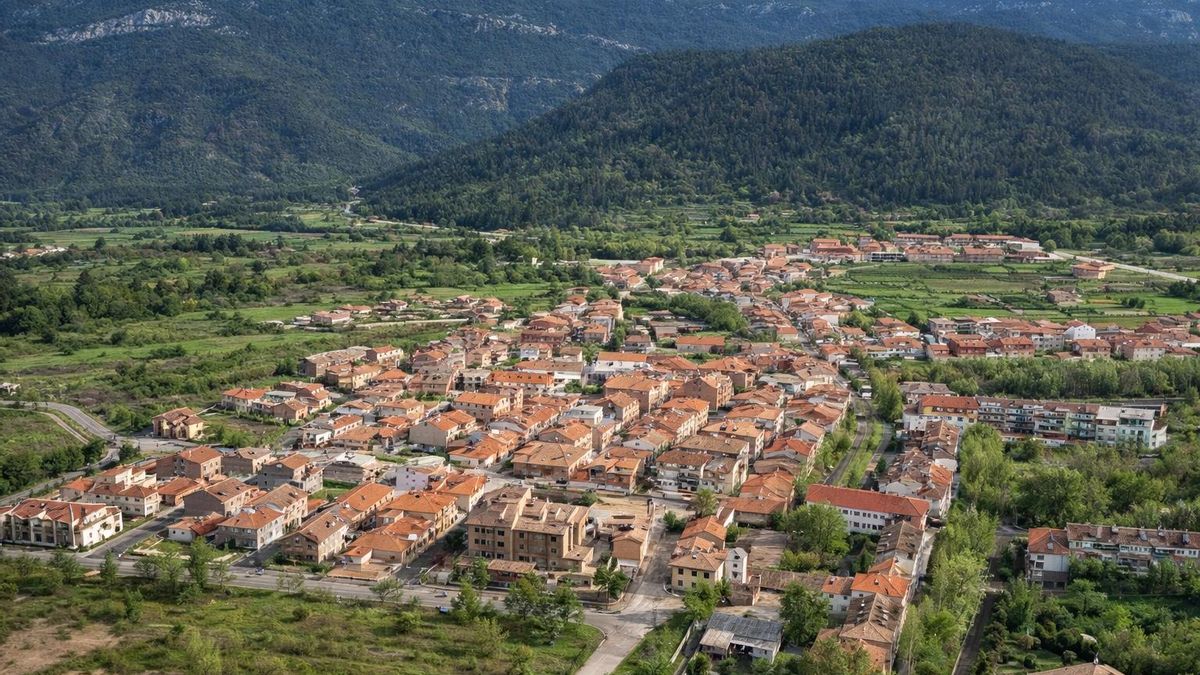
Riópar Viejo y Riópar Nuevo: la fábrica que obligó a un pueblo entero a bajar al valle Un antiguo núcleo medieval acabó convirtiéndose progresivamente en una de las colonias industriales más importantes de EspañaExcavado entre 1957 y 1962, este yacimiento del Valle del Duero es considerado de los más relevantes para comprender la primera Edad del Hierro Hay pueblos que cambian de nombre, y hay pueblos que directamente cambian de sitio. Ese es el caso de Riópar, en la Sierra de Alcaraz (Albacete), donde un antiguo núcleo medieval situado en un cerro fue vaciándose progresivamente durante dos siglos para mudarse a una colonia industrial construida desde cero, a orillas de un río, que daba cobijo a los obreros de una fábrica de latón. En este caso no fue por una guerra o epidemia, fue por una mina de calamina y un proyecto de un ingeniero austriaco. El Riópar original, hoy llamado Riópar Viejo, es un asentamiento con siglos de historia a sus espaldas. Allí se encuentra el yacimiento neolítico de La Marija, donde se descubrió, por ejemplo, el llamado Tesorillo romano de Riópar, 364 monedas que hoy se conservan en el Museo Arqueológico de Albacete. El lugar era muy curioso, pero había un problema y es que al estar encaramado sobre una roca, el pueblo no podía expandirse. El ingeniero que llegó buscando calamina Todo cambia en 1771, cuando el ingeniero vienés Juan Jorge Graubner visita Riópar atraído por la existencia de una mina de calamina, el mineral del que se extrae el zinc que, combinado con cobre, produce el latón. Carlos III, respalda el proyecto, y mediante Real Cédula de 19 de febrero de 1773 se fundan las Reales Fábricas de San Juan de Alcaraz. Fueron las primeras fábricas de España y las segundas del mundo en la elaboración y producción de objetos de zinc y latón, ya que por entonces solo existían las de Goslar, en Alemania. Instalaciones de las antiguas fábricas de Riópar Graubner decidió dividir la producción en dos complejos: uno junto al arroyo Gollizo para trabajar el latón, y otro junto al río Mundo, bajo la mina, para el cobre y el zinc. Ambos lugares estaban lejos de Riópar así que hubo que construir un pueblo nuevo: San Juan de Riópar, para que vivieran los obreros. Marta Vera, presidenta de la Asociación de Amigos de las Reales Fábricas de Riópar, lo explica brevemente: tuvieron que hacer casas para dar albergue a los trabajadores y así conformar un pueblo con todas las necesidades necesarias (Iglesia, médico, estanco de vino y carne entre otros) para asentarse en ese lugar. Entonces se configuró una colonia industrial alrededor de esa Real Fábrica que es el actual pueblo de Riópar. Varios nombres antes del definitivo El pueblo nuevo cambió de nombre varias veces: primero Fábricas de San Juan de Alcaraz, después Fábricas de Riópar, hasta quedarse finalmente con el nombre de Riópar. En 1781 se completó la Presa del Laminador, y a partir de entonces, el declive del pueblo viejo fue constante: llegó a quedar reducido a apenas medio centenar de vecinos, hasta su despoblamiento total en 1995. Con el cierre definitivo de las fábricas en 1996, tras 223 años de actividad, un decreto del Consejo de Ministros fijó los nombres actuales: Riópar (o Riópar Nuevo) para la antigua colonia obrera, y Riópar Viejo para el enclave medieval que le dio origen.
eldiario.es · about 2 hours ago
Scientists Have Identified a New Fossil Species of Axolotl in Mexico Ambystoma quetzalcoatli is the first fossil salamander to be formally identified in Mexico, revealing that axolotls have inhabited the country for millions of years.
wired.com · about 2 hours ago

Elindult a NASA vakmerő űrteleszkópmentő missziója Többszöri halasztás után elindult pénteken az amerikai űrkutatási ügynökség (NASA) vakmerő és eddig példátlan missziója, amellyel a Földre zuhanástól akarja megóvni a süllyedő Swift űrteleszkópot.
hvg.hu · about 2 hours ago
Why is the Gotthard Base Tunnel so important?
gdeltproject.org · about 3 hours ago

Jellyfish, sharks and big dreams: how I conquer oceans and summits
bluesky_The Times · about 3 hours ago
Forschende finden erstmals menschliche DNA an Höhlenkunst Alte DNA haftete womöglich über Jahrtausende an Felswänden, wie eine neue Studie zeigt. Sie passt zu einer Jäger-Sammler-Gruppe, die vor mehr als 5000 Jahren lebte
der standard · about 3 hours ago
Beyond the Busts: Unveiling Alexander the Greats True Face Historians and researchers are suggesting a new facial reconstruction of the famous ancient Greek leader Alexander the Great.
greek reporter · about 3 hours ago
Did a Single Minoan Empire Ever Exist? The Minoans ruled over Crete and many of the smaller Aegean islands throughout much of the Bronze Age. However, was this nation ever united into a single, unified Minoan empire, or were the Minoans separated into various distinct kingdoms each with its own ruler? In this article, we will examine what the evidence reveals. The […]
greek reporter · about 3 hours ago
Hva heter den største av pyramidene ved Giza? 1. Hva heter den største av pyramidene ved…
aftenposten · about 3 hours ago
Astronom über den Blick ins All: „Dieses große Gefühl des Wunderns Tim Florian Horn ist der Herr der Berliner Planetarien und Sternwarten. Mit dem Einsatz neuester 3D-Technik will er zeigen, dass Wissenschaft Spaß machen kann. mehr...
taz.de · about 3 hours ago

Greek fishermen are seeking government support to fight off an invasion of poisonous pufferfish with powerful jaws that can bite through metal and bone. Their arrival is a prime example of how climate change is altering the marine environment. 🔗 www.politico.eu/article/gree...
bluesky_Politico Europe · about 3 hours ago
Megalodon: Βρέθηκε ο σπόνδυλος του μεγαλύτερου καρχαρία που είχε χαθεί σε μετακόμιση μουσείου Ο μεγαλύτερος σπόνδυλος Megalodon στον κόσμο εντοπίστηκε ξανά, κατά το Palaeontologia Electronica μετά την εξαφάνισή του, αποκαλύπτοντας και το τελευταίο του γεύμα
protothema · about 3 hours ago
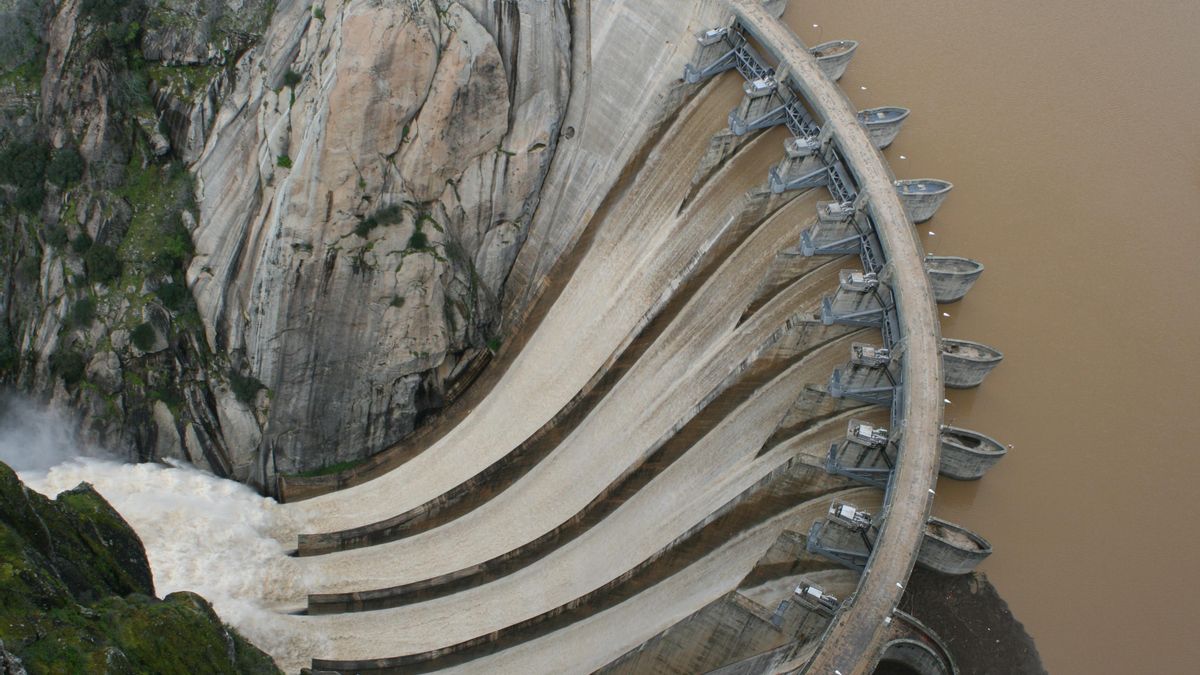
Aldeadávila de la Ribera: el pueblo que esconde la central hidroeléctrica más productiva de España La producción de la central supone más del 8,5 de la generación media hidroeléctrica de toda España, abasteciendo a más de 733.000 hogares españolesLa NASA confirma que una presa gigantesca en China ha desplazado el eje de la Tierra y ha afectado a cuánto duran los días Un municipio de poco más de 1.000 habitantes, a 100 kilómetros de Salamanca y haciendo frontera con Portugal, esconde una de las obras de ingeniería más extraordinarias de todo el país. La central hidroeléctrica de Aldeadávila, excavada en el interior de una inmensa caverna de roca granítica en el cañón del río Duero, es la instalación hidroeléctrica más productiva de toda España. Sus turbinas no se ven desde fuera porque están enterradas en la montaña, en un espacio tan colosal que, según señala la propia Iberdrola, cabría en su interior la catedral de León. Según datos oficiales, la producción de la central supone más del 8,5 de la generación media hidroeléctrica de toda España, suficiente para abastecer a 733.000 hogares. La presa, que mide 139,50 metros de altura y puede embalsar 115 hectómetros cúbicos en una superficie de 368 hectáreas, cuenta además con 12 kilómetros de túneles en su estructura subterránea, y combina dos centrales: Aldeadávila I, operativa desde 1962, y Aldeadávila II, inaugurada en 1986. Presa de la central hidroeléctrica de Aldeádavila de la Ribera La ingeniería invisible que salvó a España del apagón Este fue el primer proyecto hidroeléctrico construido bajo el suelo en España, más concretamente en la roca granítica del cañón del río Duero. En su día fue la mayor central de su tipo en Europa Occidental y su puesta en marcha supuso doblar la producción total de Iberduero. Pero la dimensión e importancia de esta infraestructura se entiende mejor si nos vamos al 28 de abril de 2025, cuando un apagón dejó sin suministro a gran parte de España. La central hidroeléctrica de Aldeadávila fue clave en la recuperación del suministro eléctrico, gracias a su sistema de arranque autónomo que le permite reiniciarse sin ningún apoyo externo. Mientras el resto de la red esperaba, Aldeadávila se arrancó sola y comenzó a devolver la luz al sistema. Escenario de película en varias ocasiones La espectacularidad del entorno en El corazón de Las Arribes, como así la denominó en su día Miguel de Unamuno, no ha pasado desapercibida para la industria del cine. En 1965 la presa fue la elegida para las escenas iniciales y finales de Doctor Zhivago, apareciendo en los créditos de cierre la presa desembalsando agua. La película de David Lean, ganadora de cinco Oscar y cinco Globos de Oro, es una de las producciones más premiadas de la historia del cine. En 2018 la presa también fue el lugar elegido para el rodaje de algunas de las escenas de Terminator: Dark Fate, sexta entrega de la franquicia, producida por James Cameron. También se rodó allí La Cabina, el mítico mediometraje español de Antonio Mercero. Y es que la presa de Aldeávila es una de las obras de ingeniería hidroeléctrica más importantes de España a nivel de potencia y de producción de electricidad. En un pueblo de poco más de mil habitantes, genera más electricidad que muchas provincias enteras, y su imponente estructura la ha hecho aparecer en algunas de las películas más icónicas de la historia del cine. Y lo que se ve no es lo más colosal, ya que bajo tierra, sin que nadie lo pueda apreciar desde fuera, guarda una de las infraestructuras energéticas clave del país.
eldiario.es · about 3 hours ago