
Trump administration imposes new tariffs on EU, 60 trading partners over forced labor
The Trump administration has imposed new tariffs ranging from 10% to 12.5% on imports from 60 trading partners, including the European Union, citing insufficient measures against forced labor. The tariffs took effect on Friday morning.
The new tariffs were announced by the office of US Trade Representative Jamieson Greer. They apply to a wide range of products but exclude goods already subject to other tariffs, such as steel and aluminum, and products that were already loaded onto ships before the effective date.
The tariffs are based on an investigation into forced labor practices. Countries that have taken steps to address forced labor will face a 10% tariff, while those that have not will face a 12.5% tariff. The European Union, along with countries like Taiwan, Japan, and Switzerland, falls into both categories, depending on the specific products.
Several countries have already expressed their dissatisfaction with the new tariffs. Canadian Prime Minister Mark Carney stated that Canada would intensify trade negotiations with the US and would not hesitate to defend its interests if necessary. Australia and New Zealand also criticized the tariffs, with Australian Trade Minister Don Farrell calling them unjustified and contrary to free trade agreements.
The legal basis for the tariffs is Section 301 of the Trade Act of 1974, which allows the US president to impose tariffs on countries that engage in unfair trade practices. The Trump administration has previously used this section to impose tariffs on China.
The new tariffs replace temporary 10% tariffs that were set to expire on Friday. The Trump administration had previously imposed these temporary tariffs after the US Supreme Court struck down broader tariffs imposed under a different legal authority.
The European Union has stated that the tariffs are unjustified and contrary to free trade agreements. The EU has also indicated that it will respond appropriately to defend its interests.
The new tariffs will apply to a wide range of products from the affected countries. However, certain products, such as oil, gas, and fertilizers, are exempt from the new tariffs. Additionally, products that qualify for duty-free status under the US-Mexico-Canada Agreement (USMCA) are also exempt.
Brazil, which faces a 12.5% tariff related to forced labor, has called the measure arbitrary and unjustified. Brazil plans to invoke its reciprocity law, which could lead to retaliatory tariffs against the US, and to file a complaint with the World Trade Organization.
The new tariffs are the latest in a series of trade measures taken by the Trump administration. Earlier this week, the administration announced a 50% tariff on certain Canadian products, citing alleged discrimination against US goods.
The Trump administration has stated that the new tariffs are necessary to address the issue of forced labor in global supply chains. The administration has argued that decades of moral persuasion have not been effective in eradicating forced labor and that trade measures are necessary to bring about change.
Follow us for live European news
- 6
- 1
- 1
- 1
- 1
- 1
- 1
- 1
- 1
- 1
- 1
5 further sources not geolocated
Articles

The Trump administration imposed new tariffs of 10 and 12.5 on goods from 60 trading partners, including the European Union and China, over allegations of lax enforcement of forced labor bans, just as a temporary 10 global tariff expired. David Lawder has more.
bluesky_Reuters · about 2 hours ago
What are the Abraham Accords? US President Donald Trump has seemingly backpedalled on a nuclear deal with Saudi Arabia.
aljazeera · about 3 hours ago
Europe Today: Trump imposes new tariffs as EU agrees fresh sanctions on Russia US President Donald Trump is imposing a new wave of tariffs on trading partners, including the EU, with levies ranging between 10 and 12.5. Bernd Lange, the EU Parliament top lawmaker on trade, reacts to this measure. Also in Brussels: The EU has agreed a new round of sanctions against Russia.
euronews · about 3 hours ago
USA unter Trump: EU-Außenbeauftragte Kallas: Neue US-Zölle sind „negative Überraschung Liveticker zur US-Politik unter Donald Trump / Trump soll republikanischen Senator angeschrien haben / Jetzt lesen im Liveticker der FAZ
faz · about 3 hours ago
Trump: Uusia tulleja kymmenille maille
iltalehti · about 3 hours ago
+++ US-Zollpolitik +++: Schweiz weist Vorwürfe zurück – Kanada bereit zu Gegenmaßnahmen EU-Außenbeauftragte Kallas kritisiert US-Zölle: „Nicht wirklich begründet +++ Trump verhängt neue Zölle gegen 60 Länder +++ Der Newsblog.
handelsblatt · about 3 hours ago
USA unter Trump: Zollstreit: Kanada kündigt mögliche Gegenmaßnahmen an Liveticker zur US-Politik unter Donald Trump / Trump soll republikanischen Senator angeschrien haben / Jetzt lesen im Liveticker der FAZ
faz · about 3 hours ago
Handelspolitik: Trump kündigt neue Zölle an – auch gegen die EU Der US-Präsident verhängt neue Zölle, um auslaufende Zölle mit sofortiger Wirkung zu ersetzen - und diesmal könnten sie länger Bestand haben. Fast alle bedeutenden Handelspartner sind betroffen.
faz · about 3 hours ago
Trump inför nya tullar Donald Trump ersätter sina gamla tullar med nya.Tullarna drabbar bland annat EU och flera andra stora handelspartners för USA.– Uppenbart att vi behöver bli mindre beroende av USA, säger Benjamin Dousa (M), biståndsminister.
expressen · about 3 hours ago
US imposes new tariff of 12.5 on Switzerland over forced labour Switzerland is among 60 other countries that face new US tariffs on Friday for allegedly not doing enough to combat forced labour. A 12.5 tariff has been imposed on Swiss goods. The new tariffs, ranging from 10 to 12.5, will apply from 6:01am in Switzerland to a number of products entering the United States. They replace the 10 tariff imposed last February, which expire at the same time. These temporary tariffs, valid for 150 days, had been introduced by US President Donald Trump in the wake of the Supreme Courts decision to overturn the majority of the tariffs imposed since his return to the White House. This new tariff is the result of an investigation launched in mid-March by the US Trade Representative Jamieson Greer, to determine whether the United States trading partners had completely eliminated forced labour from their supply chains. Swiss products subject to a 12.5 tariff "President Trump recognises that decades of moral suasion have not eradicated forced labor from ...
swissinfo · about 3 hours ago

United States to impose new tariffs on 60 trading partners over forced labor concerns, replacing an expiring global duty rolled out by Trump earlier this year. The levies, effective Friday, range from 10 to 12.5 and impact major economies like China, India and the European Union u.afp.com/Srem
bluesky_AFP English · about 3 hours ago
Ergernis en verbazing over Trumps nieuwe importtarieven aan 60 partners De Amerikaanse president Donald Trump heeft nieuwe importtarieven aangekondigd. 60 handelspartners van de VS, waaronder Europa, krijgen tarieven van 10 en 12,5 procent opgelegd. De maatregel wordt volgens de VS ingevoerd omdat andere landen te weinig zouden doen tegen dwangarbeid. De wereld reageert met verbazing en ergernis.
rtl nieuws · about 3 hours ago
Zollkonflikt: Kurz vor Fristende: Trump findet neues Schlupfloch für Zölle Nach seiner Niederlage vor dem obersten US-Gericht ließ Trump nicht locker. Er erhob für 150 Tage neue globale Abgaben. Diese laufen nun aus - doch Trump hat schon neue Zölle parat.
handelsblatt · about 3 hours ago
Trump imposes new tariffs on EU, China and 58 other trade partners The Trump administration on Friday imposed new tariffs of 10 and 12.5 on goods from 60 trading partners, including the European Union and China, over allegations of lax enforcement of forced labor bans, just as a temporary 10 global tariff expired. The move is the White Houses latest effort to restore President Donald Trumps campaign […]
cyprus mail · about 3 hours ago
Auch Produkte aus der EU betroffen: USA kündigen neue Zölle gegen 60 Handelspartner an An diesem Freitag läuft der gesetzliche Rahmen für Trumps globale Zölle aus. Nun hat er eine neue Grundlage für Importgebühren gefunden. Kanada kündigt mögliche Gegenmaßnahmen an.
tagesspiegel · about 3 hours ago
Trump imposes new double-digit tariffs on dozens of countries With existing 10 percent levies set to expire, Trump issues new tariffs on 60 countries under forced labour provision.
aljazeera · about 4 hours ago
Welthandel: Donald Trump verhängt neue Zölle gegen 60 Länder Der US-Präsident legt weitere Zölle für die wichtigsten Handelspartner fest. Verbote gegen Zwangsarbeit seien nicht umgesezt worden. Auch die EU ist betroffen.
die zeit · about 4 hours ago
US imposes new tariffs on 60 partners as Trump rebuilds trade agenda A new wave of US tariffs targeting 60 trading partners took effect Friday, replacing an expiring global duty rolled out by President Donald Trump earlier this year. The…
japantoday · about 4 hours ago
Handelspolitik: Trump verhängt neue Zölle gegen dutzende Länder und die EU Der US-Präsident verhängt neue Zölle gegen dutzende Länder, darunter die EU. Sein Handelsbeauftragter Greer begründet die Einfuhrabgaben von zehn bis 12,5 Prozent mit zu laschem Vorgehen gegen Zwangsarbeit.
sueddeutsche · about 4 hours ago

Trump verhängt neue Zölle gegen 60 Länder Wegen angeblich unzureichender Maßnahmen gegen Zwangsarbeit hat die US-Regierung auf die Einfuhren von 60 Handelspartnern Zölle angekündigt. Darunter fallen auch bestimmte Produkte aus der Europäische Union.
welt.de · about 4 hours ago

Trump imposes forced labor duties on 60 trading partners as 10 US tariffs expire reut.rs/4gOEpst
bluesky_Reuters · about 5 hours ago
US unveils new tariffs on 60 partners, including European Union, as Trump rebuilds trade agenda The levies, which take effect Friday, range from 10 to 12.5 and impact major economies like the EU, China, and India.
thejournal · about 5 hours ago

US unveils tariffs on 60 trading partners in Trump trade reset
bluesky_Euractiv · about 5 hours ago
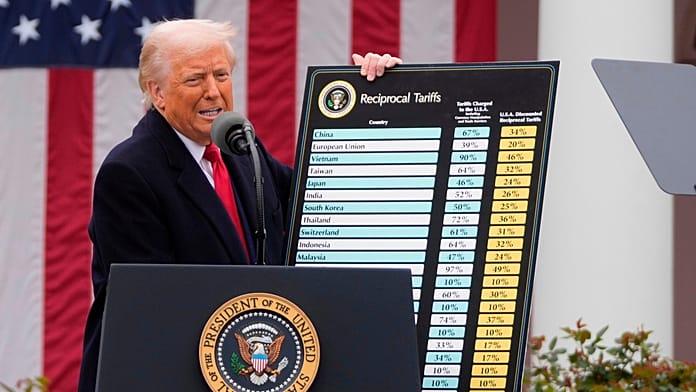
US imposes new tariffs on dozens of countries over forced labour claims The newly-announced tariffs, ranging from 10 to 12.5, will replace expiring global tariffs on Friday announced by Trump earlier this year.
euronews · about 5 hours ago

Trump administration announces new tariffs on more than 80 countries, claiming failed forced labor enforcement – US politics live
bluesky_The Guardian · about 5 hours ago

Trump to impose forced labor duties on Friday as temporary 10 US tariffs expire reut.rs/3RbbAfz
bluesky_Reuters · about 5 hours ago
USA kündigen neue Zölle gegen 60 Handelspartner an
orf.at · about 6 hours ago

„Umfassendste Maßnahme, die die USA je ergriffen haben – Trump verhängt neue Zölle gegen 60 Länder Wegen angeblich unzureichender Maßnahmen gegen Zwangsarbeit kündigt die US-Regierung Zölle auf die Einfuhren von 60 Ländern an. Darunter fallen auch Produkte aus der EU. Kanada prüft bereits Vergeltungsmaßnahmen.
welt.de · about 6 hours ago
Paragraf 301: USA kündigen neue Zölle gegen 60 Handelspartner an Der US-Präsident kann nicht nachgeben: An diesem Freitag läuft der gesetzliche Rahmen für Trumps globale Zölle aus. Nun hat er eine neue Grundlage für Importgebühren gefunden.
handelsblatt · about 6 hours ago
Trump finalizes new tariffs on dozens of countries The announcement comes ahead of the Friday expiration of a current 10 percent global duty.
politico.eu · about 6 hours ago