
Senate defies Trump: Passes War Powers Resolution to end Iran hostilities

Story Timeline
3 months · 11 summary articles
The U.S. Senate delivered a historic rebuke to President Donald Trump on Tuesday, voting 50-48 to pass a War Powers Resolution demanding an immediate end to American military hostilities against Iran unless Congress explicitly authorizes further action. The nonbinding measure, which the House approved earlier this month, marks the first time both chambers of Congress have jointly moved to constrain a sitting president’s war powers in the five-month-old conflict. Four Republican senators joined all 48 Democrats in defiance of Trump’s escalating campaign, a rare bipartisan challenge that underscores mounting unease even within the president’s own party.
The resolution arrives as Washington and Tehran edge toward a fragile 60-day ceasefire mediated by Qatar and Pakistan, with technical talks concluded in Switzerland on Tuesday. Deputy Iranian Foreign Minister Kazem Gharibabadi confirmed agreements to establish working groups and implementation mechanisms, signaling progress toward a broader interim peace accord. Yet the two sides remain at odds over nuclear inspections and the disposition of frozen assets, with Trump claiming Tehran had agreed to “inspections into infinity” while Iran’s government denied any such concession.
The Senate vote follows Trump’s furious response to congressional interference, dismissing the resolution as “a poorly timed and meaningless vote” and vowing to act unilaterally if Iran violates the emerging framework. Speaking from the White House, he reiterated that the Strait of Hormuz remains open and warned that Iran will never acquire nuclear weapons, while criticizing NATO allies for failing to support U.S. operations. Secretary of State Marco Rubio separately announced Washington will negotiate directly with Lebanon’s sovereign government on Israel-Lebanon issues, explicitly separating those talks from the U.S.-Iran framework and reaffirming that Iran cannot legally impose tolls on the strategic waterway.
The resolution, which does not require Trump’s signature, reflects broader regional shifts as Israel and Lebanon begin negotiations in Washington under U.S. auspices. It also intensifies pressure on the administration to formalize a durable ceasefire, even as Trump’s rhetoric suggests he remains prepared to resume military action if negotiations falter. With both chambers now on record opposing unilateral executive war-making, the measure sets the stage for a potential constitutional confrontation over the balance of power between the presidency and Congress in matters of war and peace.
Follow us for live European news
- 2
- 1
- 1
- 1
- 1
- 1
2 further sources not geolocated
Articles

Senate Rebukes Trump with War Powers Resolution on Iran ConflictIn a historic move, the Senate has passed a War Powers Resolution to end US hostilities in Iran, with a 50-48 vote that marks the first time both chambers of Congress have taken a stand against the conflict. The resolution, which doesnt require the Presidents signature, is a significant rebuke to Trump and a major step… #WarPowersResolution #IranConflict #NationalSecurity #Geopolitics
mastodon bot · 2 months ago

#Iran #USA The US Senate approved a war powers resolution to block military action against Iran. Subscribe to @OSINTdefender Chat room
telegram bot · 2 months ago
Trump says Iran sanctions relief will aid US farmers US President Donald Trump said on Monday that any sanctions relief granted to Iran would largely benefit American farmers, warning that Tehran must honor its commitments under a newly signed 60-day negotiating framework or face consequences while claiming the Strait of Hormuz is now fully open.
yenisafak · 2 months ago
US ends unrestricted operations authorization for Israel in Lebanon The United States has informed Israel that authorization for unrestricted military operations in Lebanon has expired, according to a Channel 13 report on Monday, as President Donald Trump imposes new constraints on Israeli actions across multiple arenas despite Prime Minister Benjamin Netanyahus claims of complete battlefield freedom.
yenisafak · 2 months ago
Irans chief negotiator in Oman for Hormuz talks Irans Parliament Speaker Mohammad Bagher Qalibaf and top diplomat Abbas Araghchi arrived in Muscat on Monday for consultations on a new framework for managing the Strait of Hormuz, following high-stakes negotiations with US officials in Switzerland under Pakistani and Qatari mediation.
yenisafak · 2 months ago
Iran announces technical talks with US concluded in Switzerland Deputy Foreign Minister Kazem Gharibabadi announced that technical negotiations with the United States concluded in Burgenstock, Switzerland, with agreements to establish working groups and implementation mechanisms, advancing Qatari- and Pakistani-mediated efforts to end the war.
yenisafak · 2 months ago
Lebanese president, US discuss trilateral cell with Iran to cement ceasefire Lebanese President Joseph Aoun discussed with US Vice President JD Vance and Secretary of State Marco Rubio the formation of a trilateral mechanism with Iran to consolidate the fragile ceasefire, with arrangements for the cell currently under study, according to a statement from Beirut.
yenisafak · 2 months ago
Irans president hails Pakistan ties, rules out missile talks Masoud Pezeshkian said on Tuesday that recent developments have demonstrated the durability of Tehrans relationship with Islamabad, as he ruled out any negotiations over Irans ballistic missile program during his first overseas trip since the war began.
yenisafak · 2 months ago
Fifth round of Lebanon-Israel talks opens in Washington US Counselor Dan Holler and Assistant Defense Secretary Daniel Zimmerman opened the fifth round of Lebanon-Israel negotiations at the State Department on Tuesday, aiming to secure a comprehensive peace agreement to end the cycle of violence as Israeli attacks on Lebanon have killed more than 4,100 people since early March.
yenisafak · 2 months ago
Ben-Gvir: US very naive on Iran, Israel may act alone against Tehran Israeli National Security Minister Itamar Ben-Gvir called the US very naive for believing Iran will abandon its nuclear program, hinting Israel may act alone against Tehran. He said no circumstances could force Israel to follow a friends dictates. His remarks come amid US-Israel tensions over Lebanon and the ongoing US-Iran peace negotiations.
yenisafak · 2 months ago
Syrias principled Lebanon stance... The first warning signal came last week from Hezbollah Secretary-General Naïm Qassem: he stated that the US is pressuring Syria to carry out a military intervention in Lebanon alongside Israel, but that the new Syrian administration has resisted this. Subsequently, some reports in the American press confirmed that President Trump had expectations from Syria in this direction. Finally, Syrian President Ahmad al-Sharaa officially announced in a detailed interview with Mashhad TV that they have no
yenisafak · 2 months ago
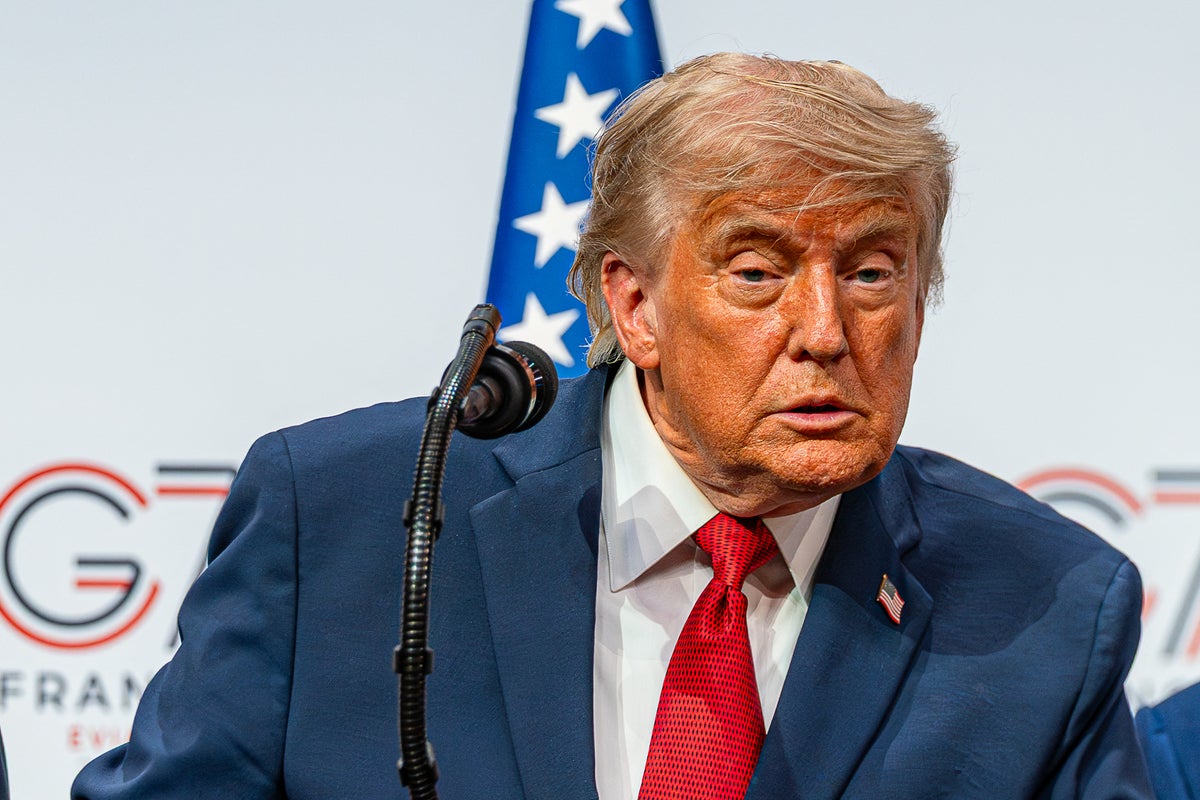
Iran-US war latest: Trump says Tehran willing to give us anything as Senate votes to block his military action Iran has denied that it has agreed to the inspections and warned against exaggerations
independent · 2 months ago
Senate majority votes to stop US war against Iran On Tuesday, a Senate majority voted 50-48 to stop the U.S. war against Iran. The proposal requires President Donald Trump to ensure that American forces do not fight against Iran unless military operations are approved by Congress. The other chamber of Congress, the House of Representatives, has already voted for the proposal. Due to the […]
cphpost · 2 months ago
Poll: Trumps popularity hits low after Iran deal An Ipsos poll for Reuters shows that many US voters believe the war against Iran was not worth the cost, and 35 percent feel the US is in a weaker position than before. Meanwhile, President Donald Trumps popularity has hit a term-low of 34 percent. Although Trump and Iran signed a framework agreement last week, […]
cphpost · 2 months ago
Qatar says US-Iran hotline essential to reopen Strait of Hormuz Prime Minister Sheikh Mohammed says Gulf state will resume normal LNG production within weeks
financial times · 2 months ago
Rubio: US to deal directly with Lebanon, separate from Iran deal US Secretary of State Marco Rubio stated that Washington will negotiate directly with Lebanons sovereign government on Lebanon-Israel issues, separate from the US-Iran framework. He reaffirmed that Iran cannot charge tolls in the Strait of Hormuz under international law, and said any investment in Iran would depend on progress on security issues.
yenisafak · 2 months ago
Qatari PM visits Oman after Iran-Hormuz talks as mediation continues Qatari Prime Minister Sheikh Mohammed bin Abdulrahman Al Thani arrived in Muscat for talks following a new agreement between Oman and Iran on navigation in the Strait of Hormuz. The visit comes as Qatar continues its mediating role between Tehran and Washington toward a lasting peace agreement.
yenisafak · 2 months ago
US Senate joins House in voting to halt Iran war, rebuking Trump The U.S. Senate backed legislation on Tuesday directing President Donald Trump to halt U.S. military action against Iran, the latest rebuke of the Republican president from an increasingly restive Congress. The Senate voted 50-48 in favor of the war powers resolution, which passed the House of Representatives early this month, reflecting growing concern even among […]
cyprus mail · 2 months ago
Auch Republikaner richten sich gegen den Präsidenten: US-Senat stimmt gegen Trumps Vorgehen im Iran Rund drei Wochen nach dem Repräsentantenhaus hat am Dienstag auch der Senat für ein Ende des Iran-Kriegs gestimmt. Trump verglich den Krieg mit einem Boxkampf.
tagesspiegel · 2 months ago
Irans Pezeshkian warns US talks need full commitment Masoud Pezeshkian said the success of negotiations with Washington hinges on strict adherence to the Islamabad Understanding, warning that deviation from agreed terms undermines diplomatic progress achieved during Sundays talks in Switzerland and could derail efforts to end the war in Lebanon and reopen the Strait of Hormuz.
yenisafak · 2 months ago
Iran excludes missile program from US talks, bars IAEA inspections Irans Foreign Ministry announced Tuesday that Tehrans missile capabilities were never on the table during negotiations with Washington in Switzerland and explicitly ruled out granting International Atomic Energy Agency inspectors access to nuclear facilities damaged during the recent conflict with the US and Israel.
yenisafak · 2 months ago
Israel not party to US-Iran talks, will continue Lebanon operations: Smotrich Israeli Finance Minister Bezalel Smotrich said on Tuesday that Israel is not a party to negotiations between the United States and Iran, vowing that offensive operations in Lebanon will continue until Hezbollah is fully dismantled rather than merely disarmed.
yenisafak · 2 months ago
Türkiye can once again change the course of history! If the US and Iran reach a real agreement in the Swiss talks, what kind of power map will emerge in the region? Will Iran, weakened by war and with its regional power broken, gain strength, or will it remain a weakened state confined to its own mainland? Or will it be marketed as a state that "won a victory against the US"? What will happen to the relationship between the Gulf countries, which suffered heavy Iranian attacks, and Iran after this? Will the Gulf Arab states realize that the US will
yenisafak · 2 months ago
Cold shoulder at peace talk 🇶🇦🇺🇸At the US-Iran peace talks held near Lake Lucerne in Switzerland, Qatari Foreign Minister Mohammed bin Abdulrahman Al-Thani ignored US Vice President J.D. Vance upon entering the room.It was notable that Al-Thani shook hands with Pakistani Prime Minister Shehbaz Sharif and Army Chief of Staff Asim Munir but left Vance, Trumps right-hand man, empty-handed.The talks ended inconclusively after the Iranian delegation, led by Foreign Minister Abbas Araghchi, left the room following threats from Trump.
yenisafak · 2 months ago
Netanyahu says Israel must break free from dependence after tensions with Trump administration Israeli Prime Minister Benjamin Netanyahu said Israel must reduce its reliance on foreign weapons and build independent military capabilities amid disagreements with the Trump administration over the US-Iran agreement. The remarks came after US Vice President JD Vance sharply criticized Israeli ministers for opposing the deal, warning them not to attack the only powerful ally Israel has.
yenisafak · 2 months ago
Iranian president arrives in Pakistan on first overseas trip since war Iranian President Masoud Pezeshkian arrived in Islamabad for his first overseas visit since the US-Israel war began in February. He was welcomed by Pakistans President Zardari and Prime Minister Sharif. The visit aims to convey Irans gratitude for Pakistans mediation efforts and to discuss trade, energy, border security, and regional cooperation.
yenisafak · 2 months ago
Trump: If Iran violates agreement, Ill do what I have to do President Trump warned that if Iran fails to comply with the US-Iran agreement, he will take whatever action is necessary. He confirmed the Strait of Hormuz is now open and emphasized that Iran will never possess nuclear weapons. He also criticized NATO allies for not supporting the US during the Iran conflict, saying they were not there for us.
yenisafak · 2 months ago
Trump says Iran wrong to deny agreeing to inspections US President Donald Trump on Tuesday insisted that Tehran will allow nuclear inspectors into the country despite its denials, saying the inspectors will arrive "at an appropriate time" while dismissing Iranian claims that contradict Vice President JD Vances announcement of a breakthrough agreement.
yenisafak · 2 months ago
US Senate passes War Powers Resolution to end Iran hostilities The Senate voted 50-48 to adopt a nonbinding resolution directing President Trump to end military action against Iran unless Congress authorizes further hostilities. Four Republicans joined Democrats in support. The measure is largely symbolic as the US and Iran have already reached an interim peace agreement mediated by Pakistan and are engaged in technical talks under a 60-day ceasefire.
yenisafak · 2 months ago
US Congress Passes War Powers Bill To End Iran Conflict As the US-Israeli war with Iran continues to impact and shape the region, journalists from RFE/RLs Central Newsroom and Iranian service, Radio Farda, deliver ongoing updates and analysis.
radio free europe · 2 months ago