
Swedish Public Health Agency rebuts claims its existential health work lacks evidence

The Swedish Public Health Agency’s evidence-based approach to public health work is not “fluffy,” as some critics have claimed, but grounded in rigorous data, according to a final rebuttal published today by agency analyst Rasmus Carlsson. Writing in *Svenska Dagbladet*, Carlsson defends the agency’s recent mapping of “existential health”—a concept championed by infectious disease specialist Magnus Gisslén—as a necessary step toward addressing societal well-being beyond traditional medical metrics.
The debate erupted after Gisslén publicly questioned whether the agency’s work on existential health was sufficiently evidence-based. In response, the Public Health Agency conducted a comprehensive review of available research, Carlsson writes, ensuring that its recommendations are rooted in peer-reviewed studies and validated methodologies. “This is not about ideology or vague aspirations,” he states. “It is about identifying what actually works to improve public health outcomes.”
The agency’s initiative comes amid growing recognition that mental and social factors—such as purpose, community belonging, and resilience—play a critical role in overall health. While critics have dismissed the focus on existential health as “fluffy” or unmeasurable, Carlsson counters that validated assessment tools and longitudinal studies now exist to quantify these dimensions. The agency’s mapping exercise, he argues, provides a foundation for targeted interventions in schools, workplaces, and local communities.
The timing of the debate is significant, as Sweden faces rising rates of burnout, youth disengagement, and social isolation. Earlier this month, the Finnish Blood Service launched a campaign urging donors of foreign descent to address shortages of rare blood types, highlighting the intersection of public health and demographic diversity. Meanwhile, in Estonia, a high school student’s op-ed in *Postimees* questioned whether the country’s education system prioritizes exam results over creativity and character, reflecting broader concerns about youth well-being.
Carlsson’s rebuttal underscores a broader shift in public health policy across Europe, where governments are increasingly investing in preventive, holistic approaches. In the Netherlands, for example, health officials have warned against downplaying the “care gap,” emphasizing the need for equitable access to mental health services. Similarly, in Germany, a study published today in *Süddeutsche Zeitung* found that young people are disproportionately burdened by recent welfare reforms, which require them to deplete savings—including private pensions—from day one.
As the Public Health Agency moves forward with its existential health framework, the debate is far from settled. But Carlsson’s defense makes clear: this is not fluff. It is a deliberate, evidence-based effort to address the root causes of societal malaise.
Follow us for live European news
- 4
- 3
- 2
- 2
- 1
- 1
- 1
- 1
1 further source not geolocated
Articles

Gerüchtekiller #12: Schläft man bei Vollmond schlechter? In Erzählungen zum Vollmond heißt es, er hätte negative Auswirkungen auf den Schlaf. Für alle Menschen, denen es vor dem Vollmond graut, haben wir nachgeforscht: Schläft man erwiesenermaßen schlechter in Vollmond-Nächten?
correctiv faktencheck · about 3 hours ago
HOMNE EESTI ⟩ Kelly Alliste: Kas me kasvatame edukaid noori või lihtsalt väsinud noori? Juba lapsena kuuleme, et meie oleme Eesti tulevik. Seda öeldakse meile koolis, tähtpäevadel ja poliitikute kõnedes. Kuid mida vanemaks saame, seda rohkem tekib küsimus, kas Eesti tõesti usub meisse või ootab lihtsalt paremaid tulemusi. Vahel tundub, et meid hinnatakse rohkem eksamitulemuste kui meie mõtete, loovuse või iseloomu põhjal. Nii kasvab põlvkond, kes pingutab rohkem kui kunagi varem, kuid tunneb end üha väsinumana, kirjutab Tallinna Järveotsa Gümnaasiumi õpilane Kelly Alliste.
postimees · about 3 hours ago
Eksperdid hoiatavad: neid esemeid ei tasu turvakontrollis oma kotist välja võtta Lennujaama turvakontroll võib olla kiire ja pingeline olukord, kus kiirustades juhtub kergesti, et mõni oluline ese jääb maha. Paljud reisijad asetavad oma asjad kontrollalusele mõtlemata, kuid just seal võivad kaduma minna kõige väärtuslikumad esemed.
postimees · about 3 hours ago
UURING ⟩ Magus närimiskumm teeb need toidud südamele kasulikumaks Värske uuring paljastab ootamatu seose: magusa närimiskummi närimine pärast köögiviljade söömist käivitab suus protsessid, mis pakuvad südamele ja veresoontele reaalset lisakaitset. See, mis toimub meie suus pärast tervislikku einet, on seega sama tähtis kui toit ise.
postimees · about 3 hours ago
Terve rida teaduslikke põhjendusi, miks on päikeseloojagu vaatamine teile kasulik Päikesetõusud ning -loojangud on meie igapäevaelu tavaline osa. Teadlased on aga kindlaks teinud, et neist osa saamine on inimese tervisele väga oluline. Sellel on aga sügavam põhjus – näiteks kogeme selle käigus üht emotsiooni, millel esmapilgul ei peaks olema inimese tervisega üldse sügavamat sidet.
postimees · about 3 hours ago
Extremelab: Här pressas människans fysik till det yttersta Kroppen blir tung. Blodet pressas ned i fötterna. Blodtrycket sjunker. Synfältet krymper.Så känns det att sitta i en humancentrifug och bli utsatt för nio gånger jordens tyngdkraft – 9g.Välkommen till Extremelab på Karolinska institutet.Här testas människans fysik till det yttersta. Här hittar du mer om medicin, hälsa och forskning!
expressen · about 3 hours ago
Zeldzame eeneiige vierling geboren in Veldhoven, jongens maken het goed In het Máxima MC in Veldhoven is in mei een eeneiige vierling geboren. De vier jongens en hun moeder maken het goed. Het ziekenhuis spreekt van een unieke gebeurtenis: een vierling is al extreem zeldzaam, maar een eeneiige vierling heeft het niet eerder meegemaakt.
nu.nl · about 3 hours ago
Landesbeauftragte: Debatte um Beauftragen-Ämter - Auch Polizei im Fokus Wie viele Beauftragte braucht das Land? Ihre Rollen werden kritisch überprüft. Auch das Amt der Polizeibeauftragten steht im Fokus.
tagesspiegel · about 3 hours ago
Longevity: „Die Wirkstoffe der Abnehmspritzen könnten das Altern verlangsamen Unsere Gene beeinflussen zu 30 Prozent die Lebenserwartung, sagt Alternsforscher Björn Schumacher. Und was ist mit den übrigen 70 Prozent? Das erklärt der Kölner Wissenschaftler im Interview.
handelsblatt · about 3 hours ago
GKV: Seit 30 Jahren Wettbewerb bei Krankenkassen – doch kaum ein Versicherter macht dabei mit Gesetzlich Versicherte wechseln ihre Krankenkasse selten, auch wenn sie immer teurer wird. Eine kleine Gruppe Wechselwilliger aber sorgt für härteren Wettbewerb zwischen den Kassen.
handelsblatt · about 3 hours ago
Smartphone im Urlaub: Was Reisende beachten sollten [premium] Das Smartphone ist im Urlaub oft unverzichtbar. Wer vor der Abreise die wichtigsten Einstellungen prüft, kann Kostenfallen vermeiden – und ist auch im Notfall besser vorbereitet. Eine Checkliste.
die presse · about 3 hours ago

Das STANDARD Quiz vom 30. Juni Montag bis Freitag: Das Quiz kombiniert Fragen zu aktuellen Nachrichten mit Allgemeinwissen. Wer regelmäßig liest und mitdenkt, ist klar im Vorteil.
der standard · about 3 hours ago

ME/CFS – MedUni Wien leitet EU-weites Millionen-Projekt "DISCOVER-ME" Die Multisyystemerkrankung ist eine Ausschlussdiagnose, weil es keine klaren Biomarker dafür gibt. Dadurch dauert eine Diagnose bis zu fünf Jahre. Nun wird verstärkt geforscht
der standard · about 3 hours ago
Ce sunt oamenii? Niște sisteme de recunoaștere de modele statistice și mașini de predicție Noi, oamenii, avem un sentiment al excepționalității. Suntem diferiți și speciali comparativ cu restul viului. Dar, simplificând lucrurile, suntem doar niște sisteme de recunoaștere de modele statistice și mașini elevate de predicție. O abordare pragmatică.
adevarul · about 3 hours ago
Frauen länger im Krankenstand als Männer Unselbstständig beschäftigte Frauen weisen durchschnittlich mehr Krankenstandstage auf als Männer. Das geht aus dem „Fehlzeitenreport hervor, der am Dienstag vom Wirtschaftsforschungsinstitut (WIFO) veröffentlicht wurde. Mit 15,5 Fehltagen verbrachten sie 2025 knapp zehn Prozent mehr Tage im Krankenstand als Männer mit 14,1 Tagen. Insgesamt gingen die Krankenstände leicht zurück. Kurzkrankenstände nahmen zu.
orf.at · about 3 hours ago
Sozialstaat: Die Bürgergeld-Reform ist für junge Menschen eine Zumutung In der neuen Grundsicherung gilt: Menschen müssen vom ersten Tag an ran an ihr Erspartes. Also auch an ihre Altersvorsorge. Das benachteiligt all die, die kaum staatliche Rente erwarten dürfen – also vor allem die Jungen.
sueddeutsche · about 3 hours ago
Wolf urine could protect Swiss livestock Wolf urine could be used as a scent barrier to protect livestock from attack, according to Swiss researchers. Urine gives wolves provides important information about potential intruders. Alpha wolves with pups are particularly alert to this, as a study by the University of Neuchâtel shows. + How many wolves are good for Switzerland? The Swiss National Science Foundation (SNSF) announced on Tuesday that the studys findings represent a first step towards understanding what attracts and repels wolves. For the study, researchers observed 13 wolves in five packs at four Swiss wildlife parks. Between April and June 2024, they placed odour stations containing wolf urine outside the enclosures. They used human urine for comparison. The animals approached the stations, sniffed at them and, in some cases, left their own urine or faecal markings. This behaviour occurred around 13 times more frequently with wolf urine than with human urine. The alpha wolves reacted particularly strongly. They ...
swissinfo · about 3 hours ago
KAS TEADSID? ⟩ Need 3 kohta kodus jäävad peaaegu kõigil puhastamata Puhtana näiv kodu ei pruugi tegelikult olla nii hügieeniline, kui esmapilgul tundub. Koristusspetsialistid toovad välja kolm kohta, mis jäävad sageli unarusse, kuigi just sinna koguneb kõige rohkem mustust.
postimees · about 3 hours ago
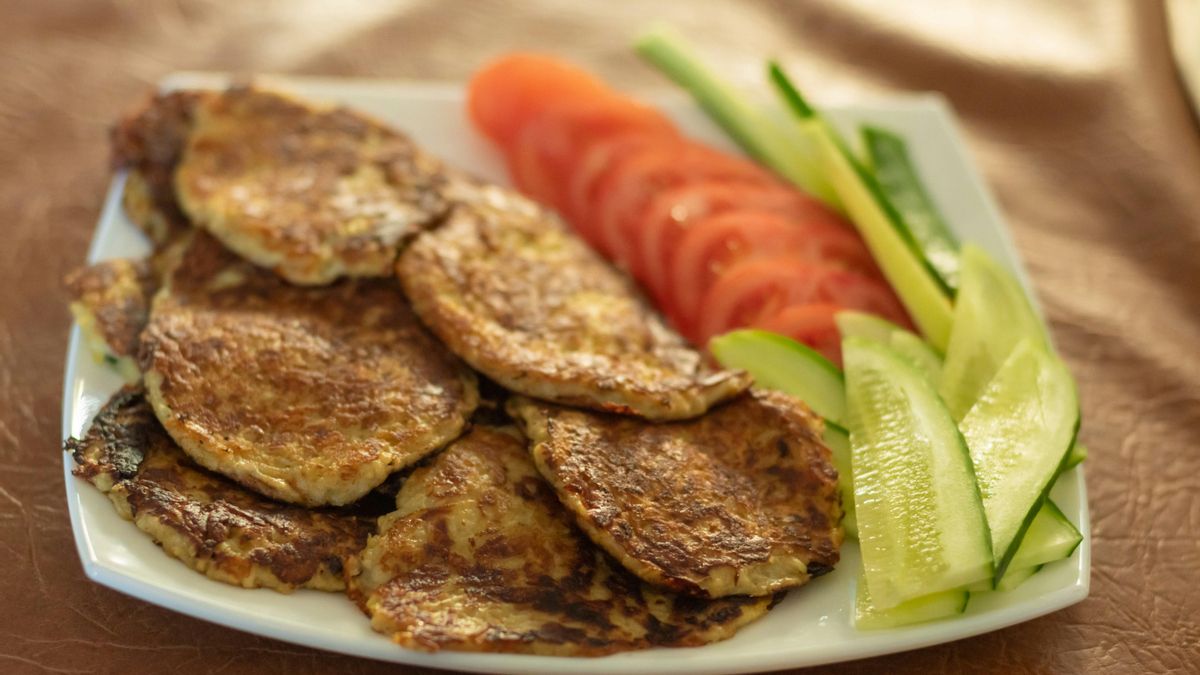
Cómo hacer las berenjenas a la milanesa para que queden jugosas por dentro y crujientes por fuera Cómo aplicar técnicas de deshidratación previa y un empanado técnico rico en fibra para lograr el contraste perfecto sin excesos de grasaQué es la microbiota intestinal y por qué se la considera una aliada clave de la salud La berenjena a la milanesa se ha consolidado como uno de los platos de corte vegetal más recurrentes gracias a su capacidad para emular la estructura de los filetes de carne tradicionales. Sin embargo, el principal desafío en su preparación radica en el equilibrio térmico: conseguir que el corazón de la hortaliza quede tierno y meloso sin que el rebozado exterior absorba un exceso de grasa o pierda su firmeza. Lograr este contraste perfecto entre un interior jugoso y una cobertura milanesa crujiente no depende del azar, sino de la aplicación de técnicas precisas de deshidratación previa y del control absoluto de la temperatura durante la fritura o el horneado. De acuerdo con los datos de la Fundación Española de la Nutrición (FEN), la berenjena es un ingrediente clave en las dietas de control calórico debido a su altísimo porcentaje de agua, lo que se traduce en un aporte energético bajo en comparación con otras hortalizas. A nivel macro y micronutricional, su valor radica principalmente en su aporte de proteínas y compuestos bioactivos como los flavonoides; asimismo, presenta un contenido fibroso medio concentrado de manera específica en la piel y las semillas. Precisamente en la epidermis del fruto se localiza la nasunina, una antocianina con una notable actividad antioxidante. Cabe señalar que, como integrante de la familia de las solanáceas, contiene solanina (un alcaloide amargo y tóxico común en los frutos inmaduros), una sustancia que disminuye hasta desaparecer por completo con el calor. De este modo, técnicas como la fritura o el horneado anulan cualquier riesgo y transforman su pulpa esponjosa en un bocado totalmente seguro. La receta de las berenjenas a la milanesa, paso a paso La berenjena tiene 85 gramos por cada 100 gramos de producto fresco La milanesa de berenjena se ha consolidado en el recetario contemporáneo como una alternativa vegetal de alta aceptación gracias a su consistencia carnosa y su versatilidad culinaria. El éxito de esta elaboración radica en un rebozado técnico enriquecido con avena, curry y semillas, diseñado no solo para aportar un matiz aromático sutilmente picante, sino para crear una barrera térmica que proteja la jugosidad interior del producto. Apunta los siguientes ingredientes para dos comensales: Un par de berenjenas medianas 100 gramos de avena en copos 30 gramos de pan rallado 40 gramos de mix de semillas (sésamo, chía y lino molido) 10 gramos de curry molido 5 gramos de perejil seco Un huevo 5 gramos de sal gruesa 5 gramos de sal fina 10 mililitros de aceite de oliva virgen extra 10 mililitros de sirope de agave Una vez que tengas listos los ingredientes, el primer paso es cortar las dos berenjenas. Puedes hacerlo en rodajas transversales o a lo largo, pero vigila que mantengan un grosor adecuado para que no se quemen ni se sequen en exceso. Sálalas por ambos lados con la sal gruesa y déjalas reposar al menos 10 minutos. Este paso es clave para que suden y pierdan por completo el toque amargo original de su pulpa porosa. Mientras tanto, en un plato hondo abre el huevo, condiméntalo con el perejil seco y bátelo unos segundos con ayuda de un tenedor hasta que quede bien espumoso. En otro plato hondo aparte, vuelca los 100 gramos de avena en copos junto el pan rallado, el mix de semillas (sésamo, chía y lino molido) y el curry. Intégralo todo bien con una cuchara para tener el rebozado especial listo. Cuando las berenjenas hayan sudado, coge unas servilletas de papel de cocina y sécalas a conciencia, retirando bien el excedente de agua y de sal superficial. Toma cada porción, báñala en el huevo batido por ambos lados asegurándote de que empape bien y rebózala en la mezcla de avena, semillas y curry presionando ligeramente con los dedos para garantizar una adherencia homogénea de los elementos secos. Finalmente, las milanesas se disponen de manera ordenada sobre una bandeja de horno previamente encasillada o pulverizada con el aceite de oliva virgen extra. La cocción se realiza en horno precalentado a 180 °C durante un tiempo total de 30 minutos. Para asegurar el máximo crujiente sin quemar las semillas, se hornean primero durante 20 minutos por una cara, se les da la vuelta con una espátula y se concluyen los últimos 10 minutos por el reverso hasta obtener un tono dorado uniforme. A la hora de servirlas, añade por encima unos hilos de sirope de agave y un poco de perejil fresco. Esto es totalmente opcional y a gusto del comensal, pero debes saber que es el toque perfecto para lograr un dulce y sorprendente contraste con el punto picante del curry. Debes tener en cuenta que, según el tamaño exacto de la verdura que utilices, puede que te falte o te sobre un poco de rebozado o de huevo. Si ves que el huevo no es suficiente para cubrir todas las láminas, no hace falta que gastes otro; una opción muy útil es aligerar la mezcla añadiendo un chorrito de leche al plato y batiendo de nuevo. Si buscas una alternativa más informal, es posible transformar este plato en un picoteo crujiente para compartir si en lugar de cortar la berenjena en rodajas grandes la cortas en bastones alargados, imitando a las patatas fritas. Al ser piezas más finas, solo tendrás que reducir el tiempo de horneado a unos 20 minutos en total para evitar que se sequen, acordándote de mover la bandeja a mitad de la cocción para que se doren de forma uniforme por todos sus lados y conseguir así el snack vegetal definitivo.
eldiario.es · about 3 hours ago
Transgenderbehandeling tieners is zorgvuldig, onderzoek nodig naar spijtgevallen Er is meer onderzoek nodig naar spijt en het stoppen met transgenderbehandelingen bij jongeren, zegt de Gezondheidsraad in een nieuw advies. Hoewel daarover nog veel onbekend is, ziet de raad geen reden om hormoonbehandelingen voor minderjarigen af te raden.
nu.nl · about 3 hours ago
„E-Autos müssen im Straßenverkehr besser wahrnehmbar sein E-Autos verursachen häufiger Unfälle mit Fußgängern, da sie schlechter hörbar sind. Zudem kommt es öfter zu Pedalverwechslungen. Brände spielen laut Unfallforschung keine Rolle. „Ist kein Thema, dafür aber die Wahrnehmbarkeit im Straßenverkehr, sagt Kristin Zeidler vom GDV.
welt.de · about 3 hours ago

Die rätselhafte Kaufzurückhaltung der Reichen wird zum Problem für Deutschland Der private Konsum ist eine der wichtigsten Stützen des Wirtschaftswachstums in Deutschland. Doch angesichts vieler Krisen halten die Bürger lieber ihr Geld zusammen. Schlechte Stimmung gibt es vor allem in zwei Bevölkerungsgruppen.
welt.de · about 3 hours ago

„Dann hat sich ein gesunder Mann einen dauerhaften Testosteronmangel geschaffen Viele Männer sorgen sich vor einem zu niedrigen Testosteronwert. Wie viel ist zu wenig – und welche Anzeichen sind wirklich Grund zur Sorge? Hormonspezialist Roger Schneiter behandelt Männer, die an einem Testosteronmangel leiden – oder eben nicht.
welt.de · about 3 hours ago
Führungskräfte: Karriereoption Staat: So gelingt der Quereinstieg Der Staat sucht Führungskräfte. Was Umsteiger aus Unternehmen über Gehalt, Bewerbungsprozess und Arbeitsweise wissen sollten – und warum der Staatsdienst nicht für jeden Manager etwas ist.
handelsblatt · about 3 hours ago
Steuern: Nießbrauch bei Lebensversicherungen: Wann die Schenkung steuerlich heikel ist Sie sind ein beliebtes Steuersparmodell: Schenkungen mit Nießbrauchsvorbehalt. Der Bundesgerichtshof entschied allerdings: Bei Lebensversicherungen funktioniert das nur verzögert.
handelsblatt · about 3 hours ago
Förslag: Polisen ska få avbryta brott i cybermiljö Polisen ska få ingripa i cybermiljö och störa och avbryta cyberbrott, föreslår regeringens utredare.Det kan till exempel handla om att gå in och stoppa gängrekrytering av barn.
svenska dagbladet · about 3 hours ago
Vi stärker arbetet mot trafficking Om brottsoffer inte identifieras, om kunskapen brister eller om stödet inte når fram i tid, då behöver arbetet mot människohandel stärkas. Det skriver jämställdhetsminister Nina Larsson i en replik.
svenska dagbladet · about 3 hours ago
In Hongkong kijken journalisten naar hun collegas in China voor lessen in de omgang met repressie Vijf jaar geleden sloot de kritische krant Apple Daily in Hongkong zijn deuren. Hoe staat het nu met de persvrijheid in het gebied? „Mensen weten niet hoe ze de risicos moeten inschatten.
nrc · about 3 hours ago
De wetenschappelijke basis voor genderzorg is wankel, maar de zorg zelf is toch zinnig, schrijft de Gezondheidsraad in een langverwacht rapport In een langverwacht rapport van de Gezondheidsraad, dat dinsdag is verschenen, wordt de wetenschappelijke basis voor genderzorg als wankel beoordeeld. Toch wordt die zorg zinnig bevonden. „De medicatie doet fysiek wat die moet doen […] En de behandeling lijkt effect te hebben op de mentale gezondheid van jongeren.
nrc · about 3 hours ago
AI-hamburger is én lekker én duurzaam – maar niet heus Is het lastig om een lekkere vleesarme hamburger te maken? Kunstmatige intelligentie kan wél een goed recept bedenken, dachten onderzoekers. Wat is het resultaat?
nrc · about 3 hours ago