Loading…
 Saturday, September 26Saturday, September 26
4 months · 2 summary articles
Russia ramps up war spending as Bulgaria hikes debt to fund defense
Global nuclear weapons spending surges to record 119 billion in 2025
Global spending on nuclear weapons hit an all-time high in 2025, rising 19 percent to $119 billion, according to the International Campaign to Abolish Nuclear Weapons (ICAN). The surge—equivalent to more than €3,200 every second—marks the largest annual increase since ICAN began tracking expenditures in 2020, underscoring a dangerous acceleration in the global arms race.
The United States led the surge, outspending every other nuclear-armed state combined, with total expenditures exceeding $50 billion. Russia followed, allocating an estimated $10.8 billion, while China’s budget reached $11.9 billion, according to ICAN’s latest report. The nine recognized nuclear powers—including the UK, France, India, Pakistan, and North Korea—collectively raised their outlays by $18.5 billion, with Israel’s spending also factored into the global total .
ICAN’s analysis highlights how these funds could address urgent global crises. “The $119 billion spent on nuclear weapons in 2025 could have ended world hunger or funded the UN’s annual budget for decades,” said Alicia Sanders-Zakre, ICAN’s policy and research coordinator. The campaign warns that the record investments reflect growing geopolitical tensions and a breakdown in arms control diplomacy.
Russia’s nuclear posture has come under particular scrutiny amid its war in Ukraine. In recent statements, Moscow has reiterated its willingness to use nuclear weapons if faced with an existential threat, raising alarms in Brussels and Washington. “The level of danger is increasing,” noted a senior analyst at the Stockholm International Peace Research Institute (SIPRI), pointing to the rapid modernization of arsenals across all major nuclear states .
Analysts attribute the spending surge to a combination of strategic competition, technological upgrades, and deteriorating arms control frameworks. The New START treaty, which limited U.S. and Russian nuclear deployments, remains in limbo, while China continues to expand its arsenal at an unprecedented rate. “We are standing on the brink of a new nuclear arms race,” warned a report by the International Institute for Strategic Studies (IISS) .
With no immediate signs of de-escalation, the record expenditures signal a long-term shift in global security priorities. As nations prioritize deterrence over disarmament, the risk of miscalculation and accidental escalation grows. ICAN has called for urgent diplomatic action, urging states to redirect funds toward humanitarian and climate initiatives instead.
Follow us for live European news
2 further sources not geolocated

US leads record rise in spending on nuclear arsenals, campaign group says reut.rs/4xmhSJq
bluesky bot · 4 months ago

3200 Euro pro Sekunde: Weltweite Ausgaben für Atomwaffen 2025 auf Rekordwert gestiegen Mit den Ausgaben für Atomwaffen könnten laut ICAN der Welthunger beendet oder der UN-Haushalt jahrzehntelang finanziert werden. Wer investiert wie viel?
tagesspiegel · 4 months ago
Výdavky deviatich jadrových mocností sveta na atómový arzenál medziročne narástli na historické maximum 119 miliárd dolárov Celosvetové výdavky na jadrové zbrane stúpli v roku 2025 o rekordných 19 percent, čo predstavuje najvyššiu sumu od začiatku monitorovania v roku 2020. Do rebríčka najviac utrácajúcich krajín patrí oficiálna osmička štátov – USA, Čína, Británia, Rusko, Francúzsko, India, Pakistan a Severná Kórea –, ku ktorým sa pripočítavajú aj odhadované výdavky Izraela.
aktuality.sk · 4 months ago
Mehr als 3.200 Euro pro Sekunde in Atomwaffen investiert Nach Angaben von ICAN hat Russland mit 5.420 die meisten Atomwaffen, am zweiten Platz folgen die USA.
die presse · 4 months ago
Weltweite Ausgaben für Atomwaffen auf Rekordwert
orf.at · 4 months ago
European protest targets rearmament drive
gdeltproject.org · 4 months ago
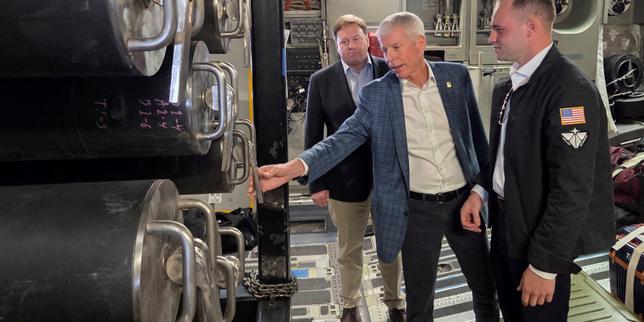
« Le niveau des dangers augmente » : les puissances nucléaires investissent massivement dans leurs arsenaux, selon de nouvelles études Lan dernier, les États-Unis ont dépensé à eux seuls davantage dans leur arsenal que lensemble des autres États dotés de larme nucléaire réunis, selon un rapport publié lundi.
le monde · 4 months ago
Russisk minister: Russland og Belarus står klar til å bruke atomvåpen Russland og Belarus er til enhver tid beredt til å bruke alle tilgjengelige midler, blant dem atomvåpen, sier Russlands…
aftenposten · 4 months ago

Ukraine - Krieg : Russland will notfalls auch Atomwaffen einsetzen
gdelt bot · 4 months ago