
Alan Greenspan, former Fed chair and "Maestro" of global finance, dies at 100

Alan Greenspan, the former chairman of the U.S. Federal Reserve whose nearly two-decade tenure shaped global finance and earned him the moniker "Maestro," died on Monday at the age of 100, his wife confirmed. The announcement, reported across international media on 22 June 2026, marks the end of an era in central banking and economic policy.
Born in New York in March 1926, Greenspan led the Federal Reserve from 1987 to 2006, guiding the U.S. economy through crises including the 1987 stock market crash and the dot-com bubble burst. His leadership during the 1990s boom earned him widespread acclaim as the architect of America’s longest peacetime expansion. Yet his legacy remains deeply contested. Critics, including many economists and policymakers, argue that his hands-off approach to financial regulation and prolonged low interest rates contributed to the conditions that precipitated the 2008 global financial crisis.
Greenspan’s influence extended far beyond Washington. As one of the most powerful figures in global finance, he was often described as an oracle whose words moved markets. His cryptic, sometimes rambling public statements—once likened to "dadaistic" prose—became legendary in financial circles. Yet his reputation as an infallible steward of the economy was irreparably damaged by the 2008 crisis, which unfolded just two years after he left office.
Tributes poured in following the news. International outlets described him variously as a "visionary," a "giant of finance," and a figure whose policies both fueled growth and sowed the seeds of instability. French newspaper *Le Monde* called him "the maestro of markets," while German broadsheet *Handelsblatt* noted his dual legacy: revered for steering the U.S. economy through the 1990s, yet later criticized for failing to act decisively against financial excess.
Greenspan’s later years were marked by declining health, including a Parkinson’s diagnosis. He remained a polarizing figure until the end, with some defending his belief in self-regulating markets and others condemning what they saw as a failure of oversight. His death closes a chapter in economic history, leaving behind a complex legacy of prosperity, crisis, and enduring debate over the role of central banks in modern capitalism.
- 5
- 3
- 2
- 2
- 1
- 1
- 1
- 1
- 1
- 1
- 1
- 1
- 1
- 1
- 1
3 further sources not geolocated
Articles

Ποιός ηταν ο Άλαν Γκρίνσπαν, ο αρχιτέκτονας της σύγχρονης αμερικανικής οικονομίας που σημάδεψε μια ολόκληρη εποχή Για σχεδόν 20 χρόνια βρισκόταν στο κέντρο του παγκόσμιου χρηματοπιστωτικού συστήματος - Ο πρώην πρόεδρος της Fed πέθανε στα 100 του χρόνια, αφήνοντας πίσω του μια κληρονομιά ισχύος, ανάπτυξης, αλλά και βαριάς αμφισβήτησης μετά την κρίση του 2008
protothema · about 23 hours ago
100 évesen meghalt Alan Greenspan A Fed élén töltött húsz éve alatt az amerikai pénzügyek „deus ex machinájaként emlegették.
444.hu · about 23 hours ago
Va in bagno durante il concerto, poi la tragedia: 51enne precipita nel vuoto al Madison Square Garden e muore. Era al live dei Goose assieme alla moglie È morto dopo essere precipitato da una passerella sospesa allinterno del Madison Square Garden durante un concerto della band rock Goose. Paul Kueker, 51enne del Connecticut e padre di due figli, è precipitato da una posizione elevata della celebre arena di New York, identificata da più fonti nel Chase Bridge, cioè la passerella sospesa realizzata […] Larticolo Va in bagno durante il concerto, poi la tragedia: 51enne precipita nel vuoto al Madison Square Garden e muore. Era al live dei Goose assieme alla moglie proviene da Il Fatto Quotidiano.
il fatto quotidiano · about 23 hours ago

Mort dAlan Greenspan, le maestro de léconomie digne "du bon Dieu dans un bon jour"
lexpress · about 23 hours ago

Die Reichmacher-Lehren des Meisters der Märkte Alan Greenspan geht als einer der mächtigsten und wichtigsten Notenbankchefs in die Geschichte ein. Denn seine Maßnahmen und auch Irrtümer hatten historische Auswirkungen. Nun ist er im Alter von 100 Jahren gestorben.
welt.de · about 23 hours ago
Federal Reserve: Notenbank: Früherer Fed-Chef Greenspan gestorben Er galt jahrelang als Orakel und Maestro: Über 18 Jahre lang herrschte Alan Greenspan als Zentralbankchef über die Zinspolitik der weltgrößten Wirtschaftsmacht.
tagesspiegel · about 23 hours ago
Federal Reserve: Einst der mächtigste Geldpolitiker: Alan Greenspan ist tot Er galt als Orakel, wird aber auch mit dem Finanzcrash 2008 in Verbindung gebracht: Lange herrschte Alan Greenspan als Notenbankchef über die Zinspolitik der weltgrößten Wirtschaftsmacht.
handelsblatt · about 23 hours ago
Kuolleet | Alan Greenspan on kuollut Yhdysvaltain keskuspankin yksi pitkäaikaisin pääjohtaja Greenspan sairasti Parkinsonin tautia.
helsingin sanomat · about 23 hours ago
USA:s mäktigaste har gått ur tiden Alan Greenspan går till historien som en av USA:s mest legendariska centralbankschefer. Men hans talanger sträckte sig långt utanför ekonomins värld.
svenska dagbladet · about 23 hours ago
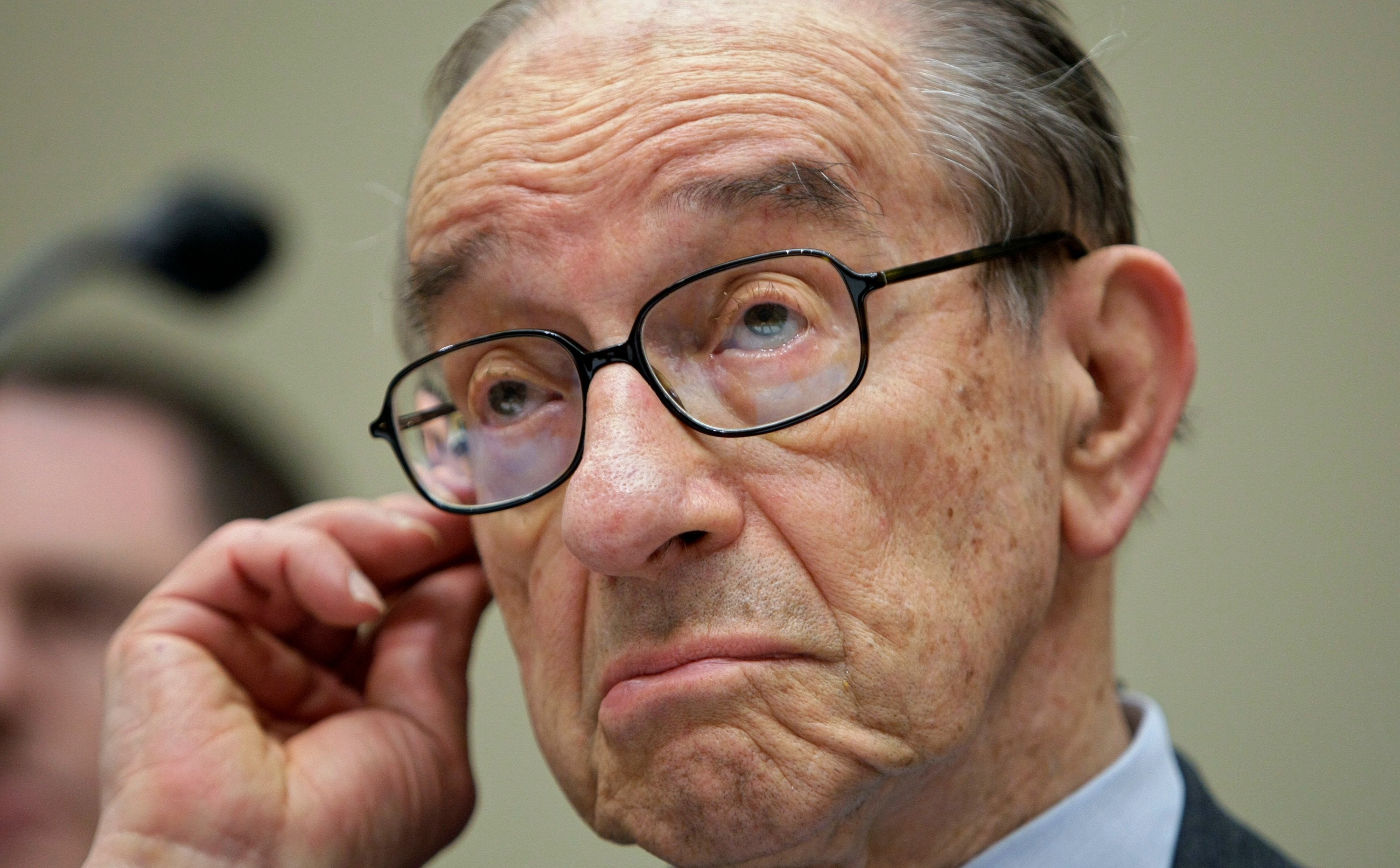
Muere Alan Greenspan, ex presidente de la Reserva Federal de EEUU, a los 100 años Nacido en marzo de 1926 en Nueva York, Greenspan estuvo al frente de la FED entre 1987 y 2006 Leer
elmundo · about 23 hours ago
US-Notenbank Fed: Er sprach in rätselhaften Sätzen, auch mal mit dadaistischen Zügen Alan Greenspan führte 19 Jahre lang die US-Notenbank und galt als Orakel. In seiner Amtszeit sorgte er für niedrige Zinsen, die Börsen boomten, danach kam die Finanzkrise. Jetzt ist er mit 100 Jahren gestorben.
sueddeutsche · about 23 hours ago
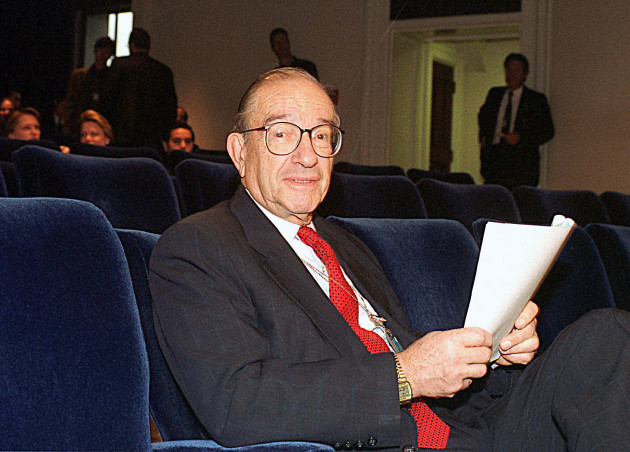
Former US Federal Reserve chief Alan Greenspan dies aged 100 Greenspan presided over a period of American economic expansion but was later faulted for failing to rein in markets ahead of the 2008 global financial crisis.
thejournal · about 23 hours ago
Former US Federal Reserve Chairman Alan Greenspan dies at age 100 Greenspan presided over economic turbulence, including crises and booms, during his 18-year tenure as Fed chairman.
aljazeera · about 23 hours ago

Alan Greenspan was one of the most influential—and controversial—U.S. Federal Reserve chairs to ever serve in that position. He died on Monday at age 100.
bluesky bot · about 23 hours ago
Alan Greenspan, US Fed maestro through years of boom and bust, dies at 100 Alan Greenspan, hailed as the greatest Federal Reserve chairman when he retired in 2006 but derided for a severe financial crisis that followed barely two years later, died on Monday aged 100, his wife said. Greenspan, who exerted a powerful influence on the U.S. economy during his tenure at the helm of the Fed from […]
cyprus mail · about 23 hours ago
Umrl "maestro" ameriškega gospodarskega razcveta v devetdesetih letih Alan Greenspan V starosti 100 let je umrl dolgoletni predsednik ameriške centralne banke Alan Greenspan, ki je Fed vodil med izjemnim razcvetom gospodarstva ZDA, a bil tarča kritik ob svetovni finančni krizi leta 2008, ker naj ne bi naredil dovolj za njeno preprečitev.
rtv slovenia · about 23 hours ago

Surnommé le Maestro des marchés, Alan Greenspan, ex-patron de la Réserve fédérale américaine, est décédé Ce géant de la finance américaine aura présidé la Fed pendant 18 ans : il aura vécu le krach financier de 1987 et léclatement de la bulle Internet. ...
la libre · about 23 hours ago
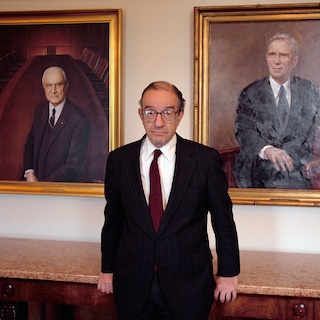
Alan Greenspan, de Maestro van de Fed, overleden: een groot visionair die enorme autoriteit genoot
de morgen · about 23 hours ago

Alan Greenspan, ancien président de la Réserve fédérale et apôtre de lautorégulation des marchés, est mort Patron de la banque centrale des Etats-Unis pendant près de vingt ans, léconomiste américain est mort lundi 22 juin, à lâge de 100 ans.
le monde · about 23 hours ago
Ehemaliger Chef der US-Notenbank: Alan Greenspan ist tot Alan Greenspan ist am Montag im Alter von 100 Jahren gestorben. Seine Amtszeit als Vorsitzender der Fed gilt als legendär.
tagesspiegel · about 23 hours ago
Ex-Chef der US-Notenbank: Alan Greenspan gestorben Von 1987 bis 2006 leitete Alan Greenspan die US-Notenbank Federal Reserve und erarbeitete sich dort den Titel „Orakel. Nun starb er mit 100 Jahren. mehr...
taz.de · about 23 hours ago
Alan Greenspan, cel mai influent guvernator al unei Bănci Centrale din epoca modernă, a murit la vârsta de 100 de ani Economistul american Allan Greenspan, care a condus Banca Centrală a Statelor Unite timp de aproape douăzeci de ani, a decedat luni, 22 iunie, la vârsta de 100 de ani, scrie Le Monde.
digi24 · about 23 hours ago
Odišla ikona americkej ekonomiky. Alan Greenspan, dlhoročný šéf Fedu, zomrel vo veku sto rokov Vo veku 100 rokov zomrel Alan Greenspan, muž ktorý formoval menovú politiku USA za štyroch prezidentov. Na čele Fedu stál v rokoch 1987 až 2006.
aktuality.sk · about 23 hours ago
Invloedrijke Fed-voorzitter wiens afkeer van marktingrijpen nog jarenlang nagalmde Alan Greenspan moest niets van marktingrijpen weten, maar werd toch voorzitter van de Amerikaanse centrale bank. Hij was zeer machtig maar vergaloppeerde zich aan de vastgoedzeepbel.
nrc · about 23 hours ago
Alan Greenspan ist tot: Der Notenbanker, der sich irrte [premium] Nachruf. Alan Greenspan war US-Notenbank-Chef von 1987 bis 2006. Er galt als „Maestro der Finanzwelt. Kritiker meinen aber, er habe den Grundstein für die Finanzkrise gelegt. Nun ist er 100-jährig gestorben.
die presse · about 23 hours ago

François Englert, einer der Väter des Higgs-Bosons, ist gestorben Englert erhielt 2013 gemeinsam mit Peter Higgs den Nobelpreis für Physik für die Entdeckung des Mechanismus hinter dem Higgs-Boson. Nun starb er im Alter von 93 Jahren
der standard · about 23 hours ago
Langjähriger Fed-Chef Greenspan 100-jährig gestorben
orf.at · about 23 hours ago
Federal Reserve: Notenbank: Früherer Fed-Chef Greenspan gestorben Er galt jahrelang als Orakel und Maestro: Über 18 Jahre lang herrschte Alan Greenspan als Zentralbankchef über die Zinspolitik der weltgrößten Wirtschaftsmacht.
handelsblatt · about 23 hours ago