Loading…
 Saturday, September 26Saturday, September 26
4 months · 2 summary articles
China woos Germanys Hidden Champions while fortifying Pacific routes
Xi Jinping strengthens ties with Kim Jong-un in Pyongyang summit
China’s President Xi Jinping rolled out the red carpet in Pyongyang on Tuesday, marking his first state visit to North Korea in seven years and sealing a fresh era of strategic alignment between Beijing and Pyongyang that analysts say is designed to counterbalance Washington’s influence in East Asia.
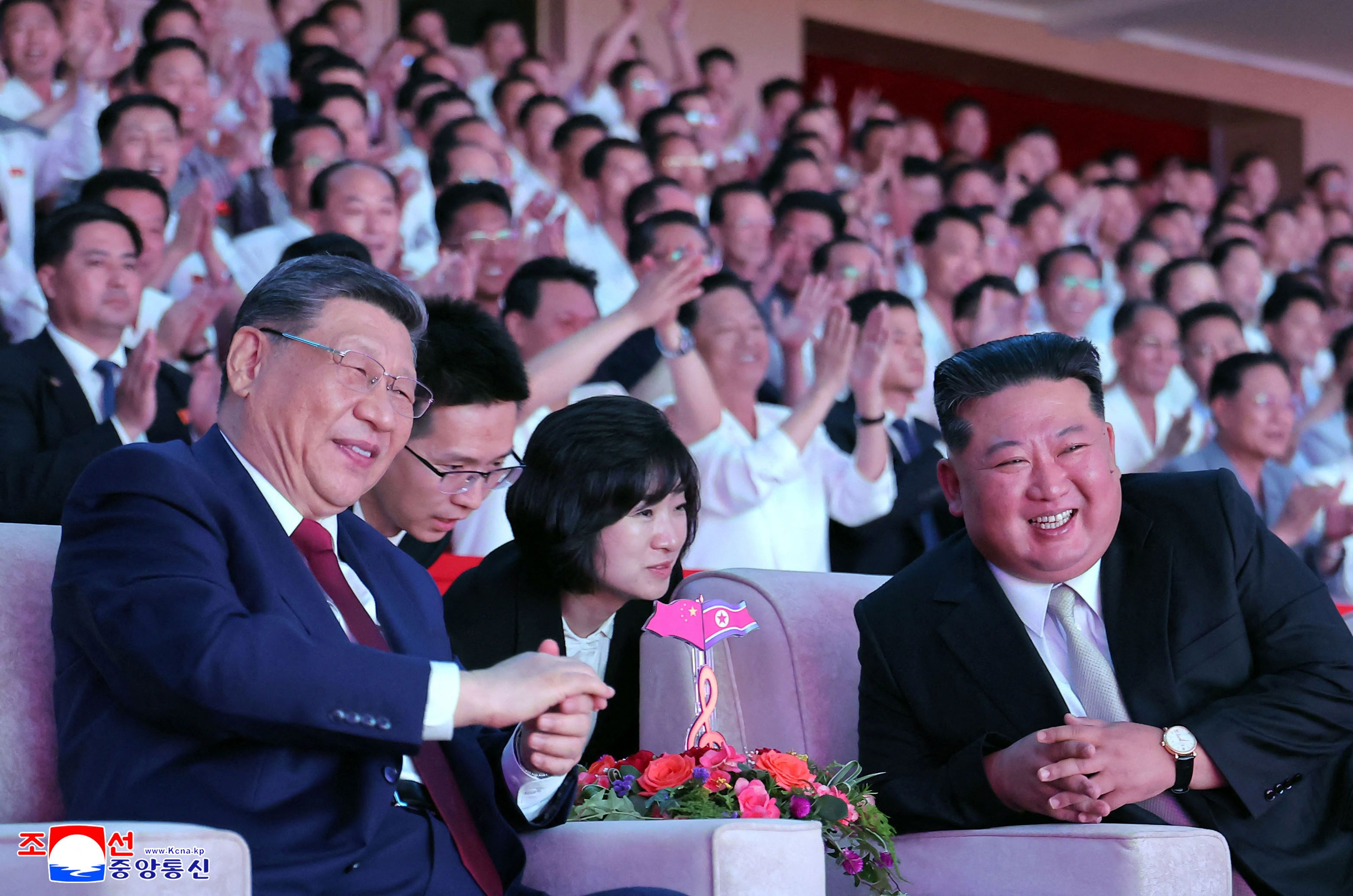
During the two-day summit, Xi and North Korean leader Kim Jong-un pledged to deepen political, economic and military cooperation, with both sides describing the talks as a “new chapter” in bilateral relations. Chinese state media hailed the meeting as a demonstration of the “unbreakable friendship” between the two neighbours, while North Korean television broadcast images of Kim personally escorting Xi through the capital’s streets .
The timing of Xi’s visit—coming just months after Kim’s own trip to Moscow—has raised eyebrows in Western capitals. Analysts quoted in German and Austrian outlets suggest Beijing is seeking to reclaim its traditional role as Pyongyang’s primary patron, reducing North Korea’s reliance on Russia and limiting the space for any future rapprochement with the United States . “Xi wants to show Kim—and the world—who sets the agenda in Northeast Asia,” said one Vienna-based foreign policy expert cited by *Der Standard* .
Economic incentives appear central to the renewed partnership. Chinese officials confirmed plans to expand trade corridors, including the reopening of rail links between Dandong and Sinuiju, and to increase food and fuel shipments to North Korea, which has faced chronic shortages amid international sanctions . Observers note that Beijing is also positioning itself as North Korea’s diplomatic shield, with Pyongyang explicitly backing China’s stance on Taiwan in a joint statement issued on Monday .
Despite the outward bonhomie, sensitive issues such as North Korea’s nuclear programme were conspicuously absent from official readouts. German daily *Die Zeit* reported that Xi avoided direct criticism of Kim’s weapons programme, instead focusing on economic integration and regional stability . Speculation has also swirled over whether Xi met Kim’s daughter, Kim Ju-ae, who has emerged as a symbolic figure in Pyongyang’s propaganda but remains a private individual.
The summit underscores a broader geopolitical realignment: two of the world’s most isolated regimes are tightening bonds at a moment when US President Donald Trump faces re-election and Washington’s traditional allies in Seoul and Tokyo seek closer coordination with Beijing. “This is less about friendship and more about strategic hedging,” said a Brussels-based analyst quoted by *Der Morgen* . With Xi’s visit concluding on Wednesday, the question now is whether the newfound solidarity will translate into tangible concessions—or merely serve as a show of defiance against Western pressure.
Follow us for live European news
1 further source not geolocated
,xPosition=.5,yPosition=.5;Resize=(1200,675)&impolicy=medium)
Kim og Xi enige om at udvide samarbejdet under besøg i Pyongyang
dr.dk · 4 months ago

„Neue Ära in gegenseitigen Beziehungen: Nordkorea und China beschwören in Pjöngjang ihre Zusammenarbeit Nordkoreas Diktator Kim rollt Chinas Staatschef Xi den roten Teppich aus. Kritische Themen spielen bei Xis erstem Staatsbesuch seit sieben Jahren öffentlich keine Rolle.
tagesspiegel · 4 months ago
Noord-Korea en China halen banden verder aan na ontmoeting tussen Xi Jinping en Kim Jong-un
de morgen · 4 months ago
„Regimul este mai bogat ca niciodată. Cum a devenit Coreea de Nord o surpriză economică cu ajutorul Chinei și Rusiei: „O realizare După mai bine de 100 de vizite în Coreea de Nord, Rowan Beard se obișnuise deja cu așteptările îndelungate pentru un taxi sub regimul lui Kim Jong Un. Însă, în timpul unei vizite recente la Phenian – prima după mulți ani –, un vehicul a sosit în doar câteva minute. Interpretul său nord-coreean a scos repede un smartphone, a deschis o aplicație numită „Samhung și a comandat un taxi printr-un serviciu similar cu Uber. Cei doi au urmărit deplasarea taxiului în timp real, scrie Wall Street Journal.
digi24 · 4 months ago
Zwei Autokraten gegen Trump: Warum Chinas Präsident gerade jetzt nach Nordkorea reist Xi Jinping hilft Nordkorea dabei, sich aus der Isolation zu schälen. Viel Vorarbeit hat bereits Russland geleistet. US-Präsident Trump muss zusehen und hoffen
der standard · 4 months ago
Xi Jinping in Nordkorea: Was will China von Nordkorea? Und umgekehrt Chinas Staatschef besucht Nordkorea. Geht es nur um die »unerschütterliche Freundschaft« der beiden Länder? Und: Bei der Entgelttransparenz bricht Deutschland EU-Recht.
die zeit · 4 months ago
Nordkorea sichert China Rückendeckung bei Taiwan zu
orf.at · 4 months ago

North Korean and Chinese leaders agree to boost ties at Pyongyang summit reut.rs/4aj5TlQ
bluesky bot · 4 months ago
Kim Jong Un is enjoying his new nuclear power North Koreas leader is the quiet winner of our age of instability
new statesman · 4 months ago
Chinas Staatschef will Nordkorea dem Kreml entreißen – und wieder stärker an China binden [premium] Erstmals seit sieben Jahren besucht Chinas Staatschef Pjöngjang. Das Ziel ist, dem rebellischen „kleinen Bruder zu demonstrieren, wer das Sagen hat in der Region. Über Kims Atomwaffen wird Xi aber eher hinwegsehen. Denn er hat andere Prioritäten. Viele Fragen sich indes: Wird Xi Kims Tochter treffen?
die presse · 4 months ago