
US and Japan intervene jointly in currency markets to support yen for first time since 2011

Story Timeline
3 days · 3 summary articles
US and Japan intervene jointly in currency markets to support yen for first time since 2011
US and Japan intervene jointly to prop up yen after 40-year low
ContinuationYen surges past 158 per dollar as Japan suspected of currency intervention: China factory activity shrinks in July
The United States and Japan conducted a rare joint intervention in currency markets on Friday to prop up the yen, marking their first coordinated action since 2011, according to officials in Tokyo and Washington. The yen had slumped to a 40-year low against the dollar, reaching nearly 164 yen per dollar before the intervention, which reduced the rate to about 157 yen per dollar by Monday.
Japanese Finance Minister Satsuki Katayama confirmed the joint action, stating it aimed to counter “excessive volatility and disorderly movements” in the yen. She added that Tokyo would not hesitate to conduct further interventions if needed, emphasizing close coordination with the U.S. Treasury Department .
The Bank of Japan’s data suggested its purchases alone may have totaled $36.58 billion during the operation, while reports from The Wall Street Journal estimated the combined intervention at $60 to $80 billion, with Japan contributing the majority . A leaked handwritten note from U.S. Treasury Secretary Scott Bessent indicated a planned purchase of $5 to $10 billion in yen .
Former U.S. President Donald Trump stated on Sunday that Washington’s support for the yen was a gesture of friendship and a contribution to the global economy . Japan’s top currency official described the joint intervention as the culmination of the U.S.-Japan alliance.
Analysts noted the U.S. took an unusual approach by selling euros rather than dollars to buy yen, a move that surprised currency markets . The yen’s prolonged weakness persisted despite recent interest rate hikes by the Bank of Japan, which set its benchmark rate at 1%, far below the U.S. Federal Reserve’s range of 3.50% to 3.75%.
Gunter Deuber, chief economist at Raiffeisen Research, said the coordinated action sent a deliberate signal, as joint interventions tend to have a stronger effect . The Japanese Ministry of Finance reiterated its readiness for further measures, stating it would act again if market conditions warranted.
Follow us for live European news
- 2
- 2
- 1
- 1
- 1
- 1
- 1
- 1
- 1
- 1
2 further sources not geolocated
Articles
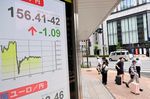
Warum die USA und Japan erstmals seit 15 Jahren gemeinsam am Devisenmarkt eingreifen Nachdem der Yen auf den tiefsten Stand seit 50 Jahren gefallen war, wollen die Notenbanken beider Länder die Talfahrt beenden. Anderenfalls könnte eine unkontrollierte Yen-Aufwertung Krisen an den Finanzmärkten befeuern
der standard · about 1 hour ago

Much to do about yen intervention reut.rs/45GR2Pi
bluesky_Reuters · about 1 hour ago
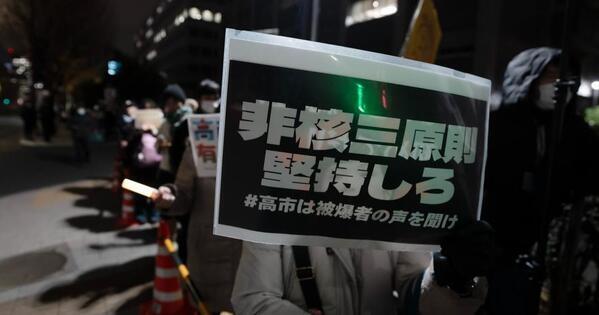
Column : Japan nuclear ambition : a perilous challenge to post - war order
gdelt bot · about 1 hour ago

Cryptocurrency trading heats up after Fed decision as MoneySimpler launches AI trading for passive income Following the Federal Reserves latest interest rate decision, global financial market liquidity has seen significant changes, with cryptocurrency trading activity surging. Mainstream digital assets such as Bitcoin and Ethereum continue to attract capital, but frequent and volatile price fluctuations and numerous market uncertainties continue to trouble ordinary investors. MoneySimpler passive income AI intelligent trading system […]
cyprus mail · about 1 hour ago
Por qué EEUU interviene en favor del yen japonés Los mercados financieros digieren aún las novedades procedentes de las divisas. Los inversores han iniciado agosto con la confirmación de la histórica intervención conjunta de EEUU y Japón para frenar las caídas del yen. Leer
expansion · about 1 hour ago
A kormányváltás óta nem volt ennyire gyenge a forint Drámai zuhanás egyelőre nincs, de közel három havi mélypontján jár a forint az euróhoz képest.
hvg.hu · about 1 hour ago
De VS helpen Japan bij steunaankopen van de yen, maar niemand begrijpt waarom In een hoogst ongebruikelijke en voor velen onbegrijpelijke actie hebben de VS en Japan samen tientallen miljarden dollars gestoken in een operatie om de kwakkelende Japanse yen op te krikken. De steun verhult dat de Japanse economie een fundamenteel probleem heeft.
nrc · about 1 hour ago
Japan: USA helfen, den fallenden Yen zu stabilisieren Die japanische Finanzministerin bestätigt am Montag, dass die US-Regierung massiv in den Yen investiert habe. Das könnte für die USA ein ebenso guter Deal sein wie für Japan.
sueddeutsche · about 1 hour ago

US shakes up currency markets with talk of unusual yen-buying via selling euros reut.rs/4fPYqN2
bluesky_Reuters · about 1 hour ago

Japans fight with yen bears goes on after joint rescue reut.rs/4fBaFOT
bluesky_Reuters · about 1 hour ago

🎧 A stronger yen, a rare joint intervention, and a warning to traders betting against Japans currency. What comes next for the worlds most closely watched FX pair? On todays Morning Bid podcast reut.rs/3TPAli4
bluesky_Reuters · about 1 hour ago

"Les États-Unis nont pas agi pour le Japon" : les vraies raisons de lintervention américaine sur le yen
lexpress · about 2 hours ago
Pour revaloriser le yen, les Etats-Unis et le Japon interviennent pour la première fois en 28 ans La devise nippone est récemment tombée à son plus bas niveau face au dollar depuis 1986. Ce lundi 3 août, Washington et Tokyo annoncent avoir mené une opération sur le marché des changes pour faire remonter le cours de la monnaie.
liberation · about 2 hours ago
Japan vows further yen intervention with US if needed Finance minister Satsuki Katayama confirms joint action with Washington to counter disorderly movements
financial times · about 2 hours ago
De ce a intervenit SUA pe piețe pentru a salva yenul după 28 de ani – Contextul unei salvări istorice Decizia Statelor Unite de a participa la o intervenție comună cu Japonia pentru a sprijini yenul este una dintre cele mai importante mișcări din piața valutară a ultimelor decenii. Este prima achiziție coordonată de yeni între SUA și Japonia din 1998, o evoluție pe care analiștii o consideră îngrijorarea crescândă a Washingtonului nu doar cu …
hotnews.ro · about 2 hours ago
Yen: „Höchst ungewöhnlich – Auf diese Art und Weise haben die USA ihren Yen-Eingriff getätigt Um japanische Yen zu kaufen, haben die USA einen gänzlich alternativen Weg gewählt: Statt US-Dollar haben sie Euro-Mittel verkauft. Was Experten hinter diesem Vorgehen vermuten.
handelsblatt · about 2 hours ago
Zelensky urges ambassadors to strengthen ties with Japan, seek new dialogue with India and China President Volodymyr Zelensky has called for stronger relations with Japan and other Asian countries.
ukrinform · about 2 hours ago