
Israel, Lebanon, US sign framework deal on phased withdrawal and Hezbollah disarmament
Story Timeline
3 months · 9 summary articles
Israel, Lebanon, and the United States signed a landmark U.S.-brokered framework agreement in Washington on Friday, marking the first direct diplomatic breakthrough between the two adversaries in decades. The 14-point accord, announced by U.S. Secretary of State Marco Rubio, envisions a phased Israeli withdrawal from southern Lebanon and the disarmament of Hezbollah, while pledging humanitarian aid to Beirut. However, the deal faces immediate resistance from Hezbollah, which has rejected the framework and vowed to continue its armed resistance, raising doubts about its implementation.
The agreement was signed at the State Department by Israeli Ambassador to the U.S. Yechiel Leiter and Lebanese Ambassador to the U.S. Nada Hamadeh, with U.S. State Department counselor Dan Holler present . Under the terms, Israel will partially withdraw its forces from southern Lebanon, transferring control of two "pilot zones" to the Lebanese Armed Forces, though Israeli Prime Minister Benjamin Netanyahu has insisted that Israeli troops will remain in a security zone until Hezbollah is fully disarmed . Lebanese President Joseph Aoun hailed the deal as a "first step" toward restoring full sovereignty over all Lebanese territory, enabling displaced residents to return to liberated towns under exclusive state authority .
The framework agreement was reached after months of U.S.-mediated negotiations in Washington, but its future remains uncertain. Hezbollah, the Iran-backed militant group, has already rejected the deal, declaring it will not abide by its terms and warning of further escalation . The group’s opposition has sparked pro-Hezbollah riots in Beirut, where Lebanese security forces have been deployed to suppress the unrest . Meanwhile, Lebanon’s insistence on a full Israeli withdrawal from all occupied territories—including disputed areas like the Yellow Line and Beaufort Castle—remains a sticking point, with negotiators acknowledging that the most contentious issues have yet to be resolved .
The deal’s humanitarian provisions include international aid to stabilize Lebanon’s economy and support displaced communities, though critics argue the framework lacks enforceable mechanisms to ensure compliance. Israeli airstrikes on southern Lebanon during the final day of talks—including a strike on Beit Yahoun—underscored the fragility of the ceasefire and the challenges ahead . As Rubio cautioned, "Much remains to be done," signaling that the road to lasting peace will require sustained diplomatic effort and regional cooperation .
Follow us for live European news
- 1
- 1
- 1
- 1
- 1
- 1
- 1
- 1
1 further source not geolocated
Articles

Israeli airstrike hits Lebanon during final day of Washington talks Israeli warplanes struck the southern Lebanese town of Beit Yahoun on Thursday, violating the ceasefire as Lebanese and Israeli officials concluded the fifth round of US-mediated negotiations in Washington aimed at securing a lasting truce.
yenisafak · 2 months ago
Lebanese president welcomes French-Italian post-UNIFIL coalition plan President Joseph Aoun welcomed a joint French-Italian initiative to establish an international coalition after UNIFILs mandate ends. He praised the plan as recognition of the Lebanese Armys role in securing the south and called it a strong expression of international support for Lebanons sovereignty and stability.
yenisafak · 2 months ago
Lebanon demands full Israeli withdrawal in any Washington deal A senior Lebanese official has told Anadolu that any declaration of principles from Washington talks must include a complete Israeli withdrawal from all Lebanese territory under a defined timetable. Lebanons insistence on this demand led to the extension of the fifth round of negotiations.
yenisafak · 2 months ago
Israel, Lebanon deadlock over south withdrawal in Washington talks The fifth round of Lebanon-Israel talks in Washington was extended as disputes over Israeli withdrawal from southern Lebanon persist. Israel refuses to leave the Yellow Line and Beaufort Castle, while Lebanon demands a full pullout from all occupied villages and towns.
yenisafak · 2 months ago
Far-right Israeli minister urges ending Lebanon ceasefire after troops hurt Far-right minister Itamar Ben-Gvir called for ending the Lebanon ceasefire after four Israeli soldiers were wounded in a grenade attack. Other ministers voiced frustration over operational restrictions, while Netanyahu said the US understands Israels right to defend itself.
yenisafak · 2 months ago
Lebanon-Israel deal first step toward complete sovereignty: Aoun Lebanese President Joseph Aoun said a framework agreement signed with Israel marks the beginning of restoring full sovereignty over all territory, enabling displaced residents to return to their liberated towns under exclusive state authority, according to a statement by the Lebanese presidency.
yenisafak · 2 months ago
Israël, Libanon en VS sluiten nieuw raamwerkovereenkomst voor vrede Israël en Libanon zijn het bij gesprekken in Washington eens geworden over een nieuwe raamovereenkomst, meldt de Amerikaanse minister van Buitenlandse Zaken Marco Rubio. Volgens Israël zullen hun militairen zich als onderdeel van een proef deels terugtrekken uit het buurland.
nu.nl · 2 months ago
USA: Israel, Libanon und die USA unterzeichnen Rahmenabkommen Ein Rahmenvertrag soll ein Friedensabkommen zwischen Israel und dem Libanon ermöglichen. Unterstützt von den USA gaben die beiden Länder eine Einigung bekannt.
die zeit · 2 months ago
Acord-surpriză la Washington. Israelul, Libanul și SUA anunță un pas neașteptat către pace sraelul, Libanul şi Statele Unite au semnat vineri la Washington un acord-cadru, fără a dezvălui detaliile acestuia, dar cu obiectivul declarat de a deschide calea către o pace şi o securitate durabile, a anunţat secretarul de stat american Marco Rubio, după mai multe zile de discuţii menite să conducă la încetarea luptelor dintre Israel şi militanţii Hezbollah susţinuţi de Iran, transmite AFP, citată de Agerpres.
digi24 · 2 months ago
Израиль и Ливан подписали соглашение, предусматривающее частичный вывод войск ЦАХАЛ Израиль и Ливан при посредничестве США подписали рамочное соглашение по урегулированию конфликта. Оно предусматривает частичный вывод израильских войск с территории на юге Ливана. Об этом сообщает Times of Israel.
meduza · 2 months ago
What is the framework agreement signed by Israel and Lebanon? Deal comes after months of US-brokered direct talks, but Israel continues to occupy Lebanese land.
aljazeera · 2 months ago
Hisbollah gegen Israel: «Erster Schritt»: Israel und Libanon schließen Vereinbarung
die zeit · 2 months ago
#BREAKING ⚡️🇱🇧🇮🇱❌🇱🇧 - Lebanese government representatives signed a United States brokered agreement with Israel in Washington. The agreement has sparked Pro-Hezbollah riots in Lebanons capital city of Beirut. The Lebanese Military has been deployed and is attempting to suppress the crowds.
telegram bot · 2 months ago
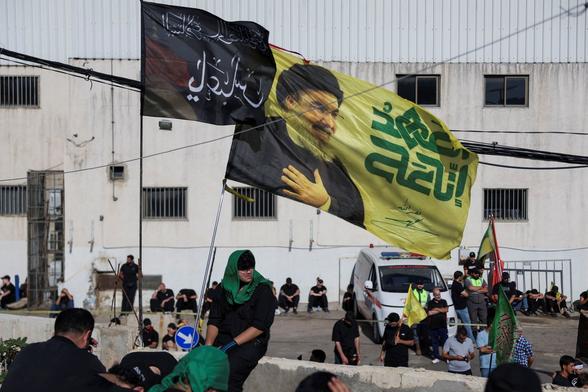
🔴 BREAKINGHezbollah rejects Israel-Lebanon framework dealHezbollah has announced it will not support the US-announced framework agreement between Israel and Lebanon. This rejection complicates diplomatic efforts to establish a ceasefire or peace deal in the region, signaling continued resistance from...📰 #Diplomacy #USA #Geopolitics #GeoWire
mastodon bot · 2 months ago

Avtal klart mellan Libanon och Israel Israel, Libanon och USA har kommit överens om ett ramavtal för fred. Enligt amerikanska uppgifter ska Israel dra sig tillbaka från Libanon. – Israel blir kvar i säkerhetszonen i södra Libanon så länge Hizbollah inte avväpnats, säger dock Israels premiärminister Netanyahu.
dagens nyheter · 2 months ago
Hezbollah will not support Israel-Lebanon framework deal Al Jazeera brings you the latest from Beirut as the US announces a framework agreement between Israel and Lebanon.
aljazeera · 2 months ago