 Monday, July 6Monday, July 6
OPEC+ approves fifth consecutive monthly oil output increase as Strait of Hormuz exports resume
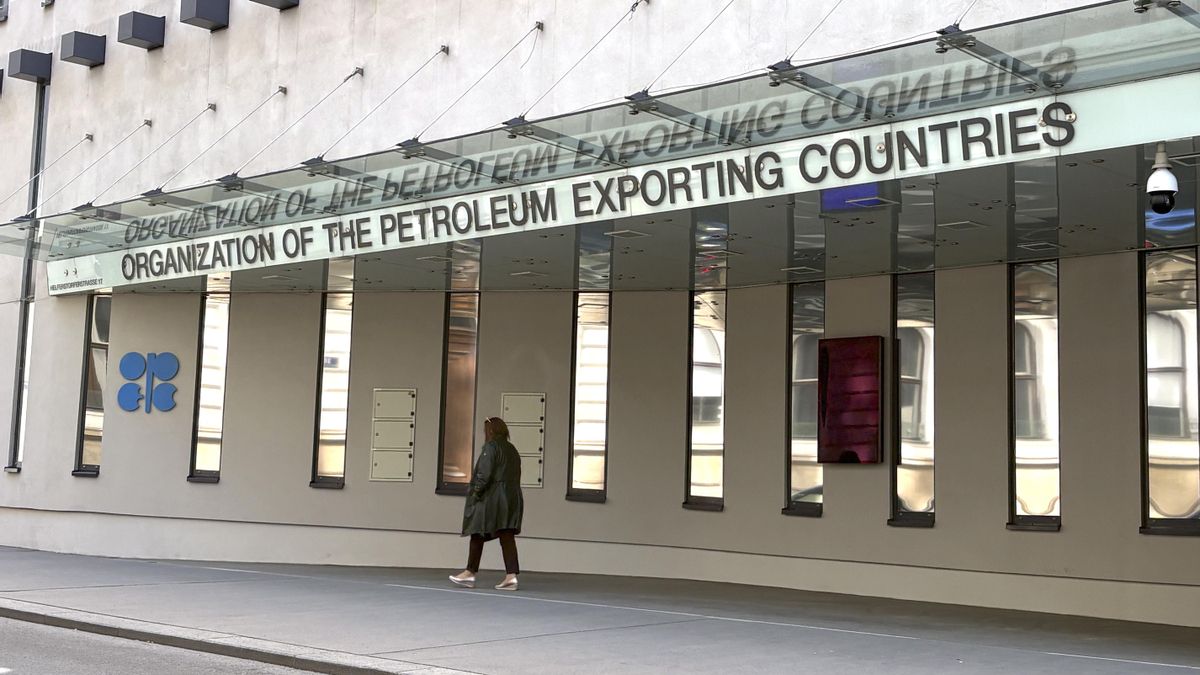
VIENNA — The OPEC+ alliance on Sunday approved a further increase in crude oil production, marking the fifth consecutive monthly rise as shipping through the Strait of Hormuz gradually resumes following months of disruption. Member countries agreed to raise output by 188,000 barrels per day from August, the same increment adopted in June and July, according to a statement from the cartel’s Vienna-based secretariat.
The decision was taken during a teleconference of energy ministers from Saudi Arabia, Russia, Iraq, Kuwait, Kazakhstan, Algeria and Oman, the OPEC statement said. The increase forms part of a phased unwinding of voluntary production cuts introduced in April 2023, when the alliance implemented a collective reduction of 1.6 million barrels per day to support crude prices. Since then, the group has incrementally restored supply, with the latest move intended to maintain market balance amid improving export conditions.
The Strait of Hormuz, a critical chokepoint for Gulf oil shipments, had been effectively closed to tankers from key producers including Saudi Arabia, Kuwait and Iraq following the escalation of hostilities between the United States, Israel and Iran earlier this year. The closure contributed to a sharp decline in OPEC+ output, which fell to 33.13 million barrels per day in May from 42.77 million in February, according to OPEC data. However, the signing of a memorandum of understanding between Washington and Tehran in late June has allowed maritime traffic to resume, easing supply concerns.
Crude prices have already reflected the improving outlook. Brent crude traded near $72 per barrel on Friday, down from peaks above $120 during the crisis and below pre-war levels, as markets anticipate a steady recovery in global supply. Industry analysts said the measured increase underscores OPEC+’s preference for gradual adjustments over abrupt changes. “Recovering exports through Hormuz give producers greater confidence to increase supply carefully,” said an independent energy analyst quoted by Brussels Morning .
The phased increases, though approved in April, June and July, had limited impact on actual output while the strait remained closed. With tanker movements now resuming, the August increment is expected to translate into tangible supply gains for the first time since the conflict began. OPEC+ officials stressed that future decisions will depend on market fundamentals, including global demand, inventory levels and geopolitical developments. “Our production policy continues to reflect market fundamentals and long-term stability,” an OPEC+ representative said after the meeting .
The alliance will monitor compliance, export activity and demand before considering additional increases, with regular reviews planned to ensure price stability and supply security. The move comes as businesses reliant on fuel—including airlines, shipping firms and manufacturers—stand to benefit from reduced volatility and more predictable energy costs. Consumers may also see steadier fuel prices if crude supplies continue to recover in line with the cartel’s cautious approach.
Follow us for live European news
1 further source not geolocated

Ανακάμπτει η παραγωγή πετρελαίου, ο OPEC+ ετοιμάζεται να ανοίξει κι άλλο τις στρόφιγγες
protothema · 1 day ago
Verlängerung der Gasreserve soll am Montag beschlossen werden Gasspeicher nach hartem Winter wieder zu 54 Prozent voll – kein Diesel- oder Kerosinengpass erwartet
der standard · 1 day ago
Země OPEC+ opět navyšují těžbu ropy. Její dodávky jsou stále pod úrovní před útokem na Írán Ministři sedmi zemí skupiny OPEC+, která zahrnuje Organizaci zemí vyvážejících ropu (OPEC) a její spojence v čele s Ruskem, od srpna zvýší těžbu celkem o 188 000 barelů denně. OPEC to v neděli oznámil v tiskové zprávě. Jde o stejně vysoký nárůst, na jakém se skupina dohodla i v předchozích měsících.
irozhlas.cz · 1 day ago
Energie: Opec+ will mehr Öl in den Markt pumpen Das Ölkartell weitet seine Produktion Schritt für Schritt aus. Doch das müsse nicht so bleiben, betont die Opec+. Die Marktlage soll das weitere Vorgehen bestimmen.
handelsblatt · 1 day ago
OPEC+ production decision raises oil output as Strait of Hormuz exports recover, supporting global energy supply and market stability. Vienna, Austria, July 05, 2026 – Brussels Morning Newspaper — OPEC+ production decision approved another increase in crude oil output as exports through the Strait of Hormuz continued to recover following recent regional disruptions. The alliance agreed to gradually raise production after assessing improving shipping conditions and steady global demand. Main Development The latest production agreement allows member […]
brussels morning · 1 day ago

Pétrole: lOpep+ augmente ses quotas de production pour le mois daoût Les ministres de lOpep+ ont décidé dimanche daugmenter les quotas de production de pétrole de 188.000 barils par jour pour le mois daoût, une hausse similaire à celles convenues ces derniers mois. ...
la libre · 1 day ago

La OPEP+ subirá su oferta de crudo en 188.000 barriles diarios a partir de agosto La alianza OPEP+, liderada por Arabia Saudí y Rusia, ha acordado este domingo elevar su producción petrolera desde agosto, por quinto mes consecutivo, en 188.000 barriles diarios. Leer
expansion · 1 day ago
Norway Expands Troll Gas Output as Europe Pushes to Secure Non-Russian Energy Supplies
gdeltproject.org · 1 day ago
Rohstoffe: Opec plus weitet Ölproduktion ab August erneut aus Die Ölpreise haben ihr Niveau vor Kriegsbeginn erreicht. Dennoch wird die Organisation Erdöl exportierender Länder ihre Förderziele ab August erneut ausweiten.
handelsblatt · 1 day ago

OPEC, Allies Hike Output Again as Hormuz Traffic Starts Recovering The fifth consecutive increase comes as the cartel continues to unwind production cuts introduced in recent years.
wsj · 1 day ago
Goldman Sachs: Τι προβλέπει για το πετρέλαιο μετά την επιστροφή στην κανονικότητα στα Στενά του Ορμούζ Τα συμβόλαια του Brent διαπραγματεύονταν σήμερα κάτω από τα 73 δολάρια το βαρέλι - Στο αποκορύφωμα του πολέμου στη Μ. Ανατολή είχαν ξεπεράσει τα 126 δολάρια
protothema · 1 day ago
La OPEP+ aumentará su oferta de petróleo en 188.000 barriles diarios a partir de agosto para estabilizar los mercados La decisión ha sido adoptada en una teleconferencia por los ministros del sector de Arabia Saudí, Rusia, Irak, Kuwait, Kazajistán, Argelia y OmánEl petróleo y el precio de la gasolina en España caen por debajo del nivel previo a la guerra en Irán La alianza OPEP+, liderada por Arabia Saudí y Rusia, acordó este domingo elevar su producción petrolera en agosto por quinto mes consecutivo, añadiendo 188.000 barriles diarios a partir del primer día del próximo mes. La decisión ha sido adoptada en una teleconferencia por los ministros del sector de Arabia Saudí, Rusia, Irak, Kuwait, Kazajistán, Argelia y Omán, según informó en un comunicado la sede de la Organización de Países Exportadores de Petróleo (OPEP), con sede en Viena. Los siete países participantes decidieron implementar un ajuste de producción de 188.000 barriles diarios, proveniente de las reducciones voluntarias adicionales anunciadas en abril de 2023, señala el comunicado
eldiario.es · 1 day ago
Opec+ will Ölförderung ab August weiter ausweiten Die Allianz will ab August 188.000 Barrel pro Tag mehr fördern, obwohl Ölpreise auf Vorkriegsniveau gefallen sind
der standard · 1 day ago