 Saturday, June 27Saturday, June 27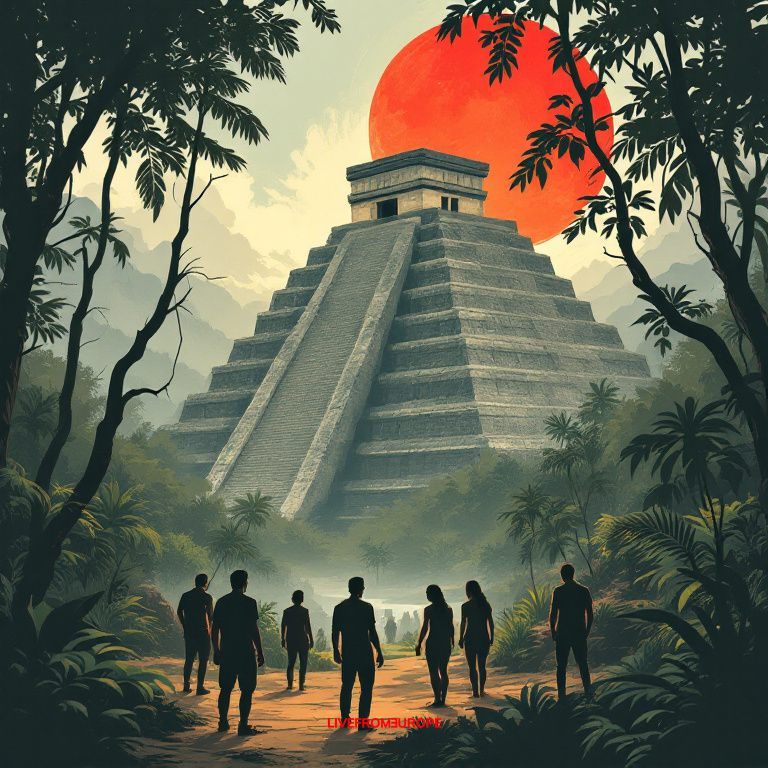
A Slovenian-led archaeological team has uncovered an untouched Maya city deep within the Calakmul Biosphere Reserve in southern Mexico, featuring a pyramid and other structures hidden beneath dense jungle canopy for centuries. The discovery, announced on 27 June 2026, marks one of the most significant finds in the region since explorations began in the 1930s.
The team, led by Slovenian archaeologist Dr. Marko Terlevic, identified the site during a three-month survey using LiDAR technology to penetrate the thick vegetation. Preliminary surveys indicate the city spans approximately 1.2 square kilometres and includes a stepped pyramid measuring 22 metres in height, residential complexes, and ceremonial plazas. “This is not just another Maya site,” Terlevic told reporters. “The structures show minimal signs of looting or erosion, suggesting the city was abandoned rapidly, possibly due to environmental or political upheaval around the 9th century.”
The Calakmul Biosphere Reserve, a UNESCO World Heritage Site, has long been known for its archaeological potential. However, dense jungle and limited access have hindered systematic exploration. The discovery follows a decade of intermittent surveys by international teams, including Slovenian, Mexican, and German researchers. Dr. Elena Vasquez of Mexico’s National Institute of Anthropology and History (INAH) confirmed the site’s authenticity and noted that further excavations would begin in August 2026.
Local Maya communities in the region have expressed cautious optimism about the find. “We have always known these lands hold stories,” said Don Santiago Pop, a community elder from nearby Conhuas. “But we ask that our voices be heard in how this place is studied and protected.” The team has pledged to collaborate with local stakeholders and INAH to ensure the site’s preservation and respect for indigenous knowledge.
The discovery comes amid a surge in archaeological activity in the Yucatán Peninsula, driven by advances in remote sensing and growing international cooperation. Earlier this month, a separate team uncovered a 1,300-year-old Maya water management system near Tikal, Guatemala. However, the Calakmul find stands out for its scale and preservation.
For now, the site remains off-limits to the public as researchers map and document the structures. A formal announcement by INAH is expected in September 2026, following a joint press conference with the Slovenian Ministry of Culture. The discovery underscores the enduring mystery of the Maya civilisation and the potential for further revelations in the world’s jungles.
Follow us for live European news
1 further source not geolocated

Velencében tüntetésre készülnek a milliárdos amerikai nagykövet luxusjachtos látogatása miatt Velence a velenceieké, nem a milliárdos szuperyachtosoké.
444.hu · about 3 hours ago
Skagen får en ny turistattraktion
dr.dk · about 3 hours ago
«This is it»: Το φουτουριστικό superyacht των 46 εκατ. που μαγνητίζει τα βλέμματα στη Μύκονο Το «This is it», το φουτουριστικό yacht των 46 εκατομμυρίων ευρώ έριξε άγκυρα στη Μύκονο και αυτά είναι όσα πρέπει να ξέρεις σε περίπτωση που θες να το νοικιάσεις... χαχα
protothema · about 4 hours ago
Výměna střechy i dřevěného obložení. Rozhlednu na Háji u Šumperku čeká rekonstrukce Rozhlednu na Háji u Šumperku čeká po třiceti letech provozu oprava. Dělníci během léta vymění její střechu a dřevěné obložení. Kvůli rekonstrukci bude bezmála třicet metrů vysoká věž uzavřena. Poslední možnost ji navštívit před opravami mají lidé tento víkend.
irozhlas.cz · about 4 hours ago
‚Jsme posádka mamin z Mostu. Parta žen a dívek se účastní závodů dračích lodí už osm sezon Po práci se seberou a v dešti nebo i v tropických vedrech vyrazí k vodě. Dámy z Mostecka se staly vášnivými závodnicemi na dračích lodích. Během sezony vyrazí na devět akcí. Loni se staly mistryněmi republiky v kategorii 40+.
irozhlas.cz · about 4 hours ago
MSC Cruceros aumentará un 7,3 su capacidad en 2027 con 2 nuevos barcos MSC Cruceros aumentará un 7,3 su capacidad el año que viene al incorporar dos nuevos barcos, uno de ellos el próximo diciembre, MSC World Asia, que se posicionará en Barcelona, y MSC World Atlantic, que debutará a finales de 2027 desde Puerto Cañaveral, en Florida (Estados Unidos). Leer
expansion · about 4 hours ago
Baudenkmal: Käufer für Niewandtschacht bei Hettstedt gesucht
die zeit · about 4 hours ago
Slovenian-led team uncovers untouched Maya city The jungle of the Calakmul Biosphere Reserve in southern Mexico is considered a treasure trove for archaeologists, with many ancient Maya structures hidden beneath a dense canopy. A Slovenian-led archaeological team has now discovered a previously unknown Maya city there that features a pyramid ...
the slovenia times · about 4 hours ago
Συνεχίζει το ταξίδι προς Σούδα το πλοίο Κίσσαμος που προσάραξε στη Μήλο, τέλος στην ταλαιπωρία για τους 1.246 επιβάτες
protothema · about 4 hours ago

Infotainment C5 Aircross: Klarer Fall von Wasserfall Wasserfalldisplay und Mickey-Maus-Ohren: Der C5 Aircross kommt mit ungewöhnlichen Details. Ein Blick auf das Infotainment.
faz · about 4 hours ago