Loading…
 Friday, August 21Friday, August 21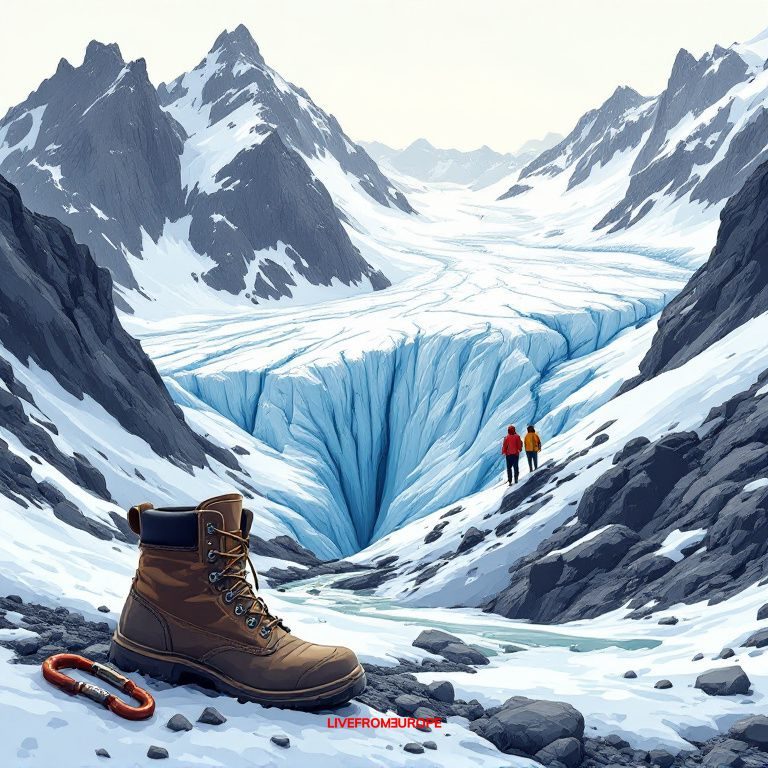
Alpine glaciers have lost 39 percent of their surface area since 2000, with Italian experts warning of rapid and unprecedented changes. Vanda Bonardo, the Alpine representative of Italian environmental group Legambiente, said glaciers "appear still and immovable," yet melting has exposed bedrock and widened crevasses, making trails dangerous . The World Glacier Monitoring Service reported an average annual loss of 273 billion tons of ice globally since 2000, rising to 408 billion tons in 2025 .
In Switzerland, the retreat of glaciers has exposed the remains of two Belgian mountaineers missing since 1992 near the Weissmies mountain in the Valais region. A hiker discovered human remains near the Trift glacier south of Lucerne last month, and DNA tests confirmed the identities . Such discoveries have grown more frequent as Switzerland’s glaciers melt at an accelerating rate, with the country losing 4 percent of its glacier volume in 2023 after a 6 percent loss the prior year.
The village of Kandersteg, home to 1,300 people, lies beneath the unstable Spitze Stei rock formation, which could trigger a landslide twice the size of the one that buried parts of Blatten in May 2025. Scientists attribute the instability to rising temperatures melting glaciers and thawing permafrost, which weakens mountain slopes. Authorities monitor the formation continuously and say a collapse would provide at least 24 hours of warning. Residents like Brigitte Jüni and Rudolf Isler acknowledge the risk but remain calm, linking it to broader climate shifts .
In Brienz, a Swiss village once threatened by a potential rockfall, authorities are planning a study on future development after receiving 42 relocation requests. The local government has allocated 82.5 million Swiss francs to support residents who choose to leave, with the canton and federal government covering most costs. Two buildings have already been destroyed by landslides, and 13 more are slated for demolition. The outgoing mayor, Daniel Albertin, will commission the study with ETH Zurich before leaving office in 2027 .
Switzerland’s population reached over 9.1 million at the end of 2025, a 0.8 percent increase from the previous year, according to the Federal Statistical Office. Growth has slowed from 1.7 percent in 2023 and 1.0 percent in 2024, with 76,100 additional residents in 2025. Immigration accounted for 92 percent of the increase, while the remaining 8 percent came from a natural surplus. For the first time, the number of people aged 65 or older (1,810,600) exceeded those under 20 (1,804,500) .
Follow us for live European news

Swiss village lives in the shadow of an unstable mountain Kandersteg, a picturesque Swiss Alpine village, sits beneath the unstable Spitze Stei rock formation, which could trigger a major landslide if it collapses. Scientists say rising temperatures are melting glaciers and thawing mountain permafrost, making slopes increasingly unstable across the Alps.
euronews · about 2 hours ago
Gletscher im Stress: Wenn der Berg ins Rutschen gerät [premium] Blockgletscher sind dynamische Alpenlandschaften. Im Ötztal dokumentieren Forscher eine dramatische Beschleunigung des gefrorenen Gesteinsstroms – seit Kurzem in Echtzeit.
die presse · about 2 hours ago
Gletscher in den Alpen schmelzen weiter: 39 Prozent Fläche seit 2000 verloren Bis 2050 könnten alle Alpengletscher unterhalb von 3500 Metern verschwunden sein. Experten warnen vor einer dramatischen Entwicklung
der standard · about 3 hours ago
Gletscher der Alpen schmelzen rasant: 39 Prozent Fläche verloren Seit dem Jahr 2000 sind weltweit durchschnittlich 273 Milliarden Tonnen Eis pro Jahr verloren gegangen. Bis 2050 könnten alle Alpengletscher unterhalb von 3500 Metern verschwunden sein.
die presse · about 5 hours ago
Bodies of 2 hikers missing for decades in Swiss Alps turn up as glacier melts The bodies of two Belgian mountaineers who went missing in the Swiss Alps more than three decades ago have been found, officials said. Police in the southwestern Valais…
japantoday · about 6 hours ago
Bevölkerungsstatistik – Wie die Schweizer Bevölkerung wächst – in fünf Grafiken In der Schweiz leben immer mehr Menschen, und sie sind im Schnitt immer älter. Die Zahlen des BFS im Überblick.
srf.ch · about 8 hours ago
Drohender Bergsturz – Studie soll Zukunft des Bergdorfs Brienz GR malen Nach einer Umsiedlung in Brienz sollen die Häuser weichen. Eine Studie untersucht die künftige Dorfgestaltung.
srf.ch · about 8 hours ago