
EU ministers deadlocked over 2 trillion budget as frugal states demand cuts
Story Timeline
8 days · 2 summary articles
EU ministers deadlocked over 2 trillion budget as frugal states demand cuts
EU members deadlocked over 2028–2034 budget and new EU taxes
Continuation
EU ministers met in Brussels on Tuesday to negotiate the bloc’s 2028–2034 budget, with deep divisions over funding levels and priorities stalling progress toward a year-end deal. European Council President António Costa has pushed for a €2 trillion budget over seven years, but Germany, the Netherlands, Denmark, Finland, Austria and Sweden demand cuts of “several hundred billion” to ensure financial sustainability, according to the Dutch ambassador.
The impasse reflects a split between net contributors and recipients, compounded by a Commission proposal to shift funds from agriculture and regional support to research, innovation and competitiveness—a move backed by the frugal states. A group of about 20 countries, primarily in Southern and Eastern Europe, opposes this reallocation and seeks a larger budget to maintain existing programs. Latvia, supported by Lithuania, Estonia, Finland, Poland and Romania, has requested an additional €7 billion to offset economic losses from geopolitical threats, citing higher inflation and lower GDP growth along the EU’s eastern flank.
European Commissioner for Budget Piotr Serafin acknowledged the familiar deadlock, noting that positions have remained unchanged for decades. Irish Minister for European Affairs Thomas Byrne said member states still aim for a December agreement, with a compromise text expected at the mid-October European Council summit. Costa warned that major cuts to defense, competitiveness or agriculture would face resistance, a remark German Europe Minister Gunther Kirchbaum called “not helpful” .
Commission President Ursula von der Leyen and Costa have repeatedly urged an ambitious budget backed by new EU taxes to fund strategic sectors, but Poland has opposed revenue sources like the Emissions Trading System, arguing they would disproportionately burden poorer member states .
Follow us for live European news
- 1
- 1
- 1
- 1
7 further sources not geolocated
Articles

Strategiczny zwrot Niemiec względem Chin. Ostrzejszy kurs ma objąć całą Europę Niemcy przygotowują pakiet regulacji gospodarczych wymierzonych w Chiny, mających na celu ochronę strategicznych gałęzi przemysłu. Mówi się m.in. o cłach na pojazdy elektryczne i bardziej restrykcyjnym podejściu do chińskich gigantów telekomunikacyjnych.
wnp.pl · about 3 hours ago
Europejska motoryzacja na zakręcie. 100 tysięcy osób wyszło na ulice, żądając ochrony rynku W całych Niemczech w ok. 200 wiecach protestowało 100 tys. pracowników z sektora motoryzacyjnego, którzy domagali się ograniczenia zwolnień i zamykania fabryk. Domagają się ochrony rynku przed chińskimi samochodami oraz wsparcie całej branży z unijnych funduszy.
wnp.pl · about 3 hours ago

ECB calls for tougher EU crypto rules and curbs on dollar stablecoins ➡️
bluesky_Euronews · about 3 hours ago

German minister slams Costa over EU budget, says he has completely lost touch with reality
bluesky_EUobserver · about 3 hours ago
Polska gotowa zapłacić wyższą składkę do budżetu UE niż niesprawiedliwe nowe opłaty
rmf24 · about 3 hours ago
In EU budget negotiations, Latvia will seek additional EUR 7 billion to fortify eastern flank - Kulbergs - The Baltic Times RIGA - Latvia will request an additional EUR 7 billion to strengthen the European Unions (EU) eastern flank during negotiations on the bloc......
baltic times · about 3 hours ago
La UE acelera su diversificación comercial con un pacto con Filipinas El bloque comunitario afianza la búsqueda de nuevos socios para abrir nuevas rutas a sus empresas y blindarse frente a la volatilidad de Donald Trump. El acuerdo contempla rebajas de hasta un 94 de todos los aranceles. Leer
expansion · about 3 hours ago

Asfixia fiscal: el papeleo hunde la competitividad de España y Europa España, en particular, y Europa, en general, se enfrentan a un espejo incómodo. Leer
expansion · about 3 hours ago
Duitsland en Nederland foeteren op EU-begroting: Volledig het contact met de werkelijkheid kwijt Duitsland en Nederland vonden de voorgestelde begroting voor de EU al veel te hoog. Een voorstel voor nieuwe EU-belastingen leidt tot irritaties bij de netto-betalers. „Natuurlijk ergeren we ons aan het feit dat nieuwe eigen inkomstenbronnen worden gepresenteerd als een wondermiddel.
nrc · about 3 hours ago
Why EU companies are now helping Chinese ones expand into Europe Many multinationals seem to be adopting an approach of if you cant beat them, join them
financial times · about 3 hours ago
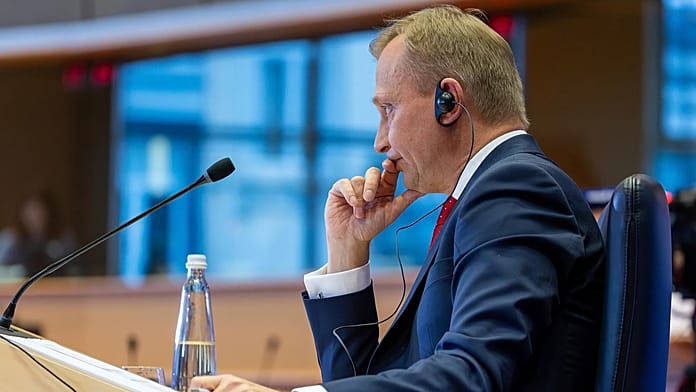
EU budget talks face deadlock despite push for year-end deal Member states have spent months reiterating their negotiating positions, fuelling frustration within EU institutions that are pushing for faster progress. Reaching an agreement only in December would mean that negotiations remain largely deadlocked until the final stage.
euronews · about 3 hours ago

China-Shock 2.0: Wie deutsche Maschinenbauer ihren Vorsprung verlierenChinas Hightech-Fertigung wächst zweistellig, deutsche Werke sind unterausgelastet. Im Oktober berät die EU über das wachsende Handelsdefizit. #China #Deutschland #Wirtschaft #news
mastodon_Telepolis · about 3 hours ago

EU budget talks face deadlock despite push for year-end deal ➡️
bluesky_Euronews · about 3 hours ago
A magyar kormány is felsorolta, mit akar az EU következő hétéves költségvetésétől Az EU-ügyi miniszterek, államtitkárok vitáztak az eredeti tervek szerint kétbillió eurós költségvetésről, év végéig kalapálnák ki az egyhangú alkut a sarokszámokról.
telex english · about 3 hours ago