
Chinese premier to visit Germany, Belgium as EU debates trade stance on China

Chinese Premier Li Keqiang will visit Germany and Belgium from May 31 to June 2 to deepen relations with the European Union amid global uncertainty, according to China’s state newswire Xinhua .
The trip follows U.S. President Donald Trump’s recent visit to Europe, where he criticized German trade policies, declined to reaffirm NATO’s Article 5 commitment, and was seen pushing aside Montenegro’s prime minister ahead of a photo opportunity.
Meanwhile, Europe faces economic pressure from Chinese trade practices. In the first half of 2026, China’s trade surplus in goods with the EU reached a record high, though 40 percent of China-EU trade involves European companies operating in China, with profits flowing back to Europe .
European leaders have signaled mixed approaches to China. In early 2026, the premiers of the UK, Germany, France, and Spain visited China, but German Chancellor Friedrich Merz and French President Emmanuel Macron later criticized China at Davos and Munich, aligning with U.S. positions . U.S. Secretary of State Marco Rubio warned at the 2026 Munich Security Conference that Europe and America must unite to address Western challenges, threatening unilateral U.S. action if Europe failed to comply.
The European Commission is attempting to forge a common stance on China, with discussions on emergency trade measures and new industrial strategies to counter Chinese competition in sectors like car manufacturing and chemicals . Germany, at the center of the economic strain, faces mounting job losses and political divisions ahead of regional elections in September.
European Central Bank President Christine Lagarde highlighted Europe’s vulnerabilities in a speech in Geneva, stating that the post-war growth model—reliant on a stable, rules-based global order and U.S. security guarantees—is weakening. She called for greater defense integration and innovation to avoid missing the next digital revolution .
The European Parliament’s political center is also shifting, with the European People’s Party increasingly willing to form transactional alliances with far-right groups, altering traditional parliamentary dynamics .
Follow us for live European news
- 2
- 2
- 1
- 1
- 1
- 1
- 1
5 further sources not geolocated
Articles

War-hit European markets are far from down and out reut.rs/3UdfZ2u
bluesky_Reuters · about 2 hours ago

When the centre looks right: Europes changing political balance The European Union was born from the conviction that Europe could not safely return to a system in which national power operated without common constraints. After two devastating wars, European states chose to share power across borders and submit themselves to rules that none of them could control alone. European integration was therefore not simply […]
in-cyprus · about 2 hours ago
Europe – Syriza-ize or Syria-nize - The Nordic Page
gdeltproject.org · about 2 hours ago
Trumps Zollchaos: Was nach einem Jahr vom EU-US-Zolldeal geblieben ist Vor einem Jahr folgte nach wochenlangem Ringen um Detailfragen die gemeinsame Erklärung zwischen der EU und den USA zum bilateralen Handelsabkommen. Doch nicht jeder ist davon begeistert.
handelsblatt · about 2 hours ago
Blood Dawn — the second world war and Asias imperial wreckage Hans van de Ven seeks to restore the continents place in a western-dominated historical narrative
financial times · about 2 hours ago
Asias rising riches protect insurers against Chinas policy shifts So long as the regions wealth accumulation continues to outpace that of most developed economies
financial times · about 2 hours ago
Can China Supplant the U.S. in Europe?
gdeltproject.org · about 2 hours ago
Navigating Sino–European trade headwinds
gdeltproject.org · about 2 hours ago
Week Ender archives: Is China the abusive partner the EU just cant quit? The Brussels Playbook Week Ender podcast is still away on holiday — but dont worry, we will be back next week. In the meantime, heres an episode from earlier this year about Europes attempts to protect its industry from Chinese products flooding the continent. In this conversation, which was first released in May, host Sarah Wheaton […]
politico.eu · about 2 hours ago
Handel: Chinesische Waren umetikettiert? US-Vorwürfe alarmieren Südostasien Die USA werfen den Staaten Südostasiens vor, China beim Handelsbetrug zu helfen. Die Region versucht nun, Trump zu besänftigen – trotz Zweifeln an der Stichhaltigkeit der Anschuldigungen.
handelsblatt · about 2 hours ago
Understanding Growth of European Style Nationalism in India
gdeltproject.org · about 3 hours ago
LankaWeb – Who Really Rules Sri Lanka Now & For How Much Longer?
gdeltproject.org · about 3 hours ago
Chinas Economic Slowdown Could Hit Global Trade
gdeltproject.org · about 3 hours ago
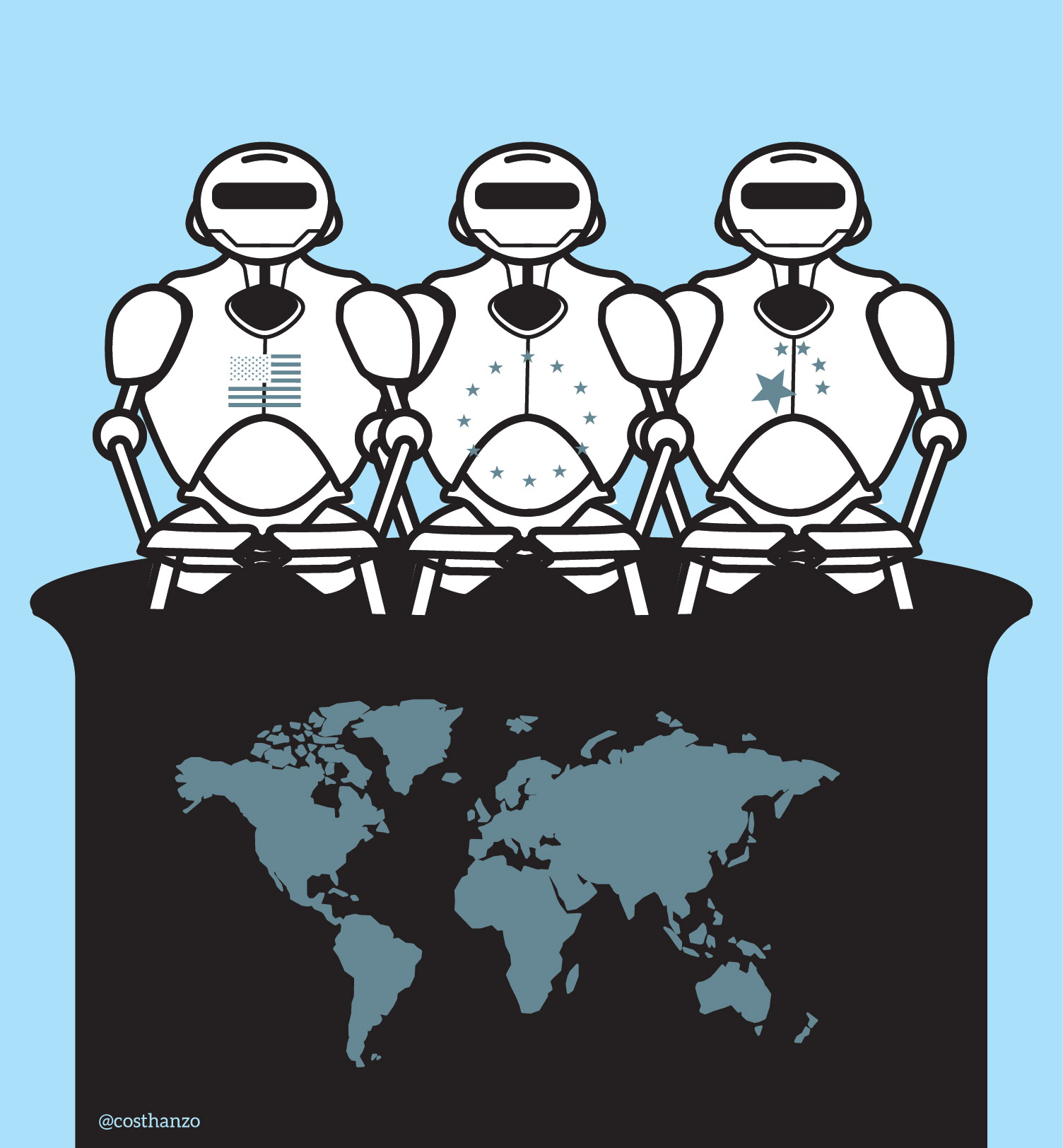
La carrera tecnológica se libra ya con las mismas armas Asistimos a una aproximación de instrumentos entre EEUU, China y la UE: cada uno está adoptando aquellos que definían a los otros. Leer
expansion · about 3 hours ago
España, cada vez más dependiente de China: ya es su primer proveedor mundial China desbanca a Alemania como principal suministrador de bienes a España y los expertos avisan del abultado déficit comercial y de la falta de reciprocidad china. Entre enero y junio, el déficit con el país asiático fue de 22.599 millones. Leer
expansion · about 3 hours ago
Brațul lung al Beijingului: Cum prinde China multinaționalele în capcană pentru a încălca sancțiunile occidentale China ripostează și schimbă radical regulile jocului în comerțul global, întinzând o capcană de reglementare pentru companiile străine. Noua strategie a Beijingului își propune să pedepsească cu sancțiuni dure acele multinaționale care respectă sancțiunile americane sau europene și le întrerup tranzacțiile cu companiile chineze, scrie Foreign Policy. Pentru a realiza acest lucru, guvernul chinez își …
hotnews.ro · about 3 hours ago
Germanys second China shock Mark Leonard welcomes Janka Oertel and Andrew Small to discuss how Chinas industrial rise is shaking Germany—and Europes—economic foundations
ecfr.eu · about 3 hours ago
Coming in from the cold: Iceland weighs joining the EU
gdeltproject.org · about 4 hours ago
The New EU Voting system – the old west-east north-south division
gdeltproject.org · about 4 hours ago
Europe as a Model for De-escalation on the Korean Peninsula
gdeltproject.org · about 4 hours ago
Europe bringing in major new travel rules from 2027 - full list
gdeltproject.org · about 4 hours ago
Europes Strategic Autonomy and Transatlantic Imperative
gdeltproject.org · about 4 hours ago
Europe Scrambles For Innovation And Defense As US Decouples From Global Order
gdeltproject.org · about 4 hours ago
Conservatives and FRP Use International Network to Clean Up the Image
gdeltproject.org · about 4 hours ago
Notice how completely different standards the European Commission applies to Ukraine and to EU member states. For several years, the European Commission legally discriminated against and condemned countries like Hungary under Orbán or Poland under the pretext of defending the rule of law and democracy, but towards Ukraine they demand nothing, and the conditions imposed on it are merely superficial, and no one cares whether they will be fulfilled. Here is an example.
telegram_Intel Slava · about 5 hours ago

Lukijoilta | Millainen Euroopan unioni on jatkossa ?
gdelt bot · about 5 hours ago

Kissingers legacy shapes Trumps Greenland and NATO strategy #Europe
mastodon bot · about 6 hours ago
Freihandelsabkommen mit China: China erhebt künftig fast keine Zölle mehr auf Schweizer Importe Die Schweiz will noch in diesem Jahr ein erweitertes Handelsabkommen mit China unterzeichnen. 99,8 Prozent der Importe in die Volksrepublik sollen dann zollfrei sein.
die zeit · about 6 hours ago
Why Taiwan and the South China Sea matter to U.S. and the world When U.S. Sen. Darline Graham struggled to answer in a debate whether the U.S. has a national security interest in Taiwan and the South China Sea, she drew…
japantoday · about 6 hours ago