
Iran buries Supreme Leader Khamenei in Mashhad as millions mourn amid US tensions
Story Timeline
2 months · 2 summary articles
Iran buries Supreme Leader Khamenei in Mashhad as millions mourn amid US tensions
Iran buries Supreme Leader Khamenei at Mashhad shrine as US-Iran clashes erupt
Follow-up
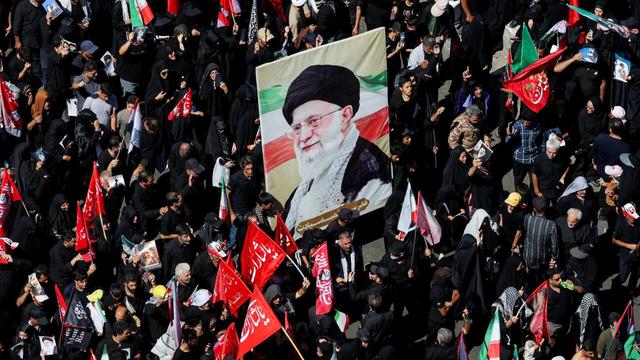
Iran laid to rest Supreme Leader Ayatollah Ali Khamenei on Thursday in the holy city of Mashhad, concluding six days of mass mourning that drew tens of millions of mourners and underscored the Islamic Republic’s defiance amid escalating regional tensions. The burial at the Imam Reza Shrine, Iran’s holiest Shiite site, followed a week-long procession that began on July 3 in Tehran and expanded across multiple cities, including the Iraqi Shiite strongholds of Najaf and Karbala. Iranian state media reported participation by up to 43 million people, a figure that, if confirmed, would make it the largest funeral in recorded history.
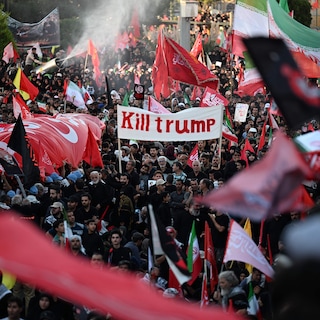
The ceremonies unfolded against a backdrop of heightened confrontation between Iran and the United States, with Iranian officials and state-aligned media using the event to project both internal unity and external resolve. Thousands gathered in Mashhad on Thursday for funeral prayers, with images showing crowds weeping and chanting slogans, some bearing banners threatening retaliation against US President Donald Trump. Security was visibly tightened around the shrine as mourners filled nearby streets, reflecting the volatile climate.
Analysts described the funeral as a carefully orchestrated display of power by the Iranian regime, designed to demonstrate its ability to mobilise mass support while reinforcing an anti-imperialist narrative. “The regime is seeking to send two messages: to its own population, by showcasing its control and ability to mobilise large crowds, and to the international community, by reinforcing the image of Khamenei as an anti-imperialist figure who stood up to the United States,” said Ahou Koutchesfahani, an Iran expert in international relations.
Khamenei, who was killed in a US-Israeli airstrike on February 28, was buried alongside four family members who died in the same attack. His son and successor did not appear publicly during the ceremonies, which included processions through Tehran on July 6 that officials claimed drew between 10 and 20 million people. The funeral began on July 3 with his body lying in state at the Grand Mosalla religious complex before a 12-hour journey through the capital.
The burial coincided with reports that Israel had shared intelligence with allies warning of an Iranian plot to assassinate Trump, further straining relations. Iranian state media also claimed that 43 million people participated in the six-day ceremonies, a figure echoed by multiple outlets, though independent verification remains scarce.
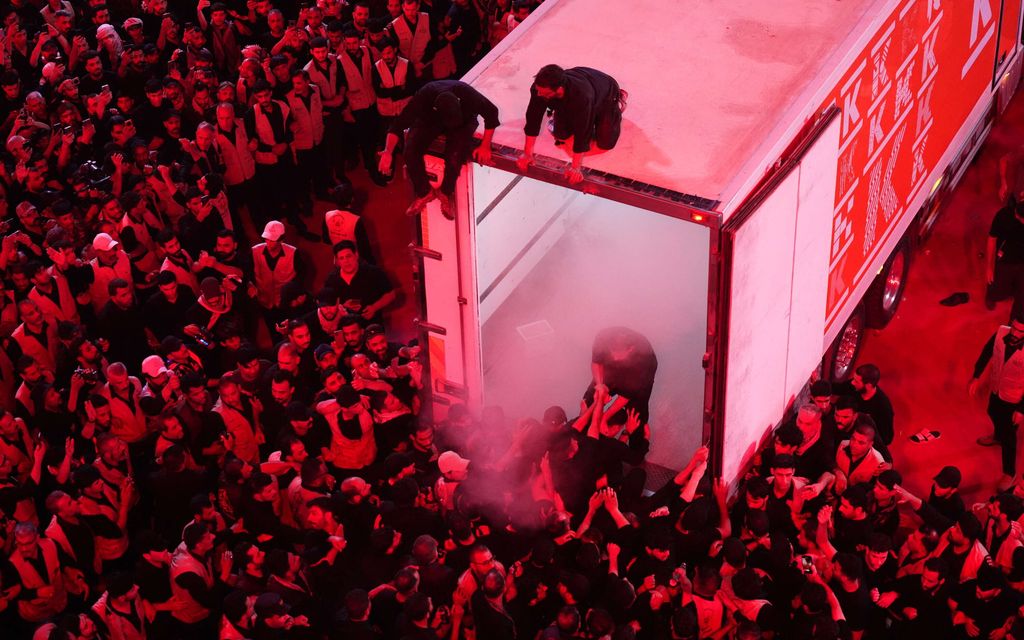
Amid the solemnity, an unexpected detail captured global attention: a Finnish refrigerated truck, typically used for transporting perishable goods, was repurposed as the hearse for Khamenei’s coffin, sparking curiosity and commentary online.
As the funeral concluded, Iran’s leadership sought to frame the event as a reaffirmation of its legitimacy and a challenge to Western influence. Yet the ceremonies unfolded against a backdrop of renewed military exchanges in the Gulf, with Tehran striking American assets in multiple countries and Washington warning of further retaliation. The burial of Khamenei, who had himself requested to be interred at the Imam Reza Shrine, marks not only the end of an era but the intensification of a confrontation that shows no signs of abating.
Follow us for live European news
- 3
- 2
- 2
- 1
- 1
- 1
- 1
- 1
- 1
- 1
- 1
- 1
1 further source not geolocated
Articles
Live - Hoge Iraanse functionaris dreigt met nieuwe aanvallen op Israël • Iraanse leider Khamenei begraven na dagenlange rouwceremonie
de morgen · about 2 months ago
Uutinen Khamenein erikoisesta ruumisautosta leviää maailmalla
iltalehti · about 2 months ago

In beeld | Iraanse leider te ruste gelegd na zesdaagse rouwplechtigheid In de noordoostelijke stad Mashhad is de overleden hoogste leider van Iran, ayatollah Ali Khamenei, te ruste gelegd. Khamenei kwam eind februari samen met naaste medewerkers om het leven bij gerichte Amerikaanse en Israëlische luchtaanvallen op zijn hoofdkwartier in Teheran.
nu.nl · about 2 months ago

Les funérailles dAli Khamenei, plébiscite pour le régime ou mascarade ? Selon la presse locale, les obsèques du guide suprême iranien tué au premier jour de la guerre américano-israélienne contre lIran ont rassemblé plusieurs dizaines de millions de personnes. Mais pour les médias dopposition, ces cérémonies organisées durant plusieurs jours ont été un échec, malgré les efforts de mobilisation tous azimuts.
courrier international · about 2 months ago
Ali Khamenei inhumé, lIran veut éliminer Trump selon Israël, les auteurs de lattentat à Damas arrêtés… Lactu de ce vendredi 10 juillet au Moyen-Orient Lessentiel des informations du jour sur la région Moyen-Orient.
liberation · about 2 months ago
⚡ NEWSIran orchestrates Khamenei funeral to project strength and anti-imperialist narrativeIrans funeral ceremonies for Ali Khamenei are analyzed as a strategic display of power. The regime aims to demonstrate internal control through mass mobilization while projecting an anti-imperialist image to the international community, specifically countering US...📰 #USA #Diplomacy #Geopolitics #GeoWire
mastodon bot · about 2 months ago
Iran: Ajatollah Chamenei nach einwöchigen Trauerfeierlichkeiten beigesetzt Das bei einem US-Angriff getötete geistliche Oberhaupt des Iran ist in seiner Heimatstadt Maschhad beigesetzt worden. Sein Sohn und Nachfolger trat nicht öffentlich in Erscheinung.
handelsblatt · about 2 months ago
D-8 Secretary-General Sohail Mahmood pays official visit to Iran, attends Khamenei tribute ceremony Ambassador Sohail Mahmood, Secretary-General of the Developing-8 Organization for Economic Cooperation (D-8), paid an official visit to the Islamic Republic of Iran from 2-4 July to attend the "Farewell and Tribute Ceremony" held in honour of Ayatollah Seyyed Ali Khamenei. He was accompanied by Executive Assistant Muhammad Bilal Khan.On behalf of the D-8 Organization, Mahmood conveyed condolences to Irans leadership, government and people, praying for the departed soul and for the bereaved family and Iranian people to find solace and strength. He also signed the Condolence Book during the ceremony, which was organized for foreign dignitaries.During his stay in Tehran, the Secretary-General held a bilateral meeting with Foreign Minister Dr. Seyed Abbas Araghchi, discussing the long-standing partnership between the D-8 Secretariat and Iran, regional developments, the blocs strategic priorities and preparations for the next phase of D-8 cooperation.Mahmood reaffirmed solidarity with the Iranian people and wished success for the countrys leadership in efforts toward durable peace, progress and prosperity. He also briefed Araghchi on recent progress across various tracks of D-8 cooperation and outlined the organizations current profile and future direction.Araghchi thanked Mahmood for attending the tribute ceremony and underlined Irans national resolve and commitment to peace through dialogue and diplomacy, while stressing the importance of enhanced economic cooperation amid the regions changing landscape. He reaffirmed Irans commitment to the D-8 as a founding member and pledged continued substantial contributions to the organizations agenda. Both sides discussed new opportunities for increased trade, investment, energy cooperation, and hard and soft connectivity arising from ongoing regional transformation.The Secretary-General also held separate meetings with Deputy Foreign Minister and President of the Institute for Political and International Studies (IPIS) Dr. Saeed Khatibzadeh, and with Irans D-8 Commissioner Ambassador Alireza Tootoonchian. Those discussions focused on strengthening policy dialogue, deepening D-8 collaboration under the Decennial Roadmap 2020-2030, and enhancing the organizations institutional capacity and international visibility.Throughout his engagements in Tehran, Mahmood emphasized that the D-8 is entering a new phase of strategic transformation centered on closer economic integration, trade and investment promotion, industrial cooperation, innovation, technology, energy security, sustainable development and people-centered growth. He noted that Irans industrial capabilities, technological expertise, manufacturing capacity and strategic position would remain valuable to advancing the D-8s collective objectives.The visit reinforced the partnership between the D-8 Secretariat and Iran, with both sides highlighting shared determination to support the organizations institutional capacity-building and deepen economic cooperation as the D-8 approaches its 30th anniversary since its founding in 1997.
yenisafak · about 2 months ago
Iran holds funeral prayers for slain leader Khamenei in Mashhad Thousands gathered in the eastern city of Mashhad on Thursday for funeral prayers for Supreme Leader Ayatollah Ali Khamenei, who was killed in a US-Israeli airstrike in February, as Iran concluded a week-long procession for the slain leader.
yenisafak · about 2 months ago
Sarajevo honors 10 Srebrenica victims ahead of July burial The remains of 10 victims of the 1995 Srebrenica genocide received an emotional farewell in Sarajevo on Thursday as they were transported toward the Potocari Memorial Cemetery, where they will be laid to rest during ceremonies marking the 31st anniversary of the massacre.
yenisafak · about 2 months ago
Ajatollan hautajaiset | Ali Khamenei on haudattu Yhdysvaltain itsenäisyyspäivänä alkaneet Ali Khamenein julkiset hautajaismenot huipentuivat kiihtyneiden sotatoimien keskellä. Uusi ylin johtaja pysyi katseilta piilossa.
helsingin sanomat · about 2 months ago
Für Khameneis Beerdigung setzt die Schweiz die Fahne auf Halbmast [premium] Die Schweiz hat ein klar geregeltes Protokoll und nimmt US-Interessen im Iran wahr. In Österreich gibt es für die Anordnung der Trauerbeflaggung keine Rechtsvorschriften.
die presse · about 2 months ago

Obchody 85. rocznicy pogromu w Jedwabnem. Na miejscu był również Braun W Jedwabnem zakończyły się obchody 85. rocznicy pogromu na Żydach. W okolicy zebrały się również środowiska skrajnej prawicy, wraz z europosłem Grzegorzem Braunem i autorem antysemickich publikacji o zbrodni Wojciechem Sumlińskim.
gazeta.pl · about 2 months ago
Behind Khameneis funeral, Irans bid to show strength Ahou Koutchesfahani, scholar in international relations and Iran expert, analyses the funeral ceremonies for Ali Khamenei as a carefully orchestrated display of power by the Islamic Republic. The regime is seeking to send two messages: to its own population, by showcasing its control and ability to mobilise large crowds, and to the international community, by reinforcing the image of Khamenei as an anti-imperialist figure who stood up to the United States. Through these ceremonies, Tehran is also attempting to strengthen its narrative and rally support beyond its borders.
france24 · about 2 months ago
Iran bids farewell to Ayatollah Ali Khamenei amid tensions with US Large crowds of mourners marched through Mashhad on 9 July for the burial of former Supreme Leader Ayatollah Ali Khamenei at Mashhads Imam Reza Shrine.
euronews · about 2 months ago

Cerca de 43 milhões de pessoas no funeral de Khamenei Os cortejos fúnebres incluíram, além do caixão de Khamenei, os de quatro familiares mortos no mesmo ataque
observador · about 2 months ago
Iran buries supreme leader Khamenei as regional tensions flare Iran has laid to rest Supreme Leader Ali Khamenei at Mashhads Imam Reza Shrine following weeklong funeral ceremonies attended by millions. The burial coincides with escalating US-Iran military exchanges across the Gulf, raising fears of wider conflict as Tehran strikes American assets in multiple countries.
yenisafak · about 2 months ago
Presa iraniană afirmă că 43 de milioane de persoane au participat la ceremoniile funerare ale lui Khamenei Între 41 și 43 de milioane de persoane au participat la ceremoniile funerare de șase zile organizate în memoria fostului lider suprem al Iranului, ayatollahul Ali Khamenei, care a fost asasinat, relatează presa iraniană, citată de Al Jazeera.
digi24 · about 2 months ago

Här används finländsk kyllastbil – som ayatollans likbil Miljontals följde begravningsceremonierna för Irans högste ledare Ali Khamenei och fyra av hans familjemedlemmar. Men i folkvimlet fick en oväntad detalj finländare att lyfta på ögonbrynen. Som likbil användes nämligen en lastbil från den finska detalj- och partihandelskedjan K.
dagens nyheter · about 2 months ago
Getöteter oberster Führer Irans: Chamenei in Maschhad beigesetzt
sueddeutsche · about 2 months ago
Iran: Anti-US anger dominates Khamenei funeral ceremonies Millions of mourners have taken part in six days of funeral ceremonies for Irans former Supreme Leader Ayatollah Ali Khamenei, chanting anti-US and anti-Israel slogans as the country commemorates the leader killed in US-Israeli strikes in late February. Even as the ceremonies drew to a close, fresh US strikes fuelled tensions, while Irans new supreme leader remained out of public sight throughout the mourning period.
france24 · about 2 months ago