
Iran buries Supreme Leader Khamenei at Mashhad shrine as US-Iran clashes erupt
Story Timeline
2 months · 3 summary articles
Iran buries Supreme Leader Khamenei in Mashhad as millions mourn amid US tensions
Follow-upIran buries Supreme Leader Khamenei at Mashhad shrine as US-Iran clashes erupt
Millions march in Tehran as Khamenei funeral procession begins: burial set for Thursday
Follow-up
Iran on Friday buried its slain Supreme Leader Ayatollah Ali Khamenei at the Imam Reza shrine in Mashhad, four months after he was killed in a US-Israeli airstrike that triggered a devastating regional war. The burial concluded a week of mass mourning ceremonies that drew millions of mourners, while fresh US-Iranian clashes erupted hours before the final rites, raising fears of renewed all-out conflict.
Khamenei’s flag-draped coffin was carried into the shrine in his eastern Iranian hometown as tens of thousands chanted slogans and waved flags, state media reported. His son and designated successor, Mojtaba Khamenei, did not appear in public during the ceremonies, which were led by other senior clerics. The absence of the new Supreme Leader underscored the uncertainty gripping Iran’s political leadership as the Revolutionary Guards consolidate power behind closed doors.
The burial took place against a backdrop of renewed violence. US airstrikes targeted Iranian railway bridges on routes leading to Mashhad, according to reports citing Iranian officials, while explosions were reported in southern cities including Bushehr, home to a nuclear plant, and Konarak. Iran retaliated with missile strikes on US-backed positions in the Gulf, deepening a cycle of tit-for-tat attacks that has persisted despite a shaky ceasefire agreement brokered in April.
Diplomatic efforts to stabilize the region continued, with US President Donald Trump briefing Israeli Prime Minister Benjamin Netanyahu on Thursday about ongoing US operations in the Gulf. Meanwhile, the US will oversee the withdrawal of Israeli forces from “pilot zones” in southern Lebanon within days, Lebanese and US officials told France 24. The phased pullback aims to reduce tensions along the border, where Hezbollah fighters have clashed repeatedly with Israeli troops since the February escalation.
Iranian state media claimed 43 million people participated in the week-long mourning processions, though independent observers noted that many mourners were coerced or feared repercussions for non-participation. The funeral prayers in Mashhad were attended by delegations from Hamas, Hezbollah, and the Houthi movement, signaling the late leader’s enduring influence across the region’s militant networks. “No compromise with the murderers,” read banners draped across the shrine, echoing the defiant rhetoric that defined Khamenei’s 35-year rule.
Khamenei, 87, was killed on February 28 when Israeli and US warplanes struck his residence in Tehran, triggering a five-week air campaign that killed more than 3,000 people and crippled Iran’s nuclear and military infrastructure. His death came amid mass protests over economic hardship and political repression, which security forces crushed with lethal force. The Revolutionary Guards, now the dominant force in Iranian politics, have since promoted their commanders to key posts, reshaping the power structure in Tehran.
The new Supreme Leader, Mojtaba Khamenei, has adopted a more confrontational stance toward the US and Israel, analysts say, abandoning his father’s cautious pragmatism. “With the old ayatollah gone, so too is the restraint he showed toward American provocations,” wrote The Times. The shift has already led to intensified attacks on shipping in the Strait of Hormuz and threats against US military assets in the region.
As the coffin was lowered into the shrine’s crypt, state television broadcast images of mourners weeping and chanting “Death to America,” a ritual refrain that has defined Iran’s revolutionary identity. Yet behind the choreographed displays of grief, the country remains deeply divided, with many Iranians privately celebrating Khamenei’s death as the end of an era of repression and economic mismanagement. The burial, broadcast live across state channels, offered no hint of the fractures now straining Iran’s fragile social fabric.
Follow us for live European news
- 4
- 2
- 2
- 2
- 1
- 1
- 1
- 1
- 1
- 1
- 1
- 1
5 further sources not geolocated
Articles

Iran: Getötetes iranisches Staatsoberhaupt Chamenei im Iran beigesetzt Nach einer Woche mit Trauerfeierlichkeiten ist Ali Chamenei in seiner Heimatstadt bestattet worden. Er war im Februar bei einem israelischen Luftangriff getötet worden.
die zeit · about 2 months ago

Irans oberster Führer Ali Khamenei in Mashhad beerdigt Nach sechs Tagen endeten die Trauerfeiern in mehreren Städten im Iran und Irak. Neben Trauer und Zorn wurden auch Rachegelüste beschworen
der standard · about 2 months ago
В Иране завершились похороны аятоллы Али Хаменеи
meduza · about 2 months ago
BiH FM attended Marking of the International Day of Remembrance and Commemoration of the Genocide in Srebrenica UNHQ The Minister of Foreign Affairs of Bosnia and Herzegovina, Elmedin Konaković, attended today the commemoration on the occasion of the International Day of Remembrance and Commemoration of the Genocide in Srebrenica in 1995, which was held in the General Assembly hall at the United Nations headquarters in New York. This years commemoration is the second […] The post BiH FM attended Marking of the International Day of Remembrance and Commemoration of the Genocide in Srebrenica UNHQ appeared first on Sarajevo Times.
sarajevo times · about 2 months ago

Khamenei foi enterrado, com 43 milhões de pessoas no funeral O funeral decorreu com a presença de delegações do Hamas, Hezbollah e Houthis
observador · about 2 months ago
Iran-Krieg: Irans oberster Führer Chamenei beerdigt Fast eine Woche lang dauerten die staatlich organisierten Trauerfeiern für das getötete iranische Staatsoberhaupt Ajatollah Ali Chamenei. Das Land steuert in eine politisch ungewisse Zukunft.
tagesspiegel · about 2 months ago
Live: Iran buries Khamenei after new fighting with US erupts Iran on Friday laid to rest its former supreme leader Ali Khamenei over four months after his killing in an airstrike, as two days of US and Iranian attacks raised fears of a return to all-out war. Khameneis flag-covered coffin was carried aloft into the shrine of Imam Reza in his home city of Mashhad in eastern Iran as a sea of people waited outside and listened to prayers, with no sign of a public appearance by his son and successor Mojtaba Khamenei. Follow our liveblog for all the latest updates.
france24 · about 2 months ago
VIDEO Liderul suprem iranian ucis în prima zi a războiului a fost înmormântat, dar unde este succesorul său? Ce au arătat ultimele zile din Iran Fiul și succesorul lui Khamenei nu a apărut încă public, iranienii promit moartea lui Donald Trump, pentru a-și răzbuna fostul lider, iar Teheranul dă semne că a ieșit consolidat de pe urma războiului, după ce fusese zguduit de protestele masive reprimate sângeros, scrie Reuters. Liderul suprem al Iranului, ayatollahul Ali Khamenei, ucis în prima zi …
hotnews.ro · about 2 months ago
Pohřbem Chameneího skončilo v Íránu šestidenní smuteční procesí. Jeho syn a nástupce se neukázal Bývalý nejvyšší íránský duchovní vůdce Alí Chameneí, zabitý 28. února při prvních izraelsko-amerických úderech na Teherán, byl v pátek nad ránem pohřben ve městě Mašhad na severovýchodě Íránu. S odvoláním na íránská státní média o tom informovaly světové tiskové agentury. Ani na závěrečném aktu šestidenní série masových smutečních obřadů, poznamenané obnovením úderů USA proti Íránu, se neukázal syn a nástupce zesnulého vůdce, Modžtaba Chameneí.
irozhlas.cz · about 2 months ago
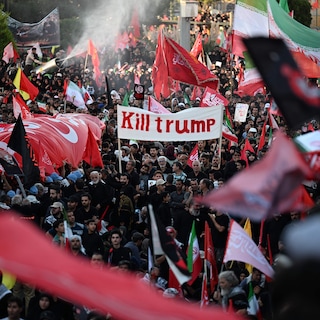
Live - Israël deelt inlichtingen over Iraans plan om Trump te vermoorden • Iraanse leider Khamenei begraven na dagenlange rouwceremonie
de morgen · about 2 months ago
Gaza mourns aid worker killed by Israel who helped them see the World Cup Israeli strike killed Mohammed al-Wahidi and three others on the eve of the Egypt vs Argentina match on Tuesday.
aljazeera · about 2 months ago
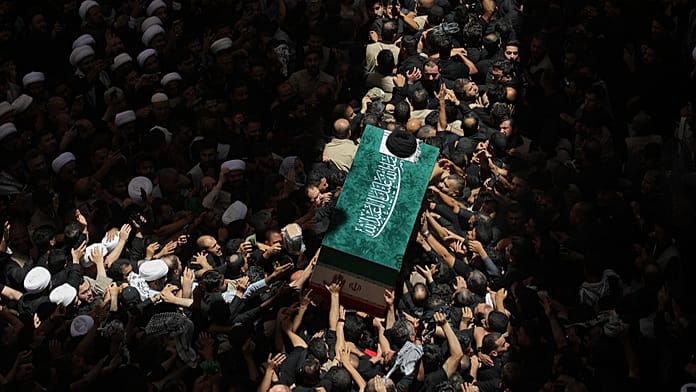
Iran buries Khamenei as renewed fighting tests shaky ceasefire deal Khameneis flag-covered coffin was carried aloft into the shrine of Imam Reza in his home city of Mashhad in eastern Iran as a sea of people waited outside and listened to prayers, with no sign of a public appearance by his son and successor Mojtaba Khamenei.
euronews · about 2 months ago
Iran buried its slain Supreme Leader Ayatollah Ali Khamenei at a shrine in Mashhad, the culmination of a week of mass funeral processions and rallies. Khamenei was killed in U.S.-Israeli airstrikes on the first day of the war on February 28. reut.rs/4fcZ4nz
bluesky_Reuters · about 2 months ago
Ajatollan hautajaiset | Ali Khamenei on haudattu Yhdysvaltain itsenäisyyspäivänä alkaneet Ali Khamenein julkiset hautajaismenot huipentuivat kiihtyneiden sotatoimien keskellä. Uusi ylin johtaja pysyi katseilta piilossa.
helsingin sanomat · about 2 months ago

Iranian State Media: Praying Policeman Amid TensionsAmid tensions, a viral video shows an Iranian policeman praying. Is this a symbol of resilience or propaganda? Get the full story now. #WorldNews #ForeignPolicy
mastodon bot · about 2 months ago
Iran holds funeral prayers for slain leader Khamenei in Mashhad Thousands gathered in the eastern city of Mashhad on Thursday for funeral prayers for Supreme Leader Ayatollah Ali Khamenei, who was killed in a US-Israeli airstrike in February, as Iran concluded a week-long procession for the slain leader.
yenisafak · about 2 months ago
Sarajevo honors 10 Srebrenica victims ahead of July burial The remains of 10 victims of the 1995 Srebrenica genocide received an emotional farewell in Sarajevo on Thursday as they were transported toward the Potocari Memorial Cemetery, where they will be laid to rest during ceremonies marking the 31st anniversary of the massacre.
yenisafak · about 2 months ago

Social media users share AI-generated video falsely depicting Iran supreme leaders funeral
news.yahoo.com · about 2 months ago
D-8 Secretary-General Sohail Mahmood pays official visit to Iran, attends Khamenei tribute ceremony Ambassador Sohail Mahmood, Secretary-General of the Developing-8 Organization for Economic Cooperation (D-8), paid an official visit to the Islamic Republic of Iran from 2-4 July to attend the "Farewell and Tribute Ceremony" held in honour of Ayatollah Seyyed Ali Khamenei. He was accompanied by Executive Assistant Muhammad Bilal Khan.On behalf of the D-8 Organization, Mahmood conveyed condolences to Irans leadership, government and people, praying for the departed soul and for the bereaved family and Iranian people to find solace and strength. He also signed the Condolence Book during the ceremony, which was organized for foreign dignitaries.During his stay in Tehran, the Secretary-General held a bilateral meeting with Foreign Minister Dr. Seyed Abbas Araghchi, discussing the long-standing partnership between the D-8 Secretariat and Iran, regional developments, the blocs strategic priorities and preparations for the next phase of D-8 cooperation.Mahmood reaffirmed solidarity with the Iranian people and wished success for the countrys leadership in efforts toward durable peace, progress and prosperity. He also briefed Araghchi on recent progress across various tracks of D-8 cooperation and outlined the organizations current profile and future direction.Araghchi thanked Mahmood for attending the tribute ceremony and underlined Irans national resolve and commitment to peace through dialogue and diplomacy, while stressing the importance of enhanced economic cooperation amid the regions changing landscape. He reaffirmed Irans commitment to the D-8 as a founding member and pledged continued substantial contributions to the organizations agenda. Both sides discussed new opportunities for increased trade, investment, energy cooperation, and hard and soft connectivity arising from ongoing regional transformation.The Secretary-General also held separate meetings with Deputy Foreign Minister and President of the Institute for Political and International Studies (IPIS) Dr. Saeed Khatibzadeh, and with Irans D-8 Commissioner Ambassador Alireza Tootoonchian. Those discussions focused on strengthening policy dialogue, deepening D-8 collaboration under the Decennial Roadmap 2020-2030, and enhancing the organizations institutional capacity and international visibility.Throughout his engagements in Tehran, Mahmood emphasized that the D-8 is entering a new phase of strategic transformation centered on closer economic integration, trade and investment promotion, industrial cooperation, innovation, technology, energy security, sustainable development and people-centered growth. He noted that Irans industrial capabilities, technological expertise, manufacturing capacity and strategic position would remain valuable to advancing the D-8s collective objectives.The visit reinforced the partnership between the D-8 Secretariat and Iran, with both sides highlighting shared determination to support the organizations institutional capacity-building and deepen economic cooperation as the D-8 approaches its 30th anniversary since its founding in 1997.
yenisafak · about 2 months ago
Getötetes Staatsoberhaupt: Irans oberster Führer Chamenei beerdigt Lange galt Ajatollah Ali Chamenei als unantastbar. Ende Februar tötete das israelische Militär ihn bei einem Luftangriff. Nach tagelanger Staatstrauer wurde er nun in seiner Heimatstadt beigesetzt.
sueddeutsche · about 2 months ago
Irankrieg: Iran meldet Angriffe im Süden des Landes Eine Militäranlage in Buschehr und weitere Orte im Süden des Irans sind laut Medienberichten attackiert worden. Ajatollah Ali Chamenei wurde beerdigt. Das Liveblog
die zeit · about 2 months ago
Iranul l-a îngropat pe Ali Khamenei și odată cu bătrânul ayatollah s-a dus și atitudinea reținută față de jignirile americanilor Noul lider suprem de la Teheran, ayatollahul Mojtaba Khamenei, a renunțat la abordarea mai prudentă a tatălui său față de America, atacând baze militare și intensificând conflictul în Strâmtoarea Ormuz, scrie The Times într-o analiză a situației din Iran.
digi24 · about 2 months ago
„Kein kompromiss mit den Mördern: Irans oberster Führer Ali Khamenei in Mashhad beerdigt Khamenei war am 28. Februar durch einen israelischen Luftangriff auf seinen Amtssitz in Teheran getötet worden. Bei den Trauerfeierlichkeiten waren Racheschwüre zu hören.
die presse · about 2 months ago
Die Lage im Überblick: USA wollen trotz Attacken mit Iran reden - Chamenei beerdigt
die zeit · about 2 months ago
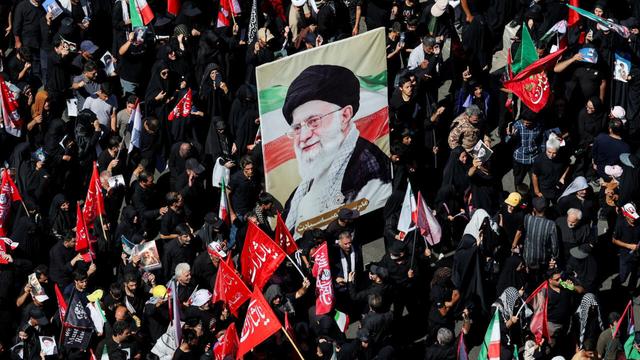
🔴 BREAKINGIran buries Khamenei amid renewed US-Iran conflictIran laid to rest former Supreme Leader Ali Khamenei in Mashhad, four months after his death in a US airstrike. The funeral coincides with two days of renewed attacks between the US and Iran, raising fears of all-out war. Successor Mojtaba Khamenei did not make a public...📰 #USA #Military #Geopolitics #GeoWire
mastodon bot · about 2 months ago

Gaza mourns aid worker killed by Israel who helped them see the World Cup
news.yahoo.com · about 2 months ago

Näin K-ryhmän auto on voinut päätyä Khamenein hautajaisiin
iltalehti · about 2 months ago
Iran-Krieg: Neue Eskalation überschattet Staatsbegräbnis im Iran Die USA bombardieren zwei Nächte in Folge Ziele im Iran. Das Land meldet seinerseits Angriffe auf US-Zerstörer. Unterdessen endet mit der Bestattung von Ajatollah Ali Chamenei eine politische Ära.
handelsblatt · about 2 months ago

Irans leader Khamenei is buried after days of mourning
news.yahoo.com · about 2 months ago

Iran on Thursday was laying to rest its former supreme leader Ali Khamenei over four months after his killing in a US-Israeli airstrike, as Tehrans reports of new American attacks and Iranian hits on US allies raised fears of a return to all-out war. u.afp.com/SKEj
bluesky_AFP English · about 2 months ago