Loading…
 Wednesday, September 2Wednesday, September 2
7 days · 2 summary articles
Volkswagen considers closing four German plants by 2034 amid cost crisis: report
Volkswagen to cut quarter of management roles as German plants face closure risk
Business insolvencies in Hamburg rose to 441 in the first half of 2026, a 7.8% increase from the same period in 2025, according to data from Statistikamt Nord. The filings affected at least 2,680 employees, with estimated liabilities totaling nearly €702 million, averaging €1.6 million per company .
Volkswagen’s management is considering the closure of four German plants—Emden, Zwickau, Hannover, and Audi’s Neckarsulm facility—between 2031 and 2034, according to a supervisory board document cited by *WirtschaftsWoche* and Reuters. The plan, driven by high production costs and the phase-out of current models, has not been officially confirmed by Volkswagen. The company’s supervisory board is set to meet on Friday to discuss the proposals. IG Metall and Volkswagen’s works council have signaled resistance, with IG Metall regional leader Thorsten Gröger warning of strong pushback if existing agreements are violated .
Volkswagen CEO Oliver Blume told employees in recent meetings that the company’s financial situation is “more than critical,” despite remaining profitable. The management is developing a new “Target 2030” framework, as current cost-cutting measures, including a planned reduction of 50,000 jobs by 2030, are deemed insufficient. Automobile expert Helena Beron Wisbert of Ostfalia Hochschule Wolfsburg stated that cost-saving programs are “unavoidable” and must be implemented swiftly to refocus on new models and technologies. She noted that while German automakers still dominate Europe, their market share in electric vehicles is declining .
Germany’s furniture industry has lost 20% of its revenue over four years, with over 60% of furniture sold in the country now imported, primarily from China. The Association of the German Furniture Industry (VDM) reported that China accounted for nearly €1.7 billion in furniture imports in the first half of 2026, an 81% increase from 2017 to 2025. VDM Managing Director Jan Kurth called for protective tariffs, citing state-subsidized production and an undervalued currency in China. He argued that existing anti-dumping mechanisms are ineffective due to their slow implementation .
Germany’s bicycle industry also faces declines, with 2025 revenue dropping 7% to €25.2 billion and employment falling 3% to 74,300. The Future Bicycle Association attributed the downturn to post-pandemic overproduction, price declines, and excess inventory, particularly in e-bikes. The association’s managing director, Wasilis von Rauch, warned of increasing competition from China, which is expanding exports to Europe in response to U.S. tariffs .
In aviation, Germany’s air traffic recovery lags behind Europe, with seat capacity slightly declining in the first half of 2026. The Frankfurt Airport’s role as a global hub is under pressure due to high costs, including air traffic taxes, security fees, and labor expenses. The recent rollback of a tax increase was described as insufficient by industry observers, who noted that regulatory costs have more than doubled in recent years. The EU’s Entry-Exit System (EES), intended to improve border controls, has also caused operational disruptions .
Follow us for live European news

Insolvenzen: Mehr Unternehmensinsolvenzen in Hamburg
die zeit · about 14 hours ago
Regionale Arbeitsmärkte: So unterschiedlich sind Berufe in Deutschland verteilt Je nach Region unterscheiden sich Arbeitsmärkte erheblich. Wir zeigen, wo welche Jobs weniger gefragt sind und warum es riskant ist, dass sich Branchen regional bündeln.
die zeit · about 14 hours ago
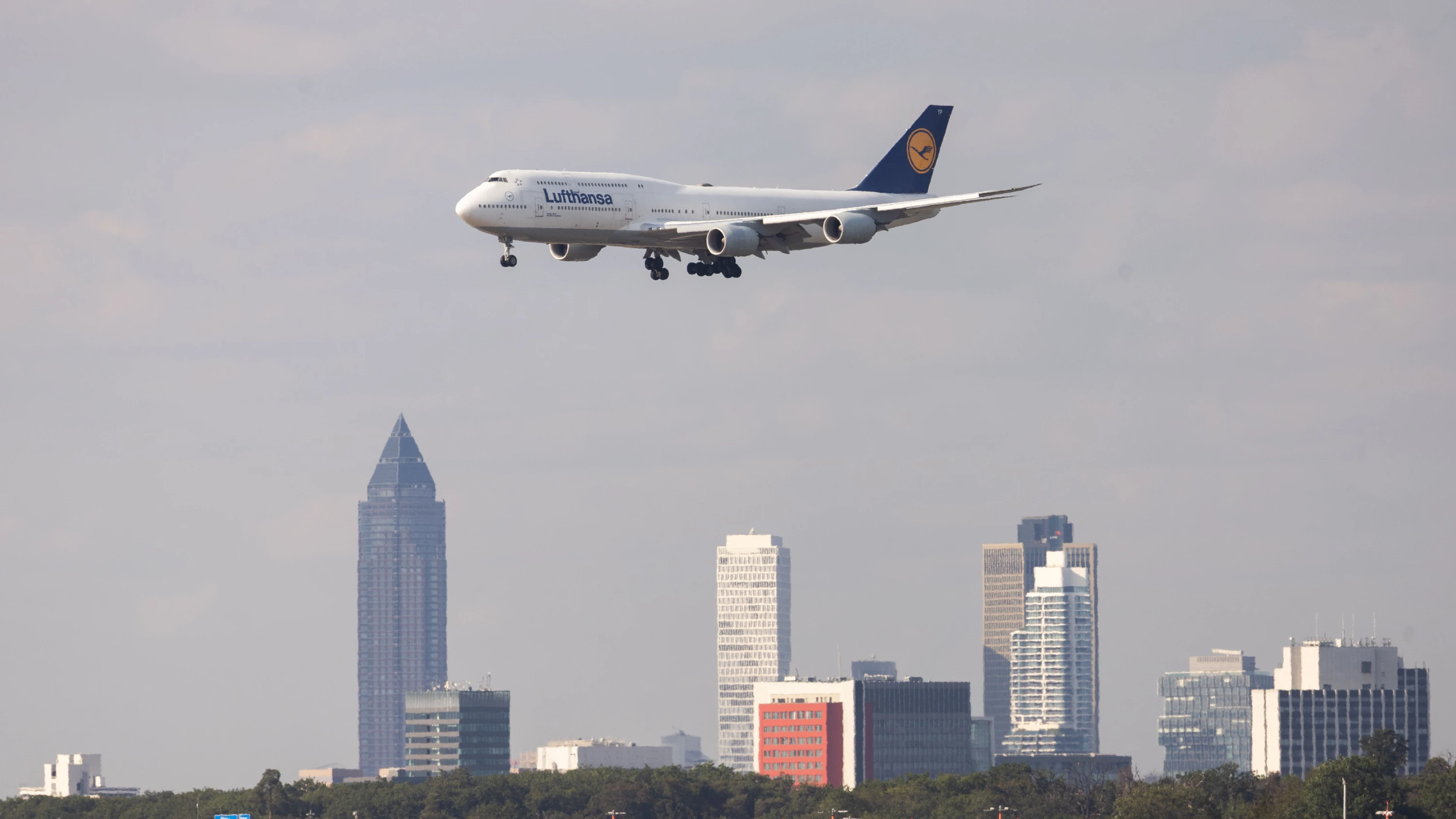
Standort Deutschland: Die Luftfahrt leidet Die Abgaben im Luftverkehr machen Deutschland im internationalen Vergleich wettbewerbsunfähig. Das ist ein Problem: Wenn der Luftverkehr in Deutschland weiter leidet, kostet das Wertschöpfung, Arbeitsplätze – und hilft dem Klima nicht weiter.
faz · about 14 hours ago
Krisenresistent: Acht deutsche Familienunternehmen älter als 400 Jahre Manche Firmen gehen in Krisen insolvent. Andere stellen den Betrieb ein, weil der Chef keinen Nachfolger findet. Und dann gibt es die unverwüstlichen Unternehmen, die alles überstehen.
handelsblatt · about 15 hours ago

Ezeket a gyárakat zárhatja be egy belső jelentés szerint a Volkswagen-csoport A pénzügyi igazgató szerint nincsenek gazdaságilag életképes alternatív termelési lehetőségeik a gyárbezárásokkal szemben.
hvg.hu · about 15 hours ago
Kazakhstan manufacturing downturn deepens in August, PMI shows Health of sector deteriorates to largest extent in over four-and-a-half years on weaker demand and reduced customer purchasing power.
intellinews · about 15 hours ago
„Krise noch nicht überwunden: Fahrradbranche verliert Umsatz und Beschäftigung Rabatte, hohe Lagerbestände und Konkurrenz aus China setzen der Fahrradbranche zu. Sie warnt vor einem Sparkurs bei Kommunen und richtet einen Appell an die Politik. Kunden profitieren von der Krise.
handelsblatt · about 15 hours ago
Autobauer: Volkswagen zwischen Spardruck und Zukunftsangst Die Betriebsversammlungen bei VW sind erledigt. Jetzt richtet sich der Blick auf den Aufsichtsrat. Eine Automobilexpertin sagt, was sie von den nächsten Tagen beim kriselnden Autobauer erwartet.
handelsblatt · about 15 hours ago
Luftfahrt: Intern oder extern – wer führt künftig Lufthansa Technik? Die Wartungstochter rettet regelmäßig die Bilanz des Konzerns. Im Januar geht der Chef in den Ruhestand. Ein Kandidat hat gute Chancen, am Freitag zum Nachfolger berufen zu werden.
handelsblatt · about 15 hours ago

Probleme in der Ausbildung: Warum fast jeder dritte Azubi hinwirft Die Zahl der abgebrochenen Ausbildungen erreicht einen Höchststand. Den Betrieben gehen Fachkräfte verloren, während junge Menschen arbeitslos werden. Was sind die Gründe, und was lässt sich tun?
faz · about 15 hours ago

Die Premium-Illusion der Lufthansa Die Lufthansa investiert Milliarden in die größte Qualitätsoffensive ihrer Geschichte. Zugleich versucht sie, sich mit Billigflieger-Methoden gesund zu sparen. Kann die Doppelstrategie aufgehen?
welt.de · about 15 hours ago
Deutsche Wirtschaft: Kommt jetzt doch der Aufschwung? Die Wirtschaft wächst, die Stimmung der Unternehmen verbessert sich. Unser Überblick über die Konjunkturdaten zeigt, ob eine Wende in Sicht ist.
die zeit · about 15 hours ago

Billigware aus China überrollt die nächste deutsche Branche Deutschlands Möbelindustrie hat binnen vier Jahren 20 Prozent ihres Umsatzes verloren. Die Branche fordert nun drastische Maßnahmen gegen die Konkurrenz aus dem Ausland.
welt.de · about 16 hours ago
Autoindustrie: Werkbank oder raus: Chinesischer Zulieferer droht Mitarbeitern – und alarmiert Mercedes, BMW und VW Der chinesische Autozulieferer Xingyu stellt Hunderte Hochschulabsolventen ein und will viele kurz darauf wieder loswerden. Das könnte für seine deutschen Abnehmer zum Problem werden.
handelsblatt · about 16 hours ago

Goiko multiplica sus pérdidas hasta los 36,4 millones de euros La cadena de hamburgueserías registró unas ventas de 109 millones en 2025, un 11,2 menos que el año anterior. Leer
expansion · about 17 hours ago

Werke sollen „leerlaufen – VW‑Vorstand beschließt Ende von vier Produktionsstätten er Volkswagen-Vorstand hat einem Medienbericht zufolge einstimmig einen Beschluss über den Zeitpunkt des Produktionsendes in den Werken Emden, Hannover, Zwickau und Neckarsulm gefasst.
welt.de · about 17 hours ago
German industry pushes to increase work week to 40 hours Big employers including Mercedes-Benz call for Germans to work longer on the same pay to stem the countrys industrial decline
financial times · about 17 hours ago
Muoti | Tamperelainen vaatebrändi Uhana nousi huippusuosioon, joutui irtisanomaan lähes kaikki ja selvisi pahimmasta Uhana on kotimaisten muotibrändien joukossa harvinaisuus, sillä se selvisi korona-ajasta sekä Ukrainan sodasta. Helppoa Uhanallakaan ei ole ollut.
helsingin sanomat · about 18 hours ago
Autobauer: Volkswagen zwischen Spardruck und Zukunftsangst
die zeit · about 19 hours ago