Loading…
 Saturday, September 26Saturday, September 26
4 months · 3 summary articles
Europe validates Ariane 6 commercial launch: ESA eyes eight annual missions by 2028
France unveils stop-gap tank as Daimler invests 1bn in military mobility amid Franco-German defence tensions
Europe pivots after FCAS collapse: Airbus-led group launches new fighter programme
European defence and space sectors pivot toward new alliances after FCAS collapse at ILA Berlin 2026
The collapse of the Franco-German Future Combat Air System (FCAS) at this week’s ILA Berlin International Airshow 2026 has triggered an immediate scramble among Europe’s aerospace and defence giants to forge fresh partnerships, with Spanish firms leading calls for a unified European fighter programme and Berlin exploring new ties with Israel. On the second day of the show, eight companies—including Airbus, GMV, Oesía, Indra, ITP Aero and Sener—signed a joint declaration of intent to launch a successor project, signalling a decisive shift away from the stalled FCAS venture .
The move follows Germany’s formal withdrawal from FCAS, confirmed last month, which left France and Spain as the only remaining partners in the €100 billion programme. Spanish defence executives warned that further delays risked eroding critical industrial capabilities. “We cannot afford to lose more time,” said a joint statement from the seven Spanish firms involved, urging Madrid to act swiftly to secure Europe’s strategic autonomy in combat aviation .
Meanwhile, German officials are quietly exploring alternative collaborations. On Wednesday, the federal government confirmed exploratory talks with Israel Aerospace Industries (IAI) on joint aerospace projects, including unmanned systems and next-generation trainers . The shift reflects broader frustration with Franco-German defence cooperation, with analysts pointing to Norway as a model: Oslo and Berlin are already co-developing a new submarine class, leveraging complementary expertise in sensors and stealth technology .
The space sector, meanwhile, offered a contrasting note of continuity. During an in-flight call from the International Space Station, ESA astronaut Sophie Adenot joined ILA 2026 live to discuss Europe’s ambitions in human spaceflight, flanked by ESA Director General Josef Aschbacher and former astronauts Alexander Gerst and Matthias Maurer . The event underscored Europe’s commitment to Artemis, with Italian astronaut Luca Parmitano named as pilot for Artemis III, despite criticism over NASA’s all-male crew selection for the lunar mission .
As Europe’s defence and space sectors recalibrate, the ILA Berlin 2026 has become a barometer of strategic realignment. The failure of FCAS has exposed deep fissures in European defence industrial policy, but it has also accelerated the search for new models of cooperation—whether through Spanish-led initiatives, German-Israeli partnerships, or renewed transatlantic coordination in space. The coming months will determine whether these alliances can deliver the resilience Europe’s leaders now demand.
Follow us for live European news
2 further sources not geolocated

Líbia. Amnistia exige libertação de portuguesa detida A missão humanitária Global Sumud tinha partido da Mauritânia em abril com o objetivo de chegar a Gaza por via terrestre, transportar ajuda humanitária e apoiar esforços de reconstrução
observador · 4 months ago

NASA răspunde criticilor privind decizia de a selecta doar bărbaţi pentru misiunea Artemis 3 Administratorul NASA, Jared Isaacman, a apărat miercuri decizia de a selecta doar bărbaţi pentru echipajul misiunii Artemis 3, explicând că la baza acestei selecţii sunt numeroase criterii şi că membrii echipajului au fost aleşi pentru a oferi misiunii cele mai ridicate şanse de reuşită, transmite DPA, potrivit Agerpres.
digi24 · 4 months ago
Rodí sa v Košiciach budúcnosť vesmírnych letov? Slovenskí študenti vyvíjajú štít, ktorý prekonáva súčasné limity Existujú rôzne technológie tepelných štítov, pričom každý prináša vlastné výhody. Slovenský návrh spája rôzne riešenia v jednom hybridnom štíte.
aktuality.sk · 4 months ago
Sveriges snabbast växande bolag PODD I Sverige pratas det ofta om att Lovable gör en ofattbar tillväxtresa. I podden denna vecka vill vi lansera ett annat företag som det snabbast växande bolaget någonsin.
svenska dagbladet · 4 months ago
Neues Kooperationsprojekt: Berlin und israelischer Luftfahrtkonzern arbeiten zusammen
die zeit · 4 months ago
Panzerfahrzeug der Wehrmacht: Sturmgeschütz im Sand - Wie ein Zufallsfund ins Museum kommt
die zeit · 4 months ago
Nach Aus für FCAS: Acht Unternehmen wollen Kampfjet-Nachfolgeprojekt starten Das FCAS-Kampfjet-Projekt von Deutschland und Frankreich ist erst kürzlich gescheitert. Nun unterzeichneten acht Firmen eine Absichtserklärung für ein Nachfolgeprojekt.
die zeit · 4 months ago
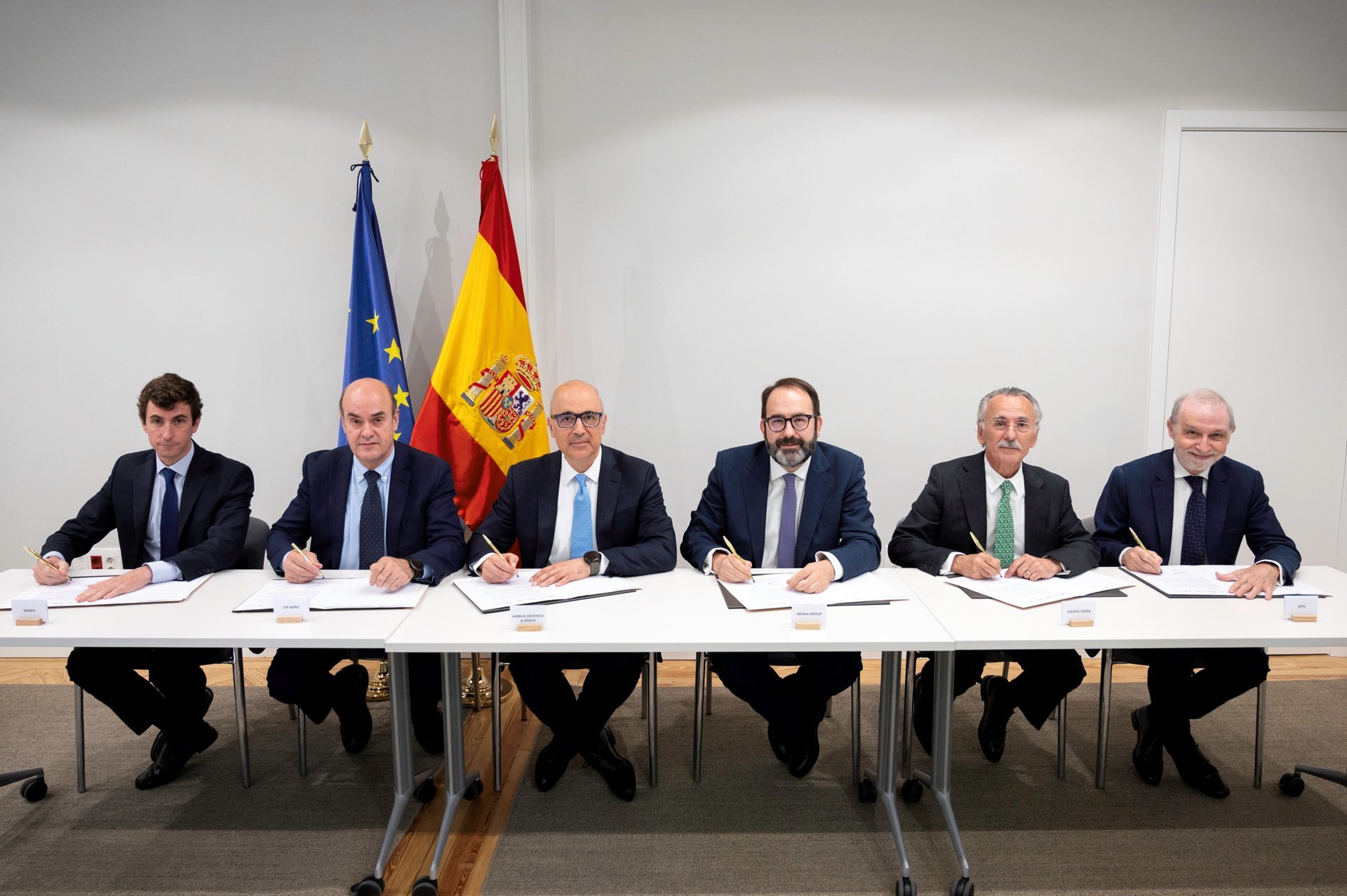
Las empresas de defensa españolas urgen al Gobierno a buscar alternativas para el fracaso del FCAS y apoyar a la industria: "No podemos perder más tiempo" Las siete compañías involucradas en el FCAS alertan de que España necesita estas capacidades Leer
elmundo · 4 months ago
Nach Aus für FCAS: Firmenallianz für neuen Jet
orf.at · 4 months ago
Speech by Tánaiste at EPP Group Study Days
gdeltproject.org · 4 months ago
Georgia World War II veteran gets warm welcome home from Honor Flight
gdeltproject.org · 4 months ago
More Countries Join European In-Space Operations And Services Pilot Mission
gdeltproject.org · 4 months ago
Spanish firms ready to build new fighter jet after failed project
gdeltproject.org · 4 months ago
Infinite Orbits and Open Cosmos Plan Tom & Jerry Space Rendezvous Mission
gdeltproject.org · 4 months ago
Luca Parmitano: Artemis III pilot Image: Luca Parmitano, Artemis III pilot, in his flight suit.
esa · 4 months ago
ILA Berlin 2026: in-flight call with ESA Astronaut Sophie Adenot Video: 00:19:00 ESA astronaut Sophie Adenot joined ILA Berlin 2026 live from the International Space Station for a special in-flight conversation on life and work in orbit, Europes ambitions in human spaceflight. The call featured ESA Director General Josef Aschbacher and ESA Director of Human and Robotic Exploration Daniel Neuenschwander, as well as ESA astronauts Alexander Gerst and Matthias Maurer, as well as Thomas Reiter, Head of the Space and Security Department in the Federal Ministry of Research, Technology and Space (BMFTR) and former ESA Astronaut.Access all ILA 2026 replays.
esa · 4 months ago
ESA at ILA 2026 – Day 2 highlights From strategic discussions on autonomy and resilience to an in-flight call with ESA astronaut Sophie Adenot, ESAs second day at ILA Berlin International Airshow 2026 highlighted the wide-reaching value of space for Europe now and in the future.
esa · 4 months ago

Is This Aviations Coolest Airline CEO? #aircraft #Airlines #CEO #Europe
mastodon bot · 4 months ago
Emirates ofrecerá seguros para animar a los pasajeros a regresar a Dubái La aerolínea repatriará a quienes queden varados, afirma su presidente, Tim Clark Leer
expansion · 4 months ago
Los gigantes españoles de la Defensa se unen para salvar el caza europeo Airbus, GMV, Oesía, Indra, ITP Aero y Sener hacen un bloque común para haya un futuro caza europeo. Leer
expansion · 4 months ago
Droni, luci e il volto di Gaudí: la Sagrada Familia è finalmente ultimata, lo show per linaugurazione della Torre di Gesù Cristo – VIDEO La Sagrada Familia ha raggiunto un nuovo traguardo simbolico con linaugurazione della Torre di Gesù Cristo, il punto più alto della basilica progettata da Antoni Gaudí. A Barcellona la cerimonia è stata accompagnata da uno spettacolo di luci e droni che ha trasformato il cielo della città in una scenografia dedicata allarchitetto catalano. Levento si […] Larticolo Droni, luci e il volto di Gaudí: la Sagrada Familia è finalmente ultimata, lo show per linaugurazione della Torre di Gesù Cristo – VIDEO proviene da Il Fatto Quotidiano.
il fatto quotidiano · 4 months ago

„Revolutionäres Projekt – Wo die Rüstungskooperation mit Deutschland als Goldstandard gilt Das deutsch-französische Kampfjetprojekt ist gescheitert. Mit einem anderen Land funktioniert die Zusammenarbeit besser: Norwegen und Deutschland bauen bereits gemeinsam ein neues U-Boot. Und das Land bringt auch in einem anderen Zukunftsbereich große Expertise mit.
welt.de · 4 months ago