Loading…
 Saturday, August 29Saturday, August 29
3 months · 3 summary articles
U.S. strikes Iranian targets after Strait of Hormuz vessel attack
U.S. and Iran exchange strikes: Tehran targets U.S. bases in Jordan, Kuwait, and Bahrain
U.S. strikes Iran after helicopter downing; Tehran retaliates with drone attacks
The United States launched a second consecutive night of airstrikes on Iran early Thursday, targeting military surveillance, communication, and air defense systems near Tehran and the Strait of Hormuz, while Iran retaliated by striking U.S. bases in Jordan, Kuwait, and Bahrain. The escalation came just hours after Iran’s Revolutionary Guard Corps (IRGC) claimed responsibility for missile attacks on the Al-Azraq Air Base in Jordan, alleging it had destroyed American fighter jets and facilities. The strikes mark the most serious military confrontation between Washington and Tehran in years, following Monday’s downing of a U.S. Army Apache helicopter, which the Pentagon described as an act of aggression.
According to U.S. Central Command (CENTCOM), the overnight strikes were conducted as “self-defense measures” and concluded before dawn Thursday. Pentagon officials confirmed that 49 Tomahawk cruise missiles were launched, including one targeting a site just 64 kilometers from Tehran. Explosions were reported near the Iranian capital and along the strategic waterway, where Iran has now declared the Strait of Hormuz fully closed to all shipping—a move that risks choking global oil supplies. Kuwait has already shut its airspace, diverting flights to alternative airports, while Bahrain and Jordan reported missile impacts near U.S. military installations.
Iran’s IRGC framed its retaliatory strikes as a direct response to the U.S. attacks, with state media claiming 12 ballistic missiles hit Al-Azraq Air Base, a key hub for American F-35 fighter jets. Iranian officials warned that any vessel attempting to transit the Hormuz Strait would be targeted, escalating tensions that had briefly eased after a fragile ceasefire was declared last week. The latest exchanges follow days of failed negotiations, with U.S. President Donald Trump accusing Tehran of stalling talks and vowing that Iran would “pay the price” for its actions.
Analysts suggest the strikes may be an attempt by Washington to pressure Iran into resuming negotiations, though Brett McGurk, a former senior U.S. national security official, cautioned that the highly telegraphed attacks were unlikely to achieve that goal. The conflict has drawn international concern, with European leaders urging restraint as the region teeters on the brink of a wider conflagration. Meanwhile, Iran’s Supreme Leader Ayatollah Ali Khamenei vowed that the IRGC would “turn the region into hell” in response to further U.S. aggression, signaling that de-escalation remains distant.
The crisis has also disrupted regional stability, with oil prices surging amid fears of prolonged disruptions to shipping through Hormuz, a chokepoint for nearly a fifth of the world’s crude oil. Kuwait’s closure of its airspace and reports of civilian flights circling before being diverted underscore the immediate economic and humanitarian fallout. As the U.S. and Iran exchange blows for a second straight night, the question remains whether either side is prepared to step back—or if the cycle of retaliation will spiral further out of control.
Follow us for live European news
1 further source not geolocated

#USA #Iran The United States has recently conducted new strikes on Iran, targeting missile sites and military infrastructure, as part of a broader military campaign. This action follows a period of failed negotiations and is described by U.S. officials as necessary for self-defense against Iranian threats. Subscribe to @OSINTdefender Chat room
telegram bot · 3 months ago
„Armistițiul din Orientul Mijlociu se clatină: Lovituri de amploare ale SUA în Iran, care a ripostat cu atacuri la baze din trei țări / Noul anunț privind Ormuz Noaptea de miercuri spre joi a fost a doua la rând de atacuri reciproce de amploare, după ce SUA au lovit mai multe instalații din Iran, iar forțele Teheranului au anunțat riposte contra unor baze americane din Iordania, Kuweit și Bahrain, potrivit AFP și Reuters. Escaladarea ostilităților a început luni cu doborârea unui elicopter american …
hotnews.ro · 3 months ago
Erneute Eskalation am Golf: Iran erklärt Straße von Hormus für „geschlossen – die USA widersprechen Der Konflikt zwischen den USA und dem Iran eskaliert trotz formal geltender Waffenruhe weiter. Nach neuen US-Angriffen erklärt der Iran die Straße von Hormus für gesperrt – und meldet eigene Angriffe.
tagesspiegel · 3 months ago
US Embassy in Jordan warns Americans to shelter amid missile threat The US Embassy in Jordan issued an urgent security alert early Thursday warning American citizens to seek immediate shelter after reports indicated missiles, drones and rockets had entered the kingdoms airspace, as regional tensions escalate following US strikes on Iran and Tehrans closure of the Strait of Hormuz.
yenisafak · 3 months ago
IRGC targets US fighter jet base in Jordan with ballistic missiles Irans Islamic Revolutionary Guard Corps said Thursday its Aerospace Force launched 12 ballistic missiles at Al-Azraq Air Base in Jordan, claiming the strike destroyed American fighter jets and facilities in retaliation for recent US attacks on targets near Tehran and a local Guard base in Pishva County.
yenisafak · 3 months ago

U.S. Launches Fresh Wave of Strikes Against Iran American military forces struck air defenses and radar sites near the Strait of Hormuz, according to a senior U.S. official.
wsj · 3 months ago
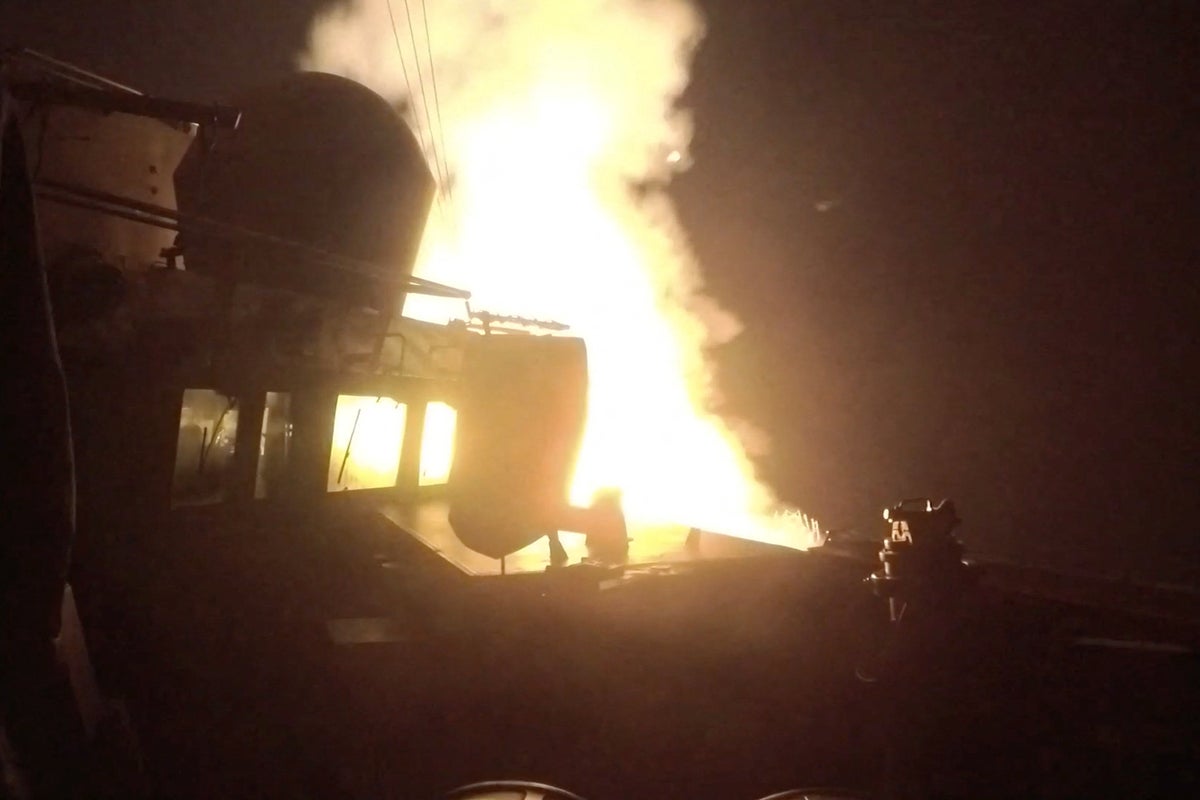
Iran-US war latest: Tehran attacks 18 US airbases across Middle East after Trump orders major new strikes US Defence Secretary Pete Hegseth warned that the military would be busy tonight ahead of the fresh strikes
independent · 3 months ago
US says second day of strikes completed – as it happened This blog has now closed – our coverage of this crisis in the Middle East continues hereIf the US genuinely wants a deal it will have to engage with Iranian demands on sanctions relief, says Danny Citrinowicz, the former head of the Iran branch of Israeli military intelligence.Todays exchange of strikes shows how easily both Iran and the US can slide towards another round of escalation, says Citrinowicz, who is now a nonresident fellow at the Atlantic Council.If Washington is unwilling to accept that reality, it should recognize the likely alternative: continued confrontations with Iran that could eventually spiral beyond anyones control and lead to military conflict under less favorable conditions.Even a limited military campaign designed to weaken Iran would not fundamentally alter Tehrans negotiating position. It has not happened in the past, and there is little reason to believe it would happen now. Iran emerges from the latest exchange of blows convinced that it can absorb pressure and respond to attacks.Legal and moral responsibility of all countries in the region (especially those located along the southern shores of the Persian Gulf) to prevent the US military and Israel from using their territory or facilities to plan, organise, execute, or support hostile actions against Iran. Continue reading...
theguardian · 3 months ago
Middle East crisis live: US and Iran trade strikes again, after Trump warns Tehran will pay the price for stalled talks US launches second round of airstrikes on Iran, and Tehran responds by targeting Bahrain, Kuwait and JordanUS strikes Iran for second day, as ceasefire appears close to collapseBrett McGurk, who served in senior national security positions in the Obama, Trump and Biden administrations, has told CNN that the strikes today were highly telegraphed, indicating that the US is perhaps trying to put a ceiling on the action today.If these strikes are designed to pressure Iran into doing a deal, I dont think that objective will be met.Attempts to kill, kidnap, harass, intimidate, or otherwise attack people on our soil, undermines national sovereignty and international norms. These actions must stop immediately. Continue reading...
theguardian · 3 months ago
Trump says US mission moved 100M barrels of oil through Hormuz President Donald Trump announced that a US military secret mission helped secure the passage of more than 100 million barrels of oil and over 200 commercial vessels through the Strait of Hormuz. He declared that the United States of America controls the Strait of Hormuz — not Iran.
yenisafak · 3 months ago
Irans Pezeshkian vows to resist attacks on critical infrastructure President Masoud Pezeshkian has vowed that Iran will resist any pressure or threat against its critical infrastructure after President Trump threatened continued military strikes. Pezeshkian said threats to target transportation, electricity, and water networks are a sign of desperation.
yenisafak · 3 months ago
Iran: Har angrepet mål i Bahrain, Kuwait og Jordan Iran sier de har angrepet mål i Bahrain, Kuwait og Jordan som svar på nattens amerikanske angrep mot Iran.
aftenposten · 3 months ago
Iran reports attacks on US bases in the Middle East Irans Revolutionary Guard (IRGC) claimed it targeted US military facilities at bases in Jordan, Kuwait, and Bahrain. The IRGC asserted that 18 US targets at two Kuwaiti airbases were hit and a southern Bahraini airbase was destroyed. However, neither the US nor local militaries have confirmed these strikes actually hit the bases. Following the reported […]
cphpost · 3 months ago
US strikes Iran for second night in a row The US military has concluded a second consecutive night of strikes against Iran, which began Wednesday evening. According to Centcom, the self-defense strikes targeted Iranian military surveillance, communication, and air defense systems. While explosions were reported near Tehran and the Strait of Hormuz, Irans Revolutionary Guard (IRGC) claimed to have attacked US military bases in […]
cphpost · 3 months ago
US and Iran trade strikes for second day, threatening return of all-out war The new US assault across multiple Iranian cities came as efforts to negotiate an end the war again appeared stuck, with Iran insisting it would maintain its chokehold on the Strait of Hormuz, which has disrupted global energy supplies and sent oil prices higher.
euronews · 3 months ago
#Jordan Smoke columns are visible from the Muwaffaq Salti Air Base in Jordan following an Iranian missile attack, which has prompted the launch of a significant number of surface-to-air missiles (SAMs) in response. This incident highlights the ongoing tensions and military engagements in the region. Subscribe to @OSINTdefender Chat room
telegram bot · 3 months ago
#Iran The Islamic Revolutionary Guard Corps (IRGC) announced missile strikes targeting the Al-Azraq Air Base in Jordan as part of their retaliatory actions against the United States. The IRGC claimed to have hit key facilities, including those housing F-35 fighter jets. Subscribe to @OSINTdefender Chat room
telegram bot · 3 months ago
Lage im Überblick: Neue Eskalation am Golf - Iran erklärt Meerenge für gesperrt Der Konflikt zwischen den USA und dem Iran eskaliert trotz formal geltender Waffenruhe weiter. Nach neuen US-Angriffen erklärt der Iran die Straße von Hormus für gesperrt - und meldet eigene Angriffe.
handelsblatt · 3 months ago
Escaladare a conflictului. SUA au atacat ținte multiple din Iran, iar Teheranul ripostează și amenință Comandamentul Central al Armatei Statelor Unite (CENTCOM) a lansat atacuri „asupra mai multor ținte din Iran, afirmând că aceste lovituri au fost date în „legitimă apărare. Președintele american, Donald Trump, a declarat pentru Fox News că SUA au lansat 49 de rachete Tomahawk în cadrul ultimului atac nocturn asupra Iranului, lovind inclusiv o țintă situată la doar 64 km de capitala Teheran. La rândul său, Corpul Gardienilor Revoluţiei Islamice (IRGC) din Iran, armata ideologică a Teheranului, a anunţat joi că a atacat baze din Kuweit şi Bahrein, ca represalii la noile atacuri aeriene americane împotriva Iranului. Mai mult, Teheranul a avertizat că forţele sale vor ataca orice navă care va încerca să traverseze strâmtoarea strategică Ormuz, prin care tranzita, în condiţii normale, o cincime din comerţul mondial cu petrol şi gaz natural lichefiat.
digi24 · 3 months ago
Middle East crisis live: US and Iran trade strikes again, after Trump warns Tehran will pay the price for stalled talks US launches second round of airstrikes on Iran, and Tehran responds by targeting Bahrain, Kuwait and JordanUS strikes Iran for second day, as ceasefire appears close to collapseKuwait has closed its airspace after Iran announced new attacks on the gulf country, with officials saying some flights were being diverted to alternative airports.Flights had been circling outside Kuwait for some time before the announcement, after it said its air defences were firing at aerial targets.It is Trump that is desperate for them to sign the agreement, as his statements reveal, and Iran that is dragging their feet.A deal that punts nuclear negotiations to a second phase and requires some sanctions relief is a lousy deal — and still the least bad available alternative. Continue reading...
theguardian · 3 months ago
U.S. launches new strikes against Iran The United States launched airstrikes against targets in Iran again last night.
ukrinform · 3 months ago