
South Koreas president proposes direct talks with North Korea to end Korean War
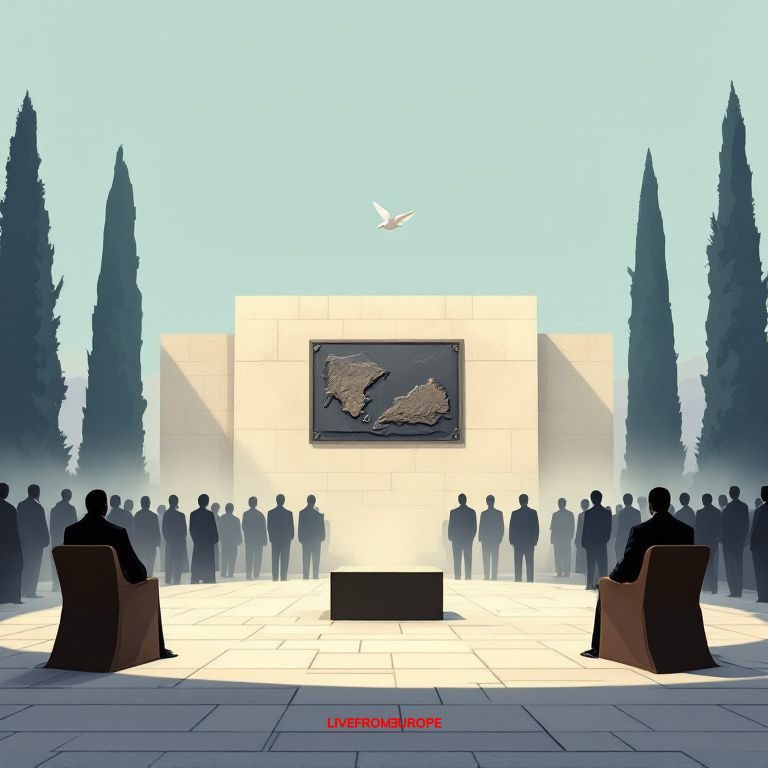
South Korean President Lee Jae-myung proposed on Saturday that North Korea engage in direct talks to formally end the Korean War, which has remained technically unresolved since the 1950-53 conflict concluded with an armistice rather than a peace treaty.
Speaking at a ceremony marking the 81st anniversary of Korea’s liberation from Japan’s 1910-45 colonial rule, Lee urged both sides to abandon mutual threats and begin discussions as the directly involved parties. “Let us put down our intentions to threaten each other and begin discussions to end the long-running war as the directly involved parties,” he said . He added that such talks could also address measures to halt the advancement of North Korea’s nuclear capabilities.
The proposal follows North Korea’s repeated declarations that it is an “irreversible” nuclear state, a stance solidified after the 2019 Hanoi summit between North Korean leader Kim Jong Un and then-U.S. President Donald Trump collapsed over denuclearization and sanctions relief. Pyongyang has yet to respond to Lee’s offers, which mark a shift from his predecessor’s hawkish approach. Since taking office in June 2025, Lee has offered unconditional dialogue with North Korea, and in July, [South Korea’s](en.wikipedia.org) unification minister stated Seoul had abandoned its campaign to pressure Pyongyang into dismantling its nuclear arsenal, focusing instead on halting its expansion.
Lee’s call comes as North Korea condemned upcoming annual U.S.-South Korean military drills, warning of stronger deterrence measures. Pyongyang has also reacted to Japan’s military buildup, conducting two ballistic missile tests in less than a week after Tokyo pledged to enhance its defense capabilities. North Korea has simultaneously deepened military ties with Russia, with reports suggesting discussions on further arms supplies to Moscow.
In a separate development on Saturday, Japan’s Defense Minister Shinjiro Koizumi visited Yasukuni Shrine, which honors 2.5 million war dead, including convicted war criminals from World War II. The visit drew rebukes from China and South Korea, with Beijing strongly condemning the action and Seoul expressing “deep regret” over what it called “anachronistic” behavior . Koizumi later stated on Instagram that he visited to pay respects to those who sacrificed their lives for the nation.
Meanwhile, Japanese Prime Minister Sanae Takaichi attended a government-sponsored memorial in Tokyo for the 81st anniversary of Japan’s surrender in World War II. In her speech, she pledged to uphold Japan’s postwar path as a peaceful nation but did not mention remorse, a departure from her predecessor’s remarks last year . Takaichi sent a ritual offering to Yasukuni Shrine but did not visit in person.
Follow us for live European news
- 1
- 1
- 1
- 1
- 1
- 1
- 1
- 1
- 1
- 1
- 1
- 1
5 further sources not geolocated
Articles

Japanese minister visits shrine to war dead, angering China, South Korea Defence Minister Koizumis visit to Yasukuni Shrine comes on the 81st anniversary of Japans surrender in WWII.
aljazeera · about 9 hours ago

🔴 BREAKINGSouth Korea President Proposes Talks to End Korean WarSouth Korean President Lee Jae-myung has proposed dialogue with Pyongyang to formally end the Korean War, which has technically continued for over 70 years due to the absence of a peace treaty.📰 #Geopolitics #GeoWire
mastodon bot · about 9 hours ago
Japan marks 81st anniversary of WWII end, without remorse in PMs address Japan on Saturday marked the 81st anniversary of its surrender in World War II, with Prime Minister Sanae Takaichi pledging peace while not mentioning the nations "remorse" in…
japantoday · about 9 hours ago

El presidente surcoreano pide reanudar las conversaciones de paz con Corea del Norte Lee Jae Myung se compromete a adoptar medidas para reducir las tensiones militares en la península de Corea
la vanguardia · about 9 hours ago
South Korea president proposes talks with Pyongyang to formally end Korean War South Korean President Lee Jae-myung proposed on Saturday that Pyongyang engage in dialogue to formally end the Korean War, which has technically been ongoing for more than 70 years due to the lack of a peace treaty.
france24 · about 9 hours ago
Južnokorejski predsednik severni sosedi predlagal pogovore o uradnem koncu korejske vojne Južnokorejski predsednik Lee Jae Myung je predlagal pogovore s Severno Korejo o formalnem koncu vojne med državama. Korejska vojna se je namreč leta 1953 končala z dogovorom o premirju, ne pa tudi z mirovno pogodbo.
rtv slovenia · about 9 hours ago
Searching for an end game in the Korean Crisis
gdeltproject.org · about 9 hours ago

🇯🇵 Japans defence minister paid his respects Saturday at a shrine honouring the countrys war dead that has long dogged Tokyos relations with its Asian neighbours, but Prime Minister Sanae Takaichi stayed away. ➡️ u.afp.com/SHL2
bluesky_AFP English · about 9 hours ago

Seul quer terminar formalmente Guerra da Coreia O sul coreano Lee Jae-myung tomou posse em junho de 2025 e adotou uma postura contrária à linha dura em relação ao país vizinho implementada pelo antecessor, Yoon Suk-yeol.
observador · about 10 hours ago
Seul propõe diálogo com Pyongyang para fim formal de Guerra Lee, que já tinha aberto as portas a negociações incondicionais sobre o programa nuclear da Coreia do Norte, fez a nova oferta no 81º aniversário da fim da ocupação japonesa da península (1910-1945).
observador · about 10 hours ago
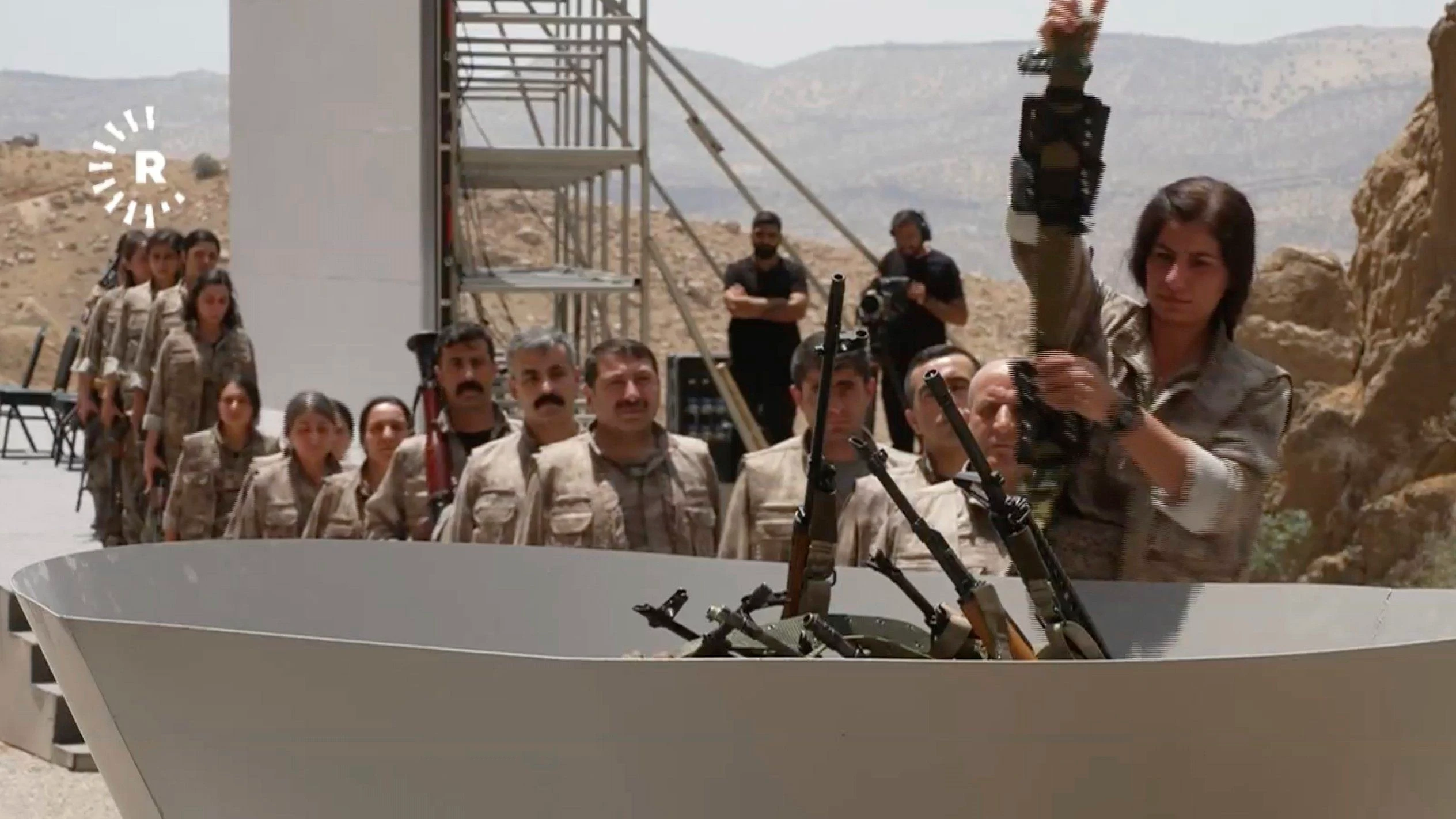
Brief aus Istanbul: Frieden mit den Kurden, Krieg der Demokratie In der Türkei ist ein Amnestie-Gesetz für PKK-Mitglieder beschlossen worden. Erdoğan verkauft das als Geschenk des Friedens. Doch es steckt etwas ganz anderes dahinter.
faz · about 10 hours ago
Dutch community tied to former East Indies marks 81 years since Japans surrender The Netherlands on Saturday commemorates 81 years since Japans surrender ended World War II in the former Dutch East Indies.
nltimes.nl · about 10 hours ago
Japonski obrambni minister ob obletnici kapitulacije obiskal sporni tempelj Jasukuni Japonski obrambni minister Šindžiro Koizumi je ob 81. obletnici japonske kapitulacije v drugi svetovni vojni obiskal tempelj Jasukuni v Tokiu, kjer so se poklonili spominu na japonske žrtve vojne. Kitajska je obisk ostro obsodila.
rtv slovenia · about 10 hours ago
Kim a lăudat „isprăvile martirilor armatei sovietice. Putin: Rusia şi Coreea de Nord fac eforturi coordonate în domeniul securităţii Preşedintele rus Vladimir Putin i-a transmis liderului nord-coreean Kim Jong-un că Moscova şi Phenianul cooperează în toate domeniile şi îşi coordonează eforturile pentru a asigura securitatea şi stabilitatea regională, a relatat sâmbătă agenţia de stat nord-coreeană KCNA. În același timp, liderul de la Phenian a evocat „isprăvile martirilor armatei sovietice, cu ocazia aniversării eliberării Coreei de sub dominaţia colonială japoneză.
digi24 · about 10 hours ago
Președintele Coreei de Sud cere negocieri cu Phenianul pentru înlocuirea armistițiului cu un acord de pace Președintele sud-coreean Lee Jae Myung a cerut reluarea dialogului cu Coreea de Nord pentru construirea unei relații de coexistență pașnică și înlocuirea armistițiului care a pus capăt luptelor din Războiul Coreean cu un regim de pace, scrie Reuters.
digi24 · about 10 hours ago
Südkoreas Präsident bietet Pjöngjang Friedensverhandlungen an
orf.at · about 10 hours ago
Venemaa ja Põhja-Korea süvenev koostöö tekitab muret seoses Ukraina sõjaga Venemaa president Vladimir Putin ütles Põhja-Korea liidrile Kim Jong-unile, et Moskva ja Pyongyang teevad koostööd kõigis valdkondades ning koordineerivad jõupingutusi piirkondliku julgeoleku ja stabiilsuse tagamiseks, vahendab Reuters.
postimees · about 10 hours ago
South Koreas inverse correlation Kospi down, won up
financial times · about 10 hours ago

Philippine defence chief rejects China criticism, calls response a squid tactic reut.rs/461V05h
bluesky_Reuters · about 10 hours ago
Проєкт програми уряду Корецького на 20262027 : 400 завдань
gdelt bot · about 11 hours ago