 Saturday, July 4Saturday, July 4
The Old Arsenal in Vilnius reopens as a cultural stage this weekend with *Foot, Face, Vault and Key*, a solo exhibition by interdisciplinary artist Danas Aleksa that transforms the 16th-century armoury of the Grand Duchy of Lithuania into a site of contemporary sound, architecture and social inclusion. The show, which opened on 18 June at the Museum of Applied Arts and Design (Arsenalo St 3A, Vilnius), is anchored in the building’s historic arches and features a new immersive performance created with composer Snieguolė Dikčiūtė. “Do not miss the opportunity to see this exhibition and take part in the opening performance,” urged Džiuljeta Žiugždienė, director of the LNMA Museum of Applied Arts and Design. “The piece *The Arsenal – the Cross-Sections of the Arch* celebrates creative cooperation among professional artists, enthusiasts and disabled participants, strengthening cultural dialogue through inclusivity.”
Aleksa’s installation interprets the museum’s history through the arch, one of architecture’s oldest elements that once bridged engineering breakthroughs, military conquests and spiritual symbolism. Though arches are rare in modern construction and their medieval builders’ terminology has faded, their traces remain visible in the museum’s graceful curves. The exhibition also folds in the concrete mixer—an icon of today’s urban expansion—whose rotating drum evokes both a seashell’s spiral and the golden ratio, while recalling Brutalism’s concrete language. “Personal details—cannon names—reveal historic strata of the arsenal,” Aleksa notes. “One cannon was called ‘Vitold,’ likely a nod to Vytautas, while another bore the name ‘Baba.’”
The Vilnius show coincides with another diaspora milestone: on 2 July at 6 pm, the Vytautas Kasiulis Museum of Art (A. Goštauto St 1, Vilnius) launched *“Nijolė Šivickas de Mockus. The Universe from a Spiral”*, the first comprehensive Lithuanian presentation of the ceramic artist and sculptor’s oeuvre. The exhibition displays over 200 works donated by the artist’s family, including sculptures, paintings, graphics and drawings that travelled from Bogotá to Klaipėda earlier this year. “The art by Nijolė Šivickas de Mockus is one of the most amazing phenomena of the Lithuanian diaspora,” said Dr Arūnas Gelūnas, director general of the Lithuanian National Museum of Art. “Born in Lithuania, she created a unique world in Colombia by fusing European modernism, pre-Columbian inspiration and a philosophically subtle perception of humanity and medium.” The donation, he added, “brings her art back into the orbit of Lithuanian culture and ensures future access for scholars and art lovers.”
Both exhibitions underscore how historic sites in Vilnius are being reimagined as spaces of contemporary creativity and transnational memory. The Old Arsenal’s transformation from military stronghold to cultural venue, and the return of Šivickas’s legacy from Colombia, reflect broader trends in which architecture and migration converge to reshape cultural narratives.
Follow us for live European news
4 further sources not geolocated

Oáza v centru Vrchlabí. Zahrada krkonošského muzea nabízí vzácné třešně i místo na oddech Ovocný sad stál na zahradě bývalého augistiniánského kláštera už před třemi sty lety. Znovu ho obnovila Správa Krkonošského národního parku, která v budově provozuje muzeum. V sadu rostou staré i regionální odrůdy ovocných stromů, zejména třešní. Slouží zároveň jako místo pro letní odpočinek. „Jsme skoro v centru Vrchabí a máme tu takovou oázu, říká pro Český rozhlas Hradec Králové botanik a ovocnář správy parku Jakub Fišera.
irozhlas.cz · about 2 hours ago
60th Đakovački Vezovi festival formally opened ZAGREB, 4 July (Hina) – The 60th Đakovo Vezovi Festival, one of Croatias leading traditional folklore events, was officially opened on Friday... The post 60th Đakovački Vezovi festival formally opened first appeared on Croatia Week.
croatia week · about 2 hours ago
From an armoury into a culture space – the revival story of the Museum of Applied Arts and Design told by Danas Aleksas exhibition - The Baltic Times 18th June, the Museum of Applied Arts and Design of the Lithuanian National Museum of Art (LNMA) (Arsenalo St 3A, Vilnius) opened Danas Aleksa&r......
baltic times · about 2 hours ago
Od vzducholodí po závodníka Lobkowicze. Děti v umělecké soutěži zkoumaly, jak cestovala šlechta V Severočeském muzeu v Liberci vystavují vítězná díla z umělecké soutěže Děti památkám, památky dětem. Tu každoročně organizuje Národní památkový ústav. Letošního ročníku se zúčastnilo přes 400 dětí z celé republiky, z nichž v různých kategoriích vyhrálo celkem 26 z nich.
irozhlas.cz · about 2 hours ago
Kafékedjan i konkurs Driver 58 kaféer i Sverige
expressen · about 2 hours ago
60.000 Menschen besuchten KHM-Ausstellung in Rom
orf.at · about 2 hours ago

Berlin Fashion Week: Wenn der Designer ins Wohnzimmer lädt Die Berliner Modewoche beginnt mit spektakulären Schauen und seltsamen Überraschungen. Wann wird man schon einmal zu einer Präsentation bei einem Modemacher zu Hause eingeladen?
faz · about 2 hours ago
PILDID ⟩ Lossipäev tõi saja-aastasesse Põltsamaa linna rahvast nii lähemalt kui kaugemalt Põltsamaa lossihoov täitus laupäeval traditsioonilise lossipäeva puhul laadamelu, kultuuriprogrammi ja külastajatega. Tänavune, järjekorras 31. lossipäev pakkus kohalikele ning kaugemalt tulnutele käsitööd, kohalikku toitu, muusika- ja tantsuesinemisi ning tegevusi kogu perele.
postimees · about 2 hours ago
„Nehéz új korszakot nyitni azokkal, akik a lövészárkokat ásták – üzente a művészeti akadémiás Krasznahorkai-döntés után Nagy Ervin Miután a NER szimbolikus intézményének számító MMA elnöke szomorkodott, hogy a Nobel-díjas író nem fogadta el a kitüntetésüket.
444.hu · about 2 hours ago
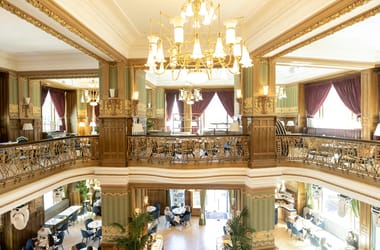
„Egy jó kávézó a nappalink meghosszabbítása – Milánó legendás cukrászdája megérkezett Budapestre Hogy kapcsolódik össze a milánói és budapesti kávéházi kultúra? Hogyan újul meg egy több mint kétszáz éves családi örökség, miközben hű marad a gyökereihez? A régi idők nosztalgikus kávéházi nyüzsgését, pezsgő találkozóhelyeit kívánja megidézni a főváros egyik legfrissebb nyitása, a Cova. Paola Faccioli vezérigazgatóval beszélgettünk.
hvg.hu · about 2 hours ago
Psych ward turned museum earns major award The village of Trate in northeast Slovenia is home to one of the most unusual exhibitions in the country. Once a psychiatric facility, Cmurek Castle is now a museum dedicated to exploring societys attitude to mental illness and its work has been recognised as exceptional by the European Museum ...
the slovenia times · about 2 hours ago
Vytautas Kasiulis Museum of Art opens the artistic universe of Nijolė Šivickas de Mockus brought from Columbia to Lithuania - The Baltic Times Thursday, 2nd July at 6 pm, the Vytautas Kasiulis Museum of Art (A. Goštauto St 1, Vilnius) of the Lithuanian National Museum of Art open......
baltic times · about 2 hours ago
Kibla 30: mariborski multirmedijski center praznuje 30. obletnico delovanja MMC Kibla praznuje 30 let delovanja kot pionirski multimedijski center v Mariboru. Društvo, ki se posveča umetnosti in izobraževanju je ustanovilo številne pomembne prostore, festivale ter publikacije in ostaja ključni kulturni akter na mariborski sceni.
rtv slovenia · about 2 hours ago
Albtraum ohne Ausweg: Wolfgang Petricks letzte Ausstellung auf Schloss Sacrow Die diesjährige Sommerausstellung auf Schloss Sacrow ist eine eindrucksvolle Hommage an den kürzlich verstorbenen Künstler Wolfgang Petrick – das Panoptikum eines Warners.
tagesspiegel · about 2 hours ago
Doi domni gospodari și-au făcut propriile grădini la Centrul pentru Persoane Vârstnice Odăi Doi domni în vârstă de 70 de ani și-au făcut propriile grădini unde cultivă roșii și castraveți la Centrul pentru Persoane Vârstnice Odăi din Sectorul 1. Nea Florică și Nea Vasile își îngrijesc peticele de pământ așa cum se pricep ei mai bine, în ritmul și după preferințele lor. Cei doi își încep ziua încă …
hotnews.ro · about 2 hours ago
Správce ferrat ve Víru vytvořil rozsáhlý turistický okruh, chce tak v obci podpořit cestovní ruch Kolem obce Vír na Žďársku vznikl nový turistický okruh. Navrhl a vytvořil ho místní správce ferrat Slávek Matuška. Využívá všechny barvy Českého turistického klubu a nejdelší trasa vyjde na denní či dvoudenní túru. Podklady pro zmapování poskytla obec skrze participativní rozpočet. „Občané přichází s vlastními nápady a pak o nich musí přesvědčit hlasující, říká pro Český rozhlas Vysočina starosta obce Ladislav Stalmach.
irozhlas.cz · about 2 hours ago
Schaukelstuhl bis Fernsehtisch – So hat die Schweiz im letzten Jahrhundert gewohnt Möbel Pfister, Giroflex, Ikea: Zahlreiche Möbel stammen aus dem Kanton Aargau. Ein neues Buch erzählt ihre Geschichte.
srf.ch · about 2 hours ago
Další česká medailová radost z vodního kanálu. Kratochvíl slaví stříbro na mistrovství světa do 23 let Vodní slalomář Lukáš Kratochvíl na mistrovství světa do 23 let v Krakově skončil při obhajobě titulu druhý, stříbro získal v Krakově stejně jako v závodu hlídek. Jednadvacetiletý kanoista na mistrovství světa této věkové kategorie v sobotu zkompletoval individuální sbírku po loňském zlatu ve Francii a bronzu z předloňska v Liptovském Mikuláši.
irozhlas.cz · about 2 hours ago

A Landerneau, lusine à rêves du créateur visionnaire Andy Wahrol
lexpress · about 3 hours ago
Fabuloasele aventuri ale unui colecționar român în Africa neturistică. „Un șef de trib de 100 de ani era rușinat că nu a reușit să taie decât patru capete Clujeanul Alin Samochiș colecționează de aproape trei decenii artă africană cumpărată din cele mai izolate triburi ale continentului negru, aflate departe de destinațiile turistice all inclusive. Aproape fiecare obiect, fie că este o mască de război mursi, o statuetă voodoo sau o mască terapeutică d
adevarul · about 3 hours ago
MQ Freiraum blickt auf 25 Jahre Museumsquartier Wien durfte nicht Bilbao werden: Eine Ausstellung blickt anlässlich des Jubiläums auf Geschichte, Gegenwart und eine grüne, garagenlose Zukunft des Wiener Wohnzimmers
der standard · about 3 hours ago

Une chaise est un objet très complexe : un gratte-ciel est presque plus aisé à concevoir Le musée Horta expose cent ans de design, 1850-1950, à travers 31 sièges iconiques. ...
la libre · about 3 hours ago
Narazit na stolek a dát si partičku. V Žatci se objevily šachomaty s motivy města, piva nebo chmelu V Žatci se objevily tzv. šachomaty. Betonové instalace, na kterých se nachází šachová deska i s figurkami. Celkem mají v Žatci vzniknout čtyři a oživit tak veřejný prostor města. Za projekt město zaplatilo 300 tisíc korun z participativního rozpočtu.
irozhlas.cz · about 3 hours ago