
Loading…
mastodon_EDRi
🤓 #DigitalOmnibus: 1,840 amendments. And quite a few ways to make the GDPR and ePrivacy rules weaker in the name of 'simplification.'We have just published EDRi's guide to the European Parliament's amendments to the Digital Omnibus on Data, focusing on what they would mean for privacy, data protection and, ultimately, people's rights ➡️

1/5 🚨 Today, the European Commission published its proposal for a Digital Fairness Act #DFA, with the aim to strengthen consumer protection against manipulative and exploitative commercial practices ➡️ Think of practices like fake notifications designed to bring us back to an app, endless scrolling that keeps you online longer than you intended, or personalised techniques that exploit your vulnerabilities.

2/5 👏🏾 The Commission's proposal takes some important steps forward. It introduces new prohibitions on deceptive design, extends specific protections beyond the biggest online platforms, and recognises the harms associated with addictive digital features. The accompanying consumer protection reforms could also give regulators stronger enforcement powers. We welcome this progress and the work behind it.
3/5 😟 But the proposal also leaves serious gaps:❓ While it recognise that certain features encourage compulsive use, it largely leaves people responsible for finding the off switch❓ Some protections depend on user characteristics like age instead of the harmfulness of a feature, potentially creating further incentives for harmful age verification❓The proposal does little to address the algorithms and business models designed to maximise our attention, engagement and spending.
4/5 The Commission's recent preliminary ruling against TikTok under the DSA show why this is critical: It is already clear how recommender systems can push people towards harmful patterns of use. Based on the experience with the DSA's systemic risk rules, we need clearer rules addressing these practices across the digital economy, not only for online platforms ➡️
5/5 The DFA should require companies to avoid manipulative and exploitative design from the outset - safer defaults, clear prohibitions of harmful practices, meaningful accountability and stronger protections for everyone. Companies should have to demonstrate compliance, rather than people and civil society spending years uncovering and challenging harmful product design.🫶🏾 People should be able to use digital services without having to fear and fight their design every time they go online.

1/4 🚨 The European Commission is working on a new EU surveillance regime and it's not looking great - as reported by POLITICO Europe this morning.The leak shows that the Commission's own quality control body, the Regulatory Scrutiny Board, points to serious shortcomings in the impact assessment for a potential EU-wide data retention framework.Wondering what exactly is at stake for you with a data retention framework? Read our new briefing to find out ➡️
2/4 🕵 "Data retention" means internet and telecom companies are required by law to store data about us, like internet browsing history or location data, for a longer period of time than technically necessary, in case police need to access it to investigate crimes. The type of data retained is very intrusive into people's privacy, it can reveal things like where people are going, who they are communicating with for how long, which websites people are visiting, and more.
3/4 👎🏾 This is not the first time EU has tried to impose this mass surveillance instrument - in 2014, the EU Data Retention Directive was annulled by the EU Court because it targeted everyone without suspicion and discrimination, which is unlawful.Once again, the European Commission has failed to learn from its past mistakes by planning a new data retention regime without proving its necessity or proportionality.
4/4 🚨 Law enforcement already has access to huge amounts of data. Moreover, it seems that the Commission also did a poor job at assessing the different impacts such a surveillance regime would have on investigations, costs, cyber security and fundamental rights.We deserve better from EU lawmakers than just another way of enforcing surveillance on us. Mass surveillance through data retention will not make us safer. Upholding privacy protections across all EU countries will 🩵

🚨 In October 2026, we shared our first analysis of the GDPR and ePrivacy aspects of the Council's General Approach to the #DigitalOmnibus on Data. Now we've gone quite a few steps further.🤓 Read a more detailed blog post with our analysis which includes a comprehensive table comparing the existing legislation, the European Commission's proposed changes, and what the Council has agreed, and EDRi's position on both ➡️

🥰 We're still riding the high of spending #PrivacyCamp26 with our community!It was an amazing day dedicated to thinking about where technology comes from, who gets a say in shaping it, and how meaningful self-determination can be made possible for all communities.💙 A huge thanks to our sponsors and partners for making #PrivacyCamp26 possible: @mozilla as our long-standing event partners, @EDPS as our general event partners, and @NordVPN, @flokinet @nextcloud 👏🏾

1/4 🥳 Some amazing news from the Netherlands yesterday for digital fairness!Dutch MP Barbara Kathmann has tabled a bill taking aim at addictive and manipulative design across digital services. And there is a lot here for Brussels to look at and learn from 🤓 Read more about the proposal in 🇳🇱 ➡️
2/4 ✅ The proposal would treat manipulative design as an unfair commercial practice. It puts attention-grabbing features off by default. It targets practices including endless scroll, engagement-based recommender systems and notifications designed to pull people back into a service. Crucially, it would also put the burden on companies to show that their services are designed in a non-addictive and non-manipulative way.
3/4 ⚖️ This is relevant as the EU prepares its Digital Fairness Act (DFA): it must protect people of all ages; change harmful products and practices by design; put responsibility on the companies designing them rather than expecting each person to somehow resist systems perfected to capture their attention.The Netherlands is putting some very concrete ideas on the table. The European Commission should be at least as ambitious in the DFA proposal that will see the light on November 11.

4/4 What do WE think digital fairness should look like? Explore our position paper ➡️
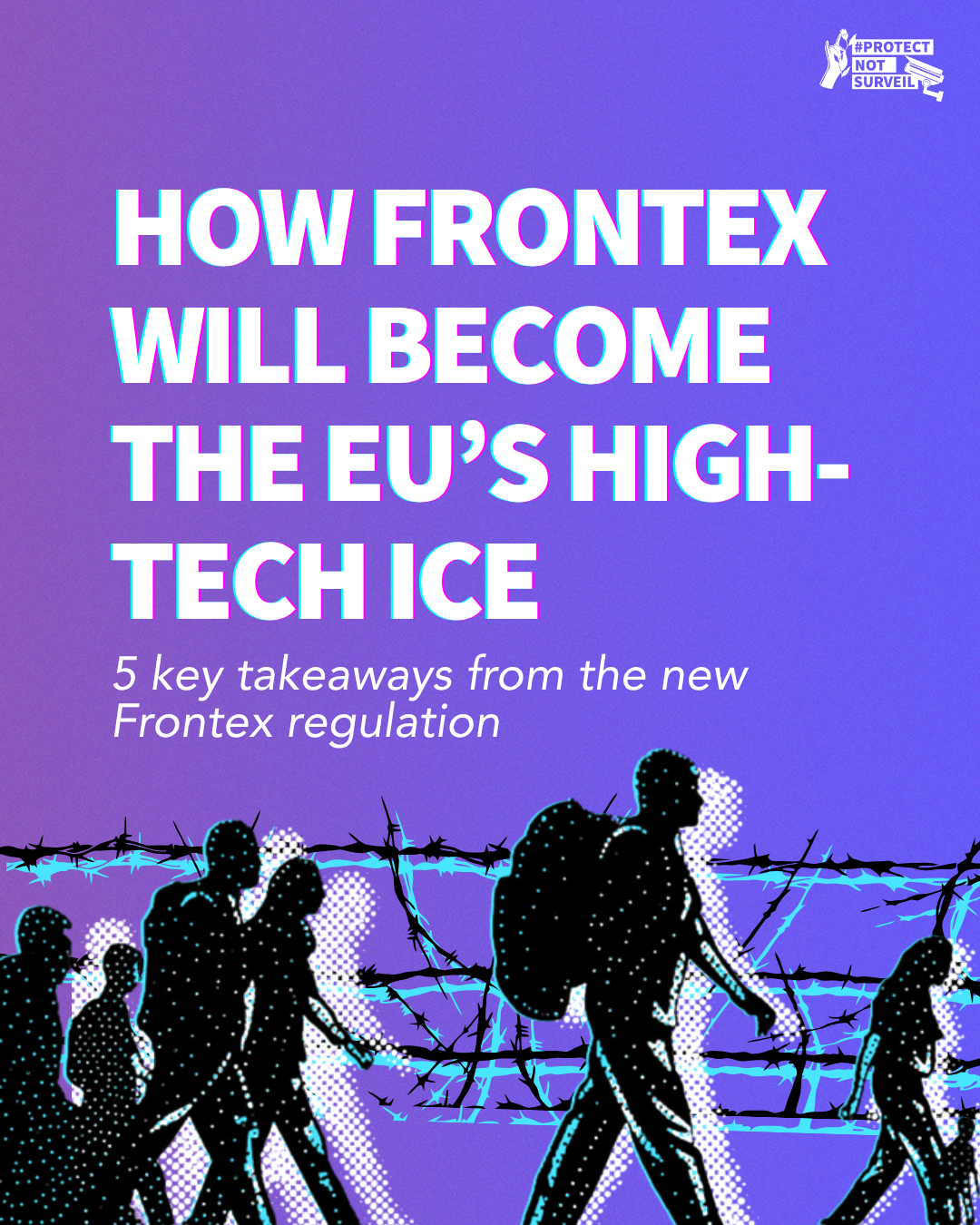
🚨 Yesterday, the European Commission announced a revamp of Frontex, EU's border agency. The new reform doubles Frontex's budget to nearly €12 billion for 2028–2034 and expands its powers for deportations, preventing arrivals, and surveillance. This would effectively turn Frontex into an ICE-style deportation agency.Read a detailed analysis of the proposed new Regulation from the Protect Not Surveil coalition ➡️

🤩 European Digital Rights is honoured to be a receipient of the 2026 DuckDuckGo Charitable Donations programme! Thanks DDG for supporting our work of building thriving digital futures for people, the planet and democracy 💙 ☘️ We're also glad to see EDRi members and partners, including @article19, Gesellschaft für Freiheitsrechte, @eff @openrightsgroup, the Tor Project and others, amongst the recipients! 🤝🏾 Read more ➡️
🤩 European Digital Rights is honoured to be a receipient of the 2026 DuckDuckGo Charitable Donations programme! Thanks DDG for supporting our work of building thriving digital futures for people, the planet and democracy 💙 ☘️ We're also glad to see EDRi members and partners, including @article19, Gesellschaft für Freiheitsrechte, @eff @openrightsgroup, the Tor Project and others, amongst the recipients! 🤝🏾 Read more ➡️
That means GDPR protection could effectively disappear halfway down the chain, together with people's rights and safeguards, even though another actor further along may have far greater ability to identify, track or single them out.
The Council also makes it easier to process some of our most sensitive data in AI contexts, weakens information duties, makes some access requests easier to reject as 'abusive,' and makes it easier to justify decisions taken entirely by machines even when a human could have taken them instead.
Research is another problem.'Scientific research' is defined very broadly while getting easier reuse of data and lighter information duties, risking activities far beyond genuine scientific inquiry benefiting from research exemptions.
On ePrivacy, one important correction: access to our phones, browsers and other devices goes back under Article 5(3) of the ePrivacy Directive, where it belongs.But the Council still expands consent-free access, lets companies ask again after a refusal, and drops the broader framework for automated, machine-readable privacy signals.
And the text is already preparing the next deregulation round.One review can reopen core GDPR duties in the name of 'risk' and burdens on smaller organisations. Another can reopen the rules protecting our devices within just 12 months.
This is hardly simplification.It is an attempt to make the EU allegedly more 'competitive' by making our data easier to use and our rights easier to abuse.Those gaining the most power are unlikely to be the people whose data are being used, or even the companies on whose behalf this is being done.
EU governments have agreed their position on the #DigitalOmnibus on Data, and AI is at the heart of it.Under the Irish Presidency, the Council has joined a deregulation project built around a dangerous idea: that Europe's AI ambitions require feeding an ever-growing appetite for data, even if that means weakening rights people already have.
The text gives AI special treatment: personal data processed 'in the context of the development and operation' of AI may be carried out for the legitimate interest of a company or third party.That is extraordinarily broad, covering huge parts of an AI system's life, from building and training to deployment.
The text does not change the definition of personal data but makes it easier for the #GDPR to stop applying along a data chain. The Council wants to make the protection of pseudonymised data (gentle reminder: still personal data) depend much more on who holds them.
In today's huge data chains and distributed internet where almost nobody (except the biggest players) has a reliable overview of everybody else's capabilities, the same information can pass through websites, platforms, cloud providers, analytics companies and data brokers, all with very different abilities to link it back to a person.

🎉 It's #PrivacyCamp26 day and we're ready to welcome you! 🎉 Soon we'll kick off a day of debate, exchange and discussion on the theme for this edition: 'The Origins of Future Technologies: Towards communities of digital self-determination'.Join us online from 09.30 CEST via 📺 the Privacy Camp website: 📺 or fairtube: the final programme for the day: