human rights watch
US Sanctions on ICC Put Global Justice at Risk Click to expand Image
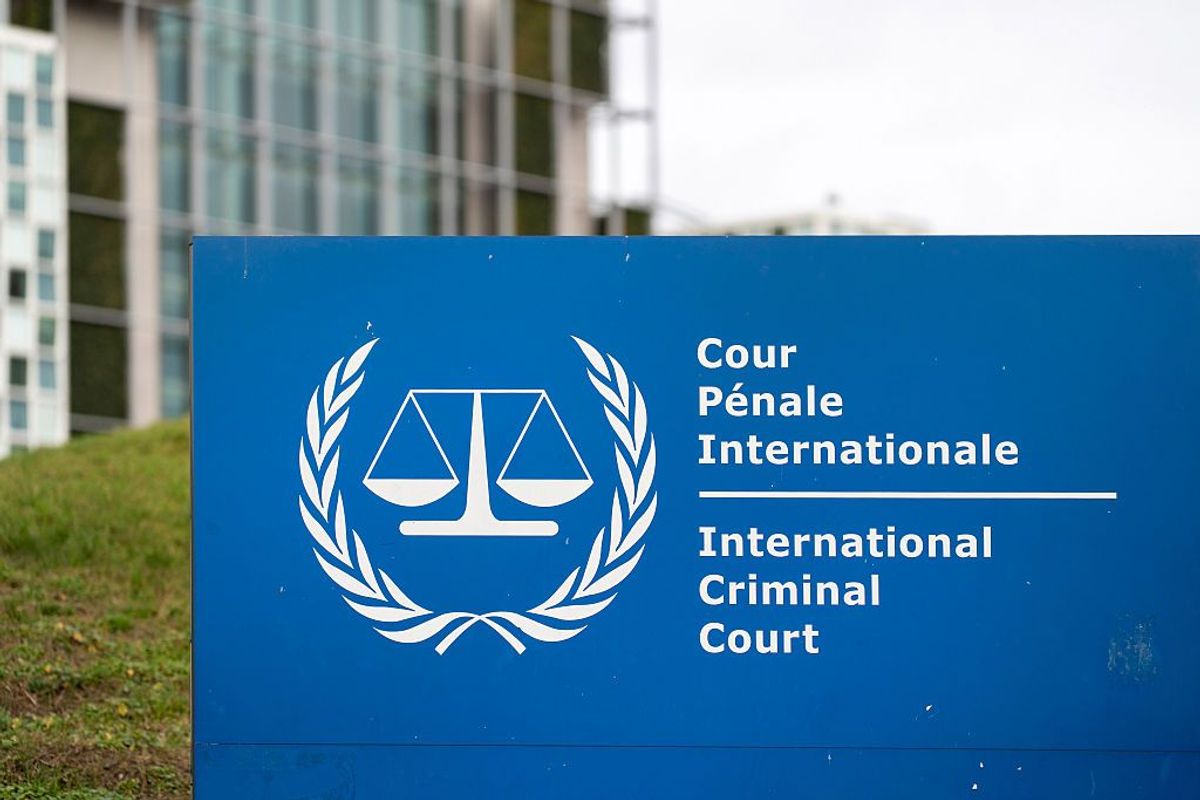
Permanent premises of the International Criminal Court in The Hague, the Netherlands.
© 2019 Peter Dejong/AP
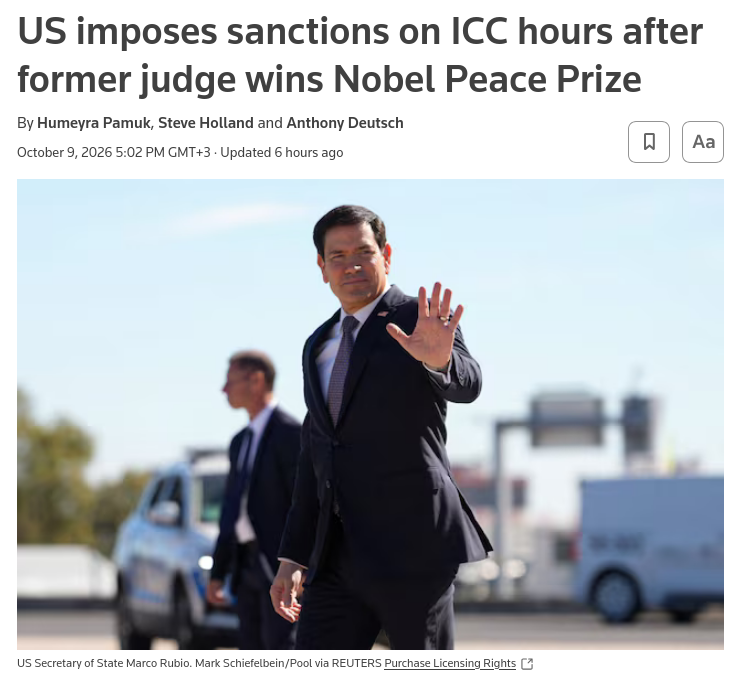
(New York) – The Trump administration's decision to sanction the International Criminal Court (ICC) is an unprecedented assault on global justice and the rule of law, Human Rights Watch said today. On October 9, 2026, US Secretary of State Marco Rubio announced the imposition of sanctions on the ICC. "The Trump administration has made clear its aim to destroy the ICC to shield US and Israeli officials from facing charges before the court," said Philippe Bolopion, executive director of Human Rights Watch. "By attacking the court, the US government is threatening justice for victims of abuses from Palestine to Ukraine, Myanmar, and Sudan." The ICC is a permanent international court created to try people, including senior officials, accused of war crimes, crimes against humanity, genocide, and the crime of aggression. Following the genocides in the mid-1990s in Rwanda and in the former Yugoslavia, the international community created the ICC to prevent those most responsible for serious crimes from evading justice. Nearly two-thirds of UN member countries have joined the court. In addition to its Palestine investigation, the court has opened investigations into alleged crimes in 17 situations, including in Afghanistan, Darfur in Sudan, Bangladesh/Myanmar, Ukraine, and Venezuela.The US government's decision to sanction the ICC was announced on the same day that the Norwegian Nobel Committee announced the 2026 Nobel Peace Prize for Navi Pillay, a former ICC judge and renowned international lawyer, in recognition of her central role "in ensuring that war crimes, crimes against humanity and genocide are prosecuted."In his October 9 announcement, Rubio stated the sanctions were aimed at shielding US nationals from investigation and prosecution at the ICC. The Trump administration has previously objected to the court's investigation of Israeli nationals for their conduct in Palestine. The ICC has issued arrest warrants for Israeli Prime Minister Benjamin Netanyahu and former Defense Minister Yoav Gallant for serious crimes in Gaza. Palestine became an ICC member in 2015 and gave the court a mandate to address serious crimes committed on its territory or by its nationals since June 13, 2014. The Trump administration has already sanctioned ICC prosecutors, nine ICC judges, three prominent Palestinian human rights groups, and the United Nations special rapporteur on human rights in the Occupied Palestinian Territory, and called on ICC member countries to leave the court.US sanctions have serious effects on those targeted, including frozen or closed bank accounts, rejected financial transactions, denied access to digital services, and US entry bans. US sanctions also have a chilling effect on non-US banks and other companies outside of US jurisdiction that could themselves lose access to the US banking system if they do not adhere to the sanctions. This means that the ICC could lose access to companies on which it relies for everyday functions, from banking to information, technology to travel. Human Rights Watch, together with three other human rights organizations, filed a lawsuit in US federal court on August 11, 2026, seeking to have the sanctions regime previously used to authorize court-wide sanctions struck down. A wide range of human rights organizations, other experts, and former US government officials have filed amicus (friend of the court) briefs in support of the suit.ICC member countries, including the Netherlands which hosts the ICC in The Hague, the leadership body of the court's Assembly of States Parties, the European Union, UN human rights experts, the UN secretary-general, the UN high commissioner for human rights, civil society organizations, and the ICC itself have repeatedly spoken out against the sanctions. The ICC and its member countries have also taken important steps to insulate the court from the potential impact of sanctions, but more action is needed to protect the court's ability to continue its critical work. The EU should immediately activate its blocking statute, which aims to shield European operators from the effects of extraterritorial sanctions.The Trump administration's sanctions targeting international justice are part of a broader attack on the laws, institutions, and organizations created to protect human rights, Human Rights Watch said. The United States has also withdrawn from the Paris Climate Accords and the World Health Organization, while disengaging from the UN Human Rights Council. President Donald Trump and other senior US officials have also expressed contempt for international law, and threatened to commit war crimes. "The ICC was created to ensure that no one, no matter how powerful, can escape justice for the worst crimes," Bolopion said. "Governments everywhere should take every available measure to counter the effects of the US sanctions and stand with the court and those relying on it to obtain justice."
about 14 hours ago
kyiv independent
US sanctions court that seeks to arrest Putin, prompts backlash The U.S. on Oct. 9 imposed severe financial sanctions on the International Criminal Court (ICC), which issued an arrest warrant for Russian President Vladimir Putin in 2023.
The new sanctions would prohibit transactions with the court after a grace period of six months. Any companies doing business with the court afterward can be punished by the U.S. government.
The foreign ministers of Canada, Denmark, Germany, France, Italy, Japan, the Netherlands, and the U.K. issued a joint statement in su
about 14 hours ago
GeoPWatch (Telegram)
🇺🇸❌🇺🇳 – Just hours after the delivery of the Nobel Peace Prize to an ICC judge, U.S. Secretary of State Marco Rubio announced new sanctions aimed at "crippling" the Court's ability to operate.
Despite framing the sanctions as an effort to avoid U.S. citizens being tried by the Court for crimes overseas, it's likely the measure is also aimed at dismantling the ICC due to its "anti-Israel bias".
The sanction published by the Department of State reads as follows:
[...]
President Trump will never allow the International Criminal Court to prosecute Americans.
That is why, today, the United States is sanctioning the International Criminal Court. We will ban transactions with this rogue court, cutting off their resources and crippling its ability to operate.
[...] neither the ICC nor States Parties have yet taken meaningful steps to address our concerns.
Despite their inaction, we hold out hope for a diplomatic solution. We have structured this action to provide an opportunity for States Parties to negotiate and present a solution to address our concerns. If these efforts do not bear fruit, we will continue to adjust accordingly.
Our message is clear: the United States and its people are not subject to the jurisdiction of the ICC. [...] Either the ICC will end its threats, or we will end the ICC.
We expect our allies, many of whom are part of the ICC and that rely on American servicemembers for their defense, to rein in the court.
If they do not, the United States will continue its campaign to dismantle the ICC, brick by brick, until Americans are threatened no longer.
@GeoPWatch
about 16 hours ago