
NATO leaders endorse 70 billion military aid package for Ukraine at Ankara summit

Story Timeline
3 months · 20 summary articles
NATO leaders on Wednesday endorsed a landmark €70 billion ($80 billion) military aid package for Ukraine and unveiled a wave of new defense deals worth tens of billions of euros as the alliance’s two-day summit in Ankara entered its final hours. The agreements, announced during a high-profile defense industry forum on Tuesday, underscore Europe’s push to bolster its military readiness amid persistent tensions with the United States over burden-sharing and transatlantic commitments.
NATO Secretary General Mark Rutte hailed the deals as a “historic step” toward modernizing the alliance’s capabilities, revealing three multinational initiatives focused on strategic airlift, aerial refueling, and surveillance. “This is not just about spending more—it’s about spending smarter and together,” Rutte told reporters at the forum, where defense ministers and industry executives announced contracts in rapid succession. Among the most significant was a memorandum of understanding between U.S. defense giant Lockheed Martin and Germany’s Rheinmetall to establish Europe’s first production line for ATACMS ballistic missiles in Unterlüß, northern Germany .
The summit’s defense pledges come as U.S. President Donald Trump publicly rebuked European allies for what he described as insufficient support during the recent U.S.-Israel conflict with Iran. Speaking alongside Turkish President Recep Tayyip Erdoğan on Tuesday, Trump declared he was “very disappointed with NATO,” singling out Italy, Germany, and France for failing to back Washington in the confrontation. “Why are we spending hundreds of billions of dollars when they’re not there for us?” Trump asked, renewing a long-standing grievance over defense spending imbalances .
Despite the criticism, Trump struck a conciliatory tone toward Erdoğan, praising their “very good relationship” and hinting at a potential reversal of U.S. sanctions on Turkey while considering the sale of F-35 fighter jets—a move that would mark a significant thaw in bilateral ties. The Turkish leader, meanwhile, leveraged the summit to showcase Ankara’s central role in NATO, hosting a lavish welcome for Trump at the newly inaugurated Etimesgut Airport, complete with a flyover by fighter jets trailing the colors of the U.S. flag .
Ukraine, represented by President Volodymyr Zelensky, secured a series of drone cooperation agreements with Estonia, Denmark, and the Netherlands, expanding joint production of unmanned systems and cybersecurity initiatives. Zelensky also held urgent talks with Rutte on air defense shortages, particularly the need for Patriot missile systems, as Kyiv faces mounting pressure from Russian advances .
Yet the summit’s most consequential outcome may be the €70 billion aid package for Ukraine, finalized by NATO ambassadors ahead of the gathering. The funds, earmarked for 2026 and 2027, represent a dramatic increase in alliance support, reflecting Europe’s determination to sustain Kyiv’s war effort amid waning U.S. enthusiasm. Analysts warn, however, that the package’s long-term viability hinges on continued political cohesion—a challenge underscored by Trump’s unpredictable stance .
As the summit concludes, NATO faces a paradox: while Europe accelerates its defense investments, the alliance’s future remains hostage to Washington’s shifting priorities. Rutte’s strategy of “becoming more European” to reduce reliance on the U.S. may offer a path forward, but the road ahead is fraught with uncertainty. “To stay transatlantic, we have to become more European,” Rutte said ahead of the summit, a sentiment echoed by European Commission President Ursula von der Leyen .
Follow us for live European news
Articles

US resident Donald Trump praises his chemistry with Turkish leader Recep Tayyip Erdogan as he arrived in Ankara for a NATO summit while hitting out at European allies for their response to his war in Iran. u.afp.com/SKhC
bluesky_AFP English · about 2 months ago

Zelenskiy arrives at Nato summit full of confidence, but has everything to play for at a meeting with Trump Ukraine arrived at this weeks key Nato summit in Turkey determined to persuade US President Donald Trump that the momentum in the war has shifted in Kyivs favour, despite Russian forces continuing to make slow but steady territorial gains.
intellinews · about 2 months ago
#EU #USA NATO Secretary General Mark Rutte is working to maintain a positive relationship with Donald Trump ahead of the NATO summit, focusing on diplomacy and praise to keep the alliance united. His strategy includes highlighting the increased defense spending by European allies to appease Trump and avoid public disputes. Subscribe to @OSINTdefender Chat room
telegram_OSINTdefender · about 2 months ago
NATOs Ankara Summit and Albanias Uncertain Moment Tirana Times, July 07, 2026 – The next NATO Summit, where the leaders of Allied member states gather annually, will take place on July 7–8, 2026, at the Presidential Complex in Ankara. It will be NATOs 36th summit and the second hosted by Türkiye, after the Istanbul Summit of 2004. The final declaration has already been negotiated by all 32 Allies, including the United States, which remains the Alliances dominant political and military power, and has been approved at ambassadorial level. Heads of state and government are now expected to formally endorse it on July 8. Its core message is The post NATOs Ankara Summit and Albanias Uncertain Moment appeared first on Tirana Times.
tirana times · about 2 months ago
NATO summit in Ankara must demonstrate the alliances unity - Rinkevics - The Baltic Times RIGA - At the NATO summit in Ankara, the alliance must demonstrate that, despite discussions and disputes, it is capable of standing united, Pre......
baltic times · about 2 months ago
Ukraine and Netherlands sign drone deal on unmanned technology cooperation Dutch Prime Minister Rob Jetten and Ukrainian President Volodymyr Zelenskyy have signed an agreement on cooperation in unmanned technology on the sidelines of the NATO summit.
ukrpravda · about 2 months ago
Zelensky discusses needs for urgent air defense missiles delivery with Rutte President Volodymyr Zelensky, on the sidelines of the NATO summit in Ankara, held a meeting with NATO Secretary General Mark Rutte, during which they discussed the need for urgent delivery of missiles for air defense systems and contributions from Alliance countries to the PURL program.
ukrinform · about 2 months ago
Summitul NATO de la Ankara, prima zi: Forumul Industriei de Apărare, primirea fastuoasă a lui Trump și un dineu de lux cu șefi de stat Summit istoric la Ankara. Liderii NATO se reunesc marți și miercuri pentru o reuniune la nivel înalt a Alianței, pe fondul presiunilor exercitate de președintele Donald Trump asupra Europei de a-și majora cheltuielile pentru apărare și după luni de tensiuni transatlantice legate de războiul din Iran și de Groenlanda. Criticile frecvente ale președintelui SUA la adresa NATO, alături de anunțurile privind retragerea trupelor din Europa și de o revizuire de șase luni a prezenței militare americane pe continent, au alimentat incertitudinea în cadrul NATO. Liderii celor 32 de țări membre se vor afla la Ankara, unde a sosit și Donald Trump. Liderul SUA a deschis reuniunea la nivel înalt subliniind că a fost dezamăgit de modul în care NATO a acţionat în timpul războiului cu Iranul.
digi24 · about 2 months ago
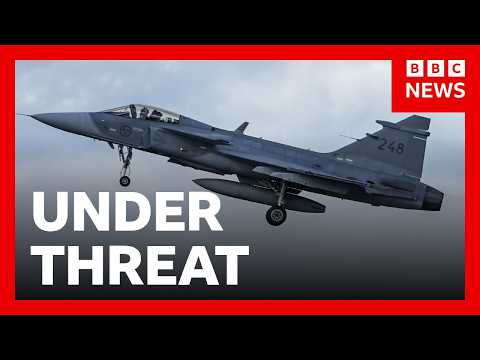
🇸🇪 Sweden is getting ready for a potential war with russiaSwedish Prime Minister Ulf Kristersson speaks with the BBC from the NATO summit in Ankara, Turkiye to discuss how Sweden is preparing for war, and what Europe needs to do to meet defence targets.#NATO #Sweden #Europe #defenceHow Sweden is readying for a p...
mastodon bot · about 2 months ago
NATO summit in Ankara unveils major arms deals, $140 billion support for Ukraine
gdeltproject.org · about 2 months ago
Estonia and Ukraine sign drone agreement At the NATO summit in Ankara, Estonian Prime Minister Kristen Michal and Ukrainian President Volodymyr Zelenskyy signed a drone cooperation agreement.
news.err · about 2 months ago
At Nato summit, Trump berates European allies while pleasing Turkish host The NATO summit has opened on July 7, with many topics to be discussed. Trump has opened the possibility of the US selling F35 fighter jets after Turkey was booted out of the programme in 2019 over Ankaras purchase of a Russian system. Trump has also expressed annoyance at European Nato allies for not "helping" the US in Iran. FRANCE 24s Kethevane Gorjestani tells us more on the summit.
france24 · about 2 months ago
NATO summit begins in Ankara today - The Baltic Times RIGA - The NATO summit will take place in the Turkish city of Ankara today and tomorrow.Latvian President Edgars Rink......
baltic times · about 2 months ago
Ukraine and Estonia sign Drone Deal on cooperation in unmanned technology Ukraine and Estonia have signed a Drone Deal agreement on cooperation in unmanned technology on the sidelines of the NATO summit in Ankara.
ukrpravda · about 2 months ago
Turkish state broadcaster accused of censoring question on jailed comedian, detentions during NATO press conference TRT, Turkeys state broadcaster, is facing accusations that during a press conference ahead of the NATO summit in Ankara, it censored the live Turkish translation of a question to NATO Secretary General Mark Rutte by omitting references to jailed comedian Deniz Göktaş and a recent crackdown on government critics. A Dutch journalist asked Rutte whether […] The post Turkish state broadcaster accused of censoring question on jailed comedian, detentions during NATO press conference appeared first on Stockholm Center for Freedom.
stockholm center for freedom · about 2 months ago
NATO video spotlights Türkiyes strategic role ahead of Ankara summit NATO has released a promotional video ahead of the Ankara summit, highlighting Türkiyes geostrategic position, defence industry, and the capitals cultural heritage. The video describes Ankara as home to Türkiyes largest defence industry companies and a hub for military engineering and advanced technology.
yenisafak · about 2 months ago
Turkish VP hails NATO summit as historic gathering for deterrence Vice President Cevdet Yılmaz has described the NATO summit in Ankara as a historically significant gathering at a critical time of global transformation, where the alliances deterrence and defense efforts will be reviewed and steps to increase defense investments evaluated.
yenisafak · about 2 months ago
Turkish FM Fidan meets bipartisan US senators ahead of NATO summit Foreign Minister Hakan Fidan received a bipartisan US congressional delegation in Ankara on Monday, including Senator Jeanne Shaheen and Senator Chris Coons. The delegation is in Türkiye for the NATO Summit Defense Industry Forum and related events.
yenisafak · about 2 months ago
Erdogan, NATO chief Rutte meet in Ankara ahead of leaders summit President Recep Tayyip Erdogan met with NATO Secretary General Mark Rutte in Ankara on Monday to discuss the upcoming leaders summit and regional developments, expressing hope that the gathering hosted by Türkiye would yield positive outcomes for collective defense and defense industry cooperation.
yenisafak · about 2 months ago
Türkiye completes security preparations for NATO summit in Ankara Interior Minister Mustafa Ciftci said on Monday that Turkish authorities have finalized comprehensive security protocols covering airports, summit venues, transportation networks and cyber defenses for the 36th NATO summit opening Tuesday in Ankara, pledging full coordination between police and gendarmerie units to ensure safety throughout the two-day gathering.
yenisafak · about 2 months ago
NATO allies advance defense financing plan ahead of Ankara summit The UK, Netherlands, Finland, and Poland have reaffirmed plans to increase defence spending and improve military procurement ahead of the NATO summit in Ankara. They are making significant progress on a multilateral defence mechanism aimed at accelerating investment, joint procurement, and support for Ukraine.
yenisafak · about 2 months ago
Trump departs for NATO summit in Türkiye US President Donald Trump has departed for Ankara to attend the NATO summit and hold a bilateral meeting with President Recep Tayyip Erdoğan. He will also hold separate meetings with Ukrainian President Zelenskyy and Syrian President al‑Sharaa.
yenisafak · about 2 months ago
South Korean president departs for Türkiye to attend NATO summit President Lee Jae Myung has departed for Türkiye to attend the NATO summit in Ankara, marking the first time a South Korean leader has visited the country for the alliances leaders meeting. He will also attend a joint meeting with Japan, Australia, and New Zealand before heading to Mongolia.
yenisafak · about 2 months ago
Türkiyes NATO envoy: Solidarity is main expectation from Ankara summit Türkiyes permanent representative to NATO, Ambassador Basat Öztürk, has stated that the primary expectation from the Ankara summit is a clear reaffirmation of unity and solidarity among allies. He also highlighted Türkiyes special place within NATO and the significance of the NATO 3.0 vision.
yenisafak · about 2 months ago
Erdogan receives Canadas premier as NATO summit opens in Ankara Turkish President Recep Tayyip Erdogan on Tuesday received Canadian Prime Minister Mark Carney for closed-door talks in Ankara, marking the first visit by a Canadian premier to Türkiye in 11 years as the two-day NATO summit kicked off.
yenisafak · about 2 months ago
Rutte unveils 3 defense projects as NATO summit opens in Ankara NATO Secretary General Mark Rutte announced three multinational defense initiatives on Tuesday covering strategic airlift, aerial refueling and surveillance capabilities, unveiling modernization programs and new aircraft acquisitions as the alliance opened its 2026 summit in Ankara with a defense industry forum.
yenisafak · about 2 months ago
Alliance evolving toward NATO 3.0 as Ankara summit nears Former NATO Secretary General Jaap de Hoop Scheffer argues the alliance stands at a critical juncture requiring transformation into "NATO 3.0" to address artificial intelligence and hybrid warfare, while urging European members to increase defense spending ahead of the upcoming summit in Ankara.
yenisafak · about 2 months ago
NATO allies to pledge $160B for Ukraine, Germany says German Foreign Minister Johann Wadephul said Tuesday that NATO allies are preparing to pledge €140 billion ($160 billion) in support of Ukraine for 2026 and the coming year, describing the commitment as a strong signal to Moscow ahead of the alliances upcoming summit in Ankara, Türkiye.
yenisafak · about 2 months ago
Turkish DefMin meets Japanese, BAE Systems officials ahead of NATO summit Turkish Defence Minister Yaşar Güler held separate meetings with Japanese Defence Minister Shinjiro Koizumi and BAE Systems CEO Charles Woodburn in Ankara ahead of the NATO summit. No details of the discussions were disclosed, but the meetings underscore Türkiyes growing defence partnerships.
yenisafak · about 2 months ago
Turkish defence chief: Türkiye ready to drive NATOs industrial transformation Defence Industries Secretariat head Haluk Görgün has declared that Türkiye is ready to be a driving force in NATOs defence industrial transformation. Speaking at the NATO Defence Industry Forum in Ankara, he highlighted Türkiyes mature solutions in unmanned combat aircraft, deep strike, air defence, and counter-drone systems.
yenisafak · about 2 months ago